
TL;DR
Fit&Well published a yoga therapist’s seven-part seated movement flow for older adults, including arm raises, twists, side bends and cat-cow. The therapist says the movements can be adapted to each person’s range and performed with a sturdy chair; the report does not provide clinical evidence that the routine improves health outcomes.
Fit&Well has published a seven-part chair-based movement flow recommended by a yoga therapist who works with older adults, including people with Parkinson’s disease and other movement disorders. The therapist describes the exercises as gentle and adaptable, offering a seated option for people who do not have the mobility for floor-based movement or feel more comfortable exercising from a chair.

Get health and wellness essentials delivered free with Prime
- Fast, free delivery on millions of items
- Prime Video, Amazon Music and more included
- Member-only deals all year
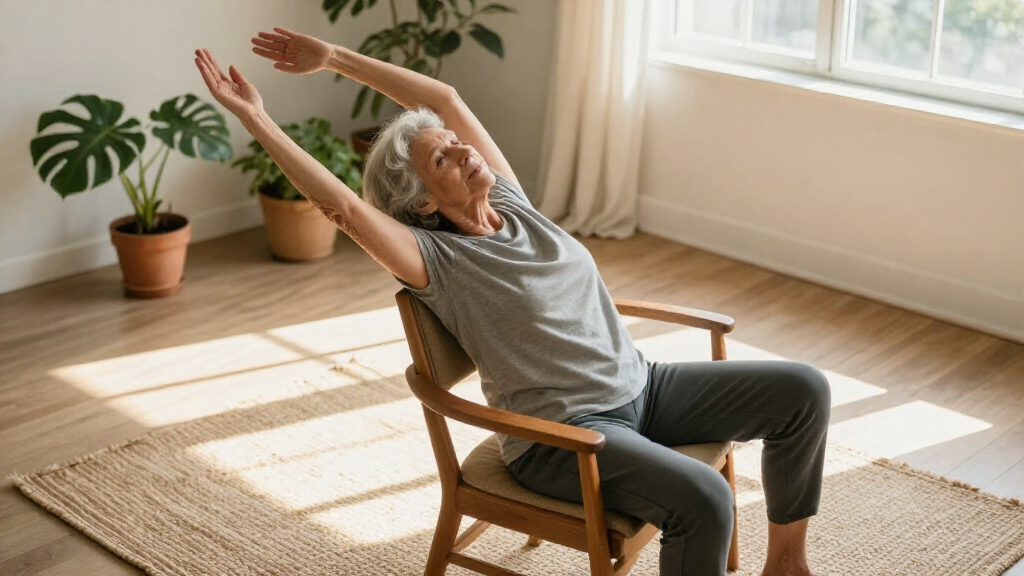
The sequence starts with one minute of settling: sit toward the back of a sturdy chair, place both feet flat on the floor, rest the hands on the lap and allow the breath to settle. The remaining movements are performed seated and coordinated with breathing. They include sweeping the arms overhead and bringing the palms together, rotating the torso to each side, raising one arm at a time and then both arms, and bending the upper body sideways.
The flow also includes seated cat-cow, in which the back alternately rounds and the chest moves forward, followed by a seated forward fold. The therapist suggests three to five repetitions for most movements, with three twists and side bends per side. For the forward fold, the report says participants who need more support can keep their hands on their knees; during side bends, they can hold the chair rather than reaching an arm down.
The therapist advises people to move within their own range and capacity, without trying to achieve a particular pose. The routine calls for a stable chair and enough surrounding space to lift the arms. The supplied report does not give clinical trial results, quantify benefits or provide individualized guidance for people with specific health conditions.
A Seated Option for Gentle Movement
The routine presents chair-based movement as an accessible alternative for people who find floor exercises impractical or prefer additional support. Its structure offers a short sequence that can be followed at home or in a group setting, with modifications described for two of the movements.
That accessibility may be relevant to older adults and people living with movement disorders or chronic conditions, groups the therapist says they work with. However, the report describes the therapist’s approach and experience; it does not establish that this particular flow is safe or suitable for every person, or that it produces specific fitness or health outcomes. Readers with health concerns may need advice from a qualified health professional before starting or changing exercise.
Products Worth Considering

Withings BPM Vision Blood Pressure Monitor with Wi-Fi and Bluetooth

Garmin Forerunner 970 GPS Running and Triathlon Smartwatch, 47mm, Carbon Gray DLC Titanium, Black/Whitestone

Philips Sonicare DiamondClean 9500 Electric Toothbrush with 3 Brush Heads, Black
As an affiliate, we earn on qualifying purchases.
How the Therapist Frames Chair Yoga
The Fit&Well report presents chair yoga as a form of mindful movement performed while seated. The therapist says their groups use it to stretch muscles, move joints and feel calmer in their bodies, and describes gentle exercises as potentially energizing. Those are the therapist’s observations about their classes, not findings from a study cited in the supplied material.
The exercises are arranged as a sequence: settle, coordinate arm movement with breathing, rotate, bend, move the spine through cat-cow and fold forward. The instructions repeatedly offer ways to scale the movement, including looking up only if comfortable and using the chair or knees for support. The report does not specify the therapist’s name in the provided source material, or give a date for when the article appeared.
“I encourage everyone to move within the range and capacity of their body—there’s no particular shape or position to achieve.”
— The yoga therapist quoted in Fit&Well
Evidence and Individual Suitability
The supplied report does not identify clinical research testing this exact sequence, or provide evidence that it improves mobility, balance, pain or other health outcomes. It also does not state how often participants should repeat the flow, whether it has been reviewed for particular diagnoses, or what adaptations may be needed for people with different levels of mobility.
The therapist’s advice to stay within a comfortable range is general, not an individualized safety assessment. The material does not explain what someone should do if a movement causes pain, dizziness or other symptoms. It also gives no specific instructions for choosing a chair beyond calling for a sturdy one.
Using the Sequence With Care
Fit&Well’s published instructions describe the seven movements and their suggested repetitions, but the source material gives no announced follow-up, research study or clinical evaluation. The next step for readers considering the routine is to review the instructions and adapt the range of movement to their own capacity, using the listed chair-support options where needed.
People with chronic conditions, movement disorders or questions about whether a particular movement is appropriate can ask a qualified health professional for individualized guidance. The report does not say whether Fit&Well or the therapist plans to publish additional modifications or evidence about the sequence.
Key Questions
What exercises are included in the chair-based flow?
The sequence includes settling and breathing, an overhead arm sweep into prayer, seated twists, single- and double-arm raises, side bends, cat-cow and a forward fold.
What equipment or space is needed?
The report calls for a sturdy chair and enough space around it to raise the arms comfortably. The movements are performed seated.
How many repetitions does the therapist suggest?
The instructions generally suggest three to five repetitions. Twists and side bends are listed as three repetitions on each side, while the opening settling exercise lasts one minute.
Does the report show that the routine improves health?
No clinical results are provided in the supplied material. The therapist describes their experience and the intended feel of the movements, but the report does not establish measured health benefits from this specific sequence.
Can everyone with limited mobility do these exercises?
The therapist recommends moving within an individual’s range and capacity, but the report does not assess each person’s needs. Anyone unsure about suitability, particularly someone with a health condition, can seek individual guidance from a qualified health professional.
Source: fitandwell.com