
On a raw food diet, you’ll want to include healthy fats from sources like nuts, seeds, avocados, and cold-pressed oils, aiming for about 20-35% of your daily calories from fats. Incorporate raw fish, unprocessed meats, and dairy sparingly for animal fats. Balancing vegetable and animal fats ensures a diverse intake of essential fatty acids, but moderation is key due to their calorie density. Keep exploring to discover how to guarantee your fat sources and amounts for better health.
Key Takeaways
- Include a variety of raw nuts, seeds, and oils for healthy vegetable fats in your diet.
- Consume raw animal fats like fish, unprocessed meats, and dairy in moderation, ensuring high-quality sourcing.
- Balance your fat intake by combining plant-based and animal fats for diverse omega-3 and monounsaturated fats.
- Be mindful of fat quantities; fats are calorie-dense, so moderation supports overall health.
- Prioritize raw, unprocessed foods to maximize nutrient retention and minimize oxidation of fats.
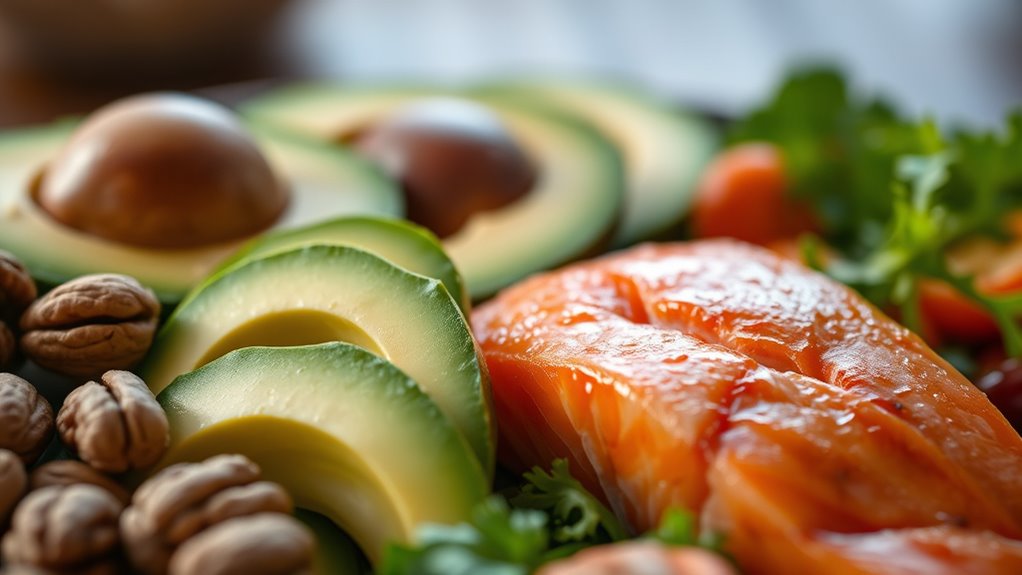
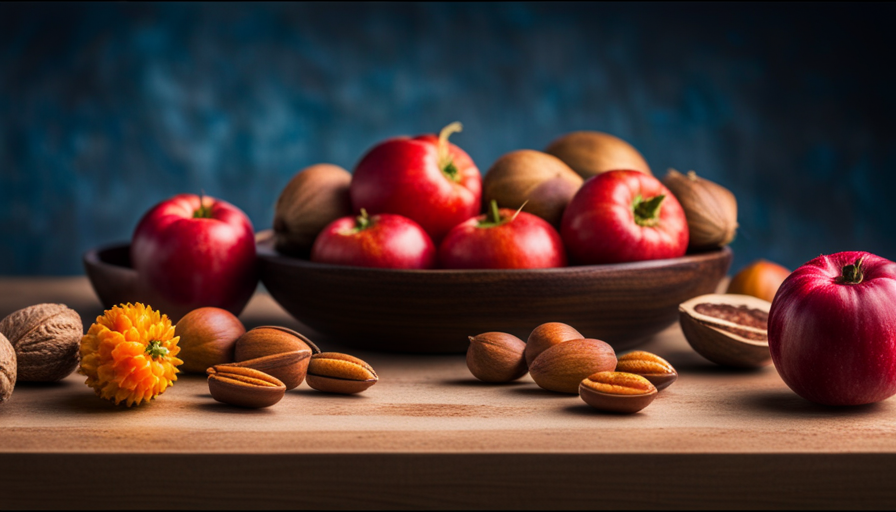
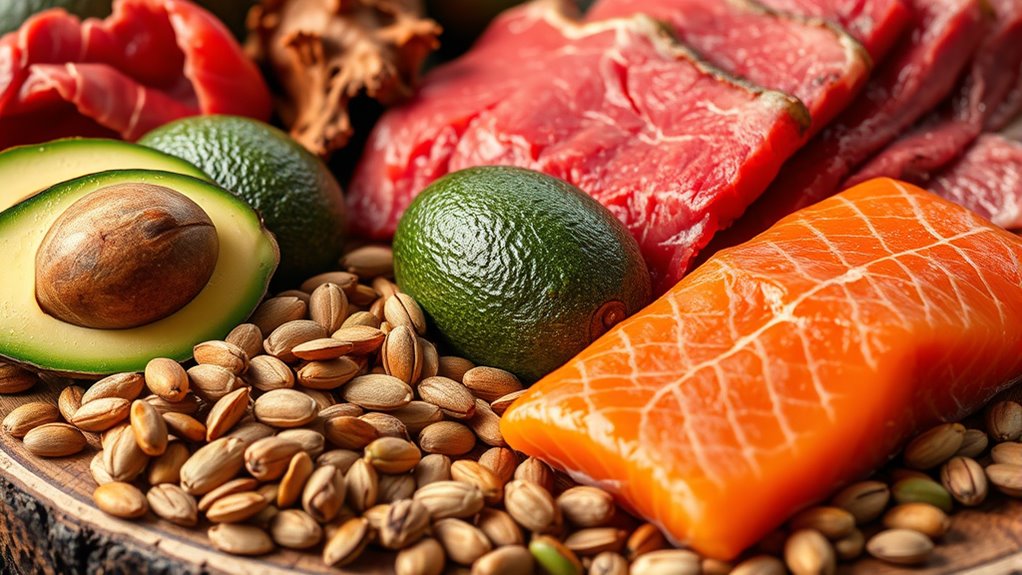
Have you ever wondered what role fats play when consuming raw foods? Fats are indispensable for your health, providing energy, supporting cell function, and aiding in the absorption of fat-soluble vitamins. When you eat raw, understanding the types and sources of fats becomes even more important, especially since raw foods can be rich in different kinds of fats, notably vegetable fats and animal fats. Vegetable fats come from plants and are often found in nuts, seeds, avocados, and oils like olive or coconut oil. These fats tend to be healthier, offering monounsaturated and polyunsaturated fats that support heart health and reduce inflammation. You’ll find these fats in abundance in raw nuts such as almonds, walnuts, and cashews, as well as in seeds like sunflower and chia. Avocados are another excellent source, providing a creamy texture along with beneficial fats that can help lower bad cholesterol levels.
On the other hand, animal fats are derived from meat, dairy, and other animal products. When you consume raw animal fats, such as those found in raw fish or unprocessed meats, you’re getting saturated fats and sometimes even omega-3 fatty acids, especially if you eat raw fatty fish like salmon or mackerel. These fats are crucial for brain health, hormone production, and cell structure. However, raw animal fats should be consumed with care, as they can contain harmful bacteria if not sourced properly. Raw dairy products like unpasteurized milk or cheese also contain animal fats, which can be nutritious but require careful handling to avoid foodborne illnesses. It’s also important to consider the types of fats present in your diet to maintain a balanced intake.
Balancing vegetable and animal fats in your raw diet ensures you’re getting a diverse array of fatty acids. Vegetable fats are generally more stable and less prone to oxidation, making them a good choice for raw consumption. Meanwhile, animal fats, especially omega-3 rich fish fats, can offer unique health benefits, but you should be mindful of their source and quality. Incorporating raw nuts, seeds, oils, and carefully selected raw animal products can help you meet your nutritional needs without overdoing it. Keep in mind that even healthy fats are calorie-dense, so moderation is key. Knowing which raw foods contain these fats and how much to consume helps you optimize your diet for both health and enjoyment. Whether you prefer the plant-based richness of avocados and nuts or the omega-3 power of raw fish, understanding their role in your raw diet empowers you to make smarter, more informed choices.

Go Raw Organic Sprouted Pumpkin & Sunflower Seeds, 10 oz, Sea Salted, Keto, Kosher, Superfood
HEALTHY SUPERFOOD: 10oz resealable pouch of organic sprouted pumpkin seeds (pepitas) & sprouted sunflower seeds, perfectly seasoned with…
As an affiliate, we earn on qualifying purchases.
As an affiliate, we earn on qualifying purchases.
Frequently Asked Questions
Are All Raw Fats Equally Beneficial for Health?
Not all raw fats are equally beneficial for your health. Beneficial omega-3s, found in raw fish and flaxseeds, support your heart and brain, while excessive saturated fat intake from sources like raw dairy or certain meats can raise concerns about heart health. You should prioritize healthy fats, such as omega-3s, and limit saturated fats to maintain ideal health and avoid potential risks.
How Can I Identify Healthy Fats in Raw Foods?
Did you know that plant-based omega-3s, like those in flaxseeds and walnuts, boost heart health? To identify healthy fats in raw foods, look for sources rich in these omega-3s and healthy monounsaturated fats in avocados and nuts. Avoid saturated fat sources like processed meats or fried foods. Choose whole, unprocessed foods, and read labels to guarantee you’re selecting natural, nutrient-dense options with beneficial fats.
Do Raw Fats Affect Digestion Differently Than Cooked Fats?
Raw fats digest slightly differently than cooked fats because they retain more enzymes that aid digestion. When you consume raw fats, your body may process them more efficiently, potentially leading to easier digestion for some. In comparison, cooked fats can become more concentrated and sometimes harder to digest due to heat changes. Overall, raw fat digestion often feels gentler, but individual responses vary depending on your digestive health.
Can Raw Fats Help With Weight Management?
Raw fats can support your weight control efforts due to their raw fat benefits, like providing healthy, unprocessed nutrients that help keep you full longer. Incorporate moderate amounts of raw fats from sources like nuts, seeds, and avocados into your diet. These fats boost your metabolism and curb overeating, making them a helpful part of your weight management plan. Just remember to balance raw fats with other healthy foods for best results.
Are There Any Risks Associated With Consuming High Raw Fat Amounts?
Like Icarus flying too close to the sun, consuming excessive raw fats from sources like nuts, seeds, or oils can pose risks. High raw fat intake may lead to digestive issues and hinder fat oxidation, possibly increasing cholesterol levels. To stay safe, balance your raw fat sources and avoid overdoing it, ensuring your body benefits from healthy fats without the potential downsides of too much raw fat consumption.

365 by Whole Foods Market, Vegetable Oil, 32 Fl Oz
32 fluid ounce vegetable oil
As an affiliate, we earn on qualifying purchases.
As an affiliate, we earn on qualifying purchases.
Conclusion
As you explore raw foods, remember that fats are like gentle waves, nourishing your body with every bite. From the creamy avocados to the crunchy nuts, these natural fats paint a vibrant picture of health. Embrace their richness, letting each morsel fuel your journey. When you choose raw, you’re diving into a colorful ocean of fundamental fats—simple, pure, and alive—ready to support your vitality with every delicious, unprocessed splash.

Amazon Grocery, Wild Caught Sockeye Salmon Skin-On Fillet Portions, 12 Oz
One 12 ounce serving of fresh Sockeye Salmon skin-on fillet portions (previously frozen)
As an affiliate, we earn on qualifying purchases.
As an affiliate, we earn on qualifying purchases.

Blue Valley Heavy Whipping Cream 8Fl Oz Shelf Stable Ultra-Pasteurized Heavy Cream – Kosher And Grass Fed-Grade A dairy ideal for Desserts, Cooking
Premium Quality: Crafted from grade A dairy, this heavy whipping cream delivers superior richness, clean flavor, and exceptional…
As an affiliate, we earn on qualifying purchases.
As an affiliate, we earn on qualifying purchases.