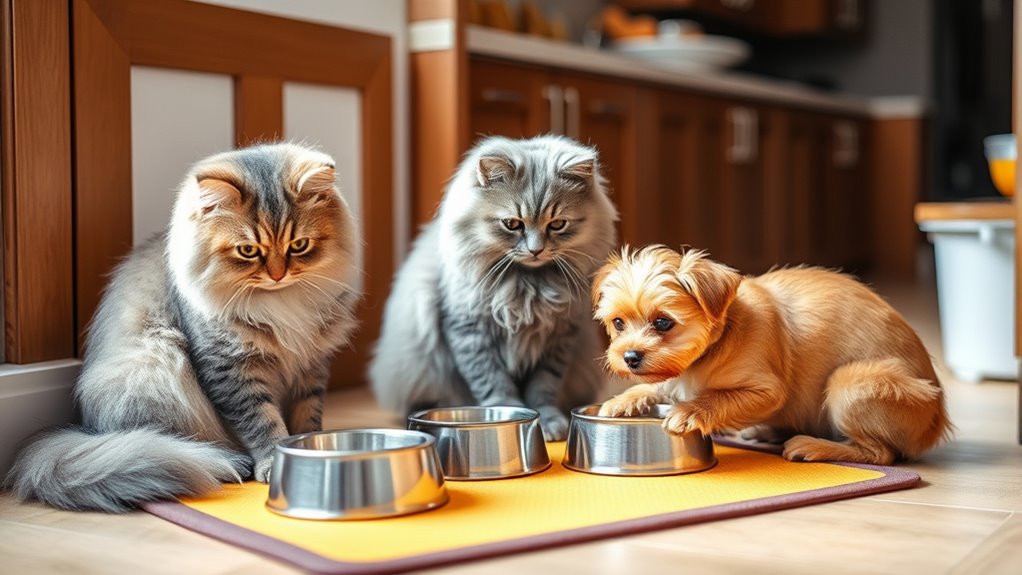

To prevent feeding fights in a multi-pet household, establish a consistent routine and designate specific feeding areas for each pet. Use separate bowls and supervise mealtime to reduce competition. Adjust schedules for individual needs and consider feeding smaller, frequent meals for cats or larger portions for bigger pets. Keep an eye on interactions and make environment changes as needed. Staying attentive and consistent helps create a peaceful, healthy feeding environment—learn more ways to promote harmony during mealtimes.

Get health and wellness essentials delivered free with Prime
- Fast, free delivery on millions of items
- Prime Video, Amazon Music and more included
- Member-only deals all year
Key Takeaways
- Use separate feeding areas or bowls to minimize competition and reduce aggressive behaviors.
- Establish a consistent feeding routine to promote predictability and lessen conflicts among pets.
- Feed pets in different rooms or designated spaces, especially if they tend to fight over food.
- Monitor interactions during mealtime to promptly address any signs of aggression or disputes.
- Adjust feeding schedules and portions based on individual pet needs to prevent hunger-driven conflicts.
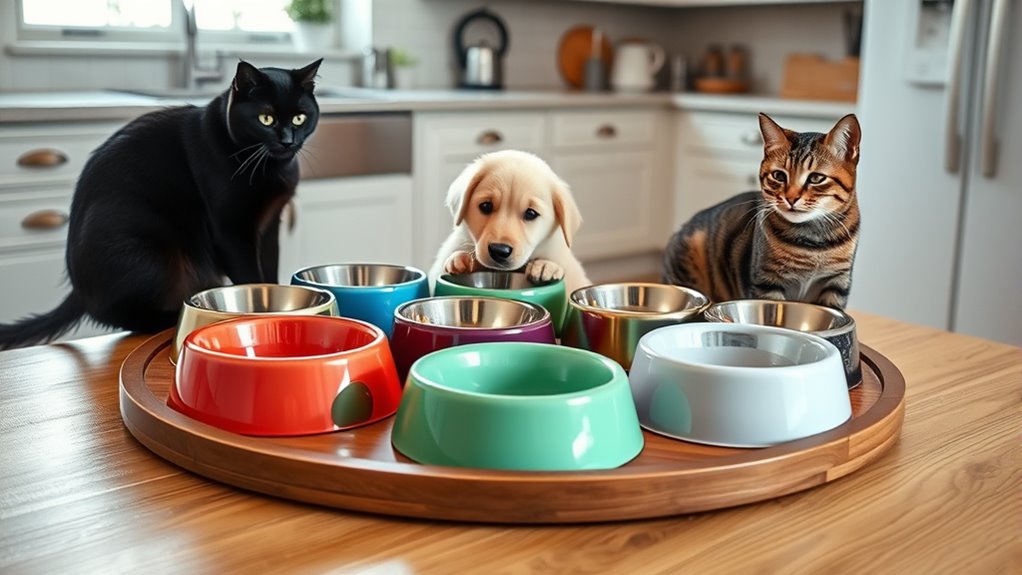
Have you ever wondered what it’s like to manage a household with multiple pets? It can be both rewarding and challenging, especially when it comes to mealtime. One of the biggest concerns is ensuring pet food safety while coordinating a feeding schedule that keeps everyone happy and healthy. When you have several animals, each with different dietary needs, establishing a reliable routine is essential. Not only does this help prevent conflicts, but it also minimizes health risks associated with improper feeding practices.
Pet food safety should be your top priority. You need to ensure that each pet’s food is stored properly in airtight containers, away from pests and contaminants. Make sure to read labels carefully and avoid sharing food between pets unless explicitly recommended by your veterinarian. Cross-contamination can lead to allergic reactions or digestive issues, so keep their bowls and utensils separate and clean them thoroughly after each use. Consistent monitoring of expiration dates and inspecting food for spoilage also helps prevent any health hazards. By maintaining strict pet food safety measures, you’re protecting your pets from illnesses and ensuring they get the nutrition they need. Proper storage and handling are crucial components of food safety practices.
Feeding schedule coordination is another critical aspect. You should create a consistent timetable that considers each pet’s age, size, and dietary requirements. For example, larger dogs may need more frequent or larger portions, while cats might prefer several small meals throughout the day. Setting specific times for feeding helps prevent disputes and ensures that no pet feels neglected or overfed. If some pets are more food-motivated than others, consider feeding them separately, at least initially, to reduce competition and prevent aggressive behaviors. Using different bowls or designated areas can also be helpful. Over time, you can adjust the schedule as you observe how each pet responds, but consistency remains key. This routine not only minimizes conflicts but also makes it easier to identify any health issues early, such as sudden loss of appetite or gastrointestinal problems.
Balancing pet food safety with a well-organized feeding schedule might seem overwhelming at first, but with patience and planning, it becomes second nature. Your pets will thrive when they receive their proper meals on time and in a safe environment. Remember that each pet is unique, and adaptability is important. Pay close attention to their behavior and health, and don’t hesitate to consult your veterinarian for tailored advice. Ultimately, managing a multi-pet household during mealtime is about creating a peaceful routine that prioritizes safety, nutrition, and harmony among your furry family members.
As an affiliate, we earn on qualifying purchases.
Frequently Asked Questions
How Do I Prevent Resource Guarding Among Pets?
To prevent resource guarding, establish shared feeding locations and keep them consistent. Feed your pets at individual meal schedules, so no one feels threatened or possessive. Use separate bowls and space pets apart during mealtime to avoid conflicts. Praise calm behavior, and avoid punishing guarding tendencies. Over time, these strategies help your pets feel secure and reduce the likelihood of guarding, promoting a peaceful household.
What Are Signs of Stress in Multi-Pet Feeding Situations?
You’ll notice signs of stress in your pets’ body language during feeding, like flattened ears, tucked tails, or avoiding eye contact. They might also show agitation, such as pacing or growling. Pay attention to feeding time cues, like tense posture or stiff movements, which indicate discomfort. Recognizing these signals helps you intervene early, ensuring a calmer feeding environment and reducing potential conflicts among your pets.
How Can I Introduce New Pets to Existing Feeding Routines?
When introducing pets, start by adjusting feeding routines gradually. Feed them in separate areas initially, then slowly bring their spaces closer over time. Monitor their behavior closely, rewarding calm interactions. Consistency is key; keep routines predictable and positive. As they become more comfortable, you can gradually combine feeding times, ensuring each pet feels secure and no fights break out. Patience helps create a peaceful, shared feeding environment.
Are Special Feeding Dishes Necessary for Multi-Pet Households?
Special feeding dishes aren’t always necessary, but they can help manage pet mealtime etiquette and prevent fights. Using different feeding dish types, like raised or divided bowls, encourages pets to eat calmly and avoid conflict. It’s important to observe your pets’ behavior and choose dishes that suit their size and eating habits. Clear boundaries and consistent routines also promote peaceful mealtimes, making feeding easier and less stressful for everyone.
How Do I Ensure All Pets Get Enough Food During Meals?
To guarantee all your pets get enough food, establish a consistent feeding schedule and stick to it. Use portion control to prevent overeating and ensure each pet receives the right amount. Separate their meals if needed, either with individual dishes or by supervising feeding times. This approach minimizes fights, maintains fairness, and keeps everyone healthy and satisfied during mealtime.
Conclusion
In multi-pet households, feeding without fights is possible with patience and the right strategies. Imagine Sarah, who separated her cats during mealtime and gradually introduced shared feeding areas. Over time, her cats learned to coexist peacefully while eating. By observing your pets’ behaviors and adjusting accordingly, you can create a calm feeding routine. Remember, consistency and patience are key—your efforts will lead to a more harmonious home for all your furry friends.
Halloween Picks
halloween
As an affiliate, we earn on qualifying purchases.