

Understanding fiber types is key to better health. Soluble fiber dissolves in water, forming a gel that helps control blood sugar and cholesterol, found in oats and fruits. Insoluble fiber adds bulk to your stool, speeding up digestion and preventing constipation, present in whole grains and nuts. Resistant starch resists digestion, feeding gut bacteria and supporting colon health, found in cooled potatoes and bananas. Keep exploring to discover how combining these fibers benefits your overall wellbeing.
Key Takeaways
- Soluble fiber dissolves in water, forms gel-like substances, and helps regulate blood sugar and cholesterol.
- Insoluble fiber does not dissolve in water, adds bulk to stool, and promotes regular bowel movements.
- Resistant starch resists digestion in the small intestine, ferments in the large intestine, and feeds beneficial gut bacteria.
- Both soluble and insoluble fibers support gut health, digestion, and immune function, while resistant starch offers additional colon nourishment.
- Incorporating a variety of fiber types from different foods enhances overall gut health and promotes balanced digestion.
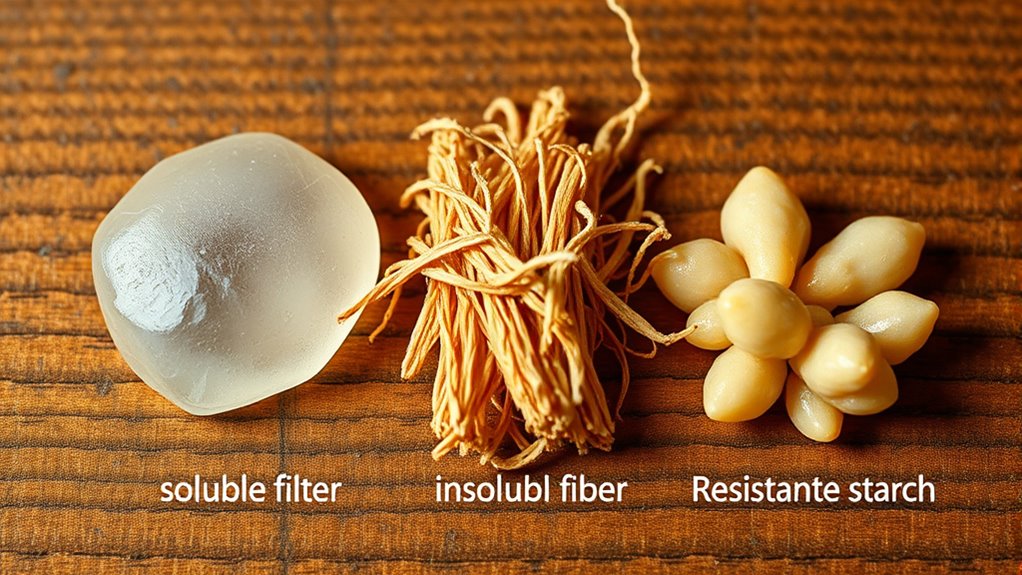
Understanding fiber types is essential because they directly impact your health and diet. Your body handles different fibers in unique ways, affecting how your digestion process works and how nutrients are absorbed. Knowing the differences between soluble fiber, insoluble fiber, and resistant starch can help you make smarter dietary choices and improve your overall well-being.
Knowing fiber types helps you make smarter choices for better digestion and overall health.
Soluble fiber dissolves in water, forming a gel-like substance that slows down digestion. This type of fiber is particularly good at helping regulate blood sugar levels and lowering cholesterol. When you consume foods rich in soluble fiber, such as oats, beans, apples, and citrus fruits, it interacts with your digestion process by delaying stomach emptying and nutrient absorption. This not only keeps you feeling full longer but also stabilizes your blood sugar, which is *vital* if you’re managing diabetes. Soluble fiber also ferments in your gut, feeding beneficial bacteria, which supports gut health and boosts your immune system. You can find dietary sources of soluble fiber in foods like barley, carrots, and certain berries, making it easy to incorporate into your daily meals.
In contrast, insoluble fiber doesn’t dissolve in water. Instead, it adds bulk to your stool and speeds up the passage through your digestive tract. This type of fiber is essential for preventing constipation and maintaining regular bowel movements. When you eat foods high in insoluble fiber, such as whole wheat bread, nuts, seeds, and the skins of fruits and vegetables, it works mechanically within your digestion process to keep things moving smoothly. Insoluble fiber also contributes to a feeling of fullness, which can help in weight management. Its presence in your diet encourages healthy gut motility and reduces the risk of developing digestive disorders. You’ll find dietary sources of insoluble fiber in foods like broccoli, cauliflower, and brown rice, making it straightforward to boost your intake.
Resistant starch is a special type of fiber that resists digestion in the small intestine and ferments in the large intestine. It acts like soluble fiber by feeding gut bacteria but also shares characteristics with insoluble fiber by improving gut health. Resistant starch is found naturally in foods such as green bananas, cooked and cooled potatoes, and legumes. When you consume these, resistant starch remains undigested in the early stages of your digestion process, reaching your gut where it is fermented by bacteria. This fermentation produces short-chain fatty acids, which nourish your colon and may help reduce inflammation. Incorporating resistant starch into your diet can improve gut health and support weight management because it promotes satiety and stabilizes blood sugar levels. Additionally, fiber diversity in your diet enhances overall gut microbiome health, which is crucial for optimal digestion and immunity.
Frequently Asked Questions
How Much Daily Fiber Intake Is Recommended for Adults?
You should aim for about 25-30 grams of daily fiber intake, according to dietary guidelines. This helps support fiber digestion and keeps your digestive system healthy. To reach this goal, include a variety of fiber-rich foods like fruits, vegetables, whole grains, and legumes. Consistently meeting these recommendations can improve your gut health, regulate bowel movements, and reduce risk of chronic diseases.
Can Fiber Supplements Replace Natural Fiber Sources?
Imagine a lush garden, full of vibrant vegetables, whole grains, and fruits—natural fiber sources that nourish your body. Fiber supplements can help meet your daily needs, but they often lack the diverse benefits of natural fiber. While fiber supplement efficacy varies, natural sources provide a broader range of nutrients and benefits. Relying solely on supplements isn’t ideal; combining both ensures maximum digestion and health.
How Does Fiber Affect Blood Sugar Levels?
Fiber helps regulate your blood sugar levels by slowing down carbohydrate absorption, which supports blood sugar regulation. When you include enough fiber in your diet, it can prevent spikes and crashes, making it easier to manage your energy. Fiber metabolism also promotes overall gut health, aiding in nutrient absorption. To keep blood sugar stable, prioritize fiber-rich foods like fruits, vegetables, and whole grains, and consider fiber supplements if needed.
Are There Any Side Effects of Consuming Too Much Fiber?
Yes, eating too much fiber can cause gastrointestinal issues like bloating, gas, and constipation, especially if your body isn’t used to it. Overconsumption may lead to fiber deficiency in other nutrients and discomfort. To avoid these side effects, increase your fiber intake gradually, drink plenty of water, and balance your diet. Too much fiber can overwhelm your digestive system, so moderation is key for overall health.
Is Fiber Equally Beneficial for Everyone Regardless of Age?
Like a wise owl adjusting its flight, your fiber needs change with age. Fiber isn’t equally beneficial for everyone, as age-related digestion and fiber absorption differences influence how your body processes it. Younger individuals may tolerate higher amounts, while older adults might need tailored intake to avoid issues like bloating or constipation. So, listen to your body and adjust fiber consumption accordingly, ensuring ideal health at every life stage.
Conclusion
Now that you’ve uncovered the secrets of soluble, insoluble, and resistant starch, think of fiber as your body’s loyal guide, gently sweeping away toxins and fueling your health. Like a skilled gardener tending to a vibrant garden, fiber nurtures your digestive system, keeping everything in harmony. Embrace these fiber types, and watch your well-being flourish like a lush, thriving landscape—because when you nourish your body with fiber, you’re planting the seeds for a healthier, happier you.