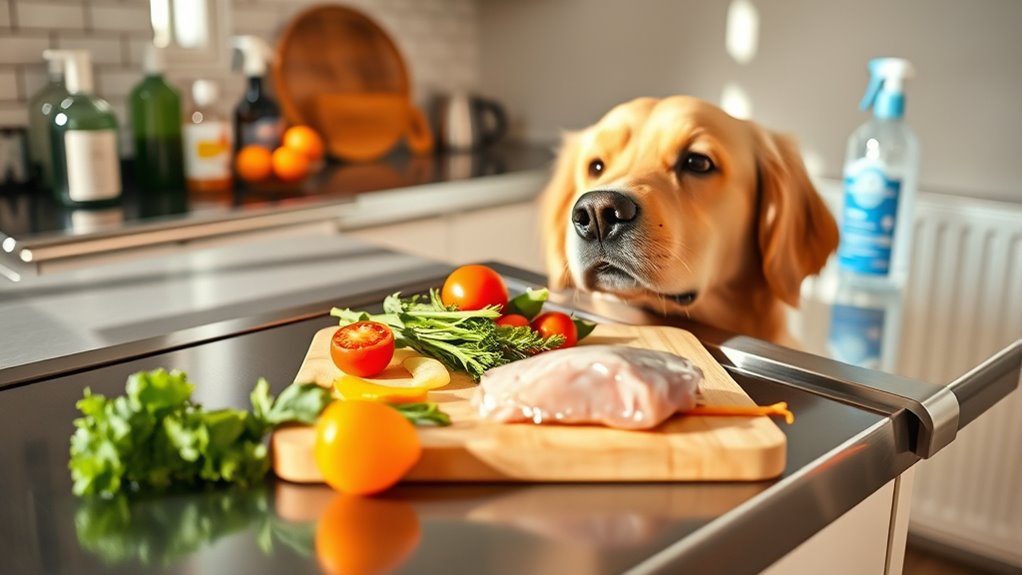

To reduce risks from foodborne pathogens for your pets, always handle and store food properly. Wash your hands after preparing pet food, keep raw meats separate, and store leftovers in airtight containers in the fridge. Avoid feeding pets contaminated foods like raw meat or leftovers that seem unsafe. Monitor your pets for symptoms like vomiting or diarrhea, and seek vet help if needed. Staying vigilant and informed can protect your pet’s health—learn more to keep them safe.
Key Takeaways
- Wash hands thoroughly after handling raw pet foods or meats to prevent bacterial transfer.
- Store raw meats separately and in airtight containers to reduce cross-contamination risks.
- Keep pet foods and leftovers refrigerated promptly and discard uncertain or spoiled foods.
- Regularly consult with a veterinarian to monitor pet health and receive safety guidance.
- Educate family members about toxic foods and proper storage to prevent accidental pet ingestion.

Have you ever wondered if your furry friend might be at risk from the food you eat? It’s a common concern among pet owners, especially as more people share their meals with their pets or leave food unattended. Foodborne pathogens, such as Salmonella, E. coli, and Listeria, don’t just threaten humans—they can seriously impact your pet’s health too. Understanding pet toxin awareness is essential because many bacteria and toxins can be transferred through contaminated food, posing serious health risks. Being informed helps you recognize the dangers and take steps to guarantee your pet’s safety, which is a key part of maintaining veterinary safety in your household.
Pet food safety awareness is vital to protect your furry friend’s health from harmful pathogens.
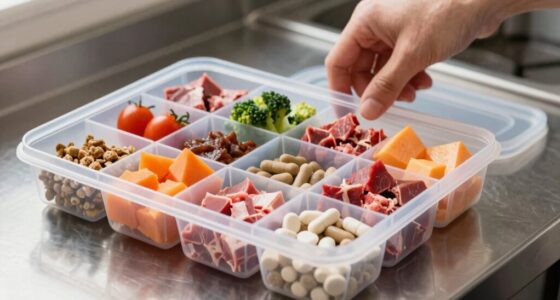
Contaminated food can be sneaky. Even foods that seem safe, like raw meat or leftovers, can harbor dangerous pathogens. When pets consume contaminated food, they might develop symptoms like vomiting, diarrhea, lethargy, or even more severe conditions like kidney failure or sepsis. That’s why it’s important to be vigilant about what your pet eats and how it’s prepared. Proper food handling and storage are fundamental strategies to reduce these risks. Always wash your hands thoroughly after preparing food, keep raw meats separate from other foods, and store leftovers in airtight containers in the refrigerator. If you’re unsure whether a food is safe, it’s better to discard it rather than risk exposing your pet to harmful bacteria.
Another essential aspect of foodborne pathogen risk reduction is regularly consulting your veterinarian. They’re trained in veterinary safety and can give you advice tailored specifically to your pet’s health needs. For example, some pets are more vulnerable to certain bacteria, especially young, old, or immunocompromised animals. Regular check-ups and open communication help you stay ahead of potential risks. If your pet shows signs of illness after eating, prompt veterinary attention can make all the difference. Remember, early diagnosis and treatment are critical in preventing serious health complications. Additionally, being aware of specific bacteria common in pet food can help you better understand potential risks and take more targeted precautions.
It’s also wise to educate yourself about common household foods that are toxic or dangerous for pets. Foods like grapes, onions, garlic, and chocolate are known to be harmful, and even small amounts can cause severe reactions. Keeping these foods out of reach and ensuring your family understands pet toxin awareness can prevent accidental poisoning. Educating yourself and your family about these dangers is a proactive step that supports veterinary safety and your pet’s well-being. Ultimately, staying informed, practicing safe food handling, and seeking professional advice are your best tools to protect your pet from foodborne pathogens. Your attentive care helps guarantee your furry friend remains healthy, happy, and safe from unseen threats lurking in everyday foods.
Frequently Asked Questions
Can Pets Transmit Foodborne Pathogens to Humans?
Yes, pets can transmit foodborne pathogens to humans through pet transmission. When your pets consume contaminated food or come into contact with infected surfaces, they can carry pathogens like Salmonella or Campylobacter. If you handle your pets or their belongings without proper hygiene, you risk spreading these pathogens to yourself and others. To reduce pathogen risks, always wash your hands after pet contact and keep their living areas clean.
Are All Pet Foods Safe From Contamination Risks?
Not all pet foods are completely safe from contamination risks, but reputable pet food manufacturing companies prioritize contamination prevention. You should always check labels for quality assurance, choose brands with good safety records, and store pet food properly. Regularly inspect packaging for damage, and wash hands after handling. Staying vigilant helps reduce the risk of foodborne pathogens and keeps your pets and household safe from potential contamination.
What Symptoms Indicate a Pet Has Contracted a Foodborne Illness?
If your pet has contracted a foodborne illness, look for symptoms like vomiting, diarrhea, lethargy, and decreased appetite. Symptom identification is key to catching illness indicators early. You might also notice dehydration, abdominal pain, or fever. If you see these signs, contact your veterinarian promptly. Early detection and treatment can prevent serious health complications, so stay observant and act quickly when your pet shows any of these illness indicators.
How Often Should Pet Feeding Areas Be Disinfected?
You should disinfect your pet’s feeding areas after every use and at least once daily, depending on your cleaning protocols. Regular disinfection frequency helps prevent the spread of foodborne pathogens. Use appropriate cleaning agents and thoroughly clean surfaces to remove bacteria and other contaminants. Consistent disinfection not only maintains a hygienic environment but also reduces your pet’s risk of foodborne illnesses, keeping them healthier and safer.
Are There Specific Foods That Are More Risky for Pets?
You’ll want to steer clear of risky pet foods that could turn your furry friend into a food safety disaster! Certain foods like raw meats, unpasteurized dairy, grapes, and chocolate are especially risky for pets. These items can harbor dangerous pathogens and cause serious health issues. Always prioritize pet food safety by choosing appropriate, vet-approved foods, and avoid giving your pet anything that’s known to be risky to keep them safe and healthy.
Conclusion
By being mindful of your pet’s interactions with your food, you gently steer clear of potential health bumps in the road. Keep your kitchen a safe haven, and your furry friend will happily share in the joy without worry. With a few careful steps, you create a harmonious environment where both you and your pet can thrive. Remember, a little caution now guarantees many happy, healthy moments together down the road.