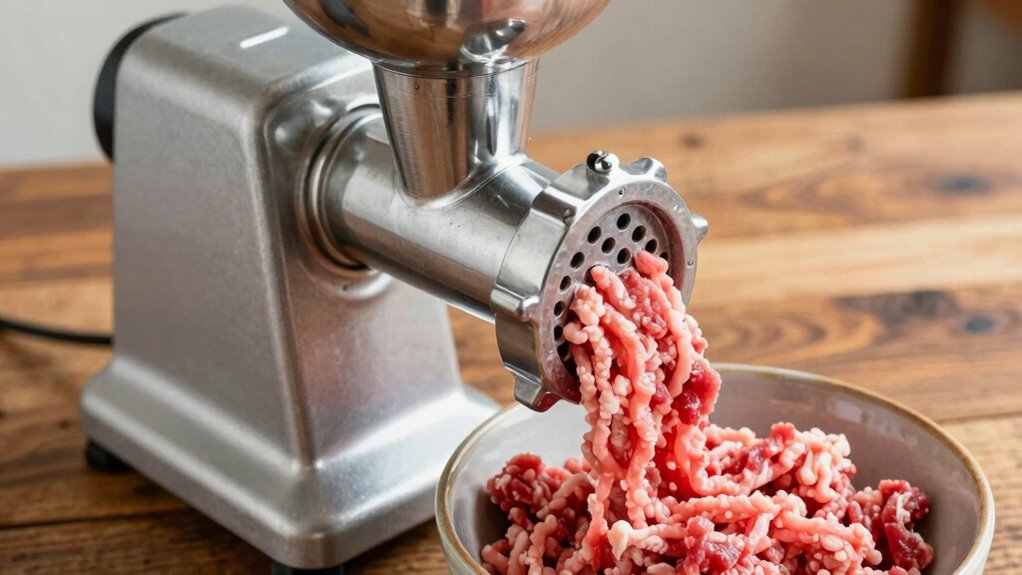

Choosing the right grinder size affects your pet’s raw food prep by influencing texture, nutrient retention, and safety. A coarse grind mimics natural prey, encouraging chewing and promoting dental health, while a fine grind creates a smoother mixture that’s easier to swallow and digest. Smaller grind sizes are ideal for pets requiring easier eating, but may need more cleaning. If you want to learn how to balance these factors for your pet, keep exploring the details below.

Get health and wellness essentials delivered free with Prime
- Fast, free delivery on millions of items
- Prime Video, Amazon Music and more included
- Member-only deals all year
Key Takeaways
- Coarse grinders create larger chunks, mimicking natural prey and encouraging pets to chew more thoroughly.
- Fine grinders produce smoother textures, making raw food easier for pets to swallow and digest.
- The choice of grinder size affects nutrient retention and even distribution within the mixture.
- Coarser grinding reduces prep time and simplifies cleaning, while finer grinding may require more frequent maintenance.
- Adjusting grinder size allows customization based on pet age, health needs, and feeding frequency.

Choosing the right grinder size for raw pet food is essential to guarantee your pet’s meals are both safe and appealing. The size of the grinder directly impacts how you prepare your pet’s food, influencing everything from texture to nutrient retention. If you opt for a coarse grind, your pet gets larger chunks that mimic their natural prey, which can be beneficial for encouraging chewing and maintaining dental health. Conversely, a finer grind produces a smoother mixture, which is ideal for pets that prefer or require easier-to-swallow food. When considering grinder size, think about your pet’s feeding frequency and dietary needs—smaller, more frequent meals might benefit from a finer consistency, ensuring easier digestion and uniform nutrient distribution.
Choosing the right grinder size ensures safe, nutritious, and appealing meals tailored to your pet’s needs and feeding habits.
The size of the grind also affects nutritional balance. Larger chunks can preserve more of the original food’s natural structure, potentially maintaining more vitamins and minerals that might degrade in finer processing. On the other hand, a finer grind allows for better mixing of ingredients, ensuring your pet gets a consistent intake of nutrients in every meal. This is especially important if you’re blending various ingredients to meet specific dietary requirements or to introduce supplements. The balance between coarseness and fineness should align with your pet’s size, age, and health status because different pets have different digestive capabilities and preferences. Additionally, grinder size can influence how efficiently you prepare meals, saving time and effort in your home food prep routine. Proper grinder maintenance is also crucial to prevent contamination and keep the equipment functioning efficiently, especially when handling raw meats to ensure safety.
Feeding frequency plays a role in choosing grinder size as well. For pets that are fed multiple small meals throughout the day, a finer grind can make meals more appealing and easier to consume, encouraging consistent eating habits. For pets that are fed once or twice daily, a coarser grind can provide a more natural, satisfying chewing experience, which may help slow down eating and promote better digestion. By adjusting the grinder size according to how often you feed your pet, you can optimize both their enjoyment and their nutritional intake. Regularly cleaning and sanitizing your grinder is essential to maintain food safety standards and prevent bacterial buildup. Additionally, selecting the appropriate grinder blade type can further influence the texture and quality of the food, helping you customize meals to your pet’s preferences.
As an affiliate, we earn on qualifying purchases.
Frequently Asked Questions
How Does Grinder Size Affect Nutrient Retention in Raw Pet Food?
Using a smaller grinder size helps you retain more nutrients and enzymes in raw pet food because it minimizes nutrient loss during processing. A finer grind preserves enzyme activity by reducing heat and oxidation that can degrade nutrients. Conversely, larger grinder sizes may cause more nutrient loss and enzyme destruction due to increased oxidation and heat generation. So, selecting the right grinder size guarantees your pet’s food stays nutritious and enzyme-rich.
Can I Use a Smaller Grinder for Larger Meat Cuts?
Yes, you can use a smaller grinder for larger meat cuts, but it may affect meat texture and grinding efficiency. Smaller grinders might struggle with tougher, larger pieces, leading to uneven grinding or clogging. To maintain ideal meat texture and grinding efficiency, consider cutting larger meats into smaller chunks before feeding them into a smaller grinder. This approach ensures smoother operation and better-quality ground raw pet food.
Does Grinder Size Impact the Safety of Homemade Raw Pet Food?
Yes, grinder size impacts the safety of homemade raw pet food by influencing food safety and bacterial contamination risks. A larger grinder can handle bigger meat cuts, but if not cleaned properly, it can harbor bacteria. Smaller grinders may be easier to sanitize thoroughly, reducing bacterial contamination. Ensuring your grinder is cleaned and maintained properly is essential to keep your pet safe and minimize food safety concerns regardless of size.
How Often Should I Clean My Grinder When Preparing Raw Pet Food?
You should clean your grinder thoroughly after every use, much like washing your hands before preparing food. This prevents cross-contamination and guarantees ideal meat texture and grinding consistency. I once neglected cleaning my grinder, and the next batch was gritty and uneven. Regular cleaning, especially when switching between different meats, keeps your raw pet food fresh and safe, maintaining the grinder’s performance and your pet’s health.
Are There Specific Grinder Sizes Recommended for Different Pet Species?
For different pet species, you should choose a grinder size based on their pet size and grinder capacity. Small pets like cats or small dogs benefit from a smaller grinder with finer settings, while larger dogs require a bigger grinder with a higher capacity to handle more substantial meat portions. Matching the grinder size to your pet’s size guarantees efficient processing, reduces mess, and makes feeding easier and safer.
Conclusion
Choosing the right grinder size truly makes a difference in preparing raw pet food. It affects not only the texture but also how easily your pet can digest their meal. Do you want a fine, uniform blend or a chunkier mix that mimics natural prey? By selecting the appropriate grinder size, you guarantee your furry friend gets the best nutrition and enjoyment from every meal. Isn’t their health and happiness worth making the right choice?
Cold & flu season Picks
humidifiers
As an affiliate, we earn on qualifying purchases.