
TL;DR

Get health and wellness essentials delivered free with Prime
- Fast, free delivery on millions of items
- Prime Video, Amazon Music and more included
- Member-only deals all year
A Seniors Guide nutrition report describes raisins as a source of fiber, potassium and antioxidants, and summarizes research linking raisin consumption with gut bacteria and dietary patterns. The findings do not establish that raisins prevent disease, and the report does not provide enough study detail to assess the strength of the health claims.
Seniors Guide has published a nutrition report on raisins, describing their nutrient content and summarizing research on gut bacteria and eating patterns. The report presents raisins as a convenient dried-fruit snack, but the cited findings are associations and potential effects, not proof that eating raisins prevents or treats illness.
The report says a one-quarter-cup serving provides 6% of the Daily Value for dietary fiber and 9% for potassium, based on a 2,000-calorie diet. It also describes raisins as a source of antioxidants. The article does not specify the total calories or grams of sugar in that serving, so readers cannot use these percentages alone to compare the full nutritional profile with other snacks.
For health research, the report cites a 2019 article in Nutrition Journal, saying daily raisin intake may increase the prevalence of beneficial gut bacteria and could have health effects, including reduced chronic inflammation. It also refers to research published in Food & Nutrition Research that found raisin consumers had higher intakes of potassium, magnesium and fiber, and lower intakes of sugar, saturated fat and sodium than people who did not consume raisins.
Those comparisons describe what researchers observed among consumers and non-consumers; they do not show that raisins alone caused the differences. The Seniors Guide piece does not give the studies’ sample sizes, methods or effect sizes. It also notes that raisins are available year-round, recommends airtight storage, and says refrigeration or freezing can preserve them for up to six months.
What Raisin Research Can Show
The report matters to readers because it puts raisins’ nutrients and research claims alongside their high natural sugar content. Its cited studies suggest raisins can fit into dietary patterns associated with higher fiber and mineral intake, while the gut-microbiota research points to a possible biological effect. These are relevant questions for people choosing snacks, but they do not establish a specific health outcome for an individual.
The distinction between a food’s nutrient profile and evidence of a health benefit is important. Raisins contain concentrated sugars because water has been removed from grapes. The report says research still characterizes them as a healthy snack that may reduce appetite and contribute to improved diet quality, but it does not provide enough information to quantify those effects or show how they compare with other snacks. Its findings are best read as a summary of reported research, not a clinical recommendation.
unsweetened raisins no added sugar
As an affiliate, we earn on qualifying purchases.
As an affiliate, we earn on qualifying purchases.
From Grapes to Dried Fruit
Raisins are dried grapes, with varieties including Thompson Seedless, Muscat, Sultana and Malaga commonly used for drying, according to the source. The report notes that grapes have been dried for thousands of years and that raisins were historically used as food and, in some societies, as decorations, currency or prizes. That history is background rather than evidence for the health claims discussed in the article.
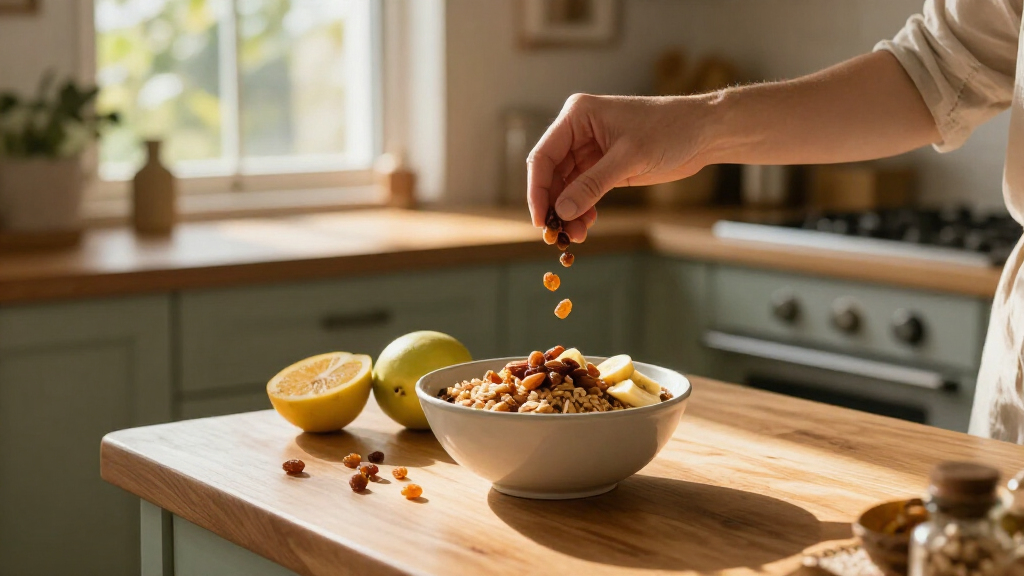
The source identifies raisins as a distinct dried fruit and gives practical ways to use them, including adding them to cereal, yogurt, salads and baked goods. It advises selecting moist, richly colored raisins when visible and pouring hot water over them to plump them before use. These suggestions are food-handling and serving tips, separate from the research findings.
“A one-quarter cup serving of raisins delivers 6% DV of dietary fiber and nine percent DV of potassium.”
— Seniors Guide report
Limits of the Cited Findings
The source does not provide full citations, study designs, participant numbers or effect sizes for the research it summarizes. It is therefore not possible from this report alone to judge how large or reliable the reported changes in gut bacteria were, or whether they led to measurable health outcomes. The relationship between raisin consumption and participants’ broader diets also remains unclear from the details supplied.
The report describes raisins as containing about 60% sugar but does not give a serving’s grams of sugar or explain how that figure was calculated. It also says raisins may reduce appetite and improve diet quality without supplying the underlying study details. The material does not establish a recommended daily serving, benefits for particular medical conditions, or whether the findings apply equally to all people.
Checking the Research Behind Raisins
The next step for readers seeking stronger conclusions is to consult the original Nutrition Journal and Food & Nutrition Research publications, which may provide methods and results not included in the Seniors Guide summary. The source does not announce a new study, policy change or scheduled follow-up, so no further development is specified.
For now, the report offers a general nutrition overview and serving ideas rather than individualized dietary advice. People making food choices for a medical reason can discuss their needs with a qualified health professional.
Key Questions
What nutrients does the report say raisins provide?
It says a one-quarter-cup serving supplies 6% of the Daily Value for fiber and 9% for potassium, and describes raisins as containing antioxidants. The percentages use a 2,000-calorie diet as their reference.
Do the cited studies prove raisins improve health?
No. The report summarizes research on gut bacteria and differences between raisin consumers and non-consumers. The details provided do not establish that raisins caused those differences or prevented a disease.
How much sugar do raisins contain?
The source says raisins have a 60% sugar content, but does not state the sugar grams in a particular serving or explain the calculation. Readers should check product nutrition labels for serving-specific information.
How should raisins be stored?
The report recommends an airtight container and says refrigeration or freezing can extend storage for up to six months. It also suggests adding hot water to plump raisins before use.
Source: rss
Cold & flu season Picks
humidifiers
As an affiliate, we earn on qualifying purchases.