Honing and sharpening serve different purposes to keep your knives cutting smoothly. Honing realigns your blade’s edge with gentle strokes, preventing dullness and maintaining sharpness over time. Sharpening, on the other hand, is a more intensive process that removes metal to create a new, sharper edge. Knowing when and how to do each prevents dull blades and prolongs their life. Keep going to uncover the secrets behind perfect knife care and sharpness maintenance.

Get health and wellness essentials delivered free with Prime
- Fast, free delivery on millions of items
- Prime Video, Amazon Music and more included
- Member-only deals all year
Key Takeaways
- Honing realigns the existing edge, while sharpening removes material to create a new, sharper edge.
- Regular honing prevents dullness; sharpening is needed when the blade becomes significantly dull or damaged.
- Honing is quick, simple, and done frequently; sharpening is more intensive, typically performed less often.
- Use honing tools like steels or ceramic rods; sharpen with whetstones or electric sharpeners for a more precise edge.
- Proper maintenance combines both techniques to keep knives sharp, safe, and effective during use.
As an affiliate, we earn on qualifying purchases.
How Do You Know When Your Knife Is Dull? Recognizing the Signs

A dull knife can be frustrating and even dangerous, but recognizing the signs early can save you time and effort. When your knife isn’t sharp, you’ll notice more force is needed to cut through ingredients, increasing the risk of slips and accidents—compromising kitchen safety. You may see uneven or jagged cuts, or notice that food sticks to the blade instead of slicing smoothly. If you find yourself pressing harder or struggling, it’s a clear sign it’s time for knife maintenance. Sharp knives cut effortlessly, making prep work safer and more efficient. Regularly checking your knives for dullness and maintaining their sharpness not only improves performance but also helps prevent accidents, ensuring your kitchen stays a safe environment. Using proper storage techniques and handling methods can also help prolong the sharpness of your knives and keep them in optimal condition. Additionally, understanding the difference between honing and sharpening can lead to better knife care, reducing the need for frequent professional services. Proper maintenance routines can extend the lifespan of your blades and keep them performing at their best.
What’s the Difference Between Honing and Sharpening Knives?
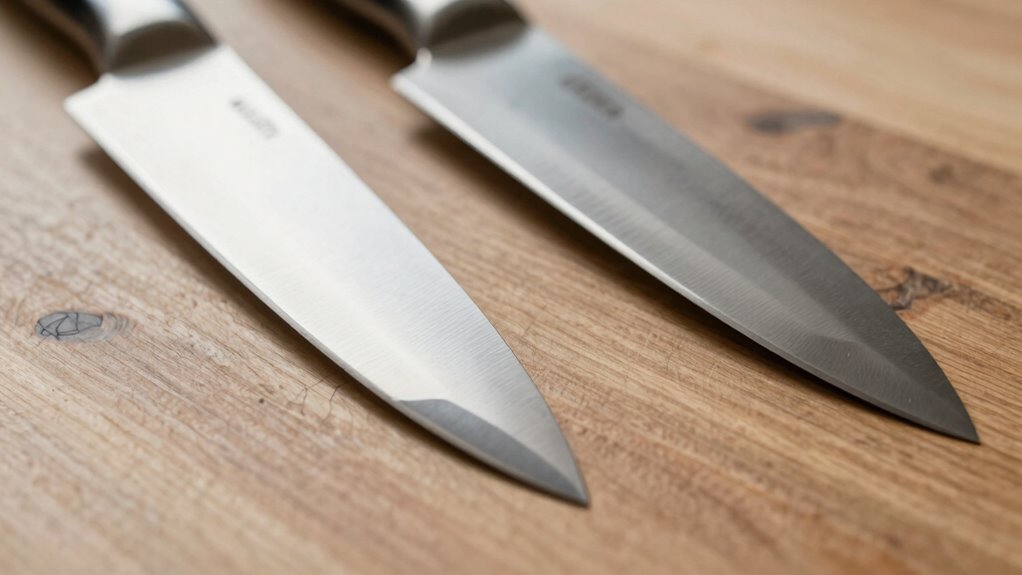
Understanding the difference between honing and sharpening your knives is essential for maintaining their performance. Honing realigns the blade’s edge by removing tiny bends and keeping it straight, which is why honing is often done regularly. Sharpening, on the other hand, involves grinding away metal to create a new, sharper edge. Blade materials matter because harder steels hold their edge longer but can be more challenging to sharpen. When comparing sharpening versus honing, remember that honing is a quick maintenance step, while sharpening is a more intensive process needed less frequently. Honing keeps your knife performing well, but sharpening restores its ability to cut effectively when the edge becomes dull. Knowing these differences helps you choose the right method at the right time.
When and How Often Should You Hone Your Knife?
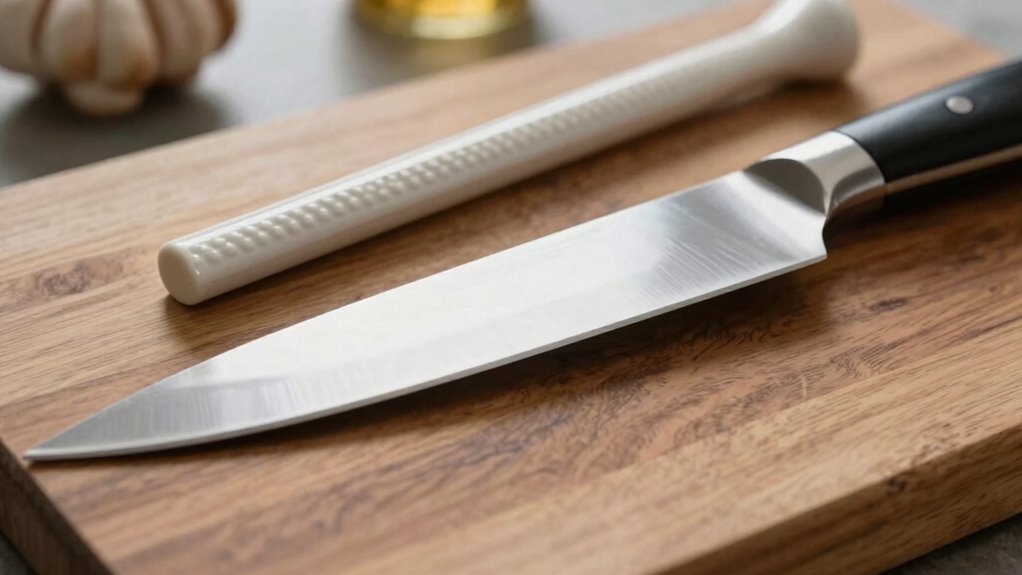
Regular honing keeps your knife performing its best, but knowing when to hone is key to maintaining sharpness. Generally, you should hone your knife after every few uses or at least once a week, depending on how often you cook. Proper knife maintenance involves honing before or after each use to realign the edge and prevent dullness. Pay attention to your cutting technique—using a gentle, controlled motion reduces unnecessary wear on the blade, meaning less frequent honing. If you notice your cuts becoming less precise or require more force, it’s time to hone. Remember, honing doesn’t remove metal like sharpening does; it simply maintains the edge’s alignment, keeping your knife sharp and ready for any task. Consistent maintenance helps prolong the life of your knife and ensures safer, more efficient cooking.
Step-by-Step Guide to Sharpening Your Knives for a Razor Edge
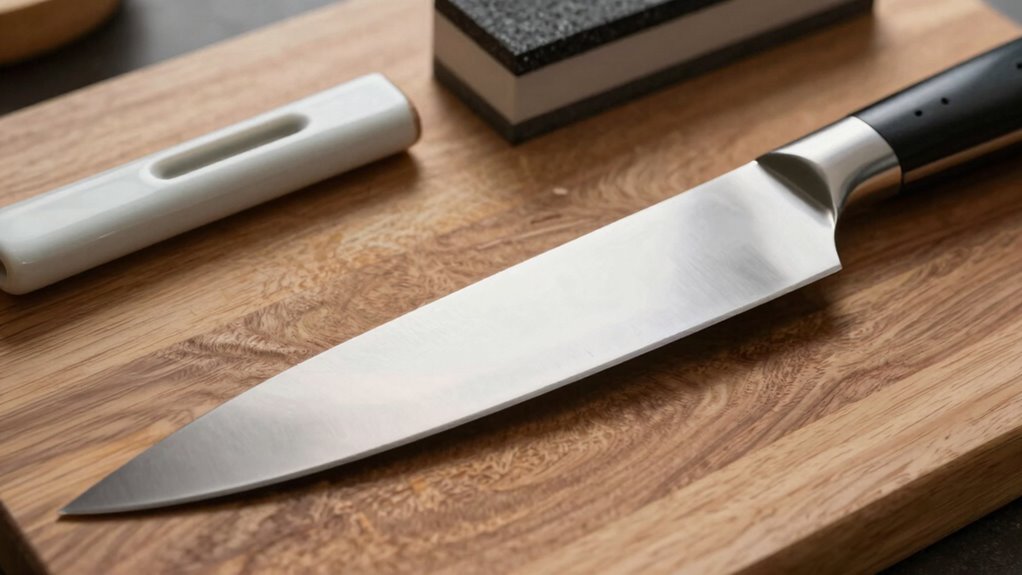
Sharpening your knives to achieve a razor edge requires a clear, step-by-step approach to guarantee safety and effectiveness. First, confirm your workspace is clean and stable to prevent accidents. Begin by selecting the right sharpening tool, like a whetstone or diamond sharpener. Soak the stone if necessary, then hold your knife at a consistent angle—usually 15 to 20 degrees. Draw the blade across the stone with gentle, even pressure, maintaining the angle. Repeat this process evenly on each side until you feel a burr. Proper knife maintenance during sharpening enhances longevity, and following safety steps minimizes injury risk. Regular blade inspection helps identify when sharpening is needed before dullness affects performance. Ensuring proper sharpening technique is crucial for achieving optimal results and extending the life of your blades. Finish by honing with a fine stone or strop to polish the edge. Keep your blades sharp to make kitchen tasks safer and more efficient. Consistent technique ensures a durable, sharp edge that stays effective longer.
Tools You Need at Home to Keep Your Knives Sharp
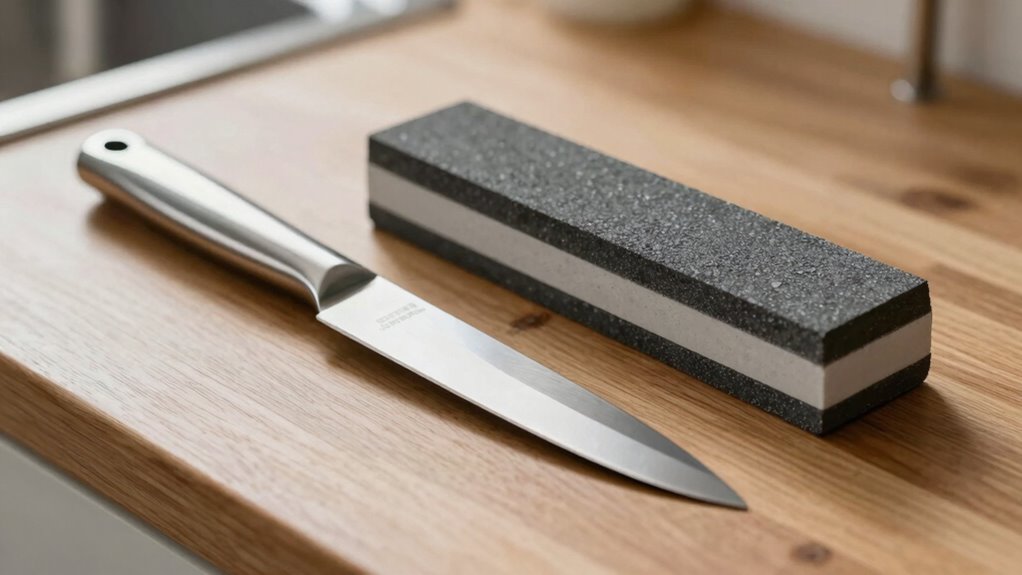
To keep your knives sharp at home, you need the right tools, like proper honing devices and effective sharpening gadgets. These tools help maintain your blades’ edge between sharpenings and restore sharpness when needed. Having the right equipment makes it easy to keep your knives in top condition every day.
Proper Honing Tools
Having the right honing tools at home makes maintaining your knives straightforward and effective. With proper tools, you can keep your blades sharp, ensuring safer and more precise cutting techniques. A honing steel is essential; it realigns the edge without removing metal. Consider a ceramic honing rod for gentle maintenance. Additionally, storing your knives properly with a knife block or magnetic strip prevents damage to the edge and maintains sharpness longer. Proper storage solutions also reduce the need for frequent honing. Regular use of these honing tools helps maintain your knives’ edge, making daily tasks easier and safer. Remember, honing is a quick, simple process that keeps your knives performing at their best between sharpenings. Using the right body jewelry materials can also prevent damage to your blades during storage and handling.
Effective Sharpening Devices
Choosing the right sharpening devices is essential for maintaining a razor-sharp edge on your knives at home. Ceramic rods are a great option for quick touch-ups and realignment of your blade’s edge between sharpenings. They’re gentle but effective, helping you maintain sharpness without damaging the steel. Proper maintenance is key to extending the lifespan and performance of your blades. Electric sharpeners, on the other hand, offer a fast and convenient way to restore a dull edge. They typically have multiple stages, allowing you to go from grinding to honing with minimal effort. Both tools are user-friendly and save you money compared to professional sharpening. Investing in ceramic rods and an electric sharpener gives you versatile options to keep your knives in top condition, ensuring safety and precision in your kitchen. Blade longevity can be significantly improved with the right tools and techniques.
Common Mistakes That Dull Your Knives and How to Avoid Them
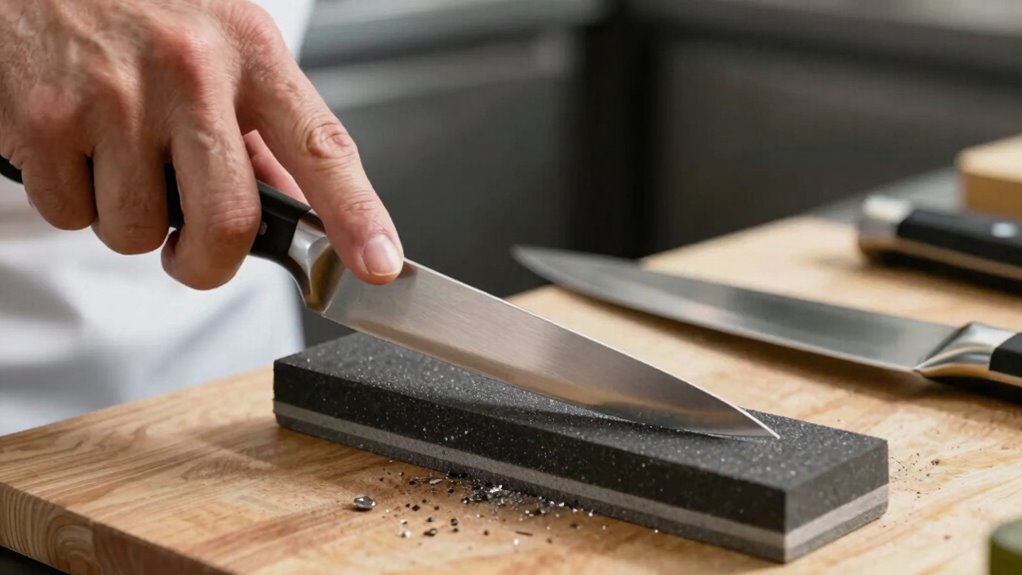
Many common mistakes can quickly dull your knives, making them less effective and more dangerous to use. Poor blade maintenance, such as neglecting regular cleaning and improper storage, causes corrosion and dullness. Using improper cutting techniques, like pressing too hard or chopping on hard surfaces, also damages the edge. Additionally, cutting on tough surfaces like glass or ceramic can rapidly dull your blade. To avoid these mistakes, focus on maintaining your knife properly and refining your cutting technique. Always use a cutting board made of softer material, and avoid applying excessive force. Regularly hone your knife to keep the edge aligned, and sharpen when necessary. Small adjustments in your blade maintenance and cutting habits can notably extend your knife’s sharpness and lifespan.
Frequently Asked Questions
Can Honing and Sharpening Be Done With the Same Tools?
No, honing and sharpening can’t be done with the same tools. Honing, using ceramic honing rods, realigns the blade’s edge gently, maintaining sharpness. Sharpening, often with diamond sharpening stones, actually removes metal to create a new, sharper edge. While honing prolongs the need for sharpening, you’ll need different tools for each task. Keep your knives in top shape by understanding and using the right tools for honing and sharpening separately.
How Long Does a Typical Honing or Sharpening Session Last?
Imagine your knife as a warrior sharpening its edge for battle. A honing session usually lasts just a minute or two, keeping your blade sleek day-to-day. Sharpening, like forging a new sword, takes longer—about 5 to 10 minutes. You should hone regularly—after every few uses—and sharpen only when dull. This duration comparison helps you maintain a keen edge without overdoing it, ensuring your knife stays sharp and ready.
Are Ceramic Knives Easier to Maintain Than Steel Ones?
Ceramic knives are generally easier to maintain because of their superior ceramic durability, which helps them stay sharp longer. However, you need to be careful with steel compatibility, as ceramics are brittle and can chip if you use them on hard surfaces or with heavy force. Regular gentle cleaning and avoiding impacts keep your ceramic knives in great shape, making maintenance simpler compared to traditional steel blades.
Does Cutting on Different Surfaces Affect Knife Dullness?
Think of your knife as a dancer gliding smoothly across the stage—your cutting surface as the dance floor. Different surfaces, like glass or ceramic, can cause your knife to dull faster, acting like rough terrain that wears down the blade. To keep your knife sharp and performing gracefully, choose softer cutting surfaces such as wood or plastic. This reduces unnecessary dullness and helps your knife stay razor-sharp longer.
What Are the Signs of a Poorly Sharpened Knife?
If your knife shows blade dullness or struggles to cut smoothly, it’s a sign of poor sharpening. You might notice jagged edges or tiny chips, indicating edge damage. Additionally, if you press harder or the knife slips off food, it’s time to sharpen or hone. A properly sharpened knife should glide effortlessly through ingredients, with no signs of blade dullness or edge damage.
Conclusion
Now that you know the difference between honing and sharpening, you can keep your knives slicing like a hot knife through butter. Think of honing as a quick tune-up and sharpening as giving your blades a complete makeover. With the right tools and techniques, you’ll enjoy effortless chopping and dicing every time. Remember, just like caring for a fine instrument, regular maintenance keeps your knives performing at their best—sharp and ready for any culinary challenge.
Halloween Picks
halloween
As an affiliate, we earn on qualifying purchases.