

To clean your juicer in just three minutes using the rinse-as-you-go method, start by rinsing parts prone to residue immediately after juicing, like the mesh screen and pulp chute. Keep your workspace organized with brushes, towels, and spray bottles nearby. Rinse parts frequently during juicing to prevent buildup, and disassemble for thorough cleaning instantly after use. Avoid rushing or harsh tools, and you’ll maintain a fresh, efficient juicer with minimal effort—discover more tips for quick, effective cleaning.
Key Takeaways
- Rinse detachable parts immediately after juicing to prevent residue hardening and simplify cleanup.
- Use warm water and gentle brushes or spray bottles for quick, effective rinsing of the mesh and blade.
- Organize tools and pulp containers nearby to streamline the rinsing process and reduce clutter.
- Incorporate rinsing during juicing to keep parts clean and prevent buildup, saving time overall.
- Focus on quick disassembly and targeted rinsing to complete cleaning within three minutes.

3Pcs Juicer Cleaning Brushes Set for Omega 8006, 8004, 8003 VRT350 VRT330-Replacement Masticating Juicer Accessories, Masticating Juicers Replacement Cleaner, HD Bristles
Perfect Juicer Compatibility – Specially designed for Omega 8003, 8004, 8005, 8006, VRT330, VRT350, and more horizontal &…
As an affiliate, we earn on qualifying purchases.
As an affiliate, we earn on qualifying purchases.
Why Rinse‑As‑You‑Go Is the Easiest Way to Keep Your Juicer Clean
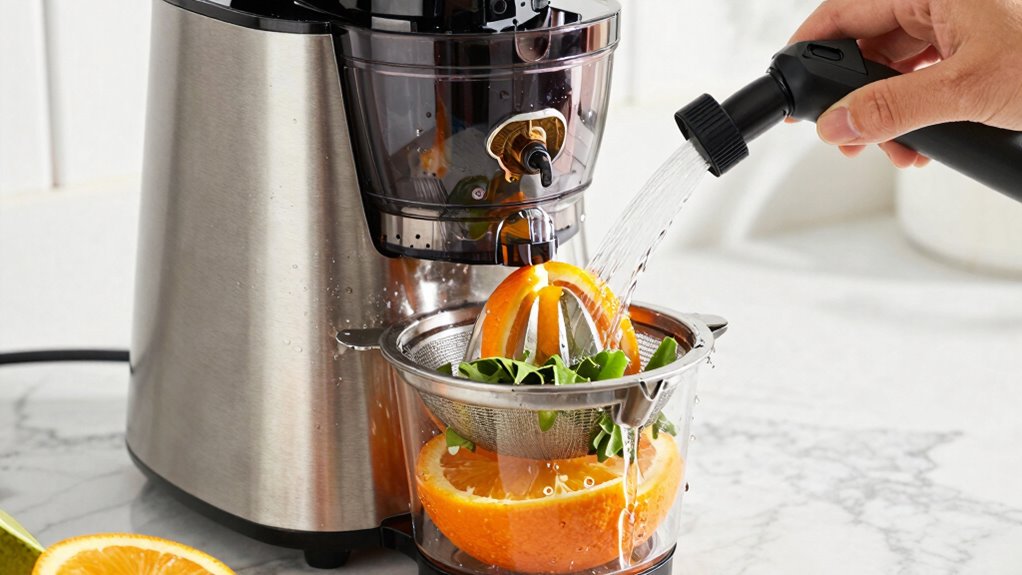
Rinsing your juicer immediately after use is the simplest way to prevent buildup and make cleaning quick. This habit is key to effective juicer maintenance because it stops pulp and juice from drying and sticking, which can be tough to remove later. When you rinse promptly, you lessen the need for scrubbing, saving time and effort. Keeping your workspace organized with a dedicated spot for your juicer and cleaning tools makes this process even smoother. It encourages consistent habits, so cleanup becomes second nature. Rinse-as-you-go keeps your juicer in top shape and helps maintain a tidy kitchen. Plus, it ensures your appliance stays hygienic and ready for your next juice session, making the entire process more efficient and less stressful. Incorporating proper cleaning techniques can further enhance the longevity and performance of your juicer. Implementing smart appliance features, such as reminder alerts or automated cleaning cycles, can further streamline your routine and ensure ongoing maintenance.

JohnBee Empty Spray Bottles (16oz/2Pack) – Adjustable Spray Bottles for Cleaning Solutions – No Leak and Clog – HDPE spray bottle For Plants, Pet, Vinegar, BBQ, and Rubbing Alcohol
【HDPE Eco-Friendly Material】Empty Spray Bottles for Cleaning Solutions are Manufactured With Strong HDPE, the BPA-Free Plastic Durable and…
As an affiliate, we earn on qualifying purchases.
As an affiliate, we earn on qualifying purchases.
Getting Your Workspace Ready for Quick Juicer Cleanup
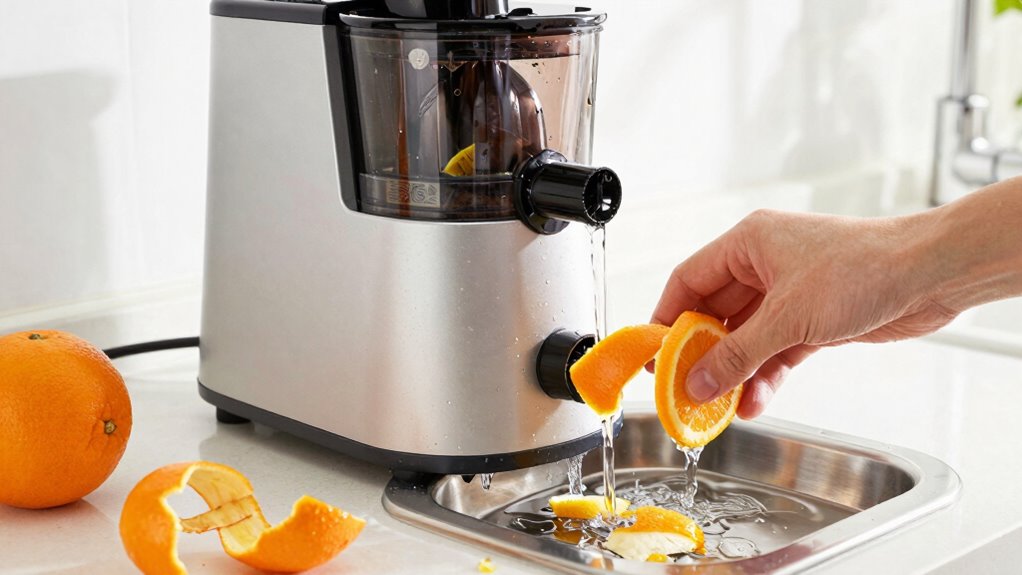
Preparing your workspace before you start juicing makes cleanup faster and easier. Clear the area of unnecessary clutter and gather all tools you’ll need, like brushes and towels. Keep your favorite nutrition tips in mind—using fresh produce and proper storage can reduce mess and improve juicer maintenance. Set up a dedicated space for juicing to prevent spills from spreading, making it easier to rinse quickly. Have a container nearby for collecting pulp and juice drips to minimize cleanup time later. By organizing your workspace beforehand, you minimize distractions and make the rinse‑as‑you‑go method more effective. Incorporating proper equipment placement can further streamline your cleanup process. A tidy, prepared area helps you stay focused on juicing and ensures your cleanup stays quick, simple, and stress-free. Additionally, using ergonomic tools designed for easy handling can reduce spills and mess during the process. Planning ahead with efficient workspace setup can also contribute to a smoother cleanup routine. Adopting energy-efficient appliances can reduce the overall mess and cleanup time during your juicing sessions.

XANGNIER 6PCS Cold Press Juicer Cleaning Brush Kit – Complete Cleaning Set for Slow Juicers, Masticating Juicer Accessories & Juice Extractor Parts – Essential Kitchen Cleaning Tool
【All-in-One Cleaning Power – Complete System for Your Juicer】Transform your juicing experience with this comprehensive 6PCS kit—designed to…
As an affiliate, we earn on qualifying purchases.
As an affiliate, we earn on qualifying purchases.
Which Parts Should You Rinse Immediately After Juicing?
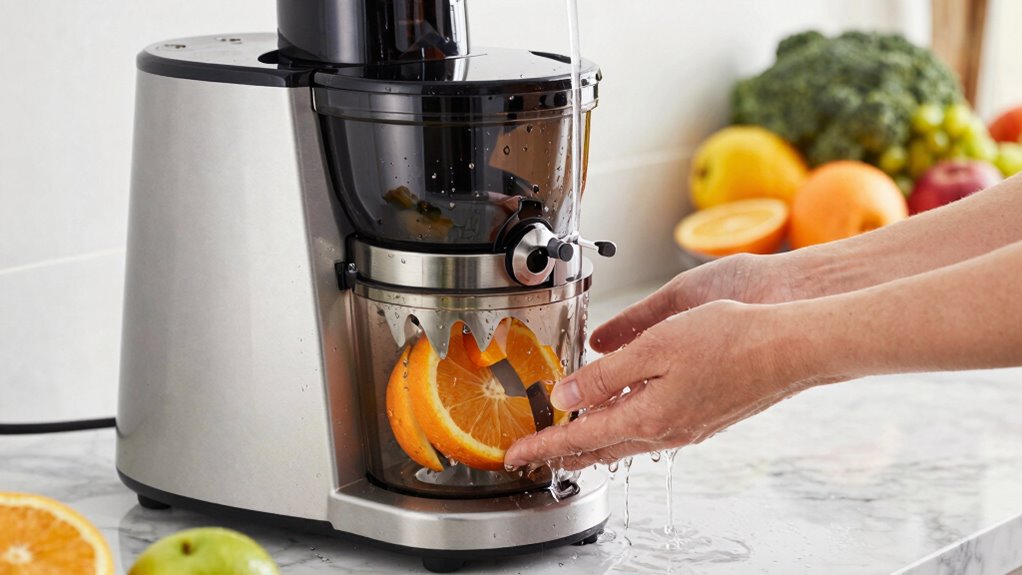
After you finish juicing, it’s important to rinse the parts that come into direct contact with the produce and juice right away. This includes the juicer’s mesh screen, blade, and juice outlet, as well as any detachable parts that handle pulp or pulp residue. Rinsing these immediately helps prevent fruit residue from drying and sticking, making blender maintenance easier and more efficient. It also helps preserve the freshness of your fruit by reducing the buildup of sticky or fermented pulp, which can affect flavor and juice quality. Keeping these parts separate from the motor base and other components that don’t need immediate rinsing is crucial for proper appliance maintenance. Quick action now keeps your juicer clean, prolongs its lifespan, and ensures your juice stays fresh and flavorful. Proper cleaning practices also tie into safe installation practices by preventing mold and bacteria buildup that could compromise your juicer’s safety and performance. Regular rinsing also supports filter maintenance, which is essential for optimal appliance functioning. Additionally, promptly rinsing the parts can help prevent the growth of bacteria and mold, which thrive in moist, neglected areas, especially when combined with cybersecurity measures to ensure your device remains protected from digital threats.

HOMEXCEL Black Microfiber Cleaning Cloth, 8 Pack Cleaning Towels for Kitchen, Lint Free, Scratch-Free, Highly Absorbent, and Reusable Cleaning Rags for House, Window and Glass, Cars, 11.5 X11.5 inch
Effective Cleaning: Take these cleaning cloths in the perfect size (11.5" x 11.5") to clean your worktop, kitchen,…
As an affiliate, we earn on qualifying purchases.
As an affiliate, we earn on qualifying purchases.
How to Rinse‑As‑You‑Go While Juicing
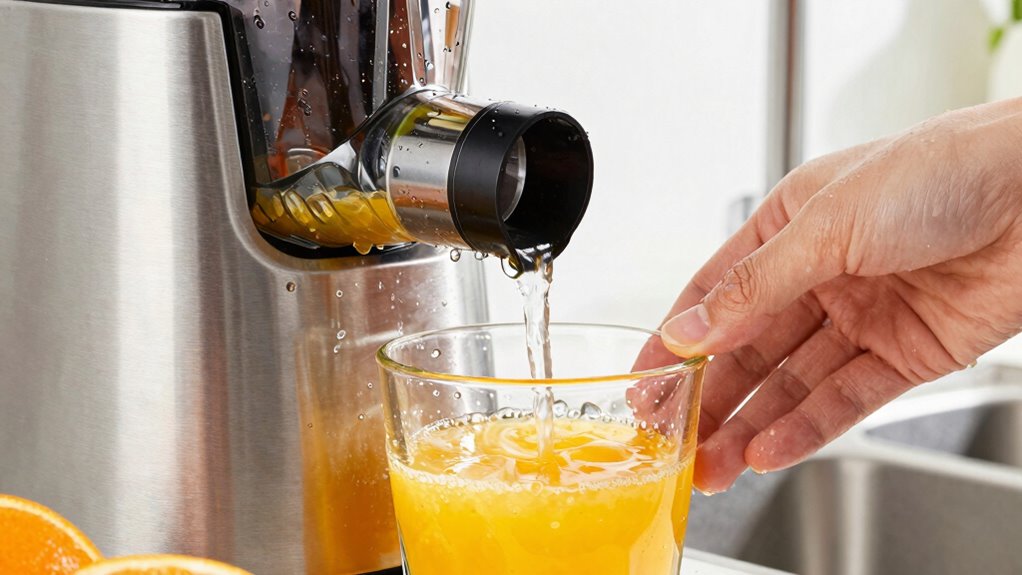
While you’re actively juicing, taking a moment to rinse parts as you go can save time and prevent messes later. Rinsing frequently helps maintain juicing safety by reducing residue buildup and bacteria. It also aids in fruit preservation, ensuring no pulp or juice dries onto parts, which can compromise flavor and cleanliness. Keep a basin or sink nearby for quick rinses of the juicer components, especially the parts that contact fruit. Use warm water and a gentle brush if needed to remove pulp quickly. This practice keeps the juicing process smooth and efficient, minimizing cleanup afterward. By rinsing as you go, you avoid cross-contamination and keep your juicer ready for the next batch. Additionally, proper cleaning methods are essential for maintaining your juicer’s longevity and ensuring it operates safely and effectively. It’s a simple step that makes the entire process faster and safer.
Best Tools and Materials for Fast, Effective Rinsing
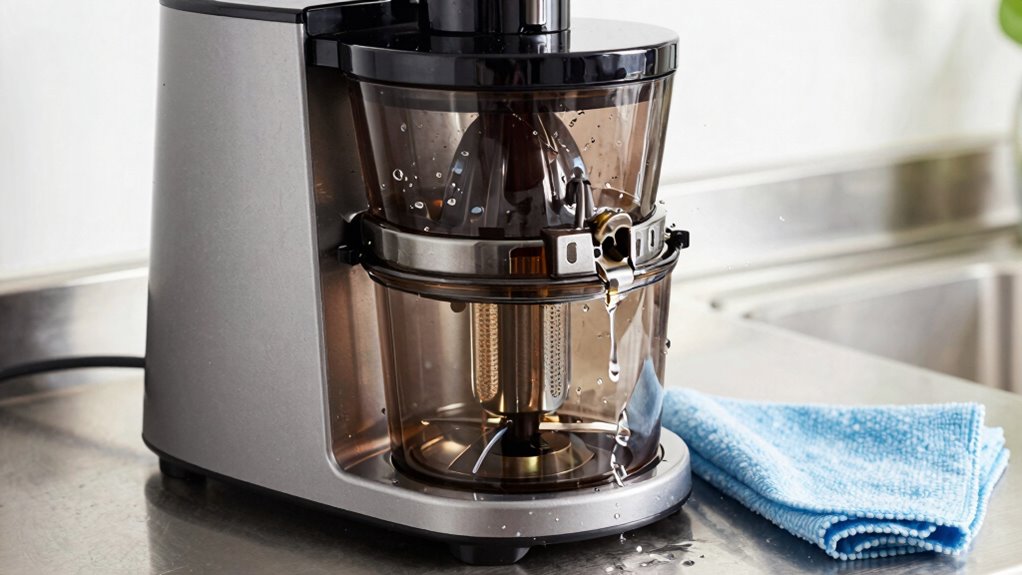
Using the right tools and materials can make rinsing your juicer quick and effective. A small, dedicated brush helps with brush maintenance, allowing you to clean hard-to-reach crevices efficiently. Opt for soft-bristled brushes to avoid damaging parts while ensuring thorough cleaning. Have a spray bottle or gentle stream of water ready to rinse away pulp and residue swiftly. Proper storage solutions, like a caddy or compartmentalized container, keep your cleaning tools organized and accessible, saving time during rinsing. Using microfiber cloths or sponges designed for kitchen use can also speed up the process. Additionally, air purifier maintenance principles, such as proper airflow and avoiding harsh chemicals, can be adapted to ensure your cleaning tools stay in optimal condition. Incorporating efficient cleaning techniques can further streamline your rinse-as-you-go routine, keeping your juicer clean and ready for the next use without extra fuss. Regularly tool organization helps reduce the time spent searching for cleaning supplies, making your rinsing process even faster. Adopting a consistent rinsing routine aligned with hygienic practices ensures your juicer remains safe and clean for repeated use.
Dealing With Pulp and Sticky Residues on the Spot
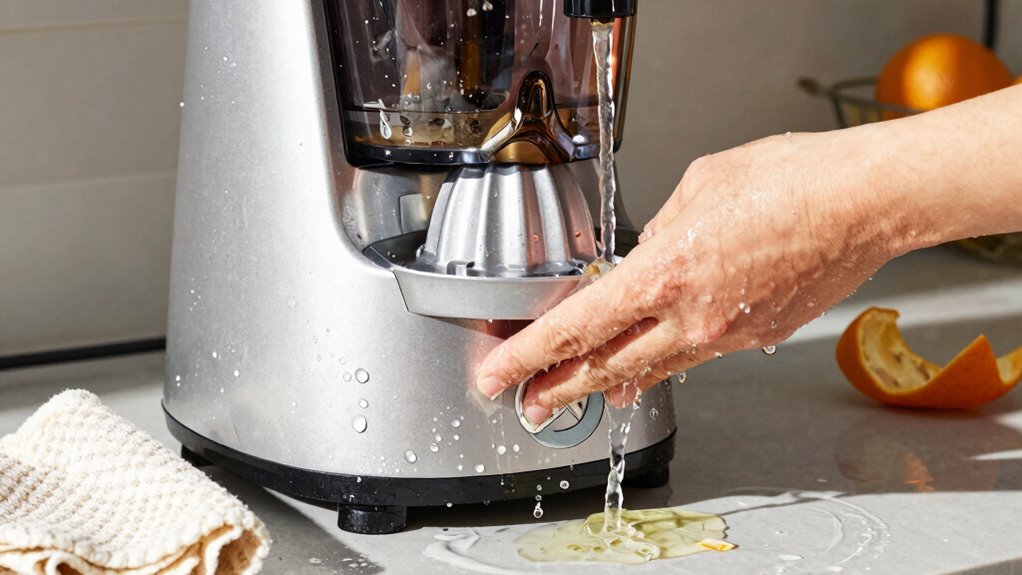
When you encounter pulp or sticky residues on your juicer, tackle them immediately to prevent buildup. Pulp buildup can clog filters and cause inefficient juicing, so remove it as soon as possible. Use a soft brush or cloth to gently loosen pulp and sticky residue from crevices and blades. For stubborn sticky residue, apply a small amount of warm water or mild cleaning solution directly to the area, then scrub gently. Avoid letting pulp or sticky residues sit, as they can harden and become difficult to remove later. Regular, quick cleanups keep your juicer functioning smoothly and prevent difficult-to-remove buildup. Staying on top of residues ensures your juicer stays clean, hygienic, and ready for the next use without extra effort.
How Rinse‑As‑You‑Go Keeps Your Juicer Running Smoothly
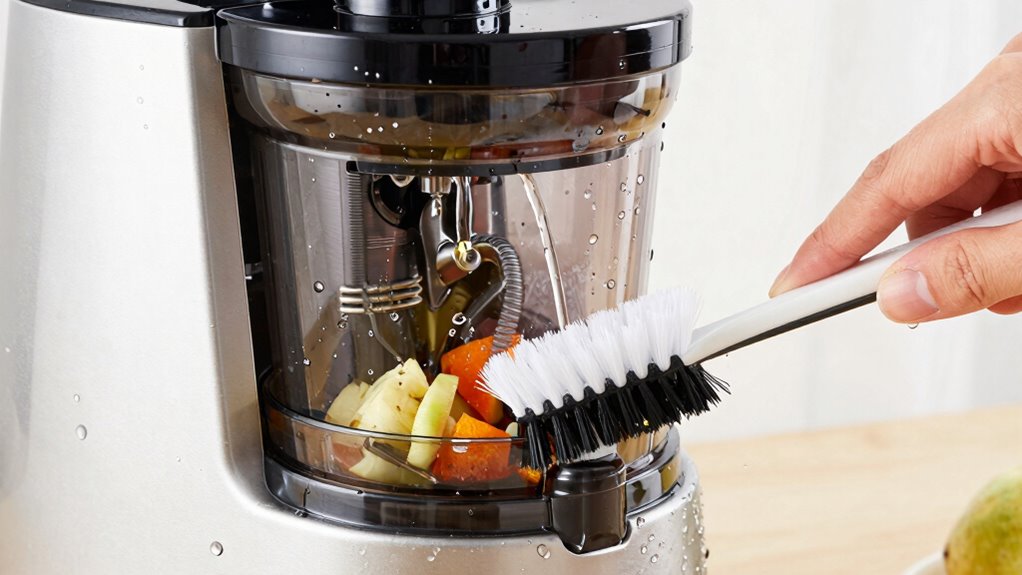
Rinsing as you go helps prevent buildup and clogs, keeping your juicer functioning smoothly. It saves you time and effort by stopping messes before they become hard to clean. With this simple habit, your juicer stays in top shape longer. Additionally, maintaining proper skincare routines ensures your kitchen tools and appliances reflect a sense of quality and style.
Prevents Buildup and Clogs
Regularly rinsing your juicer as you go prevents sticky pulp and residue from building up, which can lead to clogs and reduced performance. When you rinse immediately after juicing, you keep pulp and fruit storage debris from hardening inside the parts, making cleaning easier. This simple step also supports proper juicer maintenance, ensuring all components stay clear and functional. By preventing buildup, you reduce the risk of clogs that can stop your juicer or force you into complicated cleanings later. Consistent rinsing keeps the flow smooth and your appliance running efficiently. Plus, it minimizes long-term wear caused by stubborn residues, saving you time and effort in the future. Staying vigilant with rinse‑as‑you‑go is a quick, effective way to keep your juicer in top shape. Proper maintenance and regular cleaning are essential for extending the lifespan of your appliance. Additionally, adopting this routine helps maintain optimal performance and prevents unexpected breakdowns. Incorporating a cleaning routine that emphasizes immediate rinsing can further enhance your juicer’s longevity and overall efficiency. Regular rinsing also helps prevent the buildup of residues that can cause clogs and damage, ensuring your juicer operates smoothly over time. The use of high-quality parts can also contribute to better durability and reduce the need for frequent repairs.
Saves Time and Effort
By keeping up with rinse‑as‑you‑go, you prevent buildup that can cause clogs and slow down your juicer. This simple habit makes juicer maintenance quicker and easier, saving you time in the long run. Instead of tackling a tedious deep clean after each use, you keep parts fresh and ready to go, reducing overall cleaning effort. Staying organized in the kitchen helps you quickly access and rinse parts without hassle, streamlining your routine. Rinse‑as‑you‑go minimizes the need for intensive scrubbing, so you spend less time cleaning and more time enjoying fresh juice. This method promotes efficient kitchen organization and keeps your juicer performing at its best, ensuring smooth operation without disruptions. It’s a simple step that makes a big difference in your daily routine.
Avoid These Mistakes When Rinsing Your Juicer Quickly
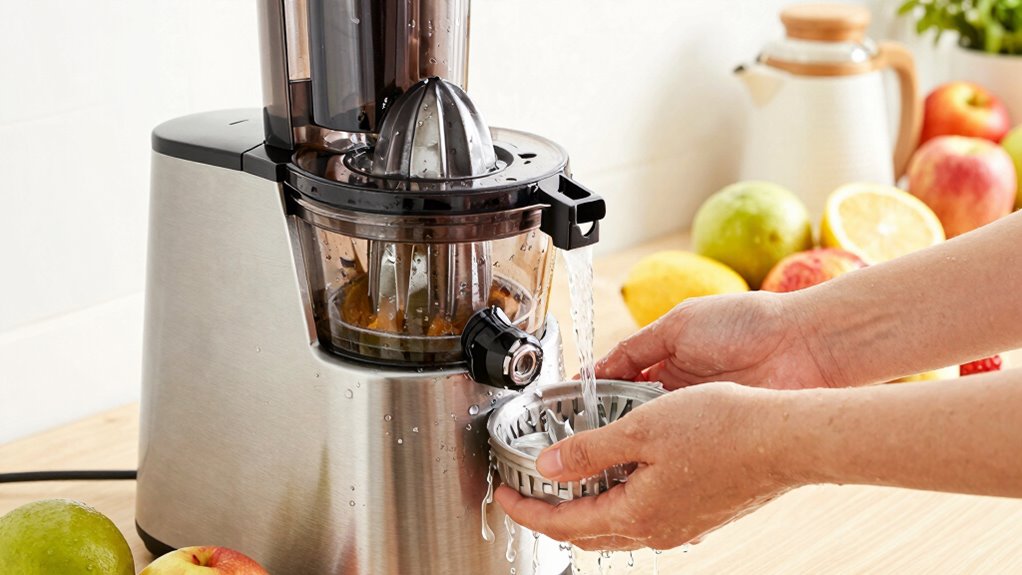
Even when you’re in a rush, it’s easy to make mistakes that can leave residue or damage your juicer. Common mistakes include skipping thorough rinsing or rushing through cleaning shortcuts that miss hidden pulp. These errors can cause buildup and wear over time. To avoid these pitfalls, pay attention to what you might overlook:
| Mistake | Consequence |
|---|---|
| Rinsing too quickly | Residue remains, causing odors |
| Ignoring crevices | Pulp buildup, bacteria growth |
| Using harsh brushes | Damage to delicate parts |
| Skipping disassembly | Hard-to-reach areas stay dirty |
| Neglecting proper temperature control | Can lead to residue buildup or damage over time |
Proper rinsing techniques and understanding cleaning best practices ensure your juicer stays in top condition, even on busy days.
Incorporating Rinse‑As‑You‑Go Into Your Daily Juicing Routine

Integrating rinse-as-you-go into your daily juicing routine is a simple way to keep your juicer clean and ready for next time. As you prepare different fruit varieties, rinse the parts immediately after juicing, especially when switching between high-sugar fruits like mangoes or berries and leafy greens. This prevents residue buildup and cross-flavor contamination. Incorporate quick rinses between different juicing techniques, such as switching from citrus to soft fruits, to maintain efficiency. By establishing this habit, you reduce cleaning time at the end of your session and keep your juicer in prime condition. Media literacy is essential for recognizing the importance of ongoing maintenance and understanding how to properly care for your equipment. Consistent rinsing also ensures that pulp and juice remnants don’t dry, making your daily routine smoother and more enjoyable.
When Quick Rinsing Isn’t Enough: Deep Cleaning Tips
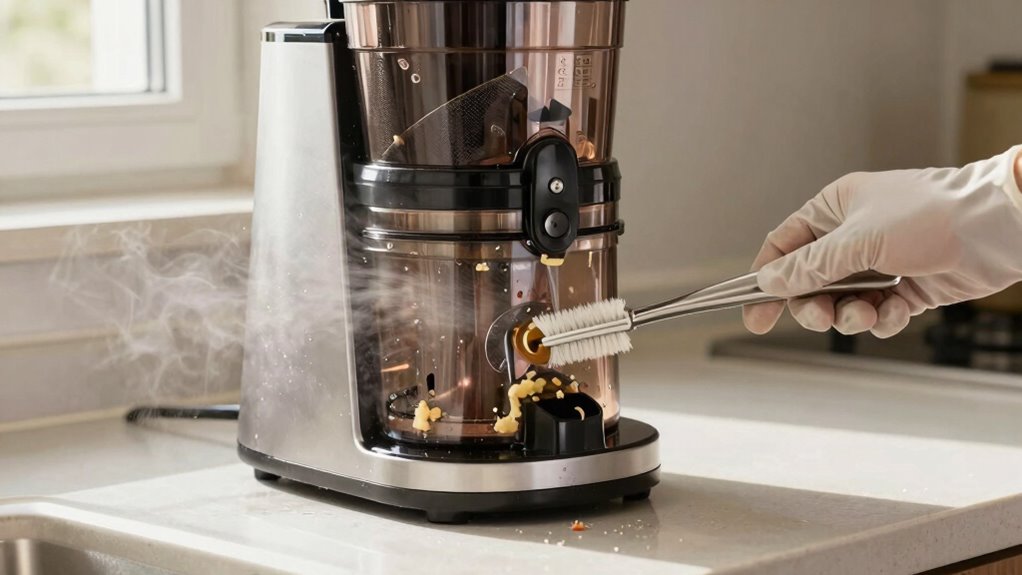
Sometimes, quick rinses leave behind stubborn residue that can affect your juicer’s performance. To keep your appliance running smoothly, you’ll need to focus on removing that buildup thoroughly. Disinfecting is also essential to guarantee your juicer stays hygienic and safe for every use.
Removing Stubborn Residue
When quick rinsing doesn’t fully remove stubborn residue, deep cleaning becomes essential. To tackle stubborn buildup, start by soaking the affected parts in warm, soapy water for a few minutes. Use a soft brush or toothbrush to gently scrub away remaining residue, focusing on crevices and hard-to-reach areas. For persistent stubborn buildup, consider applying a mixture of baking soda and water as a gentle abrasive. Let it sit for a couple of minutes before scrubbing again. Rinse thoroughly to guarantee all residue removal agents are washed away. Regular, thorough cleaning prevents stubborn residue from accumulating and keeps your juicer functioning smoothly. Deep cleaning might take a few extra minutes, but it ensures your juicer stays free of residues that can compromise juice quality or machine performance.
Disinfecting for Hygiene
If you want to guarantee your juicer is completely hygienic, disinfecting after deep cleaning is essential. This step ensures you follow proper sanitization procedures and maintain hygiene protocols. Disinfection eliminates bacteria and germs that rinsing alone might miss, especially after processing sticky or raw produce. To maximize effectiveness:
- Use a food-safe disinfectant or diluted vinegar solution.
- Focus on all removable parts, including blades and screens.
- Let the disinfectant sit for a few minutes to ensure proper sanitization.
- Rinse thoroughly to remove any residue, then air dry.
Adhering to these steps helps prevent cross-contamination and keeps your juicer safe for future use. Consistent disinfecting reinforces your commitment to hygiene protocols and ensures every juice is as healthy as it is delicious.
Frequently Asked Questions
Can Rinse‑As‑You‑Go Methods Prevent Mold Buildup in Juicers?
Yes, rinse-as-you-go methods help prevent mold buildup by ensuring your juicer stays clean and dry after each use. By promptly rinsing parts, you maintain good hygiene and reduce moisture that mold needs to grow. This simple practice promotes ongoing hygiene maintenance, keeping your juicer safe and ready for next time. Consistent rinsing minimizes mold risks and extends your juicer’s lifespan, making it a smart, quick habit.
How Often Should I Deep Clean My Juicer Despite Quick Rinsing?
You should deep clean your juicer at least once a week, even if you rinse as you go. This maintenance schedule guarantees any residual pulp or oils don’t cause mold or buildup. Regular deep cleaning keeps your juicer functioning efficiently and extends its lifespan. Make it part of your routine to thoroughly clean all parts, especially those that aren’t fully reached during quick rinses.
Are There Specific Cleaning Solutions Recommended for Stubborn Residues?
Did you know that 80% of juicer owners struggle with stubborn residues? For residue removal, use mild cleaning solutions like vinegar or baking soda mixed with water. These help break down stubborn build-up without damaging your juicer. Avoid harsh chemicals, and always rinse thoroughly. This way, you keep your juicer clean and safe for every use, ensuring ideal juice quality and appliance longevity.
Will Rinsing Immediately After Juicing Damage the Juicer Parts?
Rinsing immediately after juicing won’t damage your juicer parts if you use proper cleaning techniques. In fact, quick rinsing helps prevent residue buildup and makes maintenance easier. Just avoid harsh cleaning solutions and use warm water to clear out pulp and juice. Regular rinsing keeps your juicer in top shape, ensuring it runs smoothly. So, yes, immediate rinsing is safe and promotes better juicer maintenance.
Can Rinse‑As‑You‑Go Reduce the Need for Full Disassembly?
Yes, rinse-as-you-go can reduce the need for full disassembly by enabling quick maintenance and keeping your juicer cleaner longer. When you rinse parts immediately after juicing, you prevent pulp buildup and residue, promoting better hygiene practices. This simple step helps maintain ideal performance and minimizes the time needed for deep cleaning later. Plus, it keeps your juicer ready for the next use, saving you effort and ensuring consistent hygiene.
Conclusion
By adopting the rinse-as-you-go method, cleaning your juicer becomes as easy as a quick splash. It keeps your machine running smoothly like a well-oiled engine and saves you time and effort. Just like wiping a spill before it sets, rinsing immediately prevents buildup. Make this simple habit part of your daily routine, and you’ll enjoy fresh juice without the hassle, turning cleanup into a breeze rather than a chore.