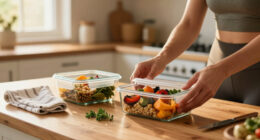
Using visual cues and hand rules helps you easily estimate proper portion sizes for raw foods without constantly measuring. For example, a palm-sized portion of raw meat or fish is about 3-4 ounces, while a fistful equals roughly one cup of vegetables. Your thumb can measure about one tablespoon of nut butter or oil. By familiarizing yourself with these natural indicators, you’ll find it easier to maintain balanced meals efficiently—learn more techniques to stay on track with your nutrition goals.

Get health and wellness essentials delivered free — and shop member deals
- Fast, free delivery on millions of items
- Access to Prime Big Deal Days deals on October 6–7
- Prime Video, Amazon Music and more included
Key Takeaways
- Use your palm to estimate a 3-4 ounce raw meat or fish portion.
- A fistful typically equals about one cup of raw vegetables.
- The thumb’s tip approximates one tablespoon of nut butter or oil.
- Hand-based cues provide quick, consistent visual measures without tools.
- Combining hand rules with visual cues enhances accurate, practical portion control.

Ever wonder how much raw food you should be eating? Knowing the right portion sizes can make a big difference in maintaining a balanced diet and avoiding overeating. To do this effectively, you need to understand measuring techniques and utilize portion control tools that help you gauge the right amounts without guesswork. The key is to develop visual cues and hand rules that simplify the process, making it easier to stick to healthy serving sizes.
Knowing proper portion sizes helps you maintain a balanced diet effortlessly.
Measuring techniques are your first line of defense for accurate portioning, especially when you’re just starting out. Using a kitchen scale can be incredibly helpful, allowing you to weigh raw foods precisely. For example, a typical serving of raw vegetables might be about 85 grams, which you can measure directly with a scale. If you prefer volume measurements, measuring cups and spoons are handy tools to keep nearby. These tools help you develop an intuitive sense of how much food constitutes a proper portion, whether it’s a cup of chopped fruit or a tablespoon of nuts. Over time, these measurements become second nature, helping you make smarter choices without constantly reaching for the scale.
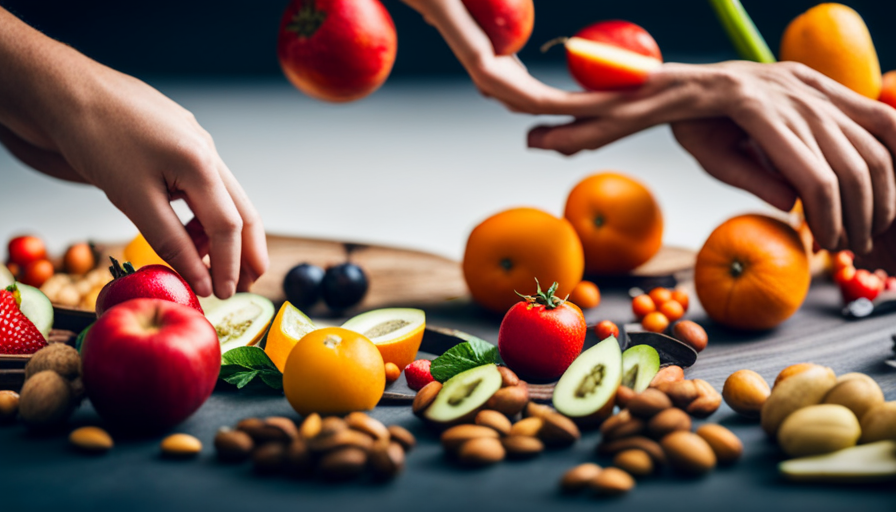
Portion control tools extend beyond just measuring cups and scales—they include simple visual cues and hand rules that you can rely on anywhere. Your hand is an excellent guide because it provides a natural, consistent measure. For instance, a palm-sized portion of raw meat or fish generally equals about 3 to 4 ounces, which is roughly the size of your palm. A fistful of raw vegetables or salad greens is roughly one cup, enough to fill your hand. A thumb can represent about a tablespoon of nut butter or oil. These hand rules are especially useful when you’re dining out or prepping food on the go, eliminating the need for bulky tools.
Using these visual cues and hand rules helps reinforce portion control without overcomplicating things. They serve as quick references, making it easier to control quantities when you’re not in the kitchen measuring everything meticulously. Combining this approach with measuring techniques and portion control tools ensures you’re always aware of how much raw food you’re consuming, supporting your health goals without the hassle. Developing these habits makes it easier to stay consistent, and over time, you’ll naturally start to recognize what appropriate portions look like without needing to measure every time. This balance of precision and practicality keeps your diet sustainable and aligned with your nutritional needs.
kitchen food scale for raw foods
As an affiliate, we earn on qualifying purchases.
As an affiliate, we earn on qualifying purchases.
Frequently Asked Questions
How Do Portion Sizes Vary Across Different Cuisines?
You’ll notice that portion sizes vary across cuisines due to cultural variations and traditional serving sizes. For example, Asian dishes often have smaller, balanced portions emphasizing variety, while Western plates may serve larger portions focused on quantity. These differences influence how much food you’re encouraged to eat, with each cuisine reflecting its cultural values through serving sizes. Paying attention to these cues helps you enjoy balanced meals suited to each culinary tradition.
Are There Specific Utensils for Measuring Raw Portions?
You don’t need special utensils for measuring raw portions, but measuring utensils and portion control tools can assist. Use standard tools like measuring cups and spoons for accuracy, especially when portioning ingredients for recipes. These tools make it easy to control your portions, reduce waste, and maintain consistency. Keep a set handy in your kitchen to ensure you’re always measuring your raw ingredients precisely.
How Do Portion Sizes Differ for Children Versus Adults?
You should serve smaller portion sizes for children compared to adult servings to support healthy child nutrition. Typically, a child’s portion is about half to two-thirds of an adult’s, depending on age and activity level. Use visual cues or hand rules to gauge appropriate amounts, ensuring children get enough nutrients without overeating. Adjust portion sizes as children grow, always prioritizing balanced, nutrient-rich foods.
Can Portion Sizes Impact Nutritional Absorption?
You’re right to wonder if portion sizes can affect nutrient absorption. When you eat too much, digestion efficiency drops, and nutrient bioavailability decreases, meaning your body struggles to absorb essential nutrients fully. Conversely, appropriately sized portions help optimize digestion and nutrient absorption. It’s a fine line, and keeping portions in check guarantees you get the most out of your food without overwhelming your system. Balance is key to good health.
What Are Common Mistakes When Estimating Raw Food Portions?
You often make visual misjudgments when estimating raw food portions, leading to estimation errors. You might rely too heavily on eye estimates instead of using proper visual cues or hand rules, which can cause you to underestimate or overestimate servings. To improve accuracy, double-check your estimates by comparing them to familiar references, like your hand size or common objects, ensuring your portion sizes are more precise and consistent.
Conclusion
Think of your hand as a trusty map guiding your portion sizes. Just like a compass points you in the right direction, your hand helps you navigate your food intake with visual cues and simple rules. When you trust this natural guide, you steer clear of overeating and stay balanced. Remember, your hand is your steady companion on the journey to healthier eating—always ready to lead you toward mindful portions.
Fall Picks
fall essentials
As an affiliate, we earn on qualifying purchases.