To keep your blended raw foods truly raw and prevent overheating, use pulse blending and avoid continuous runs. Keep ingredients cold and add ice to help dissipate heat. Don’t overfill, and pause regularly to let the motor cool down. Recognize signs like unusual smells or vibration, and switch to blenders with cooling features. Mastering these tips will help preserve nutrients and extend your blender’s lifespan—learn more to keep your raw creations fresh and safe.
Key Takeaways
- Use short pulse blending and avoid continuous operation to prevent motor overheating.
- Keep ingredients cold or add ice to help dissipate heat during blending.
- Limit blending time and include pauses to allow the blender to cool down.
- Choose blenders with thermal management and automatic shut-off features for safety.
- Regularly maintain and clean your blender to ensure efficient cooling and prevent overheating.
What Causes Blender Overheating When Blending Raw Foods?
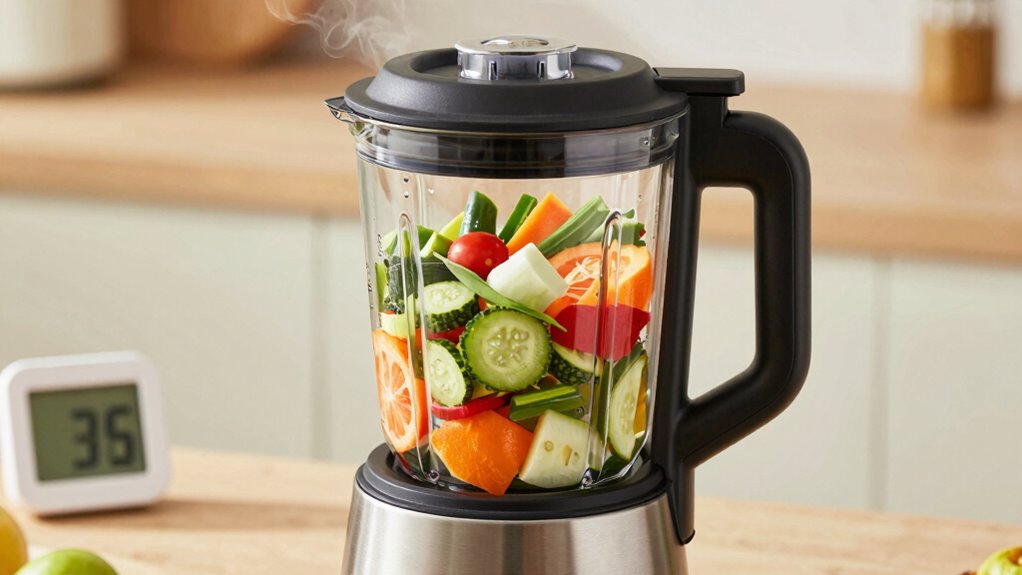
Blenders tend to overheat when you blend raw foods because these ingredients often require more effort from the motor. This increased effort leads to motor strain, which can cause the device to heat up quickly. When blending tough or fibrous raw ingredients, the blades experience more friction, making the motor work harder to cut through them. As the blades spin faster to handle these dense foods, blade friction rises, further taxing the motor. Continuous blending without giving your blender a break amplifies this strain, raising the risk of overheating. To avoid this, it’s best to pulse raw foods gently or blend in short bursts, allowing the motor to cool down between sessions. Recognizing these factors helps you prevent overheating and prolong your blender’s lifespan. Additionally, using energy-efficient appliances can help reduce overall strain on your device during heavy blending tasks. Implementing proper maintenance and ensuring the blender’s vents are clear can further prevent overheating and extend its durability. Regularly checking the motor cooling system is also essential to maintain optimal performance and prevent overheating during extended use. Furthermore, choosing blenders with overheat protection features can provide an extra layer of safety and durability during intensive use. Being aware of blend consistency can also help in adjusting your technique to minimize motor stress.
How Does Overheating Affect Nutrients and Food Safety?
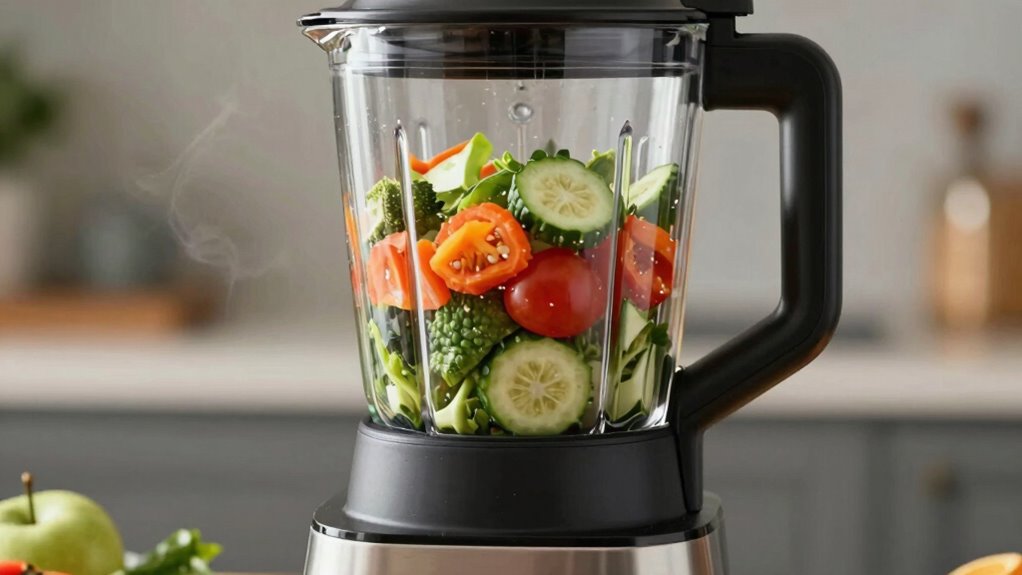
When a blender overheats, it doesn’t just risk damage to the motor—it can also compromise the nutritional quality and safety of your food. Excessive heat causes nutrient degradation, especially sensitive vitamins like C and B-complex, reducing their health benefits. Overheating can also promote microbial growth, increasing the risk of foodborne illnesses. Here’s how heat impacts raw food blending:
| Effect | Cause | Result |
|---|---|---|
| Nutrient loss | Overheating during blending | Reduced nutritional value |
| Microbial risk | Warm environment for bacteria | Food safety concerns |
| Texture alteration | Excess heat alters food structure | Unintended consistency |
| Flavor changes | Heat affects natural flavors | Off-tastes and spoilage |
Keeping your blender cool guarantees nutrients stay intact and your food remains safe to consume. Additionally, understanding overheating effects helps in selecting the right blending techniques to preserve food quality. Proper temperature regulation is essential to maintain the integrity of raw foods during blending. Being aware of blender cooling methods can help prevent overheating and preserve nutrient content.
Easy Tips to Prevent Overheating During Raw Food Blending
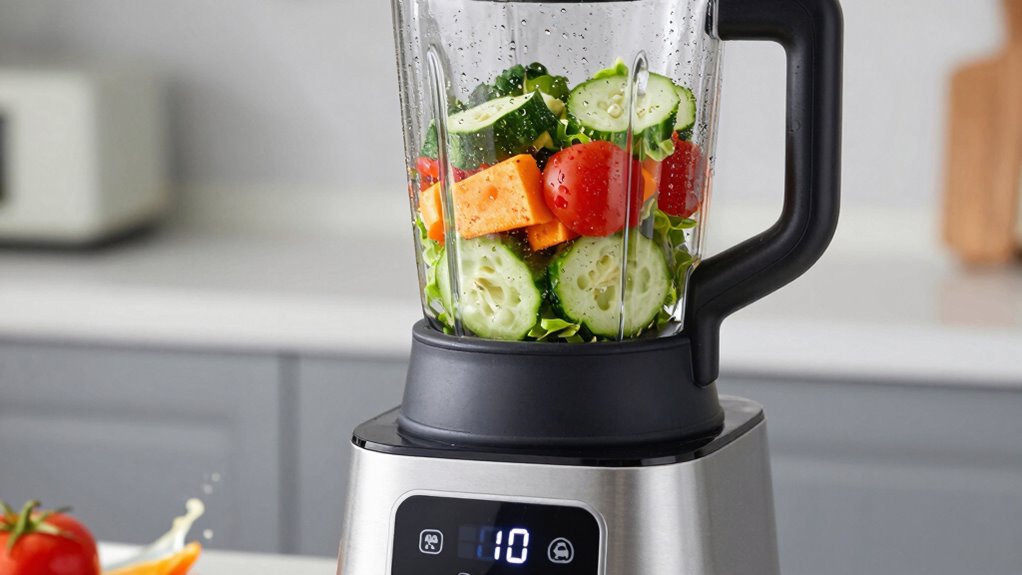
To prevent overheating during raw food blending, incorporate simple strategies that keep your blender cool and functioning best. Start by pulsing in short bursts rather than continuous blending, which reduces heat buildup. Using a blender with good cooling features or adding ice cubes can enhance blender cooling, preventing excess temperature rise. Keeping your ingredients cold before blending also supports raw food preservation by maintaining their freshness and nutrients. Avoid overfilling the blender, as crowded containers cause strain and heat. If your blender feels warm, pause and let it cool down before resuming. Additionally, understanding thermal management in blenders can help you choose models that better resist heat buildup during extended use. Proper cooling techniques are essential for maintaining the raw integrity of your foods while protecting your equipment, ensuring your blends stay true to raw food preservation principles. Incorporating wiring basics can also contribute to safer and more efficient operation by preventing electrical issues that might cause overheating. Being aware of cooling features in various blender models can further help you select appliances designed to reduce heat during extended blending sessions. Recognizing the importance of thermal regulation can guide you in selecting the right blender for prolonged raw food preparation.
How to Recognize and Avoid Overheating Signs in Your Blender

Recognizing when your blender is overheating is essential to guarantee damage and maintain safety. Keep an eye on unusual smells, excessive heat coming from the motor, or if the blender suddenly slows down or stops. These are signs your appliance might be overheating. Regular blender maintenance, like cleaning vents and ensuring blades are sharp, helps prevent overheating. When blending raw food textures, avoid overloading the jar or running the blender for too long without breaks. If you notice these signs, turn off the blender immediately and let it cool down. Ignoring overheating cues can damage the motor and compromise your raw food’s integrity. Staying informed about modern kitchen technology features can also help you choose appliances with better heat management. Proper appliance design includes features such as automatic shut-off or thermal protection, which can prevent overheating issues. Choosing blenders with advanced safety features can offer extra protection against overheating. Additionally, incorporating heat-resistant materials into blender design can further enhance safety and durability. Being aware of thermal regulation in appliance construction ensures your blender operates safely during intensive use. By staying attentive and maintaining your blender properly, you’ll preserve its performance and keep your raw foods truly raw and fresh.
Best Blending Practices to Keep Your Raw Foods Fresh and Nutritious
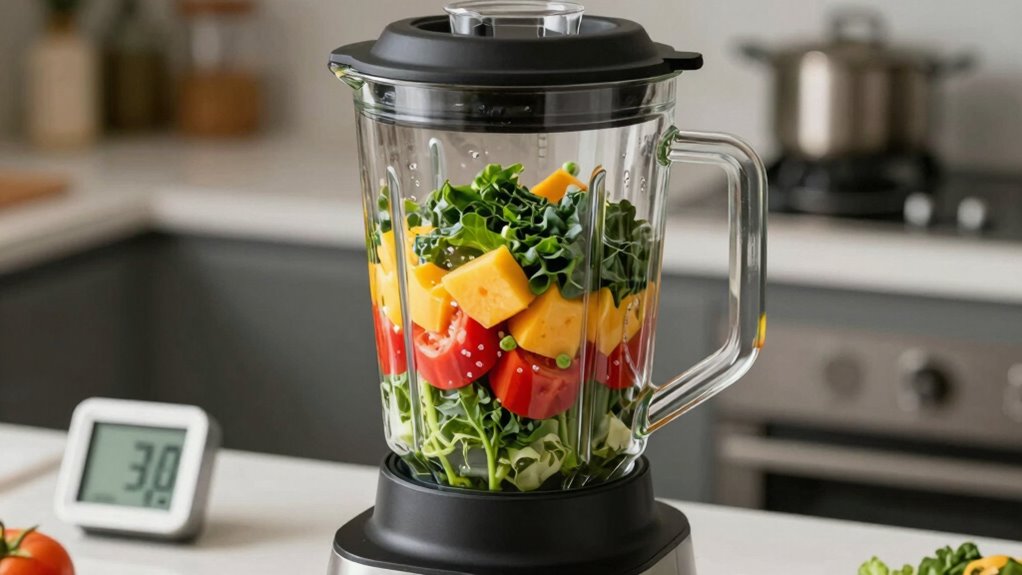
Proper blending techniques are essential for preserving the freshness and nutrition of your raw foods. To achieve this, focus on proper ingredient preparation—cut fruits and vegetables into manageable pieces to reduce strain on your blender. Regular blender maintenance ensures peak performance and prevents overheating, which can compromise raw food integrity. Always start on a low speed and gradually increase to avoid sudden stress on the motor. Avoid overfilling the blender, as this can cause uneven blending and heat buildup. Here are some tips to keep your raw foods fresh and nutritious:
Proper ingredient prep and maintenance keep your raw foods fresh and nutritious.
- Prepare ingredients in uniform sizes
- Clean your blender after each use
- Use pulse mode for better control
- Don’t blend for extended periods
- Allow the blender to cool between batches
Ensuring your blender has proper ventilation can help prevent overheating and maintain optimal performance. Additionally, being aware of overheating risks can help you take proactive measures to protect your equipment and preserve food quality. Incorporating blending best practices can further help you achieve the perfect raw food consistency without compromising its nutritional value. To further safeguard your blender, consider using cooling techniques such as pausing between blending sessions or adding ice to dissipate heat. Recognizing signs of motor strain can also help you prevent damage and extend your blender’s lifespan.
Frequently Asked Questions
What Types of Blenders Are Best Suited for Raw Food Preparation?
You should choose blenders with durable motors and highly efficient blades for raw food prep. Look for models with powerful motors that won’t overheat easily, ensuring consistent blending without losing raw nutrients. Blade efficiency is vital for smooth textures and minimal heat generation. Brands like Vitamix and Blendtec excel in these areas, offering reliable performance that preserves your raw foods’ natural enzymes and flavors while preventing overheating.
Can Overheating Damage the Motor Permanently?
Yes, overheating can damage your blender‘s motor permanently, reducing its lifespan and performance. To prevent this, you should avoid running the blender continuously for too long and give it breaks between blending sessions. Using a blender with overheating prevention features also helps safeguard the motor. Regularly monitoring the motor’s temperature and not pushing it beyond its limits ensures your blender stays in good shape and lasts longer.
Are There Specific Raw Foods More Likely to Cause Overheating?
Think of blending as a delicate dance where some foods, like high-moisture vegetables and very ripe fruit, are more prone to overheating. These items have greater vegetable moisture and fruit sensitivity, which can generate more heat during blending. To prevent this, pulse instead of continuous blending, and pause regularly. That way, you protect your motor and keep your raw foods truly raw without risking damage.
How Does Blade Design Influence Overheating Risk?
Your blade design directly affects overheating risk by influencing blade durability and cooling mechanisms. A well-designed blade with sturdy materials resists heat buildup and maintains sharpness longer, reducing friction. Incorporate cooling features like vents or water circulation to dissipate heat effectively. By choosing a blender with optimized blade design, you guarantee smoother blends without overheating, keeping your raw foods truly raw and preserving their nutritional integrity.
Can Blending Temperature Affect the Flavor of Raw Foods?
Imagine a vintage blender whirring in a modern kitchen—blending raw foods at high temperatures can definitely impact flavor. The temperature impact during blending can cause subtle changes, diminishing natural flavors or creating a slightly cooked taste. To preserve the authentic flavor, keep the temperature low and avoid prolonged blending. Proper technique guarantees your raw foods retain their freshness and vibrant taste, making every spoonful as delicious as nature intended.
Conclusion
To keep your raw foods truly raw and your blender in top shape, stay vigilant and follow these simple tips. Don’t push your blender beyond its limits, and listen to any warning signs. Remember, a stitch in time saves nine—address overheating early, and you’ll avoid costly repairs or nutrient loss. With a little care, you’ll enjoy fresh, nutritious blends every time without breaking a sweat.