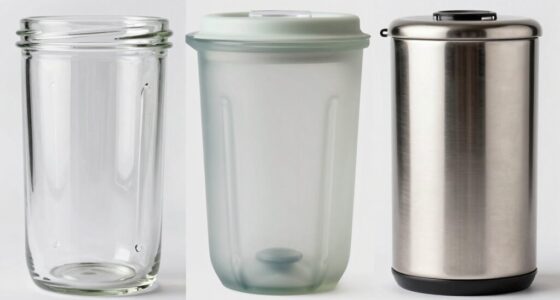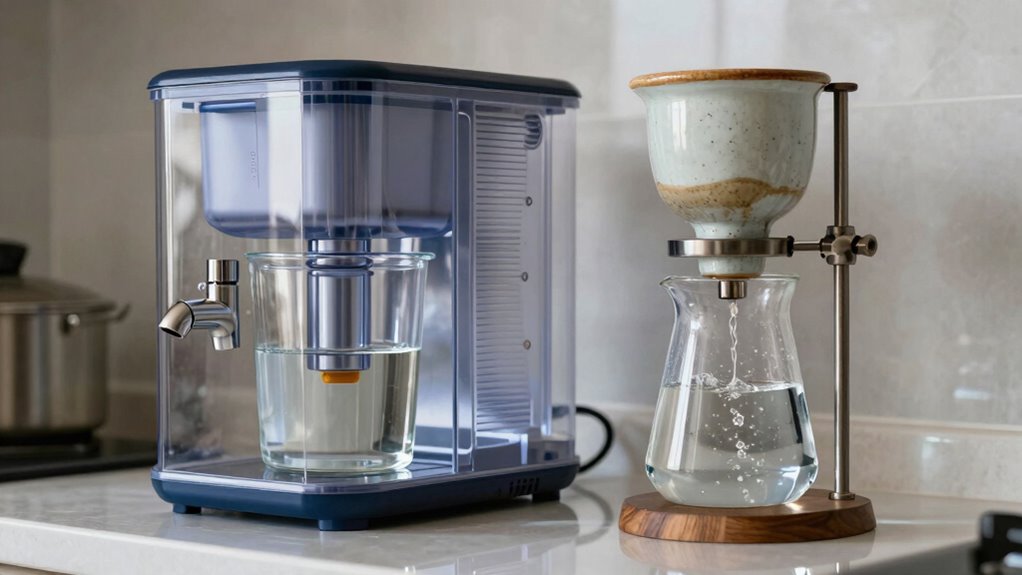

If you’re choosing between reverse osmosis and gravity filters for your kitchen, consider your needs and budget. Reverse osmosis offers superior water purity and better taste but is more complex and costly, requiring regular maintenance. Gravity filters are simple, affordable, portable, and easy to use, though they may not remove all contaminants. To find out which option suits your lifestyle best, explore the details that follow for a clearer comparison.

Get health and wellness essentials delivered free with Prime
- Fast, free delivery on millions of items
- Prime Video, Amazon Music and more included
- Member-only deals all year
Key Takeaways
- Reverse osmosis offers higher water purity and better taste but requires more space, maintenance, and higher costs.
- Gravity filters are simpler, portable, and cost-effective, ideal for quick, low-maintenance daily use.
- RO systems tend to waste water, whereas gravity filters do not, making them more environmentally friendly.
- Reverse osmosis is better suited for areas with poor tap water quality; gravity filters are versatile and easy to install.
- Both systems improve water taste and quality, but choice depends on budget, space, and desired filtration level.
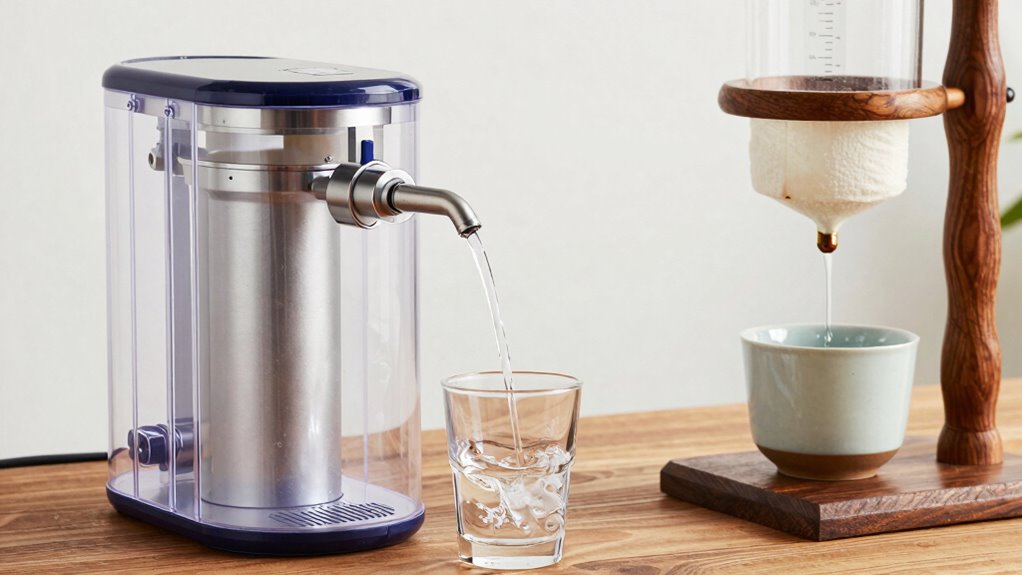
When choosing a water filtration system for your kitchen, understanding the differences between reverse osmosis and gravity filters is essential. Both options aim to provide cleaner, better-tasting water, but they do so in very different ways. Your decision should depend on your priorities, space, and budget. Reverse osmosis systems are highly effective for water filtration because they use pressure to push water through multiple filters and a semipermeable membrane. This process removes a wide range of contaminants, including heavy metals, chemicals, and dissolved solids, resulting in very pure water. Because of its thorough filtration, reverse osmosis can significantly improve the taste of your tap water, especially if you live in an area with hard or heavily chlorinated water. However, these systems tend to be more complex and require a dedicated space under your sink, along with regular maintenance. They also tend to waste some water during operation, which might be a concern if you’re environmentally conscious or want to save water. The efficiency of reverse osmosis systems can be affected by the water pressure, which is an important consideration when choosing the right setup for your home. Additionally, understanding the filtration process can help you better evaluate the benefits of different systems. Properly maintaining your filtration system ensures it continues to provide optimal water quality over time. It’s also worth noting that selecting a system with energy efficiency can help reduce operational costs and environmental impact. Regularly checking the system’s performance can help ensure it continues to function effectively and deliver high-quality water.
Gravity filters, on the other hand, work by letting water pass through a filter media driven solely by gravity. You fill the upper chamber with water, and it slowly drips through the filter into a lower chamber, ready to pour. These systems are generally simpler, more affordable, and easier to install and maintain. They don’t require electricity or plumbing modifications, making them perfect for portable use or areas where simplicity is key. Although gravity filters might not remove as many contaminants as reverse osmosis, they still significantly improve the water’s taste by filtering out chlorine, sediment, and some impurities. This taste improvement makes your water more pleasant to drink and can encourage you to stay hydrated. Keep in mind, gravity filters usually have a shorter lifespan for their filters, meaning you’ll need to replace them more frequently to maintain optimal water quality. Properly choosing and replacing the filter media ensures sustained effectiveness of the system.
In terms of everyday kitchen use, both systems have their merits. If you’re after the highest level of water purity and taste improvement, and you’re willing to invest in installation and maintenance, a reverse osmosis system is a solid choice. It delivers consistently cleaner water, especially in areas with questionable tap water quality. If simplicity, cost, and portability matter more, a gravity filter offers a reliable, low-maintenance solution that still enhances taste and removes common impurities. Your choice ultimately depends on your needs, budget, and how much effort you’re willing to put into maintaining your water filtration system.
reverse osmosis water filtration system
As an affiliate, we earn on qualifying purchases.
As an affiliate, we earn on qualifying purchases.
Frequently Asked Questions
Which Filter Type Is More Environmentally Friendly?
Gravity filters tend to be more environmentally friendly because they don’t require electricity, reducing energy consumption and lowering environmental impact. They also produce less waste compared to reverse osmosis systems, which generate significant amounts of wastewater. For sustainability considerations, gravity filters are a better choice, especially for daily use, as they use fewer resources and have a smaller carbon footprint. Your choice can help minimize environmental harm while providing clean drinking water.
How Often Should I Replace Filter Components?
You should replace your filter components based on the manufacturer’s recommended replacement frequency, typically every 6 to 12 months. Regular filter maintenance guarantees peak performance and water quality. Keep an eye on your filter’s condition—if you notice reduced water flow or taste changes, it’s time for a replacement. Staying consistent with filter maintenance prolongs your system’s lifespan and keeps your water clean and safe.
Can Both Filters Remove All Types of Contaminants?
Both filters have limitations in their contaminant spectrum. Reverse osmosis systems effectively remove a broad range of contaminants, including heavy metals, salts, and many chemicals, but may struggle with certain volatile organic compounds. Gravity filters excel at reducing particulates, bacteria, and some chemicals, yet they can’t eliminate all contaminants. Knowing each filter’s limitations helps you choose the right solution for your specific water quality concerns.
Are These Filters Suitable for All Water Sources?
About 85% of households experience water source variability, affecting filter performance. Reverse osmosis and gravity filters aren’t suitable for all water sources, especially those with high sediment or unique contaminants. You might face filter installation challenges if your water contains heavy minerals or requires pre-filtration. Always check your water source’s quality first, and choose a filter designed to handle its specific needs to guarantee safe, clean drinking water.
Do These Filters Affect the Taste of Water?
These filters can affect the taste of water, often improving flavor by removing impurities. Reverse osmosis filters tend to strip minerals, which can lead to a flatter taste, while gravity filters usually retain more minerals, offering a more natural flavor. If you’re after flavor enhancement, choose a filter that balances purification with mineral retention. Keep in mind, your water’s taste depends on what’s in it and how the filter processes those elements.
Conclusion
When choosing between reverse osmosis and gravity filters, consider your water quality and daily needs. Reverse osmosis systems can remove up to 99% of contaminants, providing pure, crisp water—ideal if your tap water has high levels of impurities. Gravity filters are simpler and more affordable, making them perfect for quick, everyday use. Ultimately, your choice depends on your priorities, but knowing that nearly 85% of households use some form of water filtration highlights its importance in daily life.
Halloween Picks
halloween
As an affiliate, we earn on qualifying purchases.