

During your road trip, it’s essential to follow the two-hour rule for perishable foods. This means you should keep only within that time frame any foods exposed to temperatures between 40°F and 140°F, or risk bacteria growth and food poisoning. Use coolers with ice packs, pre-chill items, and limit how often you open them. If you ignore this, food can spoil quickly, but there are simple steps to stay safe—you’ll discover more next.
Key Takeaways
- Perishable foods should not be left out at room temperature for more than two hours to prevent bacterial growth.
- In hot weather (above 90°F), limit perishable exposure to one hour to reduce foodborne illness risk.
- Use coolers with ice packs to keep perishables below 40°F during travel, adhering to the two-hour rule.
- Discard any food left out beyond the safe time limit, especially if it shows signs of spoilage or has been in the danger zone.
- Proper storage and monitoring of temperatures are essential to ensure food safety on long road trips.
Which Foods Are Most at Risk of Spoiling During Your Road Trip?
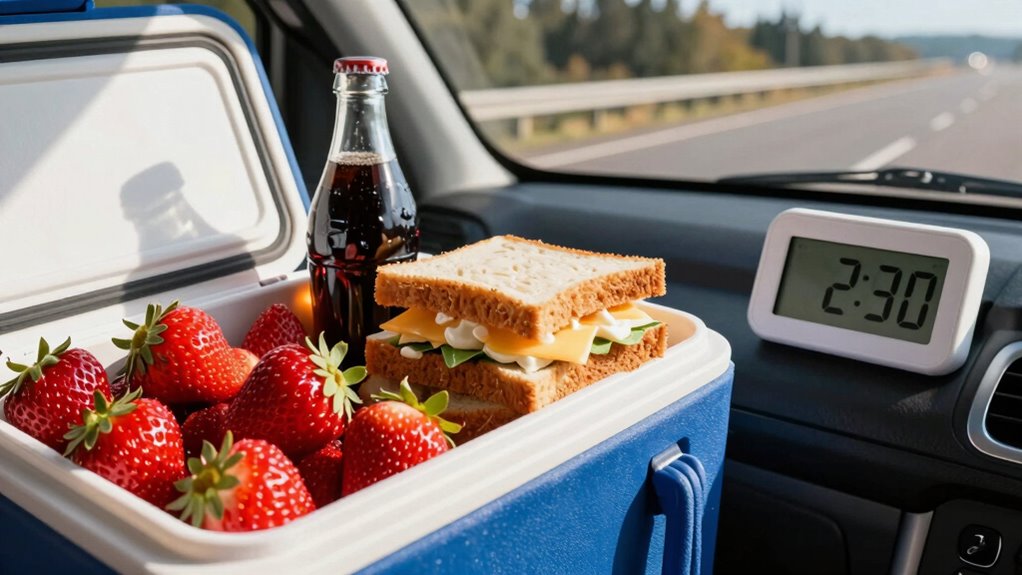
Perishable foods are most at risk of spoiling during your road trip, especially if they’re not kept at proper temperatures. Your perishability concerns mainly involve dairy products, meats, seafood, cooked grains, and cut fruits or vegetables, which can quickly become unsafe if left out too long. These foods require consistent refrigeration to prevent bacterial growth, making snack safety a top priority. To avoid foodborne illnesses, it’s essential to store perishable items in a cooler with ice packs and limit their exposure to warm temperatures. Be mindful of how long these foods sit out; even a few hours can compromise their safety. Using reliable temperature control measures helps ensure your snacks stay fresh and safe throughout your trip. Knowing which foods are most at risk helps you plan better and keeps your snacks fresh and safe throughout your trip.
What Is the Two-Hour Rule and Why Does It Matter?
The two-hour rule helps you keep food safe during your trip by limiting how long perishable items stay at unsafe temperatures. If food sits out too long, bacteria can grow quickly, increasing the risk of illness. Knowing this rule and following practical storage tips keeps your snacks safe and your trip worry-free. Additionally, understanding food safety techniques such as proper refrigeration and packing methods can further protect your meals during travel. Being aware of market trends and insights, like recent surges or pump patterns, can also inform your planning and ensure you make safe choices when selecting snacks or meals on the go. Proper temperature control is essential, and using essential oils for food preservation can sometimes help in maintaining freshness and safety during longer trips. Monitoring ambient temperatures and choosing appropriate cooler materials can also enhance safety and freshness throughout your journey. For example, selecting the right hotel water park amenities can make your stay more enjoyable while ensuring your safety standards are met.
Understanding the Two-Hour Rule
Have you ever wondered why food safety experts emphasize the two-hour rule? It’s because bacteria that cause foodborne illnesses thrive within specific temperature ranges. When perishable foods sit out too long, especially between 40°F and 140°F, bacteria multiply rapidly, increasing the risk of illness. The two-hour rule helps you prevent this by limiting how long food stays at unsafe temperatures. If the temperature isn’t controlled, harmful bacteria can grow quickly, making your food unsafe to eat. This rule applies whether you’re packing a cooler for a road trip or leaving food out at a picnic. Understanding this simple guideline helps you keep your food safe, reducing the chance of foodborne illnesses and ensuring everyone stays healthy during your trip. Additionally, maintaining proper temperature control is essential for preventing bacteria growth and ensuring food safety. Recognizing the importance of food safety protocols can further protect you from preventable illnesses. Proper storage practices are also crucial for maintaining food quality and safety during your journey. Being aware of food safety standards can help you make better decisions while on the go. Moreover, following recommended food safety practices can help you avoid cross-contamination and other hazards during transport.
Risks of Improper Food Storage
Understanding the risks of improper food storage is crucial for preventing foodborne illnesses, especially during road trips. When food isn’t stored at the right temperature, bacteria can multiply rapidly, leading to food contamination. Poor temperature control allows harmful pathogens to thrive, increasing your risk of illness. Imagine opening your cooler to find slimy, foul-smelling food or a container of milk curdling; these are signs of unsafe storage. Additionally, improper storage can lead to cross-contamination, which further spreads bacteria and increases health risks.
- Food sitting in the danger zone (40°F–140°F) for too long
- Cross-contamination from raw to cooked foods
- Warm temperatures encouraging bacteria growth
- Improper sealing leading to spoilage and odors
Keeping food cold and properly sealed is essential to avoid these dangers and enjoy your trip safely.
Practical Tips for Travelers
When you’re on a road trip, managing perishable foods is essential to prevent foodborne illnesses. To do this, practice good food preservation by keeping perishable items in a cooler with ice packs. Limit travel snacks that require refrigeration and opt for shelf-stable options instead. Remember the two-hour rule: don’t leave food out at room temperature for more than two hours, or one hour if it’s particularly hot outside. Pack plenty of travel snacks that are safe at room temperature to keep hunger at bay without risking spoilage. Regularly check your cooler’s temperature and replenish ice as needed. These simple tips help you enjoy your trip safely while preserving the freshness of your food. Additionally, understanding food safety guidelines can help you better manage your food storage during travel. Proper food storage methods and awareness of temperature control are key to preventing spoilage and ensuring your food remains safe throughout your journey. Being aware of temperature control techniques can further enhance your ability to keep food safe in various conditions. Incorporating food safety education into your travel planning can also boost your confidence in managing perishable items on the go.
How Can You Keep Perishable Foods Safe While Traveling?

To keep perishable foods safe while traveling, you need to control the temperature and minimize the time they spend in the danger zone. Pack items like pre-chilled drinks, fresh fruits, and dairy products in a cooler with ice packs. Consider refrigeration alternatives such as insulated bags or portable coolers if refrigeration isn’t available. For snacks, choose options that don’t spoil easily, like nuts or granola bars, and keep perishable items cold at all times. Visualize a cooler filled with ice packs nestled around deli meats, cheese, and yogurt, all staying below 40°F. You might also use gel packs or frozen bottles of water to maintain cold temperatures. Staying vigilant with these methods helps prevent bacteria growth and keeps your food safe throughout the trip. Proper food storage methods are essential for maintaining food safety during travel. Additionally, understanding home food safety principles can help you adapt these practices for different travel scenarios. Ensuring your cooler setup is secure and insulated aligns with reliable backup power principles, helping you maintain consistent temperatures even in unexpected situations. Implementing food safety guidelines ensures the safety and quality of your perishable foods during transit.
What Are the Risks of Ignoring the Two-Hour Rule?
Ignoring the two-hour rule can substantially increase your risk of foodborne illness. When perishable foods sit out too long, bacteria start to grow rapidly, raising the chance of food poisoning. Pathogens like Salmonella or E. coli can multiply quickly at unsafe temperatures, making your food dangerous to eat. Consuming contaminated food can cause symptoms like nausea, vomiting, diarrhea, and severe dehydration. The longer food remains in the danger zone (between 40°F and 140°F), the higher the bacterial load becomes, increasing health risks. If you neglect this rule, you might not only spoil your meal but also compromise your health during your trip. Staying vigilant about proper food storage helps prevent these risks and keeps everyone safe and healthy. Proper food safety practices during your trip are essential to avoid these hazards and ensure everyone stays healthy. Additionally, using insulated containers can help maintain safe temperatures for your food during travel, especially when temperature control is critical. Implementing appropriate handling techniques can further reduce the risk of contamination and ensure food remains safe for consumption. Recognizing the importance of time-temperature management is key to effective food safety.
How to Pack and Store Food to Stay Within Safe Time Limits
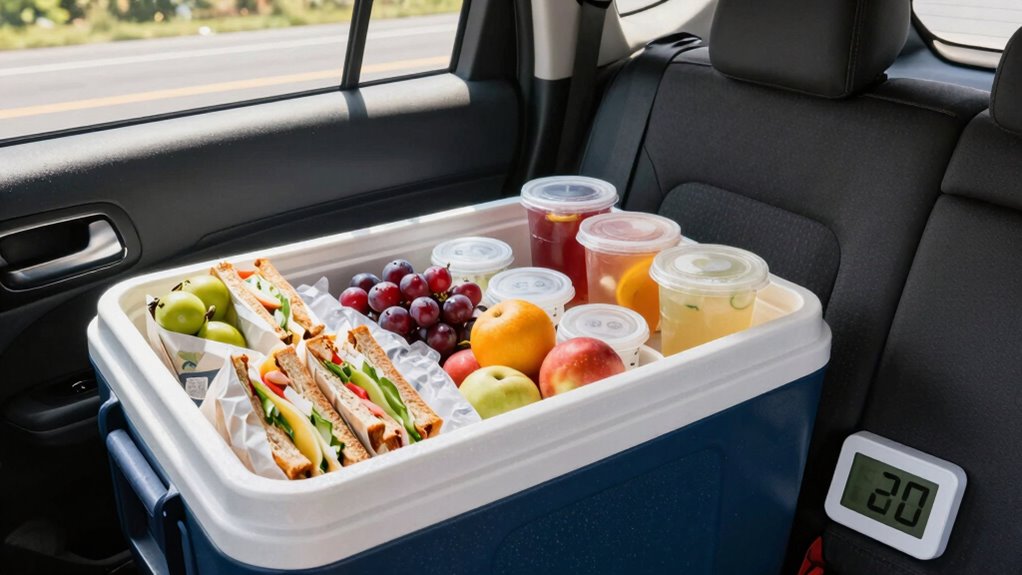
Properly packing and storing your food is essential to keep it safe within the recommended time limits. Using portable coolers helps with food preservation, maintaining the right temperature to slow bacterial growth. To maximize safety, pack your cooler with these essentials:
Proper packing and storage keep food safe and fresh during your road trip.
- Ice packs or plenty of ice to keep everything cold
- Pre-chilled beverages and food containers
- Perishable foods stored in airtight containers
- Items arranged to ensure cold air circulates freely
Place the cooler in a shaded spot, out of direct sunlight, and avoid opening it unnecessarily. Keep the cooler closed as much as possible to maintain a consistent temperature. Proper packing and storage practices help you stay within safe time limits, preventing foodborne illnesses during your road trip.
What Should You Do If Food Has Been Left Out Too Long?
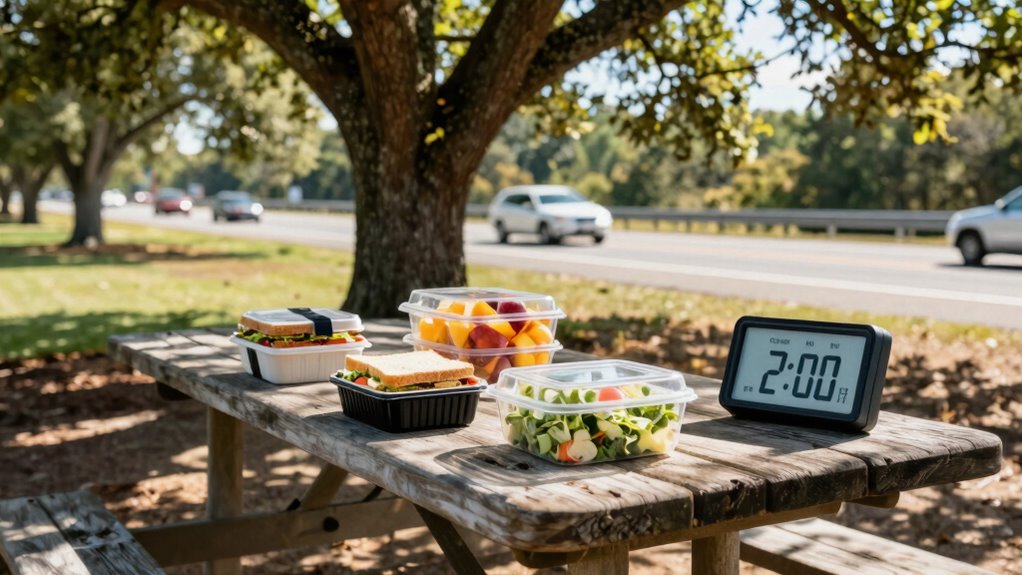
If food has been left out at room temperature for more than two hours (or one hour in hot weather), it’s important to act quickly to prevent foodborne illness. First, check the food’s condition—if it smells or looks off, discard it immediately. Even if it seems fine, consider the risk of bacteria growth. If you suspect food safety issues, stay prepared with an emergency plan, including knowledge of food recall alerts in case contaminated items are involved. Always err on the side of caution; consuming compromised food can cause illness. Properly disposing of questionable food minimizes health risks and helps you stay prepared for any unexpected situations. Remember, quick action and awareness protect you and your travel companions from avoidable health hazards.
Frequently Asked Questions
Can Non-Perishable Snacks Become Unsafe if Left Out Too Long?
Non-perishable snacks generally stay safe if left out too long, but poor food preservation can cause issues. If snacks are exposed to heat or humidity, they might spoil or develop bacteria, making them unsafe to eat. To guarantee snack safety, store them properly and keep an eye on environmental conditions. Always check for changes in texture, smell, or appearance before consuming, especially if they’ve been left out longer than recommended.
Are There Specific Foods That Are Safer to Pack for Road Trips?
You should pack foods that are safe and easy to store during your road trip, like fresh fruits, vegetables, cheese, and deli meats, especially if you use portable coolers. Consider packaging considerations to keep everything fresh and prevent spoilage. Opt for foods that don’t require constant refrigeration, but always keep perishable items chilled in a portable cooler to reduce food safety risks during your journey.
How Does Ambient Temperature Affect Food Safety During Travel?
Think of it like a pirate’s treasure—hotter temperatures can be your food’s undoing. Temperature impact is real; as ambient temperature rises, microbial growth accelerates, increasing the risk of foodborne illness. When you travel in warm weather, keep perishable items chilled or in insulated containers. Cooler environments slow microbial growth, protecting your snacks and keeping your journey safe and enjoyable.
What Signs Indicate Food Has Spoiled After Being Left Out?
If you notice signs of spoilage like a sour smell, slimy texture, or unusual food discoloration, it’s time to discard the item. These signs indicate bacteria growth and potential food poisoning risks. Always trust your senses—if food looks, smells, or feels off, don’t take chances. Properly checking for spoilage helps keep you safe and avoids unpleasant stomach issues during your trip.
Is It Safe to Reheat Food That Was Left Out Beyond Two Hours?
Think of your food as a ship steering through dangerous waters. Once it’s left out beyond two hours, it’s entered the temperature danger zone, where foodborne bacteria thrive. Reheating might seem like a rescue, but it often isn’t enough to kill all bacteria. So, for safety, avoid reheating food that’s been out too long. It’s better to discard it than risk illness from harmful bacteria.
Conclusion
Sticking to the two-hour rule might seem strict, but it’s your best defense against foodborne illness on road trips. Even if you think your food looks okay, bacteria can grow quickly once that time is up. Trust me, taking a few extra minutes to refrigerate or discard questionable items keeps you healthier and your trip worry-free. Protect your snacks and enjoy your journey—safe, fresh food makes all the difference.