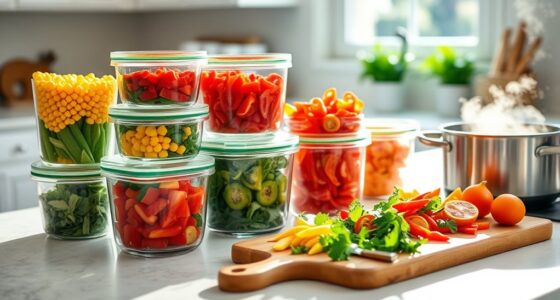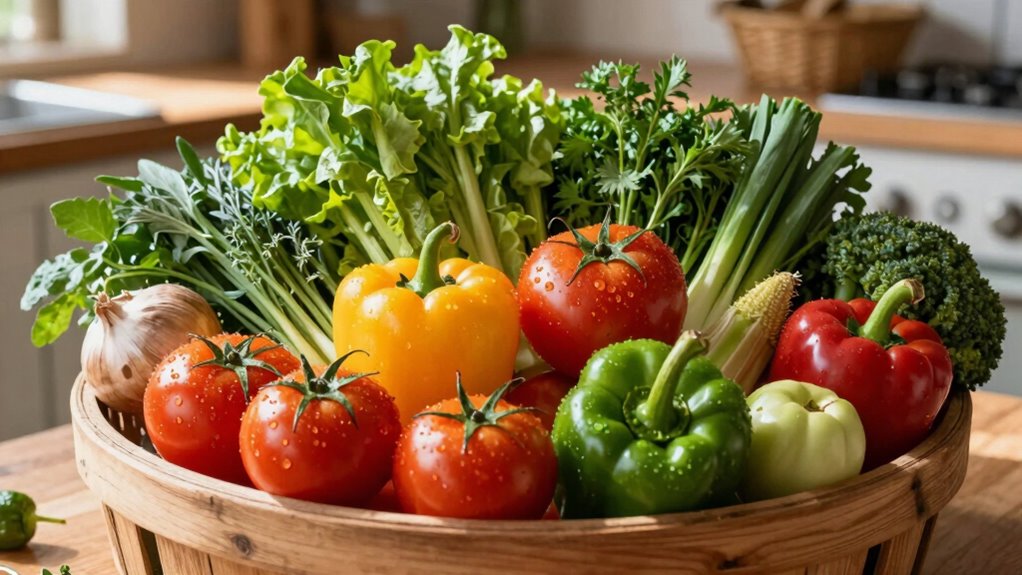

To reduce waste, you should regularly organize your produce by placing older items in front and newer ones in the back. This way, you’ll use the older fruits and veggies first. Keep an eye on ethylene producers like bananas and apples, storing them separately from sensitive items to prolong shelf life. Check your inventory weekly and plan meals around what’s ripening. Want to optimize your produce storage even further? There are more tips to explore!

Get health and wellness essentials delivered free with Prime
- Fast, free delivery on millions of items
- Prime Video, Amazon Music and more included
- Member-only deals all year
Key Takeaways
- Regularly check inventory to identify and prioritize using older produce first, minimizing waste.
- Store ethylene-producing fruits separately from sensitive vegetables to extend their shelf life.
- Implement meal prep strategies that utilize wilting or overripe produce in recipes.
- Organize your pantry and fridge by grouping seasonal produce for efficient meal planning.
- Adjust storage conditions based on ripening needs to maintain optimal freshness and reduce spoilage.
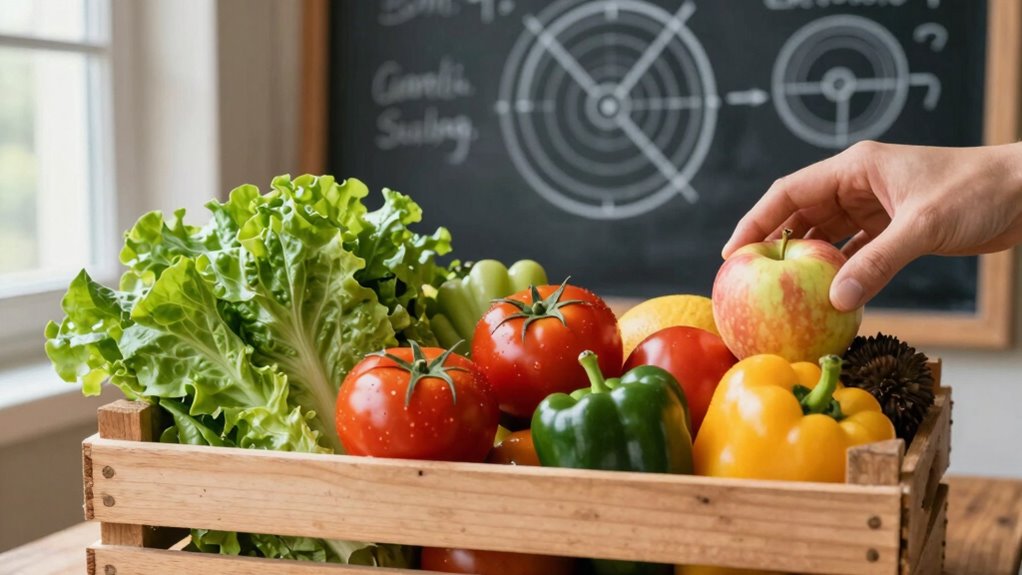
When it comes to keeping your fruits and vegetables fresh, mastering the art of produce rotation is crucial. You may not realize it, but the way you organize your produce can greatly impact its lifespan. By implementing a few simple storage tips and making produce rotation a habit, you’ll not only enhance produce freshness but also reduce waste in your kitchen.
Start by evaluating what you have on hand. Regular inventory management is key. When you return from the grocery store or farmer’s market, take a moment to sort through your fruits and vegetables. Place the newer items behind the older ones. This way, you’re more likely to use the older produce first, preventing it from going bad before you can enjoy it. Remember, a good rule of thumb is to check your inventory at least once a week, especially if you’re planning meals around what you already have.
Seasonal planning can also play an important role in how you manage your produce. When you buy fruits and vegetables that are in season, they’re usually fresher and last longer. Research what’s in season in your area and plan your meals accordingly. This not only enhances the flavor of your dishes but also helps you make the most of your grocery budget. Additionally, understanding the natural ripening process of different produce can help you time your purchases and storage more effectively. Proper storage techniques can further extend the freshness of your items and help prevent spoilage. Being aware of ethylene gas production and its effects can also help you optimize storage conditions, as certain fruits emit this gas more heavily and can influence the ripening of nearby produce.
Meal prep is another effective strategy for maintaining produce freshness. When you prepare your meals in advance, you not only save time during the week but also guarantee that you’re using your produce before it spoils. For instance, if you notice that some spinach is wilting, consider making a smoothie or a salad to use it up. This proactive approach minimizes waste and allows you to enjoy the full range of flavors your produce offers. Keeping track of ripening times and storage conditions can help you plan your meal prep more efficiently.
Additionally, be mindful of how different fruits and vegetables ripen. Some, like apples and bananas, emit ethylene gas, which can speed up ripening in other produce. Keep these items separate to extend the life of your other fruits and veggies. Proper produce storage techniques can significantly extend the freshness of your items and reduce waste. Being aware of how gases like ethylene affect ripening can help you better plan your storage. Incorporating ethylene-sensitive produce into your storage plan can prevent premature spoilage and help you enjoy your produce longer.
produce storage containers with adjustable vents
As an affiliate, we earn on qualifying purchases.
As an affiliate, we earn on qualifying purchases.
Frequently Asked Questions
How Can I Tell if Produce Is Still Fresh?
To tell if your produce is still fresh, look for key freshness indicators. Check for vibrant colors, firm texture, and a pleasant scent. If you notice any wilting, discoloration, or strange odors, it’s time to toss it. Each type of produce has a different shelf life, so keep that in mind. For example, leafy greens spoil faster than carrots. Trust your senses; they’ll guide you to the freshest options!
What Are the Best Storage Temperatures for Different Fruits?
Imagine a cozy home for your fruits, where each one thrives. Most fruits prefer a cool spot between 32°F and 40°F, while some, like bananas, enjoy a warmer embrace around 55°F. Keep humidity levels ideal to maintain freshness; apples and pears love it higher, while citrus prefers a drier environment. Seasonal storage is key—store summer fruits in the fridge and let winter varieties bask in the cool, dark pantry.
Can I Freeze Produce to Extend Its Shelf Life?
Yes, you can freeze produce to extend its shelf life. Use proper freezing methods like blanching veggies first to preserve their color and texture. For fruits, wash and chop them before freezing to enhance produce longevity. Make sure to use airtight containers or freezer bags to prevent freezer burn. When you’re ready to use them, thaw the produce in the fridge or use them directly in cooked dishes for the best results.
How Often Should I Check My Produce for Spoilage?
You should check your produce for spoilage at least once a week. Spoilage indicators like discoloration, soft spots, or an off smell can shorten your produce lifespan considerably. By regularly inspecting your fruits and veggies, you can catch issues early and avoid waste. It’s all about staying proactive; if you notice something off, use it right away or consider freezing it to extend its freshness. Keep an eye on your stash!
What Are the Signs of Ethylene Gas Producing Fruits?
You’ll notice signs of ethylene gas producing fruits by observing their rapid ripening process. Fruits like bananas, apples, and avocados emit ethylene, causing nearby produce to ripen quickly. If you see soft spots, a change in color, or an increased aroma, these indicate ethylene sensitivity. To manage this, keep ethylene-producing fruits away from other produce to slow down spoilage and extend freshness.
Conclusion
By keeping your produce in a rotating flow, you’re not just preserving freshness—you’re creating a vibrant, colorful canvas in your fridge. Imagine reaching for a crisp apple nestled beside a ripe tomato, each piece bursting with flavor and nutrition. As you enjoy these fresh treasures, you’ll feel the satisfaction of reducing waste and savoring every bite. So, embrace the rotation, and let your meals reflect the bounty of the season, one delicious dish at a time.
Cold & flu season Picks
humidifiers
As an affiliate, we earn on qualifying purchases.