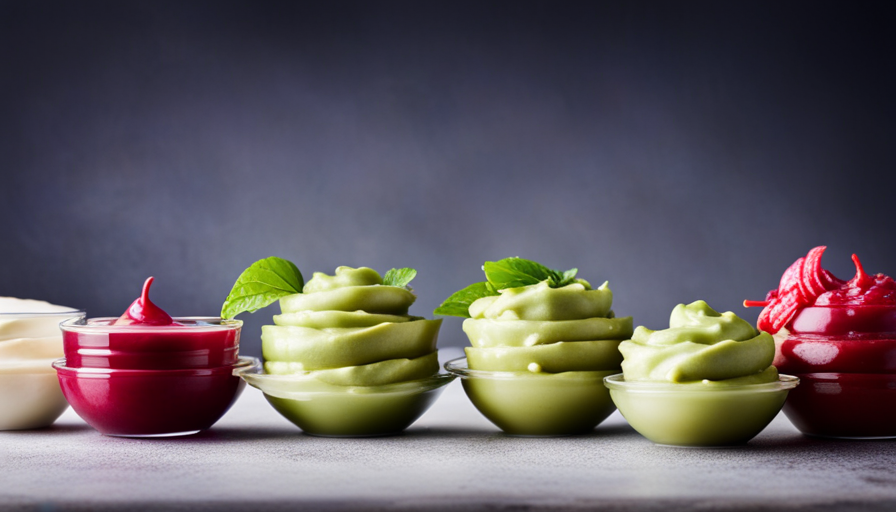
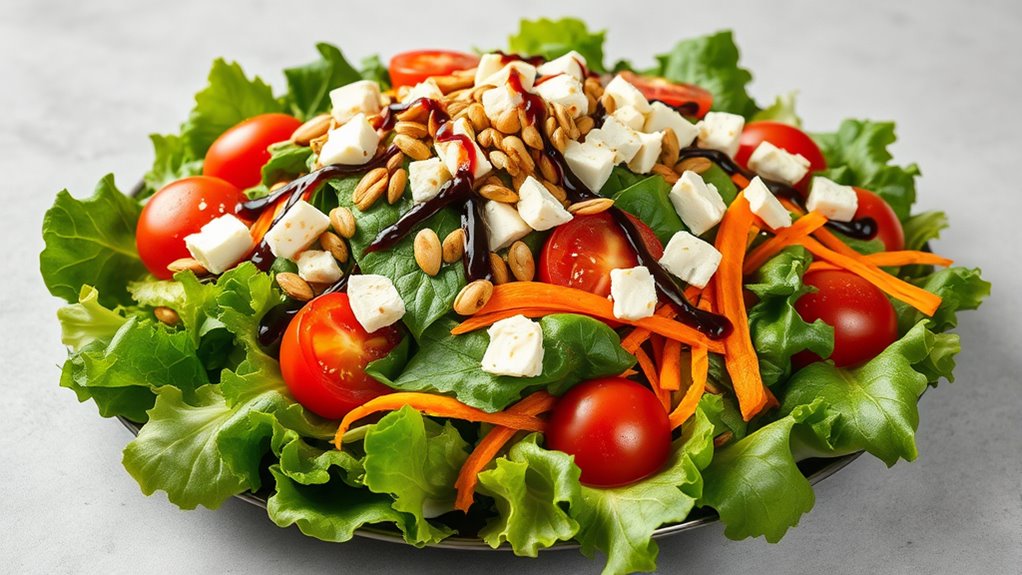

To master salad architecture, focus on arranging greens, toppers, and dressings for visual appeal and flavor balance. Use height and dimension by stacking ingredients thoughtfully, and select colorful, textured greens like arugula or kale. Place toppings carefully, balancing heavier items with vibrant accents, and apply dressings artistically with zigzags or pools. Attention to detail creates a stunning, harmonious presentation, turning simple ingredients into an artful masterpiece—if you keep exploring, you’ll discover how to elevate your salads even further.
Key Takeaways
- Select a sturdy, colorful green base like mixed leaves or kale for visual impact and stability.
- Arrange toppings thoughtfully, emphasizing height and dimension with vertical stacking and layered placement.
- Incorporate vibrant, contrasting colors and textures—crisp greens, tender toppers, crunchy nuts—for visual appeal.
- Use artistic plating techniques, such as placing heavier items on top or along one side, with intentional negative space.
- Enhance flavor and presentation by drizzling dressings in controlled patterns that complement ingredient arrangement.
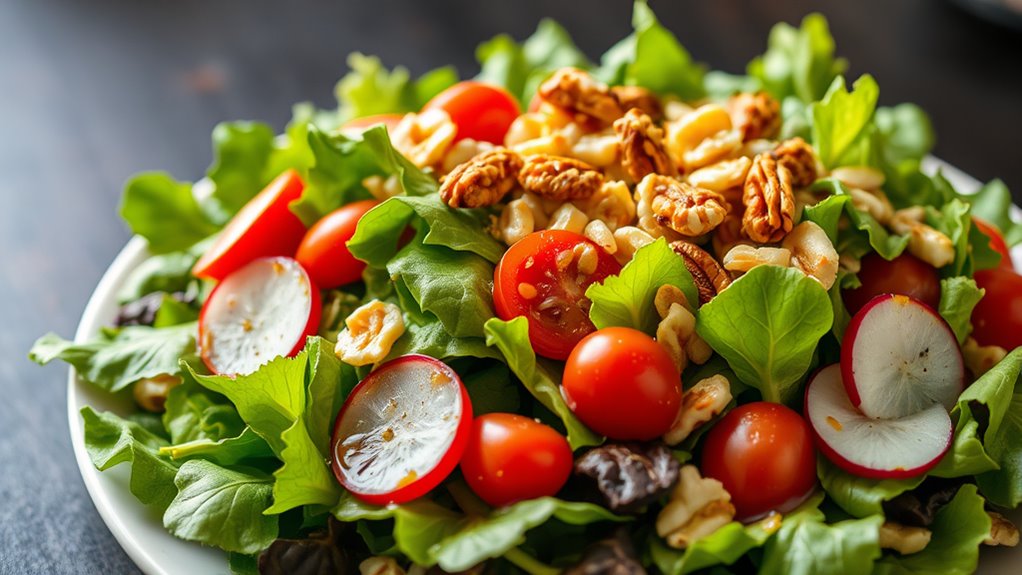
Have you ever wondered how a well-crafted salad can be more than just a mix of ingredients? It’s all about the art of salad architecture—how you arrange greens, toppers, and dressings to create a visually stunning and flavorful experience. The key lies in understanding dressing combinations and plating techniques that elevate your salad from ordinary to extraordinary. When choosing dressings, think beyond simple drizzles; consider how different flavors interact. Combining tangy vinaigrettes with creamy elements like avocado or cheese can create a balanced taste profile. A classic balsamic glaze paired with citrus-infused olive oil adds brightness and depth, while a honey-mustard dressing can tie together hearty greens and savory toppings. Experimenting with dressing combinations allows you to highlight specific ingredients, making each bite more vibrant.
Plating techniques play a vital role in how your salad is perceived. Instead of just tossing everything together, aim for a visually appealing arrangement. Start by selecting a sturdy, colorful base of greens—lettuce, arugula, kale, or mixed leaves—and spread them evenly across the plate. Then, layer your toppings thoughtfully, placing heavier or more eye-catching items like roasted vegetables, nuts, or cheese on top, but avoid clutter. Use height to your advantage—stack ingredients or arrange them vertically to create dimension. A common technique involves placing toppings in the center or along one side, leaving negative space to draw attention to the ingredients. Drizzle dressings artfully rather than pouring them randomly; a controlled, zigzag pattern or a small, focused pool of dressing can make your salad look intentional.
Color is another critical aspect of salad architecture. Bright reds, yellows, and purples catch the eye and make the dish more appetizing. Incorporate contrasting colors and textures—crisp greens, tender toppings, and crunchy nuts—to add visual interest. When plating, think about balance and harmony, just like in fine art. Symmetry isn’t always necessary, but a thoughtful arrangement that guides the eye across the plate will make your salad more inviting. Remember, presentation matters almost as much as flavor, so take your time arranging each component. With the right dressing combinations and plating techniques, you transform a simple bowl of greens into a beautiful, delicious masterpiece that invites you to indulge with your eyes before your palate.
Frequently Asked Questions
How Do I Keep Salad Greens Fresh Longer?
To keep salad greens fresh longer, focus on freshness preservation and proper storage techniques. Rinse and thoroughly dry the greens before storing to prevent wilting. Use an airtight container lined with paper towels to absorb excess moisture, which helps maintain crispness. Keep the container in the crisper drawer of your fridge, ideally around 32-40°F. Regularly check and remove any spoiled leaves to prevent spoilage from spreading.
What Are Alternative Toppings for Food Allergies?
Think of your salad as a story; each topping adds a new chapter. If you’re avoiding nuts, try seeds like sunflower or pumpkin, which symbolize resilience. For gluten-free options, consider roasted vegetables, grilled chicken, or cheese—each representing strength and adaptability. These toppings not only keep your salad safe but also enrich its flavor, making every bite a vibrant, inclusive chapter you can enjoy without worry.
Which Dressings Are Calorie-Free or Low-Calorie?
You’ll find plenty of low-calorie dressings and calorie-free options to add flavor without extra calories. Look for vinaigrettes made with lemon juice or vinegar, as they’re usually low in calories. You can also try calorie-free dressings like salsa, hot sauce, or flavored water-based dressings. These options give your salad zest while keeping your calorie intake in check. Just check labels to make sure they’re truly low-calorie or calorie-free.
How Can I Make Salads More Filling?
You can make salads more filling by adding protein options like grilled chicken, tofu, or beans. Incorporate grain bases such as quinoa, brown rice, or farro to boost satiety. These additions give your salad substantial energy and keep you full longer, making it a satisfying meal. Mixing in nutrient-dense ingredients guarantees you stay satisfied and energized throughout the day without relying solely on greens and dressings.
Are There Cultural Variations in Salad Architecture?
Yes, cultural flavor profiles and regional presentation styles heavily influence salad architecture. You might find vibrant, spice-laden salads in Middle Eastern cuisines or delicate, layered salads in Japan. These variations reflect local ingredients, traditions, and aesthetics. By exploring different cultures, you can experiment with diverse greens, toppers, and dressings, creating salads that are visually stunning and rich in regional flavors. Embrace these styles to diversify your salad game and honor global culinary traditions.
Conclusion
Just as a master architect crafts a masterpiece, you hold the power to design your perfect salad. With greens, toppers, and dressings, you build a balanced, vibrant creation that reflects your choices. Remember, like a building’s foundation, your ingredients set the stage for a nourishing, flavorful experience. So, embrace your inner architect—each salad you assemble is a reminder that with intention, you create something both beautiful and nourishing, standing tall like a timeless monument.