TL;DR

Get health and wellness essentials delivered free — and shop member deals
- Fast, free delivery on millions of items
- Access to Prime Big Deal Days deals on October 6–7
- Prime Video, Amazon Music and more included
A study in Frontiers in Aging reports that women in Bolotana, Sardinia, who reach 70 have an estimated 13.8% chance of reaching 100, compared with about 3.5% in Italy and 3.6% in the United States. Researchers verified ages using municipal and church records, but the study does not establish what causes the village’s longevity pattern or confirm that local habits are responsible.
A study of historical records from Bolotana, Sardinia, found that women who reach age 70 there have an estimated 13.8% chance of living to 100, far above the study’s estimates for women in Italy and the United States. Published in Frontiers in Aging, the research suggests the village may qualify as a newly identified longevity hotspot, but it does not explain why residents show this pattern.
The research team reconstructed residents’ life histories using civil records and church archives, including birth, death and baptismal documents. The study documented 38 people who reached 100 among 3,060 people born in Bolotana from 1900 through 1925. Researchers said they matched records across sources to check ages, an important step in a field where some claims of extreme longevity have been questioned because of record errors.
For women who reached age 70, researchers estimated an additional nearly 21 years of life expectancy in Bolotana. Their estimated probability of reaching 100 was 13.8%, compared with approximately 3.5% for women in Italy and 3.6% for women in the United States. The report also noted that six residents aged 100 or older were living in the village in 2024, a count the researchers estimated represented a prevalence about 11 times the U.S. rate.
The study assessed survival in later life rather than testing a particular diet, lifestyle or genetic explanation. Its results identify an unusual pattern in this small community; they do not show that any one feature of village life causes people to live longer.
What Bolotana Adds to Longevity Research
Bolotana’s records give researchers a case to study that combines an unusual survival pattern with documentation they say allows ages to be checked across independent sources. That matters because estimates of extreme longevity can be misleading if ages are recorded incorrectly. The study’s historical record may help researchers test the finding and compare it with other populations.
The results also point to a difference within Sardinia’s existing reputation for longevity. The island’s previously identified blue zone is known for unusually high male longevity, while women stand out in Bolotana in this analysis. The researchers’ estimates place Bolotana women second to Hong Kong on the international benchmarks they examined: life expectancy at 70 and the chance of reaching 100.
For readers, the finding is a research lead, not a recipe for a longer life. The study did not determine whether walking, diet, family support, social connection, genetics or other factors account for the survival pattern, and it offers no evidence that copying any one local practice would produce the same outcome elsewhere.
As an affiliate, we earn on qualifying purchases.
How the Village Was Assessed
Researchers use the term blue zone for places where people appear to live unusually long lives compared with populations around them. Okinawa in Japan and Costa Rica’s Nicoya Peninsula are among the communities previously identified in longevity research. Sardinia also has an established blue zone, identified more than two decades ago, associated with high male longevity.
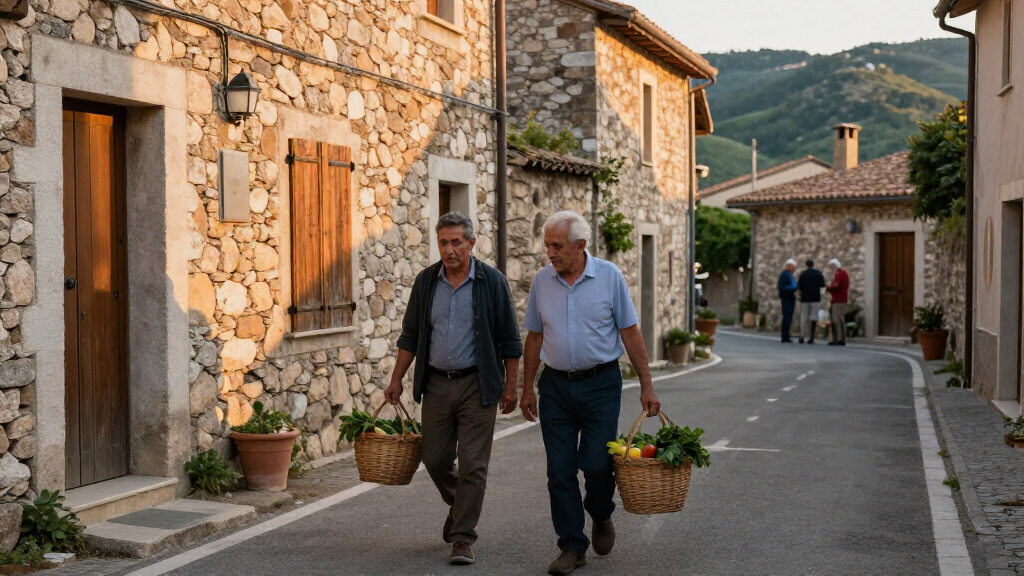
Bolotana, a village of about 2,300 residents in Sardinia’s mountains, drew attention after its reported concentration of centenarians. To examine whether the pattern held up beyond a snapshot count, the team assessed survival from age 70 to 100 and life expectancy at 70, then traced records across more than a century. The paper, by Giovanni Mario Pes and co-authors, appeared in Frontiers in Aging in 2026.
Study co-author S. Jay Olshansky, professor emeritus of epidemiology at the University of Illinois Chicago School of Public Health, said Bolotana’s municipal and baptismal records date back centuries. Researchers used those archives to verify ages, rather than relying only on reported ages or a list of people currently living to 100.
“What makes Bolotana extraordinary is that it has an incredible historical record that allows us to definitively evaluate ages at birth and death.”
— S. Jay Olshansky, study co-author
Why Residents Live Longer Remains Unknown
The study identifies a survival pattern but does not explain its causes. Researchers have pointed to local food, walking, family support, social connection and genetics as possible factors. Those ideas are clues for further research, not findings that this analysis tested or confirmed.
The estimates also describe particular historical birth cohorts and depend on the records and methods used in the study. The report does not establish that the same survival rates apply to every current resident, to men, or to people in other places. Nor does it show which factor, if any, has the largest influence.
The study’s finding that six people aged 100 or older lived in Bolotana in 2024 is a count for that year, while the survival estimates draw on people born between 1900 and 1925. These measures have different time frames and should not be treated as interchangeable. Further analyses would be needed to assess whether the pattern continues across cohorts.
Further Research Must Test Possible Causes
The paper establishes a basis for further investigation: verified life histories and comparisons of survival among older adults. Researchers can use that record to examine whether Bolotana’s pattern persists across generations and how it compares with other communities using similar measures.
The next step is to test proposed explanations rather than infer them from the village’s characteristics. That could mean studying the roles of health, activity, diet, social relationships and inherited factors, while separating their effects where possible. The source report does not announce a specific follow-up study or timetable.
For now, the finding is best read as evidence of exceptional late-life survival in one village, not proof of a particular path to longevity. Whether Bolotana meets the criteria for a new blue zone—and what might account for its results—remains a subject for continued research.
Key Questions
What did the Bolotana study find?
Researchers estimated that 13.8% of women who reach 70 in Bolotana will live to 100. The comparable estimates were about 3.5% for women in Italy and 3.6% for women in the United States.
How did researchers check the ages?
The team matched birth, death and baptismal records from municipal and church archives to verify ages, according to the study’s co-author.
Has the study shown why people in Bolotana live longer?
No. The study examined survival patterns, not causes. Walking, local food, family ties, social connection and genetics are possible factors for future research, not explanations proved by this analysis.
Is Bolotana confirmed as a new blue zone?
The findings suggest Bolotana may represent a newly identified blue zone. The report describes an unusual longevity pattern, but does not establish that the village has received a definitive blue-zone designation.
Source: rss
Halloween Picks
halloween
As an affiliate, we earn on qualifying purchases.