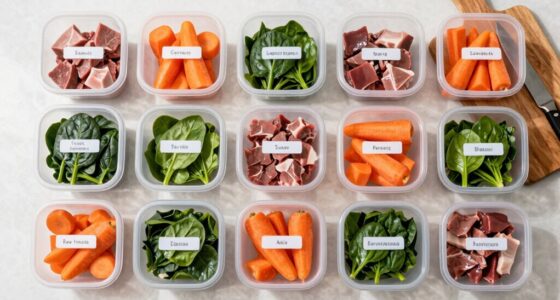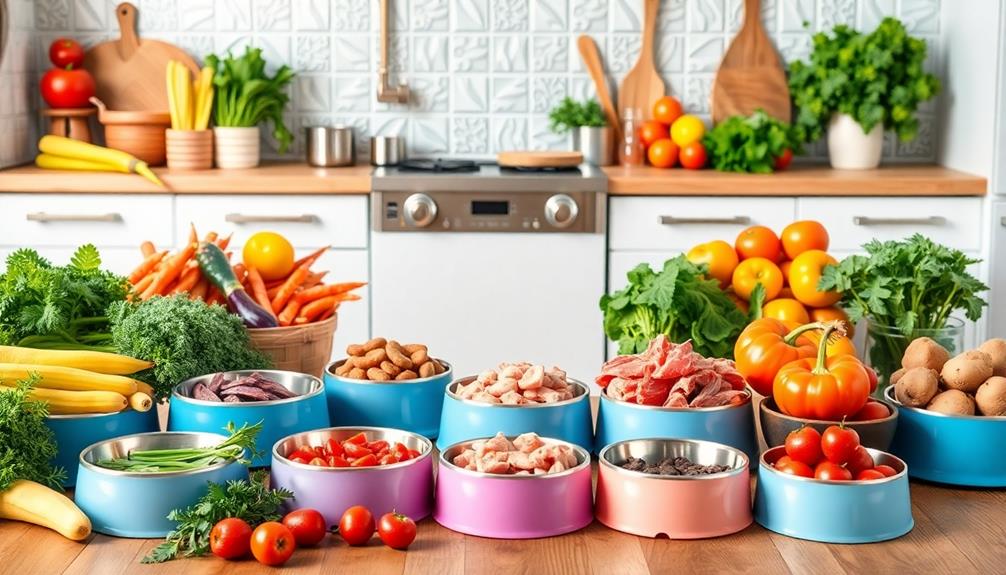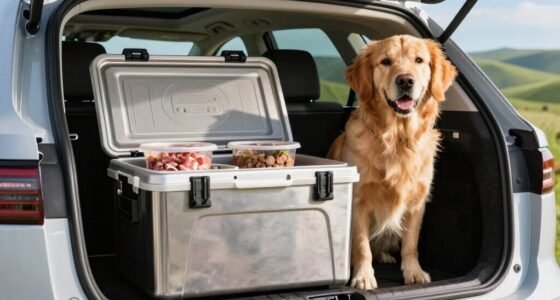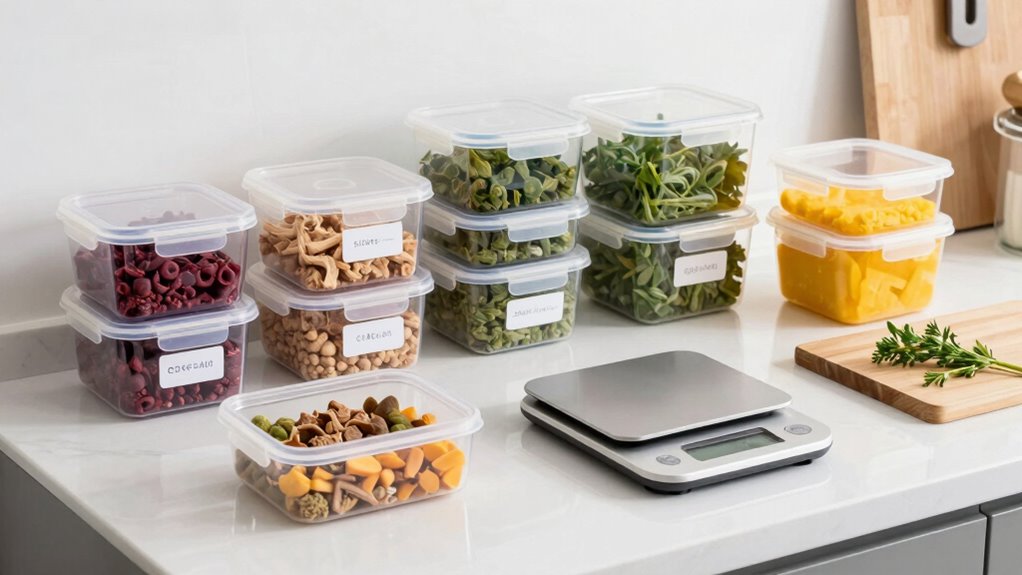

To store small raw pet portions more efficiently, use airtight, BPA-free containers to keep food fresh and safe. Opt for smaller sizes for individual servings, making meals easy to grab and prepare. Freeze small amounts in ice cube trays, then transfer to larger bags for convenience. When it’s time to thaw, avoid room temperature; use a refrigerator or cold water instead. This method helps maintain quality and supports better organization. You’ll discover even more tips ahead.

Get health and wellness essentials delivered free with Prime
- Fast, free delivery on millions of items
- Prime Video, Amazon Music and more included
- Member-only deals all year
Key Takeaways
- Use airtight, BPA-free containers to ensure freshness and prevent contamination of raw pet portions.
- Portion raw food into smaller containers for easy meal prep and portion control.
- Freeze small amounts in ice cube trays, then transfer to resealable bags for efficient storage.
- Label each container with contents and preparation date to track freshness and rotate stock.
- Thaw portions in the refrigerator or cold water, avoiding room temperature to prevent bacterial growth.
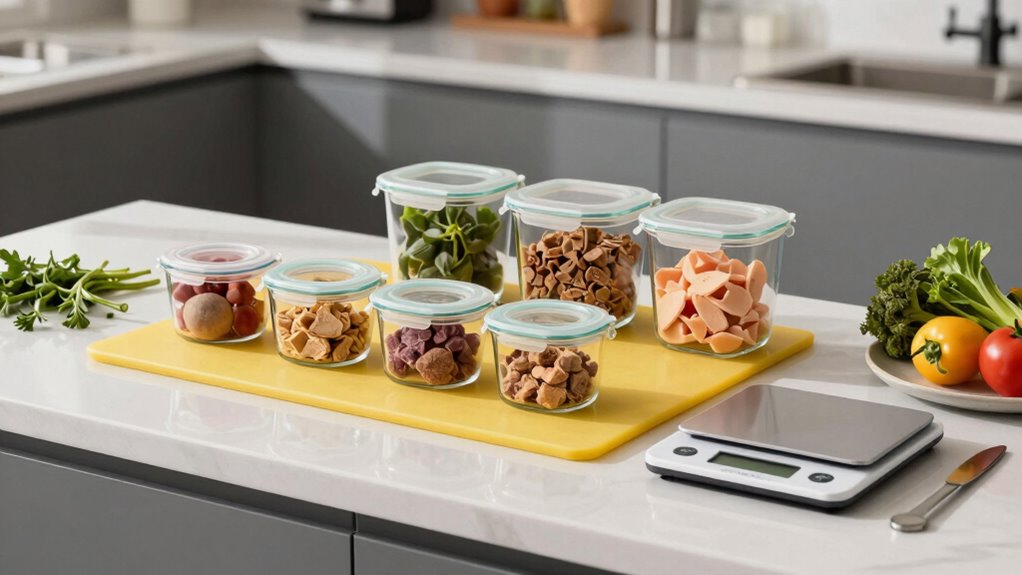
If you’re feeding your pet raw portions, knowing how to store them properly is essential. Proper storage not only guarantees food safety but also makes meal prep easier and more efficient. Start by using suitable storage containers. Opt for airtight, BPA-free containers to keep your raw portions fresh and prevent contamination. You can find a variety of sizes, which can help with portion control; smaller containers are great for individual servings, while larger ones can hold bulk quantities.
Proper storage is key for feeding your pet raw portions—use airtight, BPA-free containers for freshness and safety.
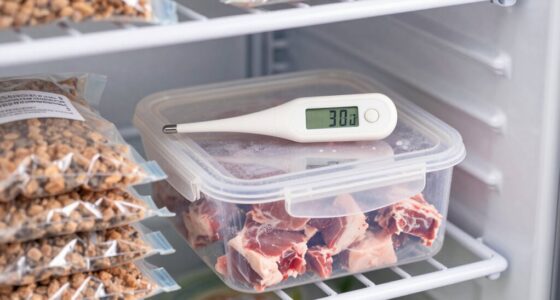
When it comes to freezing techniques, there are a few methods you can use to make the most of your storage space. If you’re preparing several portions at once, consider using ice cube trays to freeze small amounts. Once frozen, transfer the cubes to a larger storage container or a resealable freezer bag. This way, you can easily thaw only what you need, reducing waste and keeping your pet’s meals fresh.
Thawing methods are just as important as freezing. Avoid leaving raw portions out at room temperature, as this can compromise food safety. Instead, use the refrigerator for gradual thawing or place the sealed container in a bowl of cold water. These methods help maintain the integrity of the food while preventing bacterial growth. If you’re in a hurry, you can also use the microwave on a defrost setting, but be sure to use it cautiously to avoid partially cooking the food.
To keep your storage organized, implement a labeling system. Clearly mark each container with the contents and date of preparation. This not only helps you track freshness but also makes it easier to rotate your stock, guaranteeing you use older portions first. Organization tips like placing the oldest items at the front of your freezer can save you time and hassle during meal prep. Additionally, understanding the importance of proper storage can help you prevent spoilage and ensure your pet’s meals stay nutritious.
Finally, regularly check your stock and adjust your shopping list accordingly. This will help you maintain a balance between having enough raw portions on hand and minimizing the risk of spoilage. By focusing on these storage techniques, you’ll find that feeding your pet raw portions becomes a smoother, more efficient process. With the right approach, you’ll guarantee your furry friend enjoys fresh, nutritious meals while keeping everything neatly organized and safe.
airtight BPA-free pet food containers
As an affiliate, we earn on qualifying purchases.
As an affiliate, we earn on qualifying purchases.
Frequently Asked Questions
Can I Freeze Raw Pet Portions in Glass Containers?
Yes, you can freeze raw pet portions in glass containers. Using glass containers offers several benefits, like preserving freshness and preventing odors. They’re also reusable, making them great for portion control. Just make sure to leave some space for expansion as the food freezes. Label each container with the date and contents to keep track of your pet’s meals easily. This method keeps everything organized and ready when your furry friend needs it!
How Long Can Raw Pet Portions Be Stored in the Fridge?
You know how a well-organized fridge feels like a well-tuned orchestra? When it comes to raw pet portions, you can safely store them in the fridge for about 1 to 3 days. Just like keeping your instruments in tune, raw food safety hinges on proper storage. Make sure to label and arrange those portions neatly, so you can easily grab them when it’s time to feed your furry friend!
Is It Safe to Mix Different Types of Raw Meat?
Yes, it’s generally safe to mix different types of raw meat, as long as you follow safety guidelines. Combining raw meat combinations can provide a balanced diet for your pet, but be cautious. Always guarantee the meats are fresh and sourced from reputable suppliers. Keep everything clean to avoid cross-contamination, and store the mixtures properly. Monitor your pet for any reactions when introducing new meats, and consult your vet if you have concerns.
What Are the Best Labels for Identifying Frozen Portions?
The best labels for identifying frozen portions include clear, waterproof tags that specify the type of meat and portion sizes. Use labeling techniques like color coding for different proteins or date marking to track freshness. You could also include any added supplements or notes on your pet’s specific dietary needs. This way, you’ll always know what’s in each package and guarantee your pet gets the right meal every time.
How Do I Defrost Raw Pet Portions Safely?
To defrost raw pet portions safely, use one of these defrosting methods: the refrigerator, cold water, or microwave. If you choose the refrigerator, plan ahead—this method takes several hours. For cold water, seal the portions in a waterproof bag and submerge them, changing the water every 30 minutes. If you’re in a hurry, use the microwave but cook immediately after. Always practice safe handling to prevent any contamination during the process.
Conclusion
To sum up, storing small raw pet portions efficiently is like setting up a cozy nest for your furry friend. By using airtight containers, labeling portions, and freezing extras, you’ll keep everything fresh and organized. This not only saves time but also guarantees your pet gets the best nutrition possible. So, take a moment to streamline your storage, and watch how it transforms mealtime into a delightful experience for both you and your beloved companion.
Cold & flu season Picks
humidifiers
As an affiliate, we earn on qualifying purchases.