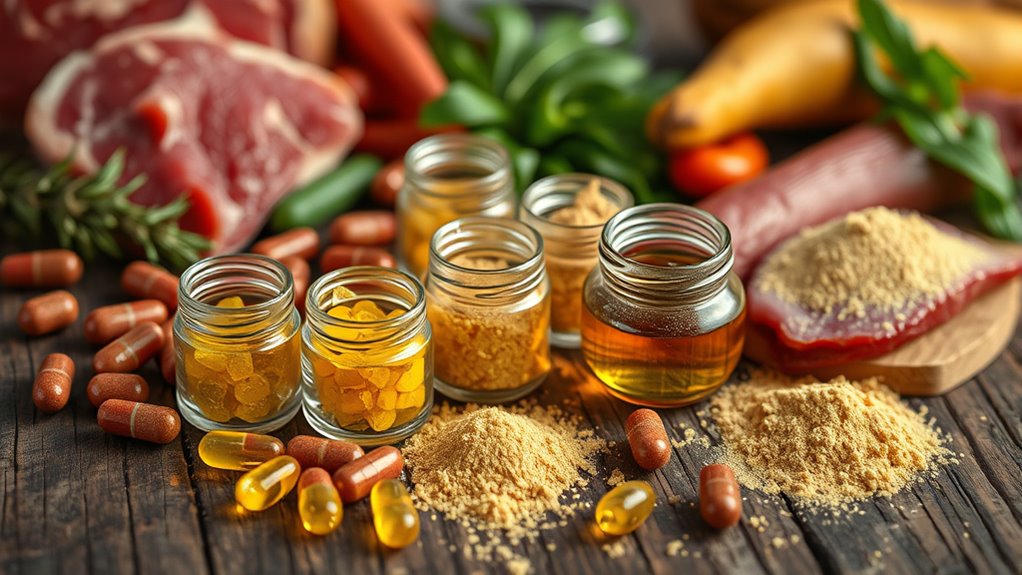

In your pet’s raw diet, adding essential supplements like taurine and iodine helps guarantee they get complete nutrition. Taurine supports heart and vision health, especially in cats, while iodine boosts thyroid function. You should choose high-quality, vet-approved products to avoid imbalances or toxicity. Proper supplementation can fill nutrient gaps and promote overall well-being. If you continue exploring, you’ll discover how to safely incorporate these nutrients and more for your pet’s ideal health.
Key Takeaways
- Proper supplementation fills nutrient gaps in raw diets, ensuring pets receive essential nutrients like taurine, iodine, and omega-3s.
- Taurine is crucial for heart and vision health, especially in cats and some dog breeds, preventing serious deficiencies.
- Iodine supports thyroid function; correct dosing prevents hypothyroidism or hyperthyroidism in pets on raw diets.
- Including high-quality vitamins and minerals enhances overall health and nutrient absorption in raw-fed pets.
- Regular veterinary guidance ensures safe, tailored supplement use, avoiding toxicity and balancing pet nutritional needs.
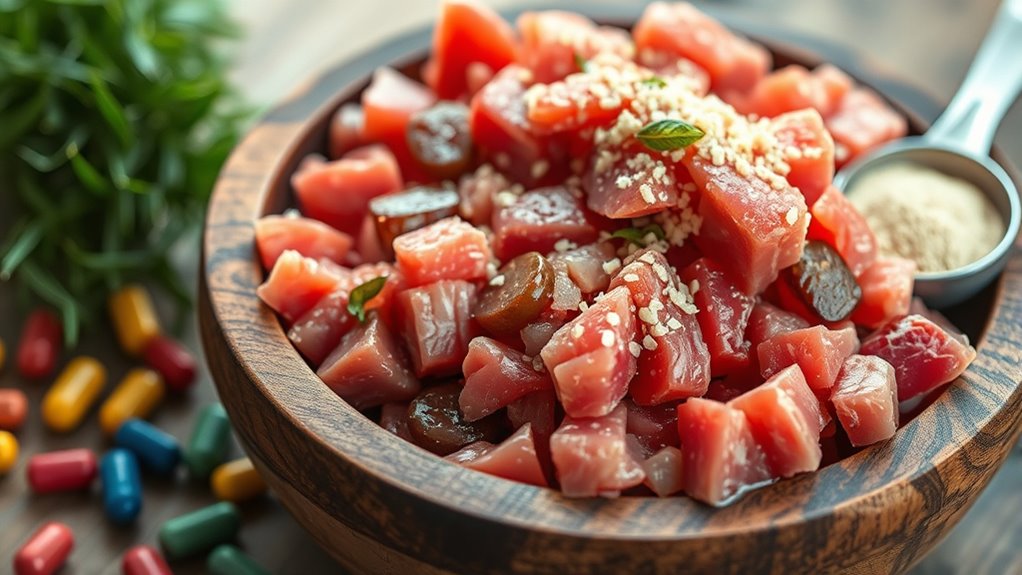
Raw diets for pets are gaining popularity, but they often lack certain nutrients your pet needs to stay healthy. Without proper planning, these diets can fall short in providing a complete nutritional balance. That’s where supplements come into play, helping to fill in the gaps and guarantee your pet gets everything they need to thrive. However, supplement safety is essential; you must choose high-quality products and administer them correctly to avoid over-supplementation or nutrient imbalances.
One of the most indispensable nutrients that often gets overlooked in raw diets is taurine. This amino acid is necessary for your pet’s heart health, vision, and overall well-being. Dogs usually produce enough taurine naturally, but some breeds and individual animals can benefit from additional supplementation. Cats, on the other hand, are obligate carnivores and rely heavily on taurine from their diet. If their raw food lacks sufficient taurine, they can develop serious health issues like blindness or heart disease. Guaranteeing your pet’s diet includes a taurine supplement—or choosing raw foods that naturally provide enough—can help maintain their health.
Taurine is vital for pets’ heart, vision, and overall health—especially for cats and some dogs.
Iodine is another critical nutrient to think about when feeding raw diets. This mineral supports thyroid function, which regulates metabolism, energy levels, and overall growth. If your pet’s diet is deficient in iodine, they can develop hypothyroidism, leading to lethargy, weight gain, and other health problems. Conversely, too much iodine can cause hyperthyroidism or other thyroid issues. It’s important to find the right balance, which means selecting a safe, well-formulated iodine supplement and monitoring your pet’s response. Using supplements that are specifically designed for pets and approved by veterinarians adds a layer of safety, helping you avoid potential toxicity.
Beyond taurine and iodine, other supplements like omega-3 fatty acids, vitamins, and minerals may be necessary to support overall health. Omega-3s, for example, promote healthy skin and coat, joint health, and brain function. But adding these supplements should be done thoughtfully, ensuring they complement the diet rather than cause excesses. Proper understanding of nutrient bioavailability is essential to maximize benefits and prevent deficiencies. Always consult your veterinarian before introducing new supplements to confirm they’re appropriate and to determine proper dosages.
Frequently Asked Questions
Are There Specific Brands Recommended for Pet Supplement Safety?
You should choose brands with a strong reputation for safety and transparency. Look for companies that prioritize high-quality ingredient sourcing and clear labeling. Reputable brands often undergo third-party testing to ensure supplement purity and potency. Research customer reviews and consult your vet to find trusted options. Avoid lesser-known brands that lack transparency or proper testing, and always verify that the supplements meet safety standards before incorporating them into your pet’s diet.
Can Supplements Replace a Balanced Raw Diet Entirely?
Don’t put all your eggs in one basket—supplements can’t substitute a balanced raw diet entirely. Relying solely on supplements risks nutrient imbalance and creates supplement dependency, which can harm your pet’s health. You need a well-rounded approach, combining quality raw ingredients with targeted supplements to fill gaps. Always consult your vet to ensure your pet’s diet covers all essential nutrients and keeps them thriving.
How Often Should Pet Blood Levels Be Monitored for Nutrient Deficiencies?
You should schedule blood testing frequency based on your pet’s diet and health status, typically every 6 to 12 months. Regular nutrient monitoring helps identify deficiencies early, especially when feeding raw diets or supplements. Consult your veterinarian to determine the appropriate blood testing schedule for your pet, ensuring their nutrient levels stay balanced and healthy over time. Consistent monitoring is key to maintaining ideal wellbeing.
Are There Age-Specific Supplement Needs for Puppies or Seniors?
Just like a fine wine ages gracefully, your pet’s supplement needs change with age. Puppies require specific nutrients for growth, while seniors need support for joint health and mobility. Age-specific needs and life stage considerations guarantee your pet stays healthy and vibrant. Consult your vet regularly to modify supplements as your pet shifts through different life stages, helping them thrive long-term.
What Are Signs of Over-Supplementation in Pets?
You’ll notice signs of toxicity if your pet shows vomiting, diarrhea, lethargy, or loss of appetite, indicating excess nutrient intake. Over-supplementation can also cause muscle weakness, tremors, or abnormal behavior. To prevent this, stick to recommended dosages and consult your vet regularly. Monitoring your pet’s health helps catch signs early, ensuring they get the right balance of nutrients without risking toxicity or adverse reactions.
Conclusion
Including supplements like taurine and iodine in your pet’s raw diet can make a real difference in their health. Did you know that over 40% of pet owners are now adding supplements to improve their pets’ nutrition? By staying informed and mindful of your pet’s specific needs, you guarantee they get the essential nutrients for a vibrant, healthy life. Remember, a well-balanced diet with the right supplements can truly boost your furry friend’s well-being.