
To smoothly switch your pet from kibble to raw food in 4-6 weeks, start by mixing 25% raw with kibble and gradually increase the raw portion each week, observing your pet’s response. Maintain a consistent feeding schedule, and monitor for any signs of digestive upset. If needed, slow down or adjust the pace to guarantee a stress-free, balanced transition. Keep going, and you’ll discover more tips to make the change successful.
Key Takeaways
- Develop a detailed 4-6 week schedule to gradually replace kibble with raw food.
- Start with 25% raw mixed with kibble, then increase gradually over weeks.
- Maintain consistent feeding times and monitor pet’s digestion throughout the process.
- Adjust the transition pace if signs of digestive upset or sensitivity appear.
- Consult a veterinarian to ensure a balanced raw diet and proper nutritional guidance.

Switching your pet from kibble to raw food can seem intimidating, but with a well-planned changeover, it’s entirely manageable. The key is to implement a gradual transition over 4 to 6 weeks, giving your pet’s digestive system time to adapt. To start, you should establish a consistent feeding schedule. Determine how many meals your pet typically eats each day and plan to gradually replace portions of the kibble with raw food during each meal. This approach minimizes the risk of gastrointestinal upset and helps your pet accept the new diet more comfortably.
Gradually switch your pet to raw food over 4-6 weeks with a consistent feeding schedule.
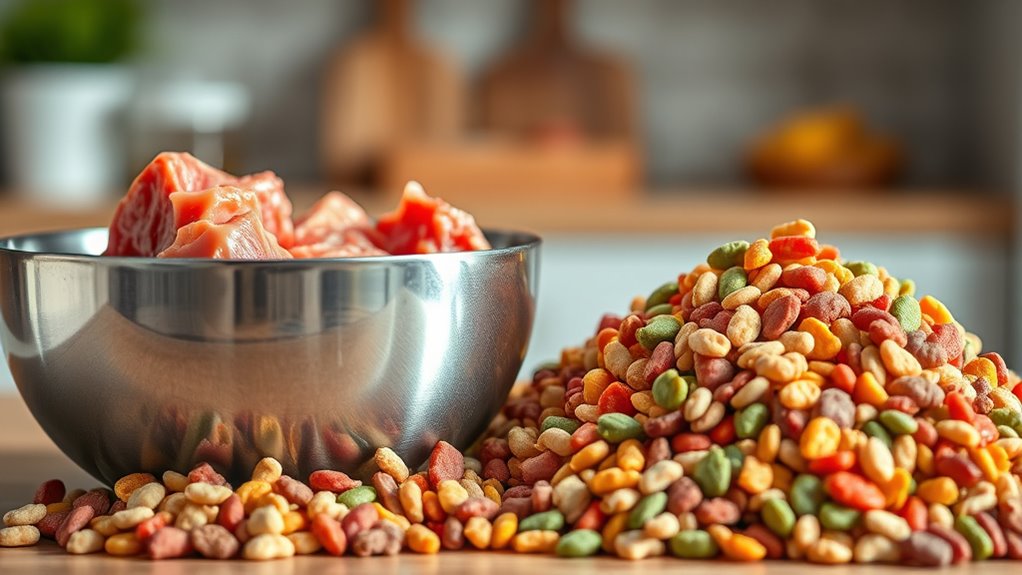
Begin by mixing a small amount of raw food—about 25%—with their usual kibble. Feed this combination for several days, observing how your pet responds. If they tolerate it well, slowly increase the raw portion while decreasing the kibble. For example, after the first few days, move to a 50/50 mix, then to 75% raw and 25% kibble in the following days. Throughout this process, stick to consistent feeding schedules, as pets thrive on routine. Feeding at the same times each day helps regulate digestion and reduces anxiety during the changeover.
It’s important to monitor your pet closely during this gradual process. Watch for signs of digestive upset, such as vomiting, diarrhea, or constipation, and adjust the transition pace if needed. If your pet shows sensitivity, slow down the process, increasing the raw food portion more gradually. Make sure that the raw food you introduce is balanced and appropriate for your pet’s age, size, and health needs. Consulting your veterinarian can provide guidance on selecting the right raw diet and help you tailor the changeover plan. Additionally, understanding decoding slang can help you communicate more effectively with pet owners and professionals about your pet’s needs and progress.
As you progress through the weeks, continue to replace kibble with raw food in small increments, always maintaining consistent feeding schedules. Keep in mind that patience is essential. Some pets adapt quickly, while others may take longer. The goal is to create a seamless, stress-free changeover that establishes raw food as a regular part of their diet. Once you reach about 100% raw food, maintain regular feeding times and monitor your pet’s health to ensure they’re thriving. With careful planning and patience, transitioning from kibble to raw food can be a smooth and rewarding experience for both you and your pet.
Frequently Asked Questions
How Do I Know if My Dog Is Ready for Raw Food?
You’ll know your dog is ready for raw food when their behavior shows increased energy and enthusiasm during mealtime. Conduct a nutritional assessment to guarantee they’re thriving on current diets, and consult your vet if you notice any digestive issues or changes in stool. Gradually introduce raw options, observing their response. If they maintain healthy weight, enjoy the food, and show no adverse reactions, they’re likely ready for the switch.
Are There Specific Breeds That Tolerate Raw Diets Better?
Certain breeds, like Beagles and Boxers, often better tolerate raw diets thanks to their breed-specific suitability. You might notice easier acceptance and fewer digestive disturbances in these breeds, aligning with their natural dietary preferences. Breeds with robust digestion typically handle raw food more comfortably, making your shift smoother. Keep in mind, always observe your dog’s response and consult your vet to ensure a safe, satisfying switch tailored to your breed’s unique needs.
What Are the Signs of Digestive Upset During Transition?
You might notice digestive symptoms like diarrhea, vomiting, or constipation during the changeover. Behavioral changes such as lethargy, irritability, or decreased appetite can also occur. Keep a close eye on your pet and monitor these signs closely. If symptoms persist or worsen, consult your veterinarian. Staying attentive helps safeguard a smooth switch to raw food and keeps your pet comfortable and healthy throughout the process.
How Do I Handle Picky Eaters During the Switch?
Remember, “You are what you eat,” so patience is key. When handling picky eaters, introduce new raw foods gradually, mixing small amounts with their familiar kibble. Offer a variety of textures and flavors to appeal to their taste preferences. Stay consistent and positive, and avoid forcing them. Over time, their palate will adjust, and they’ll learn to enjoy the benefits of raw eating.
Can I Mix Raw With Other Types of Food During Transition?
Yes, you can mix raw with other foods during the changeover, but do so gradually to avoid upsetting your pet’s feeding schedule. Incorporate raw alongside kibble or cooked foods, ensuring ingredient variety to keep their diet balanced. Start with small amounts of raw and increase gradually, observing your pet’s response. This approach helps your pet adapt smoothly while maintaining nutritional consistency and preventing digestive issues.
Conclusion
As you watch your pet’s bowl transform from dry kibble to vibrant raw bites, you’ll see a spark return to their eyes. Picture their coat shining brighter and their energy renewed with each passing week. This shift isn’t just about food; it’s about giving your furry friend a fresh start, a new chapter filled with wholesome, nourishing meals. Embrace the journey, and soon, you’ll both enjoy a healthier, happier life together.