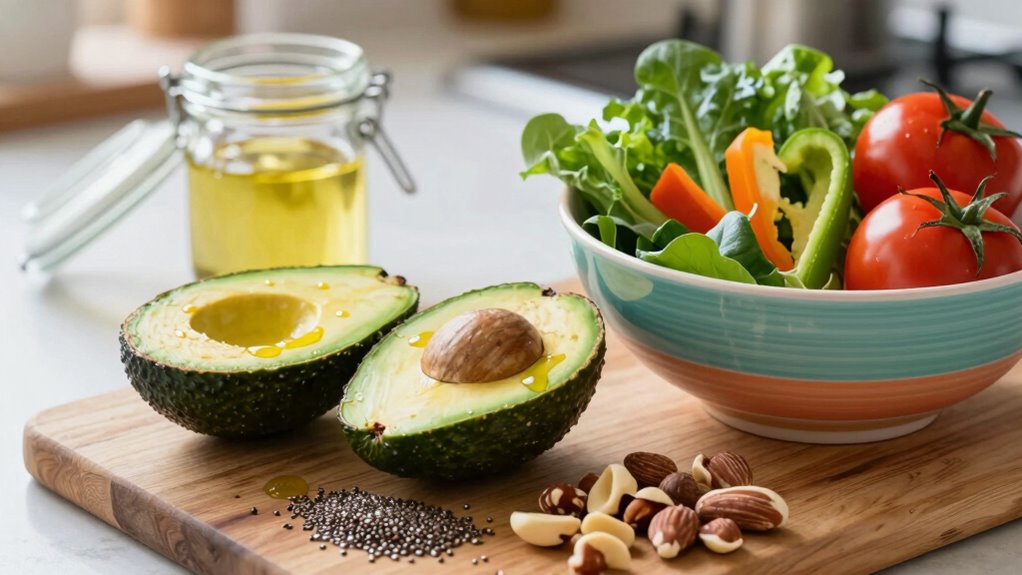

To use fat strategically in raw meals for longer satiety, incorporate sources like avocados, nuts, and seeds. These healthy fats not only enhance flavors but also keep you feeling fuller. Try adding olive oil to salads or coconut cream to smoothies for a creamy texture. Chia and flax seeds provide omega-3s, boosting your nutrient intake. By mixing and matching these fats, you’ll create satisfying meals that nourish your body. There’s more to discover about maximizing your meals efficiently.

Get health and wellness essentials delivered free with Prime
- Fast, free delivery on millions of items
- Prime Video, Amazon Music and more included
- Member-only deals all year
Key Takeaways
- Incorporate avocados in salads and smoothies for their creamy texture and healthy monounsaturated fats, promoting longer satiety.
- Add a variety of nuts and seeds for crunch, fiber, and essential omega-3 fatty acids, enhancing both nutrition and fullness.
- Use extra virgin olive oil in dressings to boost flavor and provide antioxidants, supporting heart health and satiety in raw meals.
- Mix coconut cream into smoothies or desserts for a rich, satisfying texture and the benefits of saturated fats that promote fullness.
- Experiment with different healthy fats to find combinations that enhance flavors and increase satisfaction, contributing to overall wellness.
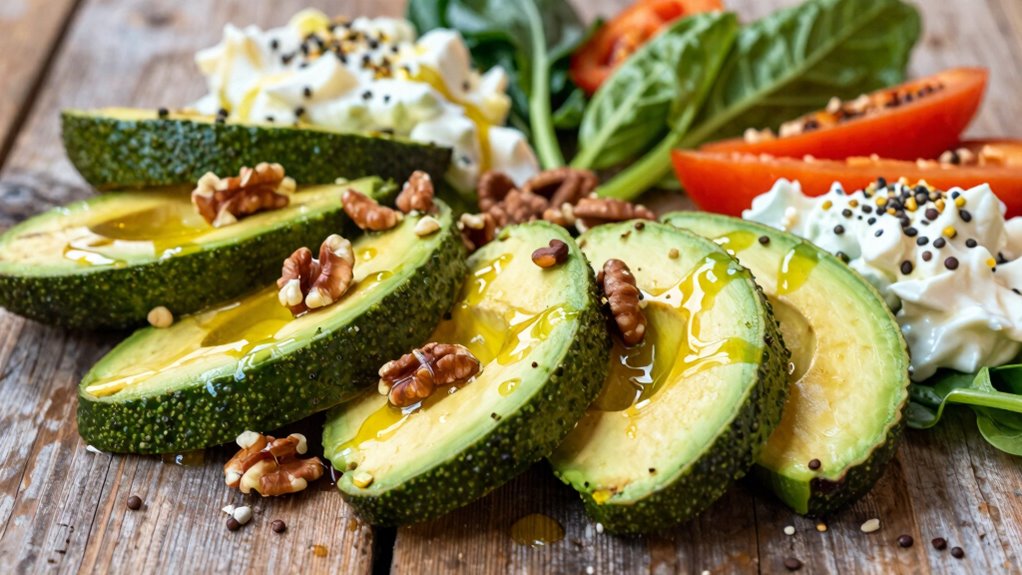
When you think about raw meals, you might overlook the importance of healthy fats, but they’re essential for balanced nutrition. Incorporating healthy fats not only enhances flavors but also helps keep you feeling satisfied longer. One of the best sources of healthy fats is the avocado. Its creamy texture and rich taste make it a perfect addition to salads or smoothies. The avocado benefits don’t stop at taste; it’s packed with monounsaturated fats that can help improve heart health and lower bad cholesterol.
In addition to avocados, you can explore various nut varieties and seed options to boost your meals. Nuts like almonds, walnuts, and cashews are fantastic for snacking or adding crunch to your dishes. Each type provides unique nutrients and healthy fat profiles that contribute to overall wellness. Seeds, such as chia, flax, and pumpkin, also offer a great source of omega-3 fatty acids and fiber, helping you achieve the right fat balance in your diet. Including a variety of these fats can also support holistic health by providing different benefits for your body.
Explore the variety of nuts and seeds to enhance your meals with unique nutrients and healthy fats for optimal wellness.
Olive oil is another versatile fat that deserves a spot in your raw meals. It’s not just for cooking; drizzling high-quality extra virgin olive oil over your salads or using it as a dressing can elevate the taste and nutritional value of your meals. Its antioxidants and anti-inflammatory properties further enhance its health benefits, making it an ideal choice for a raw food lifestyle. Additionally, choosing unrefined oils ensures you retain more of their natural nutrients and health-promoting compounds. Using quality oils can significantly impact the overall nutrient density of your meals.
Coconut cream is another delicious option that can add richness to your dishes. It’s perfect for creating creamy smoothies or using in raw desserts. The saturated fats in coconut cream can help you feel fuller for longer while providing a unique flavor profile that pairs well with fruits and other natural sweeteners. Additionally, incorporating healthy fats into your diet supports both satiety and holistic health.
As an affiliate, we earn on qualifying purchases.
Frequently Asked Questions
Can I Use Any Type of Fat in Raw Meals?
Yes, you can use various types of fat in raw meals. Focus on nutrient density by combining healthy fats like avocados, nuts, and seeds. These fats not only enhance flavor but also provide essential nutrients. Experiment with different fat combinations to find what suits your taste and keeps you satisfied longer. Just remember to balance them with other ingredients to create a well-rounded meal that fuels your body effectively.
How Do Fats Affect Nutrient Absorption in Raw Foods?
When you add avocado to your salad, you boost nutrient absorption considerably. Fats enhance nutrient bioavailability, especially for fat-soluble vitamins like A, D, E, and K. Without fat, your body struggles to absorb these essential nutrients effectively. So, including healthy fats in your raw meals isn’t just about flavor; it’s crucial for maximizing the benefits of your food. You’ll feel more energized and nourished, making every bite worthwhile.
Are There Any Fats That Should Be Avoided?
You should definitely avoid unhealthy fats like trans fats and excessive saturated fats. Instead, focus on healthy fats from unsaturated sources, such as omega-3 sources like flaxseed or walnuts. When choosing cooking oils, opt for those rich in unsaturated fats, like olive oil. Keep an eye on your fat ratios; balancing healthy fats with other nutrients can boost your overall meal quality and help you feel satisfied longer.
What Are Some Common Misconceptions About Fat in Raw Diets?
Many people see fat as a villain in the raw diet, but that’s a clouded view. You’ll find fat benefits, like enhancing flavor and promoting satiety, are often overshadowed by raw misconceptions. Nutrient myths lead you to believe all fats are harmful, fueling satiety confusion. Embracing healthy fats can be your secret weapon, transforming meals into satisfying experiences that nourish your body and delight your palate. Don’t let misconceptions steer you wrong!
How Do Different Fats Impact Flavor in Raw Meals?
Different fats can dramatically impact flavor in raw meals. For instance, avocado’s creamy texture adds richness and subtlety, enhancing the overall taste. Nut oils, like walnut or almond, introduce unique, nutty profiles that can elevate your dishes. By mixing these fats, you create a depth of flavor that keeps your meals interesting. So, don’t shy away from experimenting with avocado benefits and various nut oils to find your perfect combination!
Conclusion
Incorporating fat into your raw meals is like adding a rich tapestry to a canvas, weaving flavors and textures that not only delight the palate but also extend your feeling of fullness. As you explore nut butters, avocados, and seeds, remember that these ingredients can turn a simple dish into a nourishing feast. Embrace the power of healthy fats, and watch your meals transform into satisfying experiences that linger long after the last bite.
Cold & flu season Picks
humidifiers
As an affiliate, we earn on qualifying purchases.