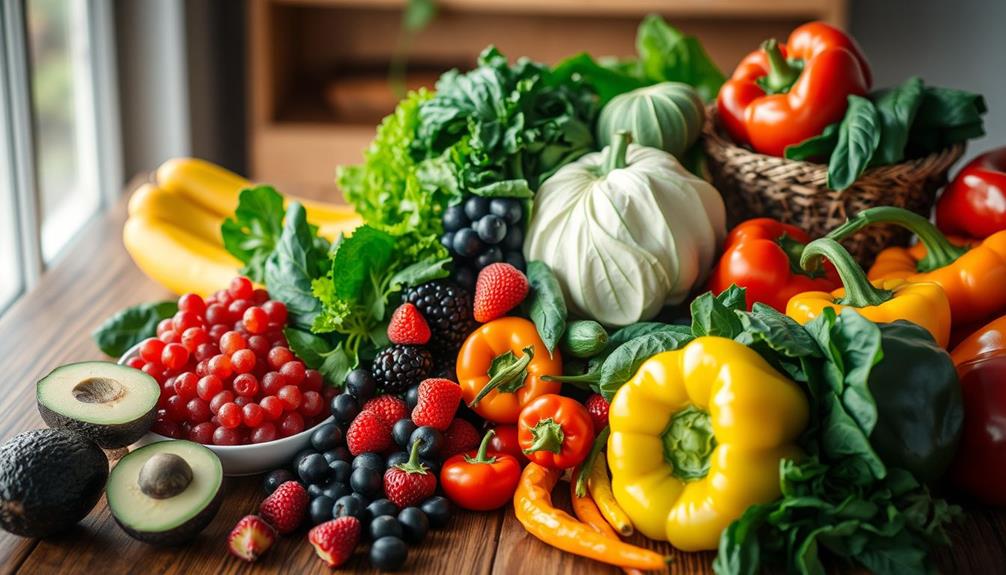
Consuming high-water foods like cucumbers, watermelon, and strawberries naturally boosts your hydration levels while providing essential electrolytes such as potassium and magnesium. These nutrients help regulate muscle function, nerve signals, and fluid balance. Incorporating these foods into your diet can prevent dehydration, reduce water retention, and support overall tissue health. If you want to understand how to optimize electrolyte intake and hydration from these foods, there’s more to discover further on.
Key Takeaways
- High-water foods like cucumbers and watermelon naturally boost hydration and supply essential electrolytes such as potassium and magnesium.
- Proper intake of electrolytes helps regulate fluid balance, muscle function, and nerve signaling in conjunction with water-rich foods.
- Consuming balanced water and electrolyte-rich foods prevents water retention, swelling, and dehydration.
- Including high-water fruits and vegetables supports tissue health, joint lubrication, and overall hydration.
- Practical tips like eating watermelon slices or adding cucumbers to salads enhance hydration and maintain electrolyte balance.
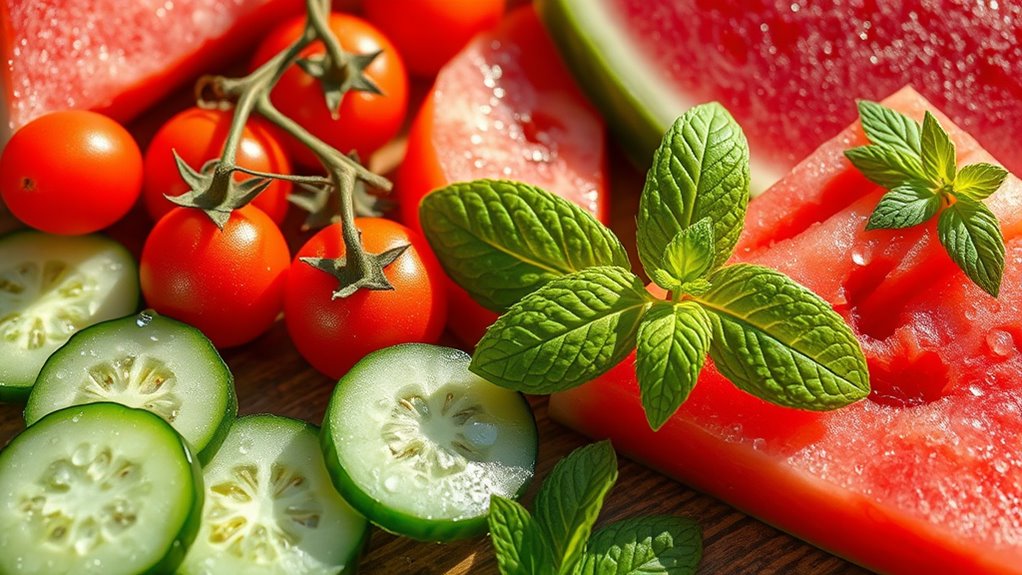
Have you ever wondered why staying hydrated is so essential for your health? It’s because water does far more than quench your thirst; it plays a critical role in maintaining electrolyte balance, regulating your body temperature, and supporting vital functions. When you consume high-water foods, you’re naturally boosting your hydration levels, but it’s also important to understand how these foods influence your body’s electrolyte levels and water retention. Electrolytes like sodium, potassium, and magnesium help your muscles contract, nerves send signals, and fluids move in and out of cells. Eating foods rich in water content, such as cucumbers, watermelon, or strawberries, provides not only hydration but also necessary electrolytes that help maintain this delicate balance.
Staying hydrated supports electrolyte balance, regulates body temperature, and promotes overall vital functions.
Staying well-hydrated with high-water foods can help prevent water retention, which is often misunderstood. When your body detects an electrolyte imbalance, it can hold onto excess water to compensate, leading to swelling or bloating. Consuming foods with a balanced mix of water and electrolytes helps your body manage water retention more effectively. For example, water-rich fruits like cantaloupe or oranges deliver hydration while supplying potassium, which is known to counteract sodium’s tendency to cause water retention. This balance is especially indispensable if you’re active, exercising regularly, or in hot weather, where sweating can deplete electrolytes and disrupt your body’s fluid equilibrium.
By choosing high-water foods, you’re not just hydrating; you’re supporting your body’s natural regulation systems. These foods help your kidneys filter excess fluids and electrolytes efficiently, reducing the risk of dehydration or fluid overload. Proper hydration from these foods also ensures your tissues stay healthy and your joints remain lubricated, making daily activities easier and more comfortable. Additionally, consuming water-dense foods can help you maintain a steady energy level, because dehydration and electrolyte imbalance often cause fatigue and muscle cramps. Eating a variety of fruits and vegetables with high water content also contributes antioxidants and necessary nutrients, further supporting your overall health.
Incorporating these foods into your diet is simple and delicious. Think slices of watermelon as a snack, adding cucumber to your salads, or enjoying a bowl of strawberries for dessert. Not only will you enhance your hydration, but you’ll also help your body keep electrolytes balanced and avoid unnecessary water retention. Remember, hydration isn’t just about drinking water; it’s about nourishing your body with the right foods that support fluid regulation at a cellular level. So, next time you think about hydration, consider the high-water foods that can keep you feeling energized, balanced, and healthy from the inside out.
As an affiliate, we earn on qualifying purchases.
Frequently Asked Questions
How Do High-Water Foods Compare to Drinking Water for Hydration?
High-water foods provide effective food-based hydration, often offering additional nutrients along with water. They tend to absorb water more slowly than drinking plain water, which can help maintain hydration longer. While water absorption from foods supports hydration, it’s best to combine both for ideal results. Eating high-water foods can complement your fluid intake, especially if you struggle to drink enough water daily, ensuring you stay well-hydrated naturally.
Can Electrolytes From Food Sources Fully Replace Supplements?
Imagine you’re recovering from intense exercise, and your diet includes bananas and leafy greens. These natural electrolyte sources can help replenish minerals like potassium and magnesium. While food mineralization provides essential electrolytes, it may not fully replace supplements during extreme dehydration or illness. Relying solely on food sources might work in daily hydration but isn’t always sufficient for severe needs, where targeted supplements ensure ideal electrolyte balance.
Are There Specific High-Water Foods Recommended for Athletes?
You should focus on high-water foods like watermelon, oranges, and cucumbers for fruit hydration because they have high vegetable water content. These foods help replenish lost electrolytes naturally and keep you hydrated during intense activity. As an athlete, incorporating these foods into your diet supports your hydration needs, especially in hot weather or after workouts, making them excellent natural choices for maintaining electrolyte balance and preventing dehydration.
How Do Climate and Activity Level Affect Electrolyte Needs?
Climate and activity level substantially influence your electrolyte needs. In hot or humid climates, your body experiences more sweat loss, requiring climate adaptation through increased electrolyte intake. During intense activity, you lose electrolytes faster, so you need to prioritize activity hydration strategies that replenish sodium, potassium, and magnesium. By adjusting your electrolyte intake based on these factors, you help maintain proper hydration, prevent cramps, and support ideal performance.
What Are Signs of Electrolyte Imbalance From Diet Alone?
Think of your body as a finely tuned orchestra; when electrolytes are out of balance, the music falters. Signs of electrolyte deficiency from diet alone include muscle cramps, fatigue, dizziness, and irregular heartbeat. Dietary indicators like poor intake of fruits, vegetables, and electrolyte-rich foods can lead to imbalances. If you notice these symptoms, it’s a cue to review your diet, ensuring you nourish your body with the right minerals to keep everything in harmony.
Conclusion
By choosing high-water foods, you’re filling your body’s reservoir with nature’s purest hydration. Think of these foods as your internal oasis, quenching thirst and balancing electrolytes effortlessly. When you nourish yourself with water-rich produce, you’re planting seeds of vigor that grow stronger with each bite. Embrace these foods as your hydration allies, turning everyday meals into a symphony of refreshment. Stay hydrated, stay vibrant — your body will thank you like a flourishing garden in full bloom.