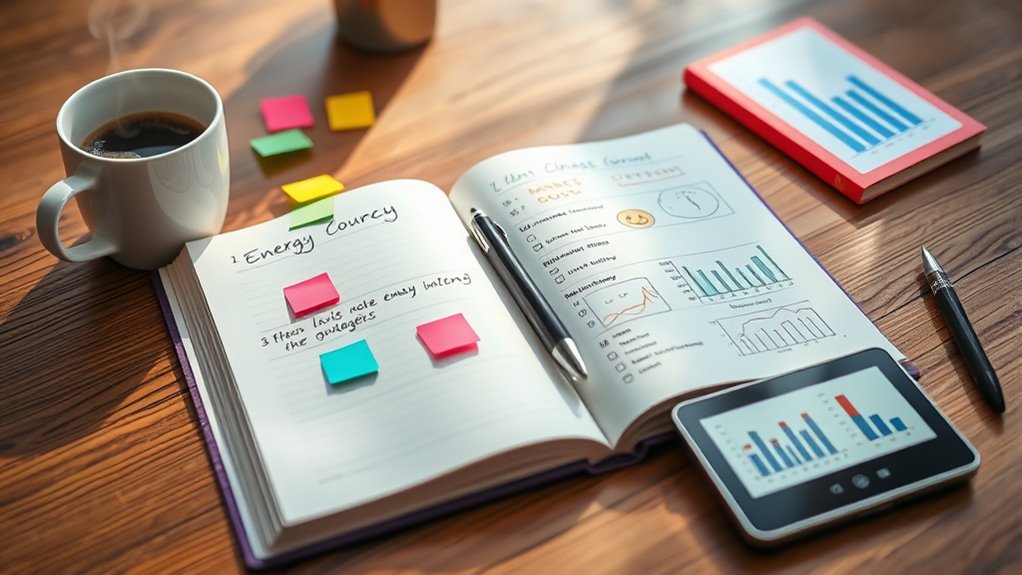

To track your progress in energy, mood, and habits, start by choosing a journaling method, either traditional or digital. Record daily entries about how you feel, your energy levels, and habits like sleep and exercise. Use tools with visual charts or reminders to stay consistent. Analyzing patterns over time helps you make smarter adjustments for improvement. If you keep practicing, you’ll discover more ways to optimize your well-being and maintain motivation.
Key Takeaways
- Use digital journaling apps with mood and energy trackers to record daily feelings, activities, and habits consistently.
- Incorporate prompts or templates to ensure regular and comprehensive entries about mood, energy levels, and habits.
- Analyze visual data like graphs and charts to identify patterns and correlations over time.
- Reflect on journal entries periodically to gain insights and adjust habits for improved well-being.
- Set reminders and goals within digital tools to maintain consistency and motivate ongoing progress tracking.
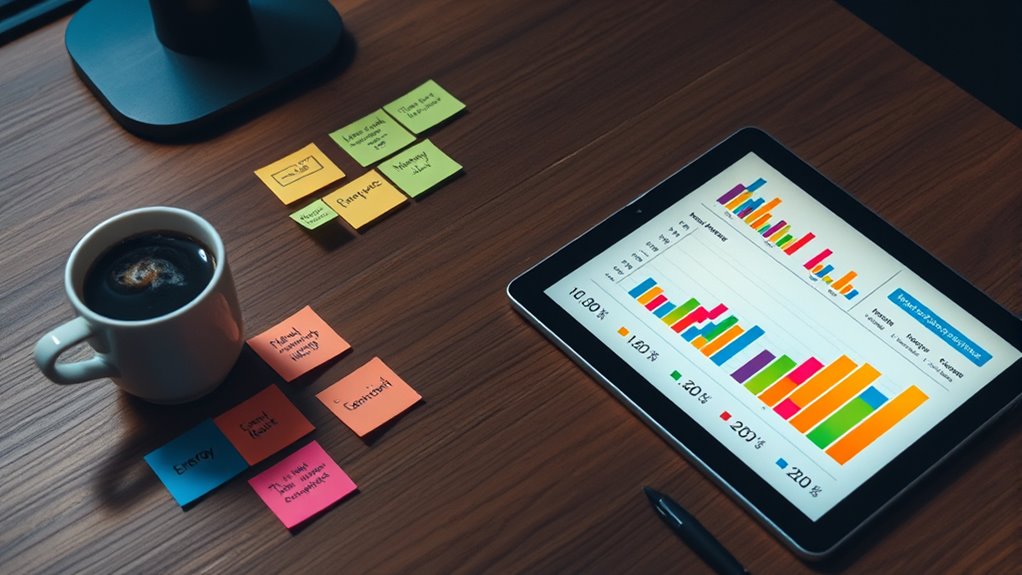
Are you wondering how to effectively track your progress and stay motivated? One of the most powerful methods is using journaling techniques combined with digital tools. Journaling allows you to reflect on your energy levels, mood, and habits, giving you a clear picture of your journey. With digital tools, you can streamline this process, making it easier to record, analyze, and visualize your data. Together, these methods help you stay accountable and identify patterns that might otherwise go unnoticed.
Using journaling and digital tools together enhances progress tracking and self-awareness.
Start by choosing a journaling technique that suits your style. Some prefer traditional pen and paper, writing daily entries about how they feel, what they’ve accomplished, and any challenges faced. Others opt for digital journaling apps that sync across devices, offering convenience and quick entry options. Digital tools often come with built-in features like reminders, mood trackers, and customizable templates, making it easier to maintain consistency. The key is to set aside a few minutes each day to jot down your energy levels, mood swings, and habits, providing a record you can revisit anytime.
When tracking your energy, note how you feel at different times of the day. Are there specific activities that boost your energy, or times when you feel sluggish? Recording these fluctuations helps you understand what influences your vitality. For mood, be honest about how you’re feeling—happy, anxious, stressed, or calm. Recognizing emotional patterns can guide you toward healthier habits and better self-care routines. For habits, document actions like exercise, sleep, nutrition, or screen time. This creates a *thorough* overview of what’s contributing to your overall well-being.
Digital tools make it easy to analyze your data over time. Many apps generate visual graphs and charts, revealing trends that might be hard to notice otherwise. For example, you might discover that your energy dips on days with inadequate sleep or that your mood improves after a walk. These insights empower you to make informed adjustments, reinforcing positive habits and eliminating those that drain your energy or negatively impact your mood. Additionally, understanding the importance of regulatory compliance helps ensure your tracking methods respect privacy standards and legal guidelines.
Consistent tracking also boosts motivation by showing tangible progress, even when it feels like change is slow. Ultimately, integrating journaling techniques with digital tools transforms your progress tracking from a tedious task into an insightful practice. It helps you stay connected to your goals, provides motivation through visible results, and deepens your self-awareness. By making this a regular part of your routine, you’ll develop a clearer understanding of how your energy, mood, and habits intertwine, enabling you to make smarter choices and sustain your growth over time.
digital mood and energy tracker app
As an affiliate, we earn on qualifying purchases.
As an affiliate, we earn on qualifying purchases.
Frequently Asked Questions
What Are the Best Apps for Tracking Energy Levels?
You can find great apps for tracking energy levels like Sleep Cycle, which monitors sleep quality and helps you understand how rest impacts your energy. Daylio lets you log mood, hydration levels, and daily habits easily. MyFitnessPal is excellent for tracking hydration and nutrition, directly affecting your energy. These apps give you insights into patterns, helping you optimize sleep quality and hydration to boost your daily energy.
How Often Should I Review My Progress?
You should review your progress weekly or biweekly to stay on track with your goal setting and maintain habit consistency. Regular check-ins help you identify patterns in your energy, mood, and habits, allowing you to verify as needed. By consistently tracking, you ensure your efforts align with your goals, making it easier to stay motivated and make meaningful improvements over time. Regular reviews keep you focused and committed.
Can Tracking Habits Improve Mental Health?
Tracking your habits can definitely improve mental health because it supports behavior change and habit formation. You might think it’s just about data, but it helps you recognize patterns and triggers, making it easier to implement positive changes. By actively monitoring your progress, you stay motivated, reduce stress, and develop healthier routines that boost your mood and resilience over time. It’s a simple, effective way to take control and foster well-being.
How Do I Stay Motivated to Track Daily?
To stay motivated to track daily, use motivational strategies like setting small, achievable goals and rewarding yourself for consistency. Find accountability partners who can encourage you and hold you responsible, making the process more engaging. Keep reminding yourself of the benefits, such as improved mental health and progress. Incorporate tracking into your routine, making it a non-negotiable part of your day, so motivation becomes a natural part of your habits.
What Indicators Show I’M Making Real Progress?
You’ll see real progress when your behavior patterns align with your goal setting, such as consistent energy levels, improved mood, and habit formation. Notice if you’re achieving smaller milestones regularly and feeling more motivated. Tracking these indicators helps you stay focused, showing that your efforts are paying off. When you observe positive changes in your daily routines and emotional state, it’s a clear sign you’re making meaningful progress.
Conclusion
Tracking your progress isn’t just about numbers; it’s like tending a garden—nurturing growth requires attention, patience, and consistency. By monitoring your energy, mood, and habits, you create a clear map to your goals, turning abstract dreams into tangible milestones. Remember, small steps build a sturdy staircase toward success. Stay committed, celebrate your wins, and trust that each day’s effort adds a new leaf to your flourishing journey.