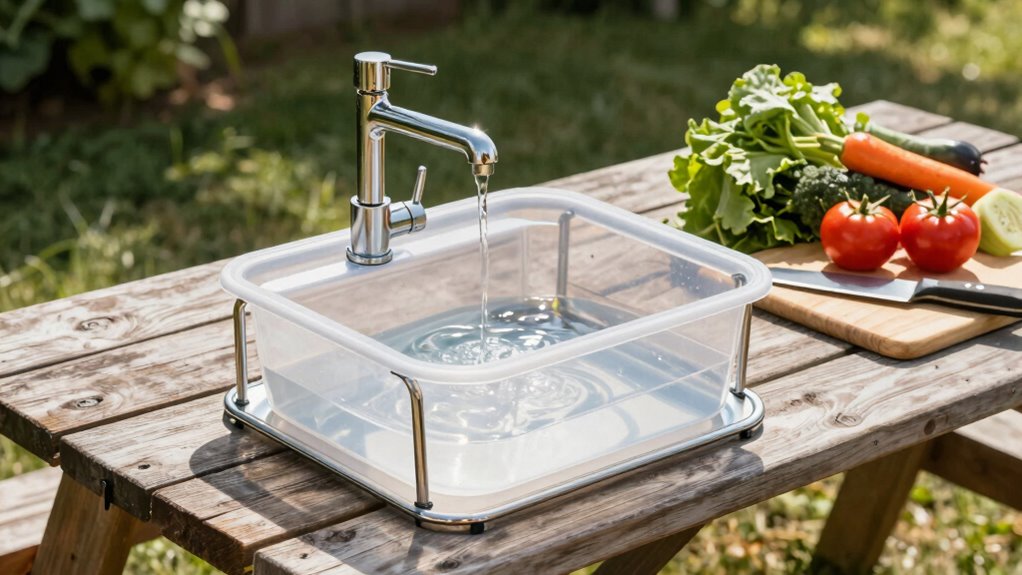

To set up a portable wash station on the road, choose a sturdy, leak-proof basin near your cooking area but away from food prep zones. Use smaller containers for rinsing and drying, keep soap nearby, and cover wash containers when not in use. Practice water conservation by reusing rinse water and drying utensils with reusable towels. For more tips on maintaining hygiene and organization, keep exploring detailed strategies to keep your station clean and efficient.

Get health and wellness essentials delivered free — and shop member deals
- Fast, free delivery on millions of items
- Access to Prime Big Deal Days deals on October 6–7
- Prime Video, Amazon Music and more included
Key Takeaways
- Select sturdy, leak-proof containers for water storage and sanitization, placing them near the cooking area but away from food prep zones.
- Incorporate water-saving techniques like reusing rinse water and minimal rinsing to conserve resources on the road.
- Use biodegradable soap and organize cleaning supplies for quick access, maintaining hygiene and efficiency.
- Cover wash containers when not in use and regularly clean to prevent bacterial growth and contamination.
- Position the station away from food prep, follow waste disposal regulations, and use eco-friendly cleaning products to protect the environment.
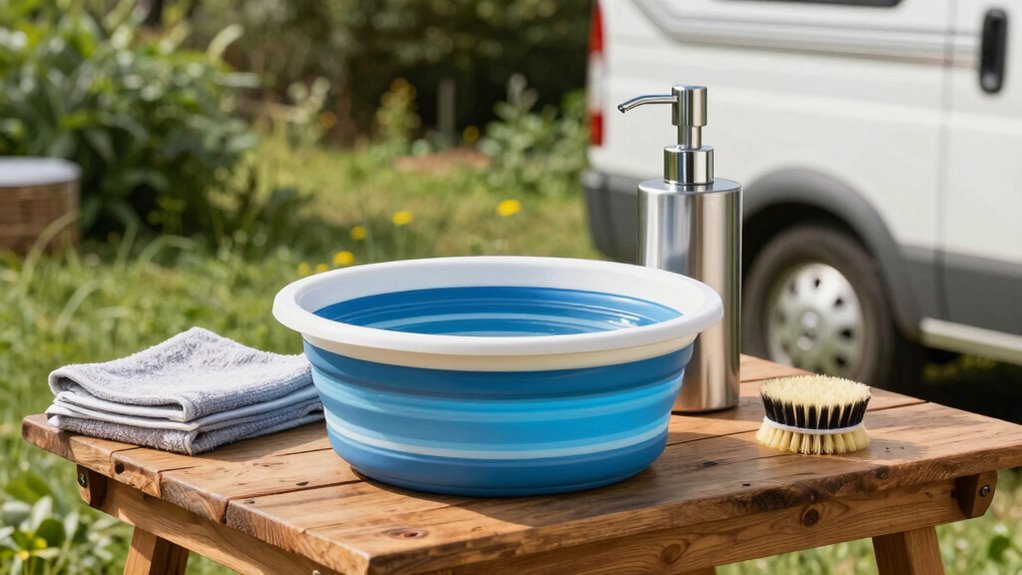
Setting up a portable wash station is vital for maintaining proper food safety standards while on the road. When you’re out camping or traveling, keeping your hands and utensils clean isn’t just about good manners; it’s about preventing bacteria from spreading and avoiding foodborne illnesses. A well-designed wash station helps you stay on top of camping hygiene, guaranteeing your meals are safe and enjoyable. Plus, with careful planning, you can manage water conservation, which is essential when you’re away from readily available water sources.
Start by choosing a sturdy, leak-proof basin or container large enough to hold enough water for washing hands, utensils, and produce. You’ll also want smaller containers for rinsing and a separate area for drying. To minimize water use, consider using a spray bottle or a sponge with a small amount of soapy water, which allows you to control water flow and reduce wastage. When setting up your station, position it close to your cooking area but away from the main food prep zone to prevent cross-contamination. Cover your wash containers when not in use to keep debris and insects out, and always keep soap nearby—preferably biodegradable soap—to guarantee effective cleaning without harming the environment.
Choose leak-proof containers, keep soap nearby, and position your station away from food prep to ensure cleanliness and prevent contamination.
Water conservation is a key element of setting up an efficient wash station. Use only the amount of water you need, and reuse rinse water for other cleaning tasks if possible, as long as it’s safe. For example, rinse vegetables with a small amount of water and reuse that water for washing your hands afterward. If you’re camping in an area with limited water supply, consider bringing a water filter or purification system to guarantee your water is safe for washing. Also, prioritize drying your hands and utensils with reusable cloth towels instead of paper towels, which can be wasteful and less eco-friendly. Being aware of water conservation techniques helps ensure you’re making sustainable choices while staying hygienic. Additionally, understanding proper hygiene practices can further prevent contamination and promote safety. To further enhance your setup, consider incorporating environmentally friendly cleaning supplies to minimize your ecological footprint.
To make your wash station even more effective, incorporate organization tools such as racks or hooks for hanging utensils and towels, keeping everything accessible and clean. Regularly empty and clean your containers to prevent bacterial growth, especially if you’re using them over multiple days. Incorporating proper waste disposal methods can also help you maintain a clean and safe environment around your setup. Paying attention to local regulations regarding waste disposal ensures you’re complying with environmental standards and protecting the natural area. By setting up your portable wash station thoughtfully, you’ll not only keep your food prep area hygienic but also do your part in conserving water, making your outdoor experience safer and more sustainable. Remember, proper camping hygiene isn’t just about cleanliness—it’s about protecting your health and respecting the environment.
portable wash station for camping
As an affiliate, we earn on qualifying purchases.
As an affiliate, we earn on qualifying purchases.
Frequently Asked Questions
What Are the Best Portable Wash Station Brands?
You should check out brands like Camco, Cleanwaste, and Reliance for portable wash stations. Brand comparisons show Camco offers durable, user-friendly options, while Cleanwaste is praised for eco-friendly features. User reviews highlight Reliance’s affordability and reliability. Consider your specific needs, like size and portability, and read reviews to find the best fit. These brands consistently receive positive feedback for quality and ease of use on the road.
How Much Does a Portable Wash Station Cost?
A portable wash station typically costs between $150 and $600, depending on size, features, and brand. When considering cost, think about equipment durability—investing in sturdy materials guarantees longevity and fewer replacements. More affordable options may suit temporary needs, but higher-quality stations with durable construction often save money long-term. Balance your budget with your specific requirements, focusing on durability to get the best value for your investment.
Can I Use Bottled Water for the Station?
Sure, you can use bottled water, but don’t pretend it’s a miracle worker. For proper sanitation standards, invest in water filtration systems to make certain your bottled supply isn’t just a fancy label. Relying solely on bottled water might seem easy, but it’s not always the safest or most sustainable. Proper filtration guarantees clean water, keeps your food prep safe, and saves you from the horror of contaminated water ruining your road trip feast.
Is a Portable Wash Station Legal Everywhere?
A portable wash station’s legality depends on local regulations and water source. You need to check legal regulations in each area you plan to operate, as rules vary widely. Using a safe, potable water source—like bottled water or a designated water supply—helps guarantee compliance. Always verify whether permits are required or if specific sanitation standards must be met, so your setup remains legal wherever you go.
How Do I Maintain and Clean the Station?
Like a well-oiled machine, you keep your station spotless by following strict sanitation standards and a consistent cleaning schedule. Rinse sinks thoroughly after each use, scrub surfaces with food-safe cleaners, and empty wastewater regularly. Sanitize all contact surfaces daily to prevent bacteria buildup. Remember, maintaining your wash station’s cleanliness isn’t just smart — it’s essential for safe food prep and staying compliant with health regulations.
Conclusion
With your portable wash station ready, you’re prepared to keep food safe and hands clean on the road. It’s a simple setup that turns a busy travel day into a moment of calm, much like finding a quiet rest stop amidst a bustling highway. Just as a steady hand guides a traveler safely home, your station guarantees your food prep remains hygienic and worry-free. Travel smart, stay clean, and enjoy every mile with confidence.
Evergreen bestsellers Picks
bestsellers
As an affiliate, we earn on qualifying purchases.