When choosing containers for frozen pet meals, look for non-toxic, BPA-free materials that can withstand freezing and thawing without cracking. Opt for stackable, clear designs with secure, leak-proof lids to keep food fresh and prevent messes. Make sure they’re dishwasher safe and microwave-friendly if you need to thaw or warm meals. Durable, high-quality containers help preserve nutrients and reduce waste, making feeding easier. Keep exploring to find all the tips for perfect pet meal storage.
Key Takeaways
- Choose non-toxic, BPA-free materials that are safe for pet food storage and resistant to cracking or breaking.
- Opt for clear, stackable containers with secure, leak-proof lids to maintain freshness and maximize freezer space.
- Ensure containers are durable, dishwasher-safe, and capable of withstanding repeated freezing and thawing cycles.
- Select containers with proper seals and insulation to prevent freezer burn and preserve nutrient quality.
- Consider size options and easy-to-handle designs that suit your pet’s feeding routine and simplify meal prep.
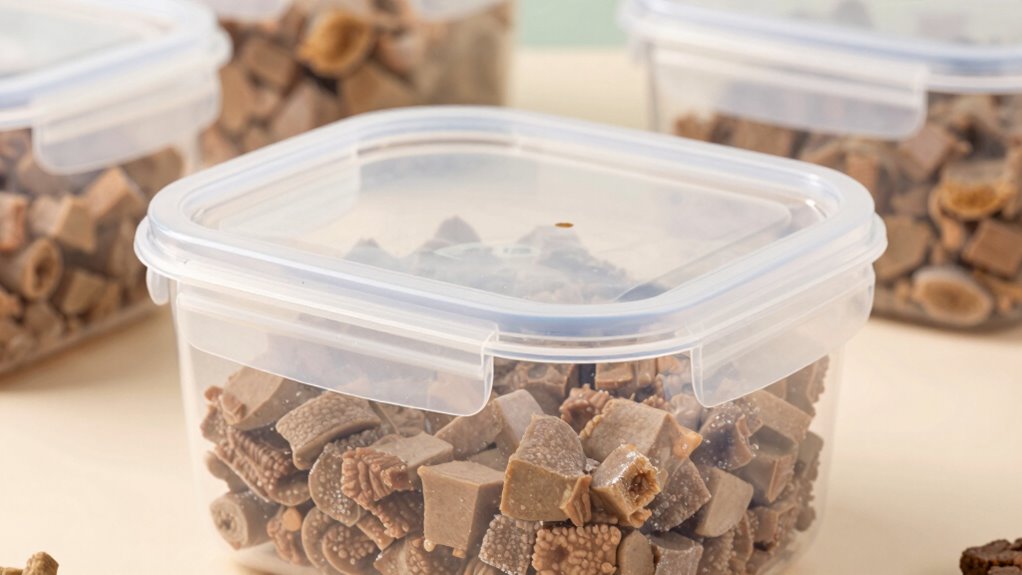
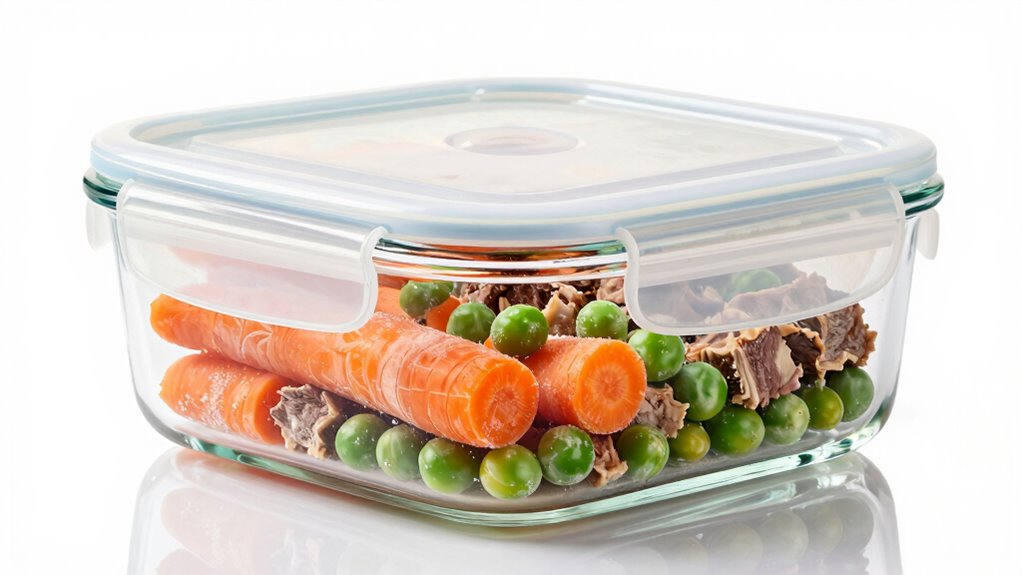
Are you wondering how to keep your pet’s frozen meals fresh and easy to serve? Choosing the right containers plays a vital role in maintaining freshness and ensuring convenient feeding. When selecting containers for frozen pet meals, pet safety should be your top priority. You want options that are made from non-toxic, BPA-free materials that won’t leach harmful chemicals into your pet’s food. Look for containers explicitly labeled as safe for food storage, as these are designed to prevent any health risks. Avoid containers that are cheap or flimsy, as they might crack or break in the freezer, potentially contaminating the food and jeopardizing your pet’s health. Additionally, choosing containers with food-safe materials ensures your pet’s meals remain free from harmful substances. Storage convenience is another key factor to weigh. Opt for containers that are stackable and space-efficient, allowing you to maximize your freezer’s capacity without creating clutter. Clear containers are a smart choice because they let you see what’s inside at a glance, saving you time during busy mornings or meal prep. Airtight lids are essential to prevent freezer burn and preserve the flavor and nutrients of your pet’s meals, so make sure the containers you pick have secure, leak-proof seals. This not only keeps the food fresh but also makes serving less messy, especially if you need to portion out meals in advance. Durability matters, too. Look for sturdy construction that can withstand repeated freezing and thawing without cracking or warping. Silicone or high-quality plastic containers often strike a good balance between flexibility and strength. A well-designed lid can further improve the overall freshness and ease of use. Properly selecting containers can also help reduce food waste, a crucial aspect of sustainable living practices. Using containers made from durable materials is essential to ensure they last through many cycles of freezing and thawing without degrading. Investing in containers with proper insulation can help maintain the optimal temperature for frozen foods, reducing energy consumption and improving storage quality. Additionally, consider whether the containers are microwave-safe, which can be very handy if you prefer to thaw and warm your pet’s meal directly in the container. Ease of cleaning is another important aspect. Dishwasher-safe containers save you time and effort, ensuring that you can maintain good pet safety hygiene standards without hassle. Finally, think about how well the containers fit your feeding routine. Some pet owners prefer single-portion containers for quick serving, while others might opt for larger storage sizes if they prepare meals in bulk. Whatever your preference, the goal is to find containers that simplify your life and keep your pet’s meals fresh and safe. When you choose thoughtfully, you’ll find that meal prep becomes more efficient, and your pet benefits from consistently fresh, nutritious food. With the right containers, you’ll enjoy peace of mind knowing your pet’s frozen meals are stored properly, ready to serve whenever mealtime comes around.

IRIS USA Dog Food Storage Container, Up to 10 lbs, Clear/Gray, Made in USA
- Pet Food Storage Capacity: Stores up to 10 lbs of dry food
- Airtight Seal: Keeps food fresh and moisture-proof
- Transparent Body: Allows easy food level visibility
As an affiliate, we earn on qualifying purchases.
As an affiliate, we earn on qualifying purchases.
Frequently Asked Questions
Are Bpa-Free Plastics Safe for Storing Frozen Pet Meals?
Yes, BPA-free plastics are safe for storing frozen pet meals. BPA concerns have raised awareness about potential health risks, but plastics labeled BPA-free eliminate that worry. When choosing containers, prioritize plastic safety to guarantee your pet’s food remains uncontaminated. These containers are durable, safe for freezing, and won’t leach harmful chemicals into your pet’s meals. Always check labels and opt for trusted, food-grade plastics for peace of mind.
How Long Can Frozen Pet Meals Stay in Containers Before Quality Declines?
Did you know that properly stored frozen pet meals can stay fresh for up to 6 months? You should regularly check your container insulation to prevent freezer burn and maintain quality. For meal portioning, use airtight containers that seal tightly, and avoid leaving meals in containers for over three months, as quality declines over time. This guarantees your pet’s food remains safe, tasty, and nutritious longer.
Can Glass Containers Be Used for Freezing Pet Meals Safely?
Yes, glass containers can be used for freezing pet meals safely. Their durability makes them suitable, especially if they’re designed for freezer use. Plus, container transparency helps you easily see the contents without opening them. Just make certain the glass is tempered or specifically labeled for freezer use to prevent cracking from temperature changes. Always leave some space at the top for expansion, and avoid sudden temperature shifts.
Are There Specific Containers Recommended for Different Pet Species?
Yes, different pet species benefit from specific container choices. For example, small dog or cat meals need smaller containers, while larger breeds require bigger ones to prevent overcrowding. Consider pet breed considerations when selecting container size options, ensuring easy portioning and storage. Durable, leak-proof containers made of safe materials work best across species. Always choose containers that fit your pet’s breed needs, making feeding simpler and more organized.
How Do I Prevent Freezer Burn in Pet Meal Containers?
Freezer burn is like a silent thief stealing freshness from your pet’s meals. To prevent it, use high-quality packaging materials designed for freezing, such as airtight containers or vacuum-sealed bags. Employ proper storage techniques by removing excess air, sealing tightly, and placing containers in the coldest part of your freezer. This helps preserve flavor, texture, and nutrients, ensuring your pet’s meals stay fresh and delicious longer.
Conclusion
Choosing the right container for frozen pet meals isn’t just about storage—it’s about ensuring freshness, safety, and convenience. When you pick a durable, airtight container, you’re not just sealing in flavor, you’re sealing in happiness for your pet. It’s funny how small details, like a secure lid or easy-to-label surface, can make a big difference. So, trust your instincts, pick wisely, and watch how these simple choices turn mealtime into a smooth, satisfying routine for both of you.