To travel with frozen pet meals without a mess, use high-quality, vacuum-sealed bags to prevent leaks. Pack meals in an insulated cooler, placing heavier items at the bottom for balance. Use ice packs to keep everything frozen, and fill gaps with towels to maintain temperature. Pre-portion meals for easy access and stick to your feeding schedule. Keep extra meals handy for surprises. Follow these tips, and you’ll discover even more ways to guarantee a smooth journey.
Key Takeaways
- Use high-quality, vacuum-sealed packaging to prevent leaks and maintain meal freshness during travel.
- Select an insulated cooler with ice packs to keep pet meals frozen and avoid temperature fluctuations.
- Pre-portion meals into smaller servings for easy access and to minimize mess during feeding.
- Keep heavier items at the bottom of the cooler to stabilize lighter packages and prevent squishing.
- Research pet-friendly stores along your route for backup meal options in case of emergencies.
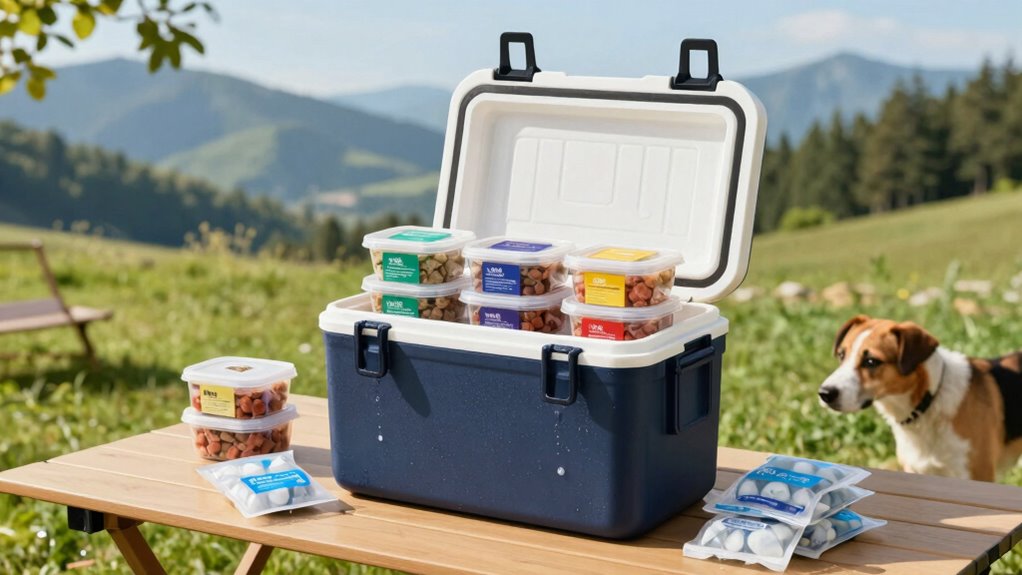
First, invest in high-quality pet food packaging. Look for vacuum-sealed bags or containers that can withstand temperature fluctuations. These not only keep your pet meals fresh but also prevent leaks and spills. If you’re using bags, make sure they’re durable and resealable. This way, you can easily portion out meals while minimizing waste. Remember, if you’re packing homemade meals, let them cool completely before sealing them to avoid condensation, which can lead to freezer burn.
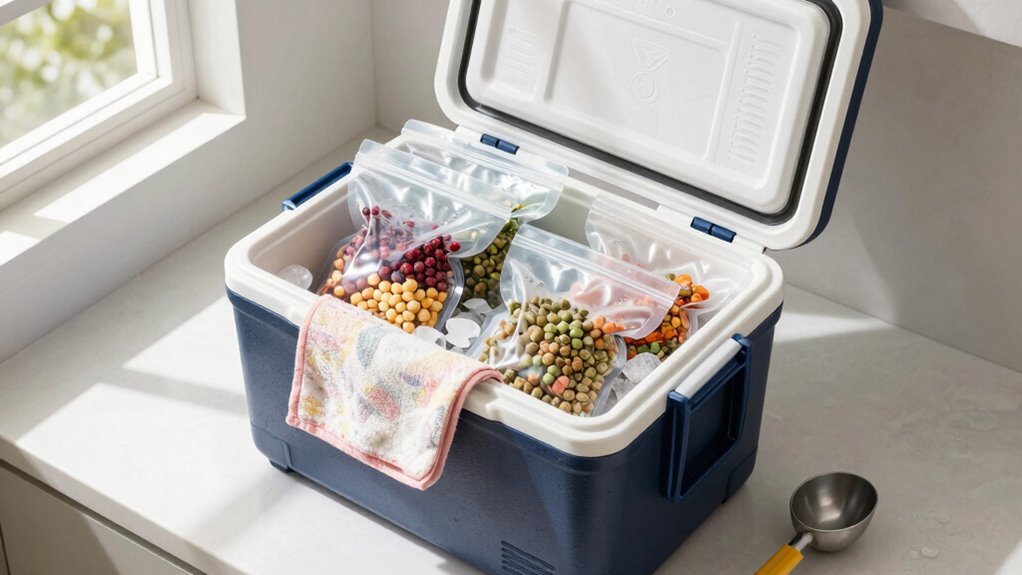
Next, consider how you’ll store these meals during your trip. A good cooler is essential for maintaining the right temperature. Opt for one that’s insulated and large enough to hold all your pet’s meals. You can use ice packs to keep everything frozen longer, but make sure to rotate them out if you’re on an extended journey. If your cooler has a drain, that’s even better; it’ll help manage any melted ice without creating a mess. Proper temperature regulation is key to keeping pet meals safe and fresh.
A quality insulated cooler is key for keeping your pet’s meals frozen and fresh during your travels.
When packing the cooler, put heavier items at the bottom and lighter ones on top. This way, you can avoid squishing your pet food packaging. Use towels or cloths to fill any gaps, which will help keep the cooler’s temperature consistent. If you’re making several stops, try to keep the cooler closed as much as possible to maintain the cold. Implementing proper handling techniques can further prevent accidental spills and contamination. Additionally, using insulated containers can help maintain the ideal temperature for longer periods, especially during extended trips. Incorporating temperature-sensitive labels on your packages can also help monitor the condition of the meals during transit.
Additionally, think about your pet’s feeding schedule. If you know you’ll be traveling for a while, pre-portion meals into smaller, easy-to-handle servings. This makes it easier to feed your pet on the go without having to dig through the cooler. Just grab a meal and serve it up—simple as that!
Finally, always have a backup plan. If you’re traveling to a remote area, research pet-friendly stores along the way. In case of an emergency, it’s good to know where you can find more pet meals. Using proper packaging is also crucial to prevent messes and keep your pet’s food fresh during transport. By following these tips and planning accordingly, you’ll make traveling with frozen pet meals a hassle-free experience for both you and your pet.
As an affiliate, we earn on qualifying purchases.
Frequently Asked Questions
Can I Travel Internationally With Frozen Pet Meals?
Yes, you can travel internationally with frozen pet meals, but you need to check the international regulations of your destination country. Some places have strict rules about pet food to guarantee safety. Make sure your meals are properly packaged and comply with these regulations to avoid issues at customs. It’s also a good idea to keep them frozen until you arrive to maintain pet meal safety throughout your journey.
How Long Can Frozen Pet Meals Be Stored?
Frozen pet meals can typically be stored for about 3 to 6 months, depending on the type of food and your meal preparation methods. Always check for any signs of freezer burn or spoilage before use. To maintain quality, keep them sealed in airtight containers or vacuum-sealed bags. If you’re unsure about their freshness, it’s best to err on the side of caution and dispose of any questionable meals.
Are There Specific Containers for Frozen Pet Meals?
Yes, there are specific containers for frozen pet meals. When you’re traveling, look for insulated containers designed to keep meals frozen longer. You can use vacuum-sealed bags or hard-sided coolers for the best insulation methods. These travel container options help prevent messes while maintaining the right temperature for your pet’s food. Don’t forget to pack ice packs for added effectiveness, ensuring your pet’s meals stay fresh throughout your trip.
What if My Pet Refuses to Eat Frozen Meals?
If your pet refuses to eat frozen meals, it might just be a matter of taste. Pets have unique food preferences, so consider warming up the meal slightly to enhance the aroma. You could also mix in some of their favorite toppers or switch to alternative meal options like freeze-dried or dehydrated foods. Experimenting with different textures and temperatures can often make all the difference in getting your picky eater excited about mealtime again!
Can I Refreeze Thawed Pet Meals?
You shouldn’t refreeze thawed pet meals if they’ve been left out too long, as it can compromise their safety. Use proper thawing techniques, like refrigerating overnight, to minimize risks. When meal planning, consider portion sizes so you only thaw what you need. If a meal’s been thawed in the fridge and hasn’t reached room temperature within a day, it’s generally safe to refreeze, but always check for any signs of spoilage first.
Conclusion
Traveling with frozen pet meals doesn’t have to be a hassle. By using insulated bags, ice packs, and proper sealing techniques, you can keep your pet’s food fresh without any mess. Remember, it’s better to be safe than sorry—plan ahead to avoid any last-minute surprises. With a little preparation, you and your furry friend can hit the road worry-free, ensuring every meal is as good as gold. Happy travels!