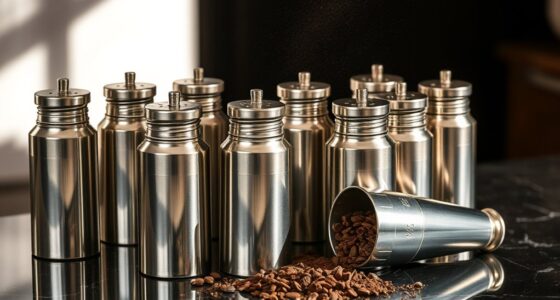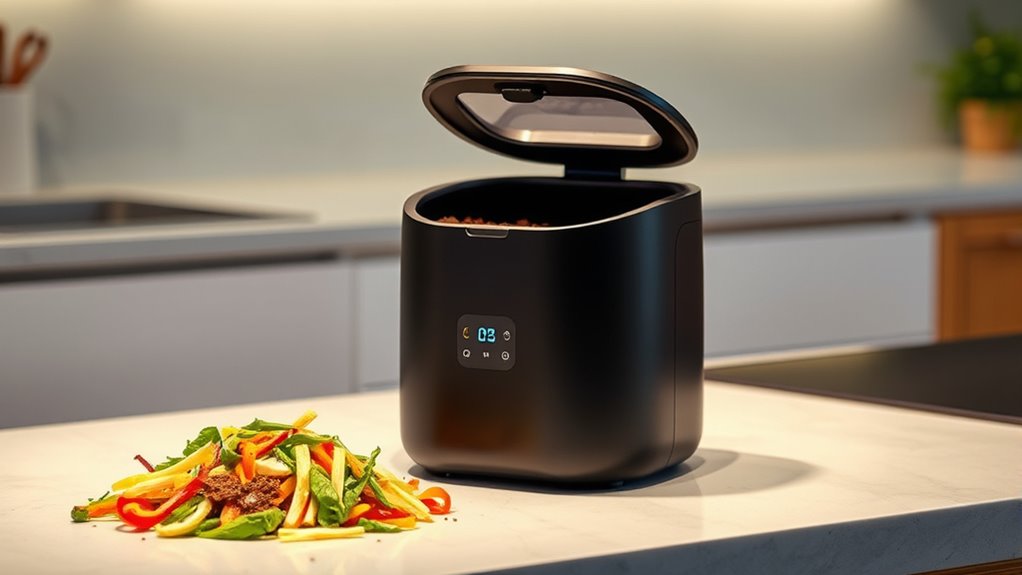

Electric indoor composters turn kitchen scraps into dry, soil-ready fertilizer overnight, but they differ widely in capacity, cycle time, noise, and odor control — and those differences decide whether one lives on your countertop or gets banished to the garage. The Reencle Gravity 22L stands out as the best overall pick for its large capacity and quiet, continuous operation, while the GEME PRO 19L makes the most sense for big households that process serious volumes of waste. On the budget end, compact 2.5–4L units like the Airthereal Revive R500 and Ouaken models cost less and fit small kitchens, but they need daily emptying and struggle with batch size. The core tradeoff in this category is countertop space and price versus capacity, plus how much noise and grinding you’re willing to tolerate in an open kitchen. Keep reading for the full breakdown of all 14 models.

Get health and wellness essentials delivered free with Prime
- Fast, free delivery on millions of items
- Prime Video, Amazon Music and more included
- Member-only deals all year
Key Takeaways
- Capacity splits this lineup into three clear tiers — compact 2.5–4L units for singles and couples, midsize 5.5–14L models for families, and 19–22L units like the GEME PRO and Reencle Gravity that handle large-household waste volumes without daily emptying.
- Reencle‘s models separated from the pack on odor control and continuous feeding: the Gravity’s Gravity system lets you add scraps mid-cycle, while most budget units require you to wait for a full batch to finish.
- Four nearly identical 4L budget composters (Ouaken, FRYLINE, Assark) show how crowded the entry-level segment is — they share similar cycles and features, so warranty, filter refill availability, and footprint become the real differentiators.
- The Airthereal R500 and R500-V illustrate a common upgrade pattern in this category: paying slightly more for a visual window and app connectivity rarely changes composting performance, so buyers should decide whether monitoring actually matters to them.
- Replacement filter and accessory costs varied meaningfully across brands, which affects long-term value far more than the sticker price difference between similarly sized units.
| Assark Electric Composter 3L Smart Kitchen Countertop Compost Bin |  | Best Compact Pick | Brand: Assark | Capacity: 3L | Composting Time: 4-6 hours | VIEW ON AMAZON | See Our Full Breakdown |
| OK-255 5.5L Electric Kitchen Composter |  | Best for Mode Flexibility | Capacity: 5.5 L | Modes: Standard, Quick, Crush, Clean, Store | Volume Reduction: Up to 90% | VIEW ON AMAZON | See Our Full Breakdown |
| GEME PRO 19L Electric Kitchen Composter |  | Best Premium Pick | Capacity: 19L | Daily Processing Capacity: 11 lbs | Composting Time: 6-8 hours | VIEW ON AMAZON | See Our Full Breakdown |
| Reencle Gravity Electric Kitchen Composter, 22L, Silver |  | Best for Continuous Quiet Composting | Capacity: 22 L | Daily Processing Capacity: 3.3 lbs | Decomposition Time: 2–24 hours | VIEW ON AMAZON | See Our Full Breakdown |
| Ouaken 4L Electric Kitchen Composter |  | Best Value Pick | Brand: Ouaken | Capacity: 4L | Waste Reduction: Up to 90% | VIEW ON AMAZON | See Our Full Breakdown |
| Reencle Prime Electric Composter – 14L Kitchen Composter (White) |  | Best for True Composting | Capacity: 14L | Daily Processing Capacity: Up to 2.2 lbs of food waste | Decomposition Time: 2–24 hours | VIEW ON AMAZON | See Our Full Breakdown |
| Airthereal Revive R500 Electric Kitchen Composter, 2.5L, Gray |  | Best Compact Pick | Capacity: 2.5 liters | Cycle Time: About 4 hours | Blade Type: SHARKSDEN Trinity Blade | VIEW ON AMAZON | See Our Full Breakdown |
| Reencle Prime Electric Composter, 14 L, Silver |  | Best for Open-Plan Kitchens | Capacity: 14 L | Daily Processing Capacity: Up to 2.2 lbs of food scraps | Processing Time: 2–24 hours | VIEW ON AMAZON | See Our Full Breakdown |
| Ouaken 4L Electric Kitchen Composter |  | Best Value Mid-Size Pick | Capacity: 4 L | Waste Volume Reduction: Up to 90% | Noise Level: Below 40 dBA | VIEW ON AMAZON | See Our Full Breakdown |
| FoodCycler Eco 5 Electric Kitchen Food Recycler – Countertop Indoor Composter Alternative, 5L Capacity, Grey |  | Best for Tough Scraps | Capacity: 5L | Grinding System: Patented Vortech | Waste Volume Reduction: Up to 90% | VIEW ON AMAZON | See Our Full Breakdown |
| FRYLINE 4L Electric Kitchen Composter |  | Best for Mode Flexibility | Brand: FRYLINE | Capacity: 4 L | Waste reduction: Up to 90% in about 3 hours | VIEW ON AMAZON | See Our Full Breakdown |
| GoveeLife Upgraded Smart Electric Kitchen Composter |  | Best Smart Pick | Capacity: 3L | Noise level: 40dB | Filters: Dual large carbon filters | VIEW ON AMAZON | See Our Full Breakdown |
| Airthereal R500-V Visual Electric Kitchen Composter, 2.5 L, Gray |  | Best Build Quality | Brand: Airthereal | Model: Revive R500-V | Capacity: 2.5 L | VIEW ON AMAZON | See Our Full Breakdown |
| Ouaken 2.5L Indoor Electric Composter, Food Waste Recycler |  | Best Compact Budget Pick | Brand: Ouaken | Capacity: 2.5L | Waste reduction: Up to 90% | VIEW ON AMAZON | See Our Full Breakdown |
| electric indoor composter | Capacity | Noise Level | Modes |
|---|---|---|---|
| Assark Electric Composter 3L S | 3L | Under 40dB | 3, including 12-hour Storage mode |
| OK-255 5.5L Electric Kitchen C | 5.5 L | Below 45 dBA | Standard, Quick, Crush, Clean, Store |
| GEME PRO 19L Electric Kitchen | 19L | — | — |
| Reencle Gravity Electric Kitch | 22 L | As low as 24 dB | — |
| Ouaken 4L Electric Kitchen Com | 4L | Below 40 dBA | Crush, Ferment, Clean |
| Reencle Prime Electric Compost | 14L | As low as 28 dB | — |
| Airthereal Revive R500 Electri | 2.5 liters | — | — |
| Reencle Prime Electric Compost | 14 L | As low as 28 dB | — |
| Ouaken 4L Electric Kitchen Com | 4 L | Below 40 dBA | Crush, Ferment, Clean |
| FoodCycler Eco 5 Electric Kitc | 5L | — | — |
| FRYLINE 4L Electric Kitchen Co | 4 L | Below 40 dBA | Crush, Ferment, Clean |
| GoveeLife Upgraded Smart Elect | 3L | 40dB | Composting, Storage, Cleaning |
| Airthereal R500-V Visual Elect | 2.5 L | — | — |
| Ouaken 2.5L Indoor Electric Co | 2.5L | Below 40dB | Crush, Ferment, Clean |
More Details on Our Top Picks
Assark Electric Composter 3L Smart Kitchen Countertop Compost Bin
The Assark 3L earns its spot as the most space-conscious option in this lineup. Where the GEME PRO 19L demands serious counter real estate, this unit slips into apartment kitchens without a second thought. Its 4–6 hour cycle keeps pace with larger rivals, and the under-40dB noise rating means it won’t compete with conversation. What sets it apart from the Ouaken 4L is maintenance: the Auto Clean mode plus a non-stick removable bucket means less scrubbing after each batch. The safety auto-pause when the lid opens is a thoughtful touch for households with curious kids. The tradeoff is straightforward — that 3L bucket fills quickly, so a family of four will be emptying it constantly. The carbon filter also needs replacing every few months, unlike the GEME PRO’s permanent filter.
Pros:- Fast 4–6 hour composting cycle matches larger units
- Whisper-quiet operation under 40dB
- Auto Clean mode and non-stick bucket simplify maintenance
- Safety auto-pause when the lid is opened
Cons:- Small 3L capacity requires frequent emptying for larger households
- Carbon filter needs replacement roughly every 3 months
Best for: Apartment dwellers and small households of 1-2 people who want fast, quiet composting without sacrificing counter space
Not ideal for: Families generating lots of food waste — the 3L capacity means near-daily emptying cycles
- Brand:Assark
- Capacity:3L
- Composting Time:4-6 hours
- Waste Volume Reduction:90%
- Noise Level:Under 40dB
- Filter Life:Up to 3 months
- Modes:3, including 12-hour Storage mode
- Warranty:12-month limited, lifetime technical support
Our verdict“This pick makes the most sense for small kitchens where space matters more than capacity.”
OK-255 5.5L Electric Kitchen Composter
The OK-255 stands out for offering five distinct modes — Standard, Quick, Crush, Clean, and Store — which is more granular control than the Assark’s three or the Ouaken’s Crush/Ferment/Clean trio. That flexibility translates into real outcomes: a quick cycle for coffee grounds and fruit scraps, a full crush mode for tougher leftovers. The moisture collection tray is a practical touch most competitors skip, pulling condensed water away from the finished product so your fertilizer comes out dry rather than clumpy. Compared with the similarly-sized FoodCycler Eco 5, the detachable fan module here makes deep cleaning noticeably easier. The tradeoff is that this is a dehydrator, not a true composter — unlike the GEME PRO’s microbial degradation, the output lacks the microbial richness of genuine compost. Filter swaps every five months add ongoing cost too.
Pros:- Five modes give real control over cycle length and output texture
- Moisture collection tray keeps finished product dry
- Detachable fan module simplifies maintenance
- Quiet operation below 45 dBA
Cons:- Output is dried waste rather than microbially degraded compost
- Filter replacement every five months adds recurring cost
Best for: Buyers who process varied food waste types and want cycle control rather than one-size-fits-all operation
Not ideal for: Gardeners who want biologically active compost — this unit dehydrates rather than truly decomposes waste
- Capacity:5.5 L
- Modes:Standard, Quick, Crush, Clean, Store
- Volume Reduction:Up to 90%
- Noise Level:Below 45 dBA
- Odor Control:Activated carbon filter
- Filter Replacement:Approximately every 5 months
- Special Features:Moisture collection tray, flip-top lid, detachable fan module
Our verdict“A strong middle-ground choice if cycle flexibility matters more to you than producing true living compost.”
GEME PRO 19L Electric Kitchen Composter
This is the heavyweight of the batch, and the only option here besides the Reencle Gravity that produces genuine compost through microbial degradation rather than simply drying and grinding scraps. That difference matters if you’re feeding a garden — the output is nutrient-rich and biologically active, not just dehydrated filler. The 11 lb daily processing capacity dwarfs the Reencle Gravity’s 3.3 lbs, making it the clear choice for serious food waste volume. Its permanent built-in filter eliminates the replacement costs that nag owners of the Assark, OK-255, and Ouaken, and the add-and-go continuous operation means no batching, no between-cycle cleaning for up to a year. The catch: at 19L, it eats counter space, and the price sits well above basic dehydrators. You’re paying for capability, not convenience of size.
Pros:- Microbial degradation produces true nutrient-rich compost, not just dried waste
- Handles up to 11 lbs of food waste daily
- Permanent filter with zero replacement costs
- Continuous add-and-go operation with no between-cycle cleaning
Cons:- Large footprint takes up substantial counter space
- Higher price than basic dehydrating models
Best for: Serious home gardeners and households of three or more who want true compost and high daily throughput
Not ideal for: Small kitchens or budget buyers — its footprint and price far exceed compact dehydrators like the Assark 3L
- Capacity:19L
- Daily Processing Capacity:11 lbs
- Composting Time:6-8 hours
- Volume Reduction Rate:95%
- Filter:Permanent built-in, no replacement needed
- Recommended Family Size:3 people
- Cleaning-Free Operation:Up to 1 year
Our verdict“This model is better suited to committed gardeners who need volume and real compost than casual users seeking a simple scrap dryer.”
Reencle Gravity Electric Kitchen Composter, 22L, Silver
The Reencle Gravity splits the difference between the microbial sophistication of the GEME PRO and the simplicity of compact dehydrators. It shares the GEME’s aerobic microbial processing, so output is real compost — but its 24 dB noise floor makes it the quietest machine in this roundup, quiet enough to run beside an open-plan living area without notice. The three-layer filter system is more robust than the single carbon filters on the Assark or OK-255, and the bundled starter pack and shovels mean you can begin composting immediately rather than sourcing supplies. Its weakness relative to the GEME PRO is throughput: 3.3 lbs daily is modest for a 22L unit, so big cooking households may find it bottlenecks. Energy claims are vague too — described only as minimal, with no quantified figures.
Pros:- Quietest operation in the lineup at as low as 24 dB
- Aerobic microbial processing yields genuine compost
- Three-layer filter system outperforms single carbon filters
- Includes starter pack and two shovels for out-of-box use
Cons:- Daily capacity of 3.3 lbs is modest for its 22L size
- Energy consumption claims are unquantified
Best for: Open-plan homes where near-silent continuous composting matters more than maximum daily capacity
Not ideal for: High-volume kitchens — the 3.3 lb daily limit is tight for a household that cooks heavily every day
- Capacity:22 L
- Daily Processing Capacity:3.3 lbs
- Decomposition Time:2–24 hours
- Noise Level:As low as 24 dB
- Filter System:Three-layer
- Included Accessories:Carbon filter, compost starter pack, 2 shovels
- Color:Silver
Our verdict“This pick makes the most sense for buyers who prioritize silent, odor-controlled continuous composting over raw throughput.”
Ouaken 4L Electric Kitchen Composter
The Ouaken 4L nails the fundamentals at a friendlier position on the price spectrum than feature-laden rivals. Its three-hour processing time is actually the fastest in this batch — quicker than the Assark’s 4–6 hours — while the four-liter bucket buys meaningfully more capacity between empties. What elevates it above the comparable FRYLINE 4L and Airthereal R500 is cleanup: the dishwasher-safe detachable bucket plus auto-clean mode means maintenance is genuinely hands-off. The Ferment mode is a nice bonus, offering a slower processing path the pure dehydrators skip. Tradeoffs are real, though. Like the OK-255, it dehydrates rather than composts microbially, so the output won’t match the GEME PRO’s true compost. And the filter needs replacing around every five months, plus documentation is thin on which materials to avoid feeding it.
Pros:- Fastest cycle here at about three hours
- Dishwasher-safe detachable bucket makes cleanup effortless
- Ferment mode offers a slower, more versatile processing option
- Quiet operation below 40 dBA
Cons:- Dehydrates rather than microbially composts waste
- Filter replacement needed every five months and unsuitable materials are poorly documented
Best for: First-time buyers who want fast processing and genuinely easy cleanup without paying premium composter prices
Not ideal for: Anyone expecting garden-ready living compost — this is a dehydrator, and its 4L size suits lighter waste loads
- Brand:Ouaken
- Capacity:4L
- Waste Reduction:Up to 90%
- Processing Time:About 3 hours
- Noise Level:Below 40 dBA
- Modes:Crush, Ferment, Clean
- Carbon Filter Life:Up to 5 months
- Bucket:Dishwasher-safe detachable
- Color:Black
Our verdict“A sensible entry point for newcomers who value speed and easy cleanup over premium compost quality.”
Reencle Prime Electric Composter – 14L Kitchen Composter (White)
Most electric units in this category — like the Airthereal Revive R500 or the FoodCycler Eco 5 — are really dehydrators that grind and dry scraps into powder. The Reencle Prime takes a different route: its patented microbe technology actually ferments waste into genuine, nutrient-rich compost rather than just dried ground scraps. That distinction matters if you plan to feed a garden, not just shrink your trash bag. The 14L capacity is generous, and unlike the 2.5L Airthereal, you can keep adding scraps daily (up to 2.2 lbs) instead of batching cycles. The tradeoff is that microbial composting is variable — 2 to 24 hours is a wide window, and you’ll need replacement carbon filters indefinitely. It’s also a bigger footprint than compact countertop models.
Pros:- Produces genuine nutrient-rich compost via microbial digestion, not just dried waste
- Continuous feeding — add up to 2.2 lbs of scraps daily without waiting for a batch cycle
- Whisper-quiet at as low as 28 dB, quieter than almost every competitor
- Complete starter package with filter, compost starter, and shovel included
Cons:- Requires ongoing carbon filter replacements and microbe replenishment
- Processing time varies widely from 2 to 24 hours depending on waste type
- Large footprint compared with compact 2.5L–4L countertop units
Best for: Home gardeners who want real finished compost rather than dried food powder, and households that generate scraps continuously throughout the day
Not ideal for: Small-apartment dwellers with tight counters who only compost occasionally — the 14L footprint and ongoing filter and microbe maintenance outweigh the benefits for light users
- Capacity:14L
- Daily Processing Capacity:Up to 2.2 lbs of food waste
- Decomposition Time:2–24 hours
- Noise Level:As low as 28 dB
- Filter System:3-layer carbon filter
- Waste Volume Reduction:Up to 90%
- Included Accessories:Carbon filter, compost starter pack, shovel
- Color:White
Our verdict“This pick makes the most sense for gardeners who want actual compost and don’t mind maintaining a living system to get it.”
Airthereal Revive R500 Electric Kitchen Composter, 2.5L, Gray
If the Reencle Prime is a composting station, the Airthereal Revive R500 is a scalpel — a small, single-purpose machine for one- or two-person households. Its SHARKSDEN Trinity blades are the standout here: compared with the blander grinding systems in similarly sized units like the Ouaken 2.5L, the blender-assisted blade design pushes waste actively into the cutting path, so soft and fibrous scraps break down more evenly. Cleanup is also easier than on the FoodCycler Eco 5, because the cast aluminum bucket is dishwasher-safe rather than requiring hand washing. The catch is capacity: 2.5 liters fills fast, and the fixed 4-hour cycle means you can’t just top it off mid-run the way Reencle owners can.
Pros:- SHARKSDEN Trinity blades with blender assist grind scraps thoroughly
- Dishwasher-safe cast aluminum bucket simplifies cleanup
- One-button operation with a predictable 4-hour cycle
- Up to 90% waste volume reduction in a very small footprint
Cons:- 2.5L capacity is genuinely limiting for households of three or more
- Requires recurring carbon filter replacements
- Fixed 4-hour cycle can’t be shortened for small loads
Best for: Singles and couples in small kitchens who want a genuinely compact unit with strong grinding performance and effortless cleanup
Not ideal for: Families — the 2.5L bucket fills after one or two meals, and batch-only operation can’t keep pace with continuous scrap generation
- Capacity:2.5 liters
- Cycle Time:About 4 hours
- Blade Type:SHARKSDEN Trinity Blade
- Waste Volume Reduction:Up to 90%
- Bucket Material:Cast aluminum (dishwasher safe)
- Filter:Biodegradable carbon filter
- Color:Gray
- Warranty:1-year manufacturer warranty
Our verdict“This model is better suited to small households that value compact size and easy cleanup over raw capacity.”
Reencle Prime Electric Composter, 14 L, Silver
This is the same Reencle Prime platform as the white model — identical 14L capacity, 2.2 lb daily throughput, and microbe-driven composting — so the real question is which kind of buyer it suits, and the answer comes down to noise tolerance. At as low as 28 dB, it runs quieter than the Ouaken 4L (below 40 dBA) and far quieter than most grinder-based units like the FoodCycler Eco 5, which makes it the safer choice if your composter lives on an open counter near where you eat or work. The silver finish also blends better with stainless appliance kitchens. The tradeoffs are inherited from the design: a variable 2–24 hour processing window that demands patience, and the same ongoing filter-replacement costs as every Reencle variant.
Pros:- Near-silent operation at as low as 28 dB, among the quietest in its class
- True microbial composting produces garden-usable output
- Three-layer filter system keeps odors contained
- Handles continuous daily feeding of up to 2.2 lbs
Cons:- Processing time is unpredictable, ranging from 2 to 24 hours
- Daily capacity capped at 2.2 lbs despite the large 14L body
- Ongoing carbon filter replacement costs
Best for: Buyers with open-plan or studio layouts who need near-silent operation and want the finish to match stainless appliances
Not ideal for: Anyone wanting predictable cycle times — the 2 to 24 hour window makes it hard to plan around, and budget shoppers may prefer simpler dryer-style units without filter and microbe upkeep
- Capacity:14 L
- Daily Processing Capacity:Up to 2.2 lbs of food scraps
- Processing Time:2–24 hours
- Noise Level:As low as 28 dB
- Odor Control:Three-layer filter system
- Waste Reduction:Up to 90%
- Included Accessories:Carbon filter, compost starter pack, shovel
- Color:Silver
Our verdict“This option stands out for noise-sensitive kitchens where a 28 dB rating matters more than fast, predictable cycles.”
Ouaken 4L Electric Kitchen Composter
The Ouaken 4L sits in the sweet spot between the tiny Airthereal R500 (2.5L) and the oversized Reencle Prime (14L) — enough capacity for a family’s daily scraps without surrendering half a countertop. What separates it from other mid-size dryers is flexibility: Crush, Ferment, and Clean modes let you choose between fast grinding and slower fermentation, something the single-mode Airthereal can’t offer. The carbon filter lasts up to 5 months, a longer interval than most rivals, which trims long-term running costs. It’s not silent at below 40 dBA — noticeably louder than the Reencle’s 28 dB — and it demands discipline: the bucket should be emptied after every cycle or waste clumps and processing time stretches.
Pros:- Three operating modes (Crush, Ferment, Clean) for different waste types
- Carbon filter life of up to 5 months reduces replacement frequency
- Dishwasher-safe detachable bucket for easy cleaning
- 4L capacity suits households too big for 2.5L compact models
Cons:- Bucket must be emptied after each cycle to avoid clumping and longer processing
- Below 40 dBA is louder than premium quiet models like the Reencle
- Carbon filter still requires eventual replacement
Best for: Small families who want more capacity than 2.5L compact units provide, plus mode flexibility, at a mid-range commitment level
Not ideal for: Set-and-forget types — if you won’t empty the bucket promptly after each cycle, clumping and extended processing will frustrate you, and noise-sensitive kitchens may prefer the quieter Reencle
- Capacity:4 L
- Waste Volume Reduction:Up to 90%
- Noise Level:Below 40 dBA
- Modes:Crush, Ferment, Clean
- Carbon Filter Life:Up to 5 months
- Bucket:Detachable and dishwasher safe
Our verdict“Compared with similar mid-size options, this pick offers the best balance of capacity, mode choice, and lower maintenance costs for everyday family use.”
FoodCycler Eco 5 Electric Kitchen Food Recycler – Countertop Indoor Composter Alternative, 5L Capacity, Grey
Where most units in this lineup quietly assume you’re feeding them vegetable peelings, the FoodCycler Eco 5 is built for the awkward stuff. Its patented Vortech grinding system handles pits, peels, and even bones — scraps that would stall the Airthereal R500 or leave chunks in the Ouaken 4L. The 5L removable bucket is also the right size for a serious cook: bigger than the Airthereal’s 2.5L, less imposing than the Reencle’s 14L body. Its refillable carbon filter is a smarter long-term design than sealed replaceable cartridges — you refresh the media instead of buying whole units. On the downside, it’s a recycler, not a true composter like the Reencle: the output is ground, dried material that still benefits from outdoor curing, and it does occupy real counter space.
Pros:- Vortech grinding system handles bones, pits, and tough peels that stall rivals
- Refillable carbon filter costs less to maintain than replaceable cartridge systems
- 5L removable bucket balances capacity and counter footprint
- One-touch operation with quiet, low-power cycles
Cons:- Output is dried ground waste, not finished compost — it needs curing before garden use
- Requires electricity for every cycle, so it stops working in an outage
- Countertop footprint is larger than compact 2.5L models
Best for: Serious home cooks who generate tough waste — bones, pits, dense peels — and want a proven grinding system that won’t choke on them
Not ideal for: Gardeners who want finished compost ready for planting — this produces dry ground waste, not true compost — and anyone with minimal free counter space
- Capacity:5L
- Grinding System:Patented Vortech
- Waste Volume Reduction:Up to 90%
- Odor Control:Refillable carbon filter
- Operation:One-touch button
- Bucket:Removable 5L
- Color:Grey
Our verdict“This model makes the most sense for cooks whose waste includes bones and pits and who value grinding muscle over true composting.”
FRYLINE 4L Electric Kitchen Composter
FRYLINE’s 4L composter stands out for offering a genuine Ferment mode alongside the standard Crush and Clean cycles, which most budget countertop models like the Ouaken 4L treat as an afterthought. That flexibility matters: crushing gives you fast, dry powder for the bin, while fermenting produces a material closer to true compost for garden use. The 90% volume reduction in roughly 3 hours is competitive with anything in this roundup, and the dishwasher-safe detachable bucket removes the messiest part of ownership. Compared with the smaller GoveeLife smart model, you trade app connectivity for a liter of extra capacity, which families will feel daily. The tradeoff is the carbon filter’s 1000-hour lifespan, which runs out faster than GoveeLife’s dual-filter setup and adds a recurring cost.
Pros:- Genuine Ferment mode produces material closer to true compost than dry-grind-only rivals
- 90% waste reduction in about 3 hours matches faster competitors
- Quiet operation below 40 dBA suits open-plan kitchens
- Dishwasher-safe detachable bucket simplifies cleanup
Cons:- Carbon filter needs replacement after 1000 hours, a shorter lifespan than dual-filter competitors
- No app or scheduling features compared with the GoveeLife smart model
Best for: Small families who want the option to ferment scraps for the garden rather than just drying them
Not ideal for: Buyers who want smart features or long filter life — this model keeps things analog and needs filter swaps more often
- Brand:FRYLINE
- Capacity:4 L
- Waste reduction:Up to 90% in about 3 hours
- Noise level:Below 40 dBA
- Modes:Crush, Ferment, Clean
- Carbon filter life:1000 hours
- Bucket:Detachable, dishwasher safe
Our verdict“A strong middle-ground pick for households that want fermentation flexibility and solid capacity without paying for smart connectivity.”
GoveeLife Upgraded Smart Electric Kitchen Composter
This is the roundup’s most connected machine. App and voice control, eco-impact tracking, and automatic filter replacement reminders give the GoveeLife a maintenance experience the FRYLINE and Airthereal simply can’t match — you’ll never guess whether the carbon filters are due. The dual large filters rated for up to 2160 hours more than double FRYLINE’s 1000-hour lifespan, which softens the sting of buying replacements. Cycle output matches the field at up to 90% waste reduction, and 40dB operation keeps it livable on a countertop. The compromises are real, though: 3L capacity is on the small side next to the FRYLINE 4L, and the start button can malfunction if the inner tank is mispositioned or overheated, a fiddly failure mode absent from one-button rivals like the Airthereal R500-V.
Pros:- App and voice control with eco-impact tracking adds genuine everyday utility
- Dual carbon filters last up to 2160 hours, far longer than single-filter rivals
- Automatic filter replacement reminders prevent guesswork
- Quiet 40dB operation and compact countertop footprint
Cons:- Start button can fail to respond if the inner tank is mispositioned or overheated
- 3L capacity is smaller than similarly priced 4L competitors like the FRYLINE
Best for: Tech-comfortable buyers who want app monitoring, reminders, and hands-off operation from their composter
Not ideal for: Larger households — the 3L bucket fills fast, and anyone who prefers dead-simple appliances may find the smart layer more nuisance than help
- Capacity:3L
- Noise level:40dB
- Filters:Dual large carbon filters
- Odor-free duration:Up to 2160 hours
- Modes:Composting, Storage, Cleaning
- Waste reduction:Up to 90%
- Connectivity:App and voice control
Our verdict“The pick for connected-home buyers who value monitoring and long filter life over maximum bucket capacity.”
Airthereal R500-V Visual Electric Kitchen Composter, 2.5 L, Gray
The R500-V earns its place on materials and warranty rather than flashy features. Its cast aluminum bucket and SHARKSDEN serrated tri-blade feel built for years of grinding chicken bones and avocado pits, where the Ouaken 2.5L’s low-speed blade assembly is aimed at softer everyday scraps. Add a 3-year warranty — unusually long for this category — and this is the model for buyers who prioritize durability over smart functions. The transparent cover is a nice touch the Ouaken shares, letting you watch progress without lifting the lid and releasing odor. Those odors are the weak point: unlike the GoveeLife’s dual-filter system, the R500-V can still produce noticeable smell mid-cycle, and 2–5 hour cycles run slower than FRYLINE’s 3-hour claim.
Pros:- Cast aluminum bucket and serrated tri-blade handle tough scraps better than plastic rivals
- 3-year warranty is among the longest in this category
- Transparent cover allows real-time cycle monitoring
- Simple one-button operation and dishwasher-safe bucket
Cons:- Cycles can still produce noticeable odor despite carbon filtration
- 2–5 hour cycle times run slower than the FRYLINE’s 3-hour claim
Best for: Buyers who process tough scraps regularly and want rugged materials plus a long 3-year warranty
Not ideal for: Odor-sensitive apartments — mid-cycle smell is a known weakness, and there are no smart controls to mask it
- Brand:Airthereal
- Model:Revive R500-V
- Capacity:2.5 L
- Waste volume reduction:Up to 90%
- Cycle time:2–5 hours
- Blade design:SHARKSDEN serrated tri-blade
- Bucket:Cast aluminum, dishwasher safe
- Warranty:3 years
Our verdict“The durability-first choice for small households that grind hard waste and want warranty backing over app features.”
Ouaken 2.5L Indoor Electric Composter, Food Waste Recycler
The Ouaken 2.5L is the smallest, most apartment-friendly machine in this batch, and it makes the most sense for one- or two-person households that generate modest scrap volumes. Where the FRYLINE 4L asks for more counter space for family-scale loads, the Ouaken fits alongside a toaster without crowding. Its filter life of up to 5 months is easier to plan around than FRYLINE’s 1000-hour rating, and the detachable blade assembly is a thoughtful cleaning detail that many compact models skip. Nighttime use is realistic at below 40dB. The honest tradeoff is capacity: like the Airthereal R500-V it holds just 2.5L, but the Ouaken’s low-speed high-torque blade targets soft daily scraps rather than the bone-grinding toughness of Airthereal’s serrated tri-blade, so heavy cookers will fill and strain it quickly.
Pros:- Compact footprint fits small countertops where 4L models won’t
- Carbon filtration lasts up to 5 months between replacements
- Whisper-quiet operation below 40dB suits nighttime cycles
- Detachable blade assembly and removable bucket make cleanup simple
Cons:- 2.5L capacity limits it to small households
- Low-speed blade handles tough scraps less capably than the Airthereal R500-V’s serrated tri-blade
Best for: Singles and couples in small apartments who compost light daily scraps and want quiet overnight operation
Not ideal for: Larger households or frequent cooks — the 2.5L bucket fills fast and the low-speed blade isn’t built for tough waste
- Brand:Ouaken
- Capacity:2.5L
- Waste reduction:Up to 90%
- Noise level:Below 40dB
- Carbon filter life:Up to 5 months
- Modes:Crush, Ferment, Clean
- Blade:Detachable, low-speed high-torque
- Lid:Transparent
Our verdict“A sensible low-cost entry point for small households with light scrap volumes — just don’t expect family-sized capacity.”
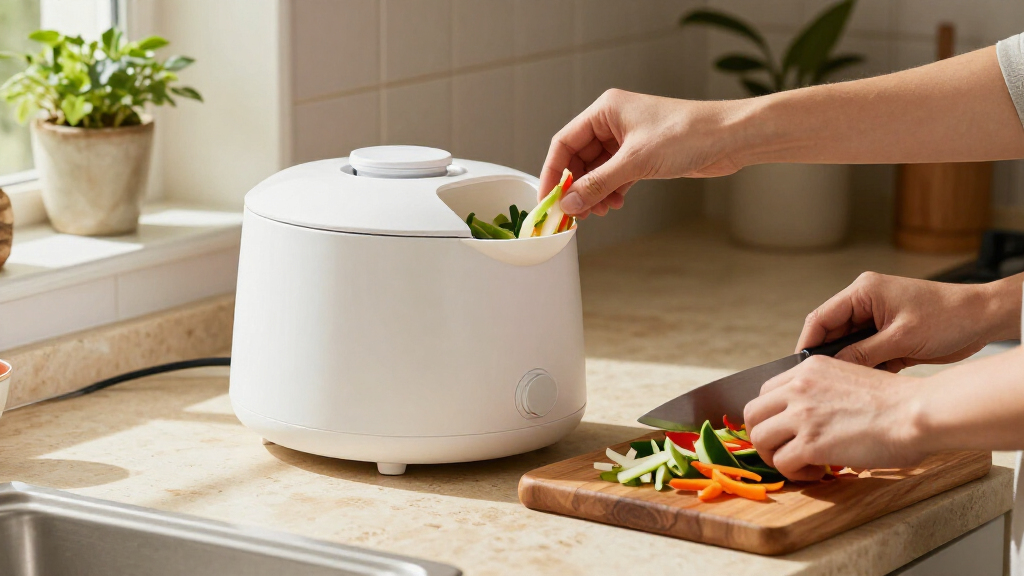
How We Picked
I evaluated these 14 electric indoor composters against the factors that actually decide satisfaction: effective capacity versus household size, cycle length, noise output during grinding, odor containment, and ease of cleaning. Capacity claims can be misleading — a 4L drum only processes a fraction of that per cycle once you account for the mixing paddle and headroom — so I grouped models by realistic per-batch output rather than raw liters. Odor control carried heavy weight because a composter that smells defeats the entire point of keeping it indoors.
Ranking also reflected versatility and ongoing costs. Models that accept continuous feeding or handle tricky waste like small bones and cooked food ranked above pickier units. I prioritized brands with readily available replacement filters and carbon refills, since a composter with unobtainable accessories becomes e-waste within a year. Finally, footprint mattered: a 22L tower earns its floor space only if a household generates enough scraps to fill it, so the ranking favors matching size to realistic use rather than rewarding bigness for its own sake.
Factors to Consider When Choosing Electric Indoor Composters
Before choosing a specific model, it helps to understand how electric composting actually works and where buyers most often go wrong. These machines don’t produce traditional compost — they dehydrate and grind food waste into a dry substrate that finishes decomposing in soil or a outdoor pile. That distinction shapes every buying decision below.Match Capacity to Your Real Waste Output, Not Your Ambitions
The most common mistake is buying a capacity tier that doesn’t match actual kitchen output. A two-person household generating a few liters of scraps per week will never fill a 19–22L unit, and running half-empty batches wastes electricity and accelerates wear. Conversely, a family of five will find a 2.5L unit frustrating because it needs emptying after nearly every meal. Track your food waste for a few days before buying — most households overestimate their output by a wide margin. Also note that stated capacity refers to the drum, not the batch size; usable volume is typically 60–70% of the advertised liters. When in doubt, size up one tier only if you cook heavily or preserve seasonal produce.
Cycle Time and Continuous Feeding Change Daily Habits
Most electric composters run three to eight hour cycles, and during that time many models lock you out of adding new scraps. That matters more than it sounds: if you cook dinner while a cycle is running, peels and trimmings pile up in a side container until the machine finishes. Models with continuous or mid-cycle feeding, like the larger Reencle units, eliminate that friction entirely, which is part of why they command a premium. Shorter cycles also mean less electricity per batch and less time listening to the grinder. If your routine involves multiple cooking sessions per day, cycle flexibility should outrank raw capacity on your priority list.
Noise Levels Determine Where the Machine Actually Lives
Every electric composter makes noise during its grinding phase — typically comparable to a dishwasher or microwave — but they differ in how long that phase lasts and whether the machine runs overnight. A unit placed in an open-plan kitchen will be heard during meals if cycles aren’t timed carefully. Buyers who plan to run machines while sleeping or during work calls should look for models with quieter continuous operation rather than loud intermittent grinding. This is a spec sheet detail that becomes a daily annoyance fast, and it’s the second most common reason people stop using their composter (after odor). Plan your placement — countertop, under-counter, garage, or laundry room — before choosing a size class.
Odor Control Is the Make-or-Break Feature
Carbon filters are the main defense against odor, and their quality and replacement schedule vary widely. Machines with dual-stage filtration or larger filter volumes contain smells noticeably better than basic single-filter designs, especially when processing pungent waste like fish, dairy, or alliums. Budget on replacing filters every three to six months with regular use, and check accessory availability before committing to a brand — a cheap composter with discontinued filters is a poor long-term deal. Some odors during the grinding of very wet or acidic waste are normal even on good machines; the difference is whether smell escapes at rest. If your composter will sit in a small apartment kitchen, treat filter system quality as non-negotiable.
Understand What the Output Actually Is
Electric composters produce dried, ground food waste — not finished compost. The output needs two to four weeks in soil, a garden bed, or a outdoor bin to fully decompose into humus, though it can be sprinkled lightly onto plants immediately as a soil amendment. This matters for apartment dwellers with no outdoor space: you’ll still generate a dry, odor-free material, but you need a plan for where it goes. Overloading plants with fresh output can attract fungus and imbalance soil, so moderation matters. Buyers expecting black, crumbly compost straight from the machine will be disappointed, so set expectations correctly before purchasing.
Factor In Energy Use and Long-Term Running Costs
Electric composters use heating elements and motors, so running costs are real — typically a fraction of a dishwasher cycle per batch, but multiplied across years of near-daily use. Larger machines consume more per cycle but process more waste, so energy per liter of scraps often favors bigger units for high-volume households. Replacement filters, optional deodorizing pellets, and eventual replacement buckets or paddles all add to lifetime cost. When comparing two similarly priced models, check accessory pricing and availability first — a small difference in filter cost compounds over five years. Cheap entry-level units can end up costing more than midrange models once consumables are included.
Frequently Asked Questions
Can an electric composter handle meat, dairy, and cooked food?
Yes, and this is one of their biggest advantages over traditional compost bins. Because electric composters dry and grind waste rather than relying on aerobic decomposition, they can process cooked foods, small bones, dairy, and even small amounts of meat without the odor and pest problems those materials cause in outdoor piles. Larger models like the GEME PRO and Reencle Gravity handle bones and dense scraps more readily, while compact 2.5L units may struggle with very hard items and ask you to chop them first. Very greasy or liquid-heavy waste should still be drained before loading, since excess oil can coat the heating element and bucket. Check each model’s manual for exclusions, but as a category these machines are far more forgiving than any bin reliant on microbes alone.
Is a bigger capacity always better if I have the counter space?
Not necessarily, and oversizing is one of the most common buying mistakes in this category. Running small batches in a large machine wastes electricity and prolongs cycles because the heating element works harder to evaporate moisture from a partially filled drum. Large 19–22L units also carry bigger footprints and price tags, and they only make sense if you genuinely produce that much waste — typically households of four or more, avid cooks, or anyone preserving garden produce. For one to two people, a 2.5–4L unit emptied every day or two keeps the process hygienic and the output fresh. Match the drum to your actual output rather than buying the biggest machine that fits.
How often do I need to replace the filters, and what happens if I don’t?
Most manufacturers recommend replacing carbon filters every three to six months with regular use, though heavy processing of pungent foods shortens that interval. When filters saturate, odor containment degrades noticeably — the machine still works, but your kitchen won’t stay neutral, which is usually the point people stop using the composter. Filter availability varies by brand, and this is a genuine risk with lesser-known names: always confirm replacement filters are stocked and reasonably priced before buying. Some models let you extend filter life by sun-drying the carbon between cycles, but that’s a stopgap, not a substitute for replacement. Budget roughly the cost of one to two filter sets per year when comparing total ownership costs.
Do smart features and app connectivity actually add value?
For most buyers, no — connectivity is a convenience, not a performance upgrade. App control mainly offers remote cycle starts, completion alerts, and usage tracking, which is handy if you run cycles while away from home but changes nothing about how the waste is processed. The comparison between the Airthereal R500 and its visual-window R500-V sibling illustrates the pattern: the premium features monitor the process rather than improve it. What matters more is cycle flexibility, filter quality, and capacity. That said, beginners who worry about operating the machine correctly may appreciate guided cycles and alerts, so the value depends on your comfort level. Skip connectivity if you’re choosing between a smart small unit and a well-built larger basic one at the same cost.
Where should I put the output if I don’t have a garden?
Apartment dwellers have several good options, and the dry, odor-free nature of the output makes them practical. A small bag of output can be sprinkled sparingly onto houseplants as a soil amendment — roughly a tablespoon per pot, mixed into the topsoil, given a few weeks to finish breaking down. Community gardens, neighborhood compost drop-off programs, and municipal food-waste collection all accept the dried output readily, and because it’s lightweight and odorless it’s far easier to store and transport than raw scraps. Some people freeze output until they have enough to drop off in one trip. Just avoid dumping fresh output thickly on any soil — it needs air and time to finish decomposing before plants can use it.
Conclusion
The right pick depends almost entirely on household size and how you plan to use the machine. For best overall, the Reencle Gravity 22L balances capacity, continuous feeding, and odor control better than anything else in this lineup, and the Reencle Prime 14L offers a similar experience in a smaller footprint for midsize households. For best premium, the GEME PRO 19L justifies its price for large families and heavy cooks who process serious volumes of waste, including bones and cooked food. For best value, the OK-255 5.5L hits a sweet spot between price and usable capacity that the crowded 4L budget segment can’t match. For beginners and small kitchens, the Airthereal Revive R500 or the Ouaken 2.5L keep the investment low and the footprint minimal while you figure out your actual waste habits — and singles who stay disciplined with daily emptying can stop there permanently. The FoodCycler Eco 5 suits buyers who want a proven, widely supported platform with easy accessory availability. Whatever you choose, size honestly to your output, keep filters fresh, and remember the output needs a few weeks in soil to become true compost — buy for the household you have, not the one you imagine.
Cold & flu season Picks
humidifiers
As an affiliate, we earn on qualifying purchases.