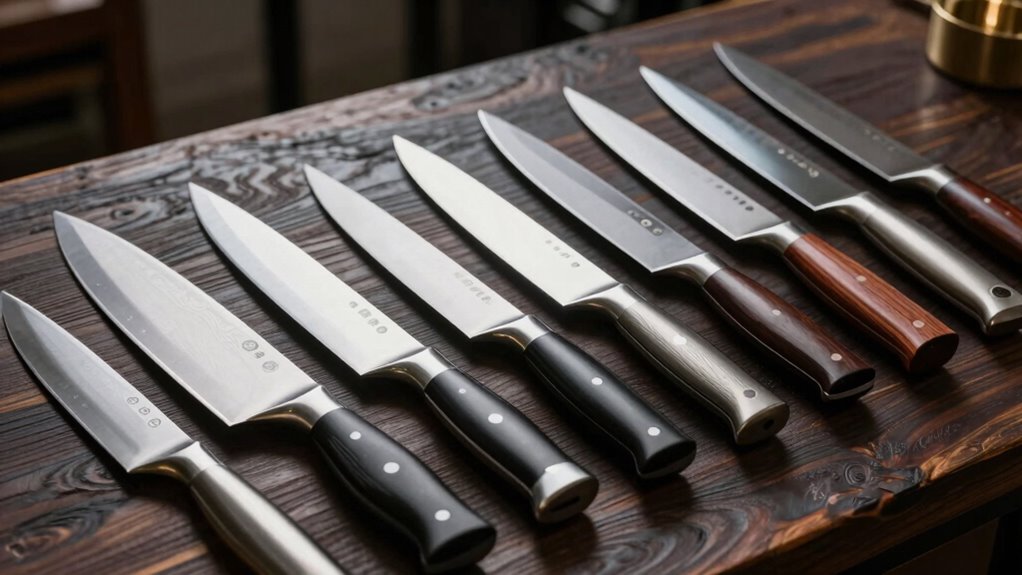

A high end chef knife for raw food prep needs one thing above all: a thin, razor-sharp edge that glides through delicate produce without bruising, crushing, or oxidizing it. My top pick is the Shun Classic Blonde 8-Inch Chef’s Knife, which pairs hand-finished VG10 steel with a lightweight build that excels at precision vegetable work. The HOSHANHO 7 Inch Nakiri stands out if you mostly prep produce, thanks to its straight edge and squared profile built for clean push-cuts. The main tradeoff in this category is between hard Japanese steel, which takes a screaming edge but chips more easily, and softer Western blades like the Wüsthof Classic, which trade some fineness for durability. Budget-minded buyers can still get excellent raw-food performance from options like the Dalstrong or SHAN ZU. Read on for the full breakdown of all 15 knives and who each one suits best.

Get health and wellness essentials delivered free with Prime
- Fast, free delivery on millions of items
- Prime Video, Amazon Music and more included
- Member-only deals all year
Key Takeaways
- Japanese VG10 and Damascus blades dominated the top spots because raw produce rewards thin, hard edges that cut cleanly without cell damage — but every one of them carries a real chipping risk if you hit pits, frozen food, or hard squash carelessly.
- Nakiri-style knives (HOSHANHO 7″ and Sunnecko 7″) outperformed general-purpose chef’s knives for pure vegetable push-cutting, but their straight profiles make them a poor choice if you also break down proteins or rock-chop herbs.
- The Shun Classic Blonde beat the Wüsthof Classic for raw food specifically because of its lighter weight and thinner grind, while the Wüsthof remains the safer choice for cooks who want one knife for everything.
- Budget Damascus options (Dalstrong, SHAN ZU, Sunnecko 8″) closed most of the sharpness gap with premium brands but cut corners on fit, finish, and edge retention consistency — you’re paying up mainly for refinement, not raw cutting ability.
- Sets and bundles like the Brewin Chefilosophi set and the MOSFiATA kit with sharpener and finger guard add convenience, but none of their blades matched the single-knife specialists for produce work.
- Kiritsuke profiles (the 8″ Damascus Kiritsuke and HOSHANHO 9″) offered the most striking designs but demand better technique — their flatter bellies punish rock-cutting habits.
| Brewin Chefilosophi 5-Piece Japanese Chef Knife Set with Red Pakkawood Handles |  | Best Set Value | Pieces: 5 | Blade material: 1.4116 German stainless steel | Rockwell hardness: 56+ | VIEW ON AMAZON | See Our Full Breakdown |
| Victorinox Fibrox Pro 8 Inch Chef’s Knife, Black |  | Best Workhorse for Beginners | Blade material: Stainless steel | Blade length: 7.9 inches | Handle material: Thermoplastic Elastomer (TPE) | VIEW ON AMAZON | See Our Full Breakdown |
| Dalstrong 8″ Japanese Chef Knife Gyuto – 66-Layer Damascus AUS-10V |  | Best Overall | Blade length: 8 inches | Steel: AUS-10V core, 66-layer Damascus | Hardness: 62+ Rockwell | VIEW ON AMAZON | See Our Full Breakdown |
| HOSHANHO 7 Inch Nakiri Knife, Ultra Sharp Japanese Kitchen Chef Knife |  | Best for Vegetable-Forward Raw Prep | Blade length: 7 inches | Steel: 10Cr15CoMoV Japanese high carbon stainless steel | Hardness: 60 HRC | VIEW ON AMAZON | See Our Full Breakdown |
| HexClad 8″ Japanese Damascus Stainless Steel Chef Knife with Full Tang Handle |  | Best Premium Presentation Pick | Blade length: 7.5 inches | Total length: 12.8 inches | Blade material: 67-layer Japanese Damascus stainless steel | VIEW ON AMAZON | See Our Full Breakdown |
| Sunnecko 8 Inch Japanese Damascus Chef Knife – Ultra Sharp VG10 Steel |  | Best Value Damascus | Brand: Sunnecko | Blade Length: 8 inches | Steel: 67-Layer Damascus with VG10 core | VIEW ON AMAZON | See Our Full Breakdown |
| KEEMAKE 8-Inch Chef Knife with Pakkawood Handle |  | Best Low-Maintenance Workhorse | Blade Length: 8 inches | Blade Material: 1.4116 high-carbon stainless steel | Hardness: 58 ± 2 HRC | VIEW ON AMAZON | See Our Full Breakdown |
| Japanese Chef Knife 8 Inch – Damascus VG10 Steel |  | Best Edge Retention | Blade Length: 8 inches | Steel Core: VG-10 steel | Hardness: 62 HRC | VIEW ON AMAZON | See Our Full Breakdown |
| Shun Classic Blonde 8-Inch Chef’s Knife |  | Best Premium Pick | Blade Length: 8 inches | Blade Steel: VG-MAX | Cladding: 68 layers of Damascus | VIEW ON AMAZON | See Our Full Breakdown |
| Wüsthof Classic 8-Inch Chef’s Knife, Black |  | Best for Heavy Raw Prep | Brand: Wüsthof | Series: Classic | Blade Length: 8 inches | VIEW ON AMAZON | See Our Full Breakdown |
| SHAN ZU 8-Inch Damascus Steel Chef Knife |  | Best Balanced Damascus Pick | Steel Core: 10Cr15MoV Japanese steel | Construction: 67-layer Damascus | Hardness: 62 HRC | VIEW ON AMAZON | See Our Full Breakdown |
| MOSFiATA 8″ Professional Chef’s Knife with Finger Guard, Sharpener, and Gift Box |  | Best Complete Starter Package | Blade Length: 8 inches | Steel: German high-carbon stainless EN1.4116 | Edge Angle: 16° per side | VIEW ON AMAZON | See Our Full Breakdown |
| 8 Inch Damascus Kiritsuke Chef Knife with VG10 Steel Core and Ash Wood Sheath |  | Best for Precision Slicing | Blade Length: 8 inches | Steel: 67-layer Damascus with VG10 core | Hardness: 60±2 HRC (listed as 62 HRC) | VIEW ON AMAZON | See Our Full Breakdown |
| HOSHANHO 9-Inch Japanese Kiritsuke Chef Knife |  | Best for Large-Cut Raw Proteins | Blade Length: 9 inches | Blade Thickness: 2.5 mm | Core Steel: 10Cr15CoMoV | VIEW ON AMAZON | See Our Full Breakdown |
| Sunnecko 7-Inch Nakiri Knife |  | Best Vegetable Specialist | Blade Length: 7 inches | Edge Angle: 12° double-bevel | Blade Material: High-carbon Japanese stainless steel | VIEW ON AMAZON | See Our Full Breakdown |
| high end chef knife for raw food prep | Blade length | Edge angle | Handle |
|---|---|---|---|
| Brewin Chefilosophi 5-Piece Ja | — | — | — |
| Victorinox Fibrox Pro 8 Inch C | 7.9 inches | — | — |
| Dalstrong 8" Japanese Chef Kni | 8 inches | 8–12° per side | Contoured G-10 |
| HOSHANHO 7 Inch Nakiri Knife | 7 inches | 15 degrees | — |
| HexClad 8" Japanese Damascus S | 7.5 inches | 12 degrees | — |
| Sunnecko 8 Inch Japanese Damas | 8 inches | 10-12° | ABS with decorative rivet |
| KEEMAKE 8-Inch Chef Knife with | 8 inches | 8°–12° per side | — |
| Japanese Chef Knife 8 Inch | 8 inches | — | Stabilized wood and resin, ergonomic slip-resistant |
| Shun Classic Blonde 8-Inch Che | 8 inches | 16 degrees | D-shaped blonde Pakkawood |
| Wüsthof Classic 8-Inch Chef’s | 8 inches | — | Black synthetic, triple riveted |
| SHAN ZU 8-Inch Damascus Steel | 8 in | — | G10, 5.3 in |
| MOSFiATA 8" Professional Chef’ | 8 inches | 16° per side | Triple-riveted Micarta with santoprene and polypropylene |
| 8 Inch Damascus Kiritsuke Chef | 8 inches | 10° | Pakkawood, full-tang, triple-riveted |
| HOSHANHO 9-Inch Japanese Kirit | 9 inches | 12–15° per side | Natural rosewood, octagonal |
| Sunnecko 7-Inch Nakiri Knife | 7 inches | 12° double-bevel | — |
More Details on Our Top Picks
Brewin Chefilosophi 5-Piece Japanese Chef Knife Set with Red Pakkawood Handles
Buying one knife gets you sharpness; buying this set gets you a full raw-prep station for less than a single Dalstrong Gyuto. The lineup covers the whole workflow — the 8-inch knives handle proteins and larger vegetables, the santoku excels at fine dicing, and the utility and paring knives take over where a big blade feels clumsy. The German 1.4116 steel at 56+ Rockwell is softer than the Japanese blades in this roundup, which translates into easier home sharpening but more frequent touch-ups. Compared with the single-purpose HOSHANHO nakiri, this set trades specialization for breadth. The red pakkawood handles with three reinforced anchor points feel secure during long prep sessions, though the blade lengths aren’t fully specified across every knife.
Pros:- Five-piece set covers chopping, slicing, paring, and detail work in one purchase
- Balanced pakkawood handles with three reinforced anchor points stay secure
- Softer German steel is forgiving and easy to sharpen at home
- Gift packaging makes it a ready present for new cooks
Cons:- Blade length is only specified for some knives in the set
- Lower hardness steel needs more frequent sharpening than Japanese competitors
- Set quality is spread across five knives rather than concentrated in one premium blade
Best for: Home cooks setting up a raw-food kitchen from scratch who want every task covered in one purchase
Not ideal for: Enthusiasts chasing maximum edge retention — the softer steel falls behind the 62+ Rockwell Dalstrong in sharpness longevity
- Pieces:5
- Blade material:1.4116 German stainless steel
- Rockwell hardness:56+
- Handle material:Pakkawood
- Handle color:Red
- Included knives:Two 8-inch knives, santoku, 5-inch utility, paring knife
- Packaging:Gift packaging
Our verdict“This set makes sense for someone building a raw-prep toolkit in one purchase rather than chasing a single do-it-all blade.”
Victorinox Fibrox Pro 8 Inch Chef’s Knife, Black
The Fibrox Pro is the anti-precious choice in a lineup full of Damascus showpieces. Where the HexClad demands hand washing and constant honing, this Swiss blade is dishwasher safe and backed by a lifetime warranty — a rarity in this roundup. The tapered, laser-tested edge slices cleanly through raw vegetables and proteins, and the thermoplastic Fibrox handle keeps its grip when your hands are slick from raw meat. It won’t match the Dalstrong’s 62+ Rockwell edge retention, so expect to sharpen more often, but the trade is a knife you can treat like a tool instead of an artifact. For raw-prep volume — big batches of chopped vegetables, breaking down fruit — this model makes more sense than a delicate nakiri.
Pros:- Tapered, laser-tested blade chops, minces, and slices efficiently
- Non-slip TPE handle stays secure even with wet hands during raw prep
- Dishwasher safe — the easiest care routine in this roundup
- Lifetime warranty from a long-established Swiss manufacturer
Cons:- Softer blade requires regular sharpening to stay at its best
- You’ll need to buy a sharpener separately since none is included
- Plain stainless construction lacks the refined cutting feel of harder Japanese steel
Best for: Beginners and high-volume home cooks who want a dependable, low-maintenance daily driver
Not ideal for: Buyers who want premium aesthetics or Japanese-style edge geometry — this is function-first through and through
- Blade material:Stainless steel
- Blade length:7.9 inches
- Handle material:Thermoplastic Elastomer (TPE)
- Dishwasher safe:Yes
- Country of origin:Switzerland
- Warranty:Lifetime against manufacturer defects
Our verdict“The Fibrox Pro is the pick for anyone who wants one honest knife that survives real kitchens without fussy care.”
Dalstrong 8″ Japanese Chef Knife Gyuto – 66-Layer Damascus AUS-10V
For a raw-food centerpiece, this Gyuto earns the top spot on edge performance alone. The AUS-10V core at 62+ Rockwell holds its angle far longer than the Victorinox Fibrox, and the hand-finished 8–12° edge glides through raw fish, tender proteins, and delicate produce with minimal cell damage — which matters when you’re plating crudo or slicing ripe fruit. The hammered finish keeps slices from clinging to the blade, a trait it shares with the HOSHANHO’s granton pits but executed on a more versatile shape. The G-10 handle offers solid knuckle clearance for larger hands. The real tradeoff: that hard steel is genuinely difficult to sharpen at home, and this blade punishes misuse — no bones, no frozen food, no twisting.
Pros:- 62+ Rockwell AUS-10V core delivers exceptional edge retention
- 8–12° hand-finished edge produces clean, low-resistance cuts
- Hammered blade finish reduces food sticking during repetitive prep
- Includes sheath and gift-ready presentation box
Cons:- Hard steel is more difficult to sharpen without professional help
- Not intended for bones, hard squash, or any twisting cuts
- Damascus cladding adds cost without improving raw cutting performance
Best for: Serious home cooks who want maximum sharpness and edge retention for precision raw prep
Not ideal for: Anyone who wants a low-maintenance knife — home sharpening is harder at this hardness and the blade is unforgiving of abuse
- Blade length:8 inches
- Steel:AUS-10V core, 66-layer Damascus
- Hardness:62+ Rockwell
- Edge angle:8–12° per side
- Handle:Contoured G-10
- Includes:Sheath and presentation box
Our verdict“If sharpness on delicate raw ingredients is the whole point of your purchase, this is the blade to beat in this lineup.”
HOSHANHO 7 Inch Nakiri Knife, Ultra Sharp Japanese Kitchen Chef Knife
The nakiri is a purpose-built vegetable machine, and if your raw prep skews toward produce rather than protein, this straight-edged 7-inch blade out-chops a generalist like the Victorinox on the board. The 10Cr15CoMoV steel at 60HRC sits between the Fibrox’s softness and the Dalstrong’s demanding hardness — sharp, durable, but still realistic to maintain. Hollow granton pits release thin slices of cucumber or zucchini instead of letting them ride the blade, and the balanced pakkawood handle keeps long veggie sessions comfortable. Be honest about the shape, though: the flat edge doesn’t rock, so herbs and curved cuts feel awkward compared with a traditional 8-inch chef’s knife. That specialization is the entire point — and the entire limitation.
Pros:- Hand-polished 15° edge makes clean, effortless cuts through produce
- 60HRC high-carbon steel balances sharpness with realistic maintenance
- Ergonomic, blade-to-handle balanced pakkawood grip reduces fatigue
- Granton hollow pits prevent slices from sticking to the blade
Cons:- High carbon steel needs prompt cleaning and drying to resist corrosion
- Flat nakiri edge is poor for rocking cuts and general-purpose tasks
- Slightly shorter 7-inch blade feels small for large melons or cabbage
Best for: Raw-food and plant-based cooks whose prep is dominated by chopping and slicing vegetables
Not ideal for: All-purpose cooks — the squared nakiri profile can’t rock-cut herbs or handle general protein work like a gyuto can
- Blade length:7 inches
- Steel:10Cr15CoMoV Japanese high carbon stainless steel
- Hardness:60 HRC
- Edge angle:15 degrees
- Handle material:Pakkawood
- Edge finish:Hand-polished, vacuum heat treated
Our verdict“Vegetable-heavy raw kitchens get more from this specialized blade than from any generalist chef’s knife here.”
HexClad 8″ Japanese Damascus Stainless Steel Chef Knife with Full Tang Handle
This is the gift-and-display choice — 67 layers of Damascus steel, a 12° Honbazuke-finished edge, full-tang construction, and a lifetime warranty stack up on paper much like the Dalstrong. Where it differs is feel and obligations: the ergonomic pakkawood handle is contoured for a pinch grip on long raw-prep sessions, but the knife demands genuine commitment. Hand wash only, hone frequently, and read the fine print — the warranty voids on dishwasher use or cutting on hard surfaces. Compared with the Victorinox Fibrox, this is a high-maintenance relationship in exchange for a blade that looks as good as it cuts. Buyers who prep raw food daily will love it; casual cooks who toss knives in the sink should steer toward the Fibrox instead.
Pros:- 67-layer Damascus construction holds an edge longer than standard stainless
- 12° Honbazuke-finished edge arrives extremely sharp out of the box
- Full-tang pakkawood handle gives precise control for detail work
- Lifetime warranty against manufacturing defects
Cons:- Hand wash only — dishwasher use voids the warranty
- Requires frequent honing to maintain the acute 12° edge
- Warranty excludes common misuses like cutting on hard surfaces
Best for: Gift buyers and dedicated cooks willing to follow a strict hand-wash-and-hone care routine
Not ideal for: Casual or careless cooks — common habits like dishwasher use void the warranty entirely
- Blade length:7.5 inches
- Total length:12.8 inches
- Blade material:67-layer Japanese Damascus stainless steel
- Edge angle:12 degrees
- Construction:Full tang
- Handle material:Pakkawood
- Care:Hand wash only; frequent honing recommended
- Warranty:Lifetime against manufacturer defects
Our verdict“A beautiful, warranty-backed blade for disciplined cooks who treat knife care as part of the routine rather than a chore.”
Sunnecko 8 Inch Japanese Damascus Chef Knife – Ultra Sharp VG10 Steel
Getting a 67-layer Damascus blade with a VG10 core at this position in the lineup is what makes the Sunnecko stand out — the same core steel here drives knives like the Japanese Chef Knife 8 Inch Damascus VG10 and Dalstrong’s AUS-10V Gyuto at higher tiers. The 10-12° edge is noticeably more acute than the Shun Classic Blonde’s 16 degrees, which translates to cleaner glides through raw fish and soft vegetables with less cell damage. Compared with the KEEMAKE, you give up a protective sheath but gain cladding that fights corrosion and dulling. The honest tradeoff is the ABS handle: it’s grippy and safe when wet, but it reads as functional rather than premium, and it’s the clearest sign of where cost was saved. For raw-focused prep where blade performance matters more than handle luxury, this pick makes the most sense.
Pros:- VG10 core at a 10-12° edge slices raw proteins and vegetables with minimal effort
- 67-layer Damascus cladding resists corrosion and slows dulling
- Full tang construction keeps weight balanced and reduces wrist fatigue
- Non-slip handle stays secure during wet, raw-food prep
Cons:- ABS handle feels less premium than the Pakkawood or stabilized wood on rival knives
- No protective sheath included, unlike the KEEMAKE
Best for: Home cooks who want VG10 sharpness for raw fish and vegetable work without paying premium-brand prices
Not ideal for: Buyers who want a knife that looks and feels luxurious in hand — the ABS handle undercuts the Damascus aesthetic
- Brand:Sunnecko
- Blade Length:8 inches
- Steel:67-Layer Damascus with VG10 core
- Edge Angle:10-12°
- Handle:ABS with decorative rivet
- Construction:Full tang
Our verdict“This is the smart pick if blade steel matters more to you than handle materials and you want Damascus performance for raw prep at a friendlier price point.”
KEEMAKE 8-Inch Chef Knife with Pakkawood Handle
Where the Damascus knives in this roundup chase edge extremes, the KEEMAKE plays a different game: 1.4116 high-carbon stainless steel at 58 HRC is softer than VG10 blades like the Sunnecko, which means it dulls faster but touches up on a honing rod in seconds and shrugs off rust with minimal fuss. That profile suits daily raw prep — breaking down chicken, slicing steak for tartare — where you’d rather maintain often than baby the blade. The Pakkawood handle immediately one-ups the Sunnecko’s ABS for feel, and the included protective sheath is something none of the Damascus picks offer. The 8°-12° per-side edge claim is aggressive for this steel, and sharpness will mellow quickly. This model is better suited to cooks who value consistency and easy care over exotic steel.
Pros:- Rust-resistant German-style steel tolerates neglect better than high-hardness Japanese blades
- Ergonomic Pakkawood handle feels more upscale than the Sunnecko’s ABS
- Protective sheath included for safe drawer storage
- Versatile enough for chopping, dicing, slicing, and light boning
Cons:- 58 HRC hardness means the edge fades faster than the VG10 and VG-MAX knives here
- No dishwasher or care instructions included
Best for: Busy home cooks who prep raw proteins daily and want a forgiving knife they can maintain with a honing rod
Not ideal for: Enthusiasts chasing maximum edge retention — the 58 HRC blade will need more frequent sharpening than VG10 or VG-MAX alternatives
- Blade Length:8 inches
- Blade Material:1.4116 high-carbon stainless steel
- Hardness:58 ± 2 HRC
- Edge Angle:8°–12° per side
- Handle Material:Pakkawood
- Included Accessories:Protective sheath and gift box
Our verdict“Choose this if you’d trade a little edge retention for a knife that forgives daily wear and stays rust-free with basic care.”
Japanese Chef Knife 8 Inch – Damascus VG10 Steel
At 62 HRC, this knife sits at the top of the hardness chart in this batch — a full four points above the KEEMAKE and the Wüsthof Classic. What that means at the cutting board: the edge holds through long raw-prep sessions, gliding through fish and tender vegetables without the mid-session touch-ups softer blades demand. The hand-sharpened Japanese finish and stabilized wood and resin handle put it a step above the Sunnecko in both craft and comfort, though you pay for it. Compared with the Shun Classic Blonde, you get a harder blade and likely a keener factory edge, but not Shun’s lifetime sharpening support. The flip side of 62 HRC is real: hard steel chips when twisted through dense squash or driven into bone, and the high-carbon core still asks for hand washing and drying despite the cladding.
Pros:- 62 HRC VG-10 core holds its edge noticeably longer than softer rivals
- 67-layer Damascus cladding adds stain and rust resistance
- Ergonomic slip-resistant stabilized wood handle reduces fatigue
- Hand-sharpened using traditional Japanese techniques for a refined factory edge
Cons:- Very hard steel is more prone to chipping if used on bones or frozen food
- Still demands careful hand washing and drying despite the cladding
- Damascus construction costs more than simpler blades like the KEEMAKE
Best for: Dedicated home cooks and pros who want maximum sharpness and edge retention for delicate raw work like sashimi and fine vegetable cuts
Not ideal for: Cook who hack through squash, bone-in meat, or frozen ingredients — 62 HRC steel is chip-prone under rough treatment
- Blade Length:8 inches
- Steel Core:VG-10 steel
- Hardness:62 HRC
- Layers:67-layer Damascus cladding
- Handle:Stabilized wood and resin, ergonomic slip-resistant
- Type:Chef knife
Our verdict“This is the pick for precision-focused raw prep where edge retention is king — as long as you’re willing to treat it gently.”
Shun Classic Blonde 8-Inch Chef’s Knife
Shun’s VG-MAX core with 68-layer Damascus cladding, handcrafted in Japan, is the most refined build in this batch — one more cladding layer than the Sunnecko or the 62 HRC Damascus knife, and backed by free sharpening and honing support that no other knife here offers. That service matters more than it sounds: it keeps the 16-degree edge performing for years without buying your own whetstone setup. The D-shaped blonde Pakkawood handle is the most distinctive grip in the roundup, and it accommodates both left- and right-handed users comfortably. The tradeoff is honesty about the edge: 16 degrees is more conservative than the Sunnecko’s 10-12°, trading a touch of raw slicing aggression for better durability and easier maintenance. This pick makes the most sense for buyers who see a knife as a decades-long purchase rather than a tool to replace.
Pros:- VG-MAX core with 68-layer Damascus cladding offers premium sharpness and durability
- Free sharpening and honing support extends the knife’s usable life
- D-shaped blonde Pakkawood handle suits both left- and right-handed users
- Handcrafted in Japan with tight quality control
Cons:- 16-degree edge is less aggressive than the 10-12° angles on cheaper rivals here
- Premium branding commands a price well above comparable VG10 Damascus options
Best for: Buyers who want a heirloom-quality Japanese knife with long-term manufacturer sharpening support and refined fit-and-finish
Not ideal for: Budget-conscious shoppers — the brand premium over the Sunnecko buys polish and service, not dramatically better raw cutting performance
- Blade Length:8 inches
- Blade Steel:VG-MAX
- Cladding:68 layers of Damascus
- Edge Angle:16 degrees
- Handle:D-shaped blonde Pakkawood
- Country of Manufacture:Japan
Our verdict“If you want one knife to own for a decade with manufacturer support behind it, this is the premium choice that justifies its cost through service rather than specs alone.”
Wüsthof Classic 8-Inch Chef’s Knife, Black
Everything the Japanese knives in this roundup optimize away, the Wüsthof Classic keeps on purpose. At 8.5 oz with a full bolster and finger guard, it’s built for authority — breaking down raw chicken, splitting joints, and powering through dense vegetables that would make you wince with the 62 HRC Damascus knife. The precision-forged, triple-riveted full tang and 58 HRC steel echo the KEEMAKE’s forgiving hardness profile but with far heavier-duty construction and German forging pedigree. Compared with the Shun, you sacrifice finesse and fine-edge delicacy for a blade that tolerates rough technique and repairs easily. The weight is the honest drawback: over long sessions of delicate slicing, that heft becomes wrist fatigue, and the bolster makes full-blade sharpening on a whetstone slightly awkward. This option stands out as the durability anchor of the batch.
Pros:- Full bolster and finger guard add safety during forceful raw-meat prep
- 58 HRC forged steel resists chipping and is easy to sharpen at home
- Full-tang, triple-riveted handle is built for decades of abuse
- Handles chopping, mincing, slicing, and dicing with equal authority
Cons:- At 8.5 oz, it’s the heaviest knife in this batch and tiring for fine work
- Full bolster complicates whetstone sharpening across the entire blade
Best for: Cooks who regularly break down raw poultry, dense squash, and other demanding ingredients and want a knife that won’t chip or complain
Not ideal for: Cooks doing long sessions of delicate slicing — the 8.5 oz weight causes fatigue where lighter Japanese blades glide
- Brand:Wüsthof
- Series:Classic
- Blade Length:8 inches
- Weight:8.5 oz
- Blade Material:High-carbon stainless steel, 58 HRC
- Construction:Full tang, precision forged
- Handle:Black synthetic, triple riveted
- Features:Full bolster and finger guard
- Country of Manufacture:Germany
Our verdict“This is the knife for raw prep that involves force — choose it when durability and safety outrank featherweight precision.”
SHAN ZU 8-Inch Damascus Steel Chef Knife
What separates this SHAN ZU from flashier Damascus knives like the Dalstrong 66-layer Gyuto is restraint. The 67-layer construction over a 10Cr15CoMoV-style core at 62 HRC delivers real slicing performance for raw proteins and delicate produce, while the G10 handle — a material borrowed from survival knives — shrugs off moisture better than the Pakkawood handles on the Kiritsuke and Sunnecko picks. At 270 g it sits firmly in the middleweight class, which suits longer prep sessions where a heavier blade like the HOSHANHO 9-inch would tire the wrist. The 15° edge is a touch less aggressive than the Kiritsuke’s 10°, but it trades a little bite for better durability on dense vegetables. The real gap is documentation: no care instructions or dishwasher guidance means first-time high-carbon buyers are on their own.
Pros:- 67-layer Damascus construction around a hard 62 HRC Japanese steel core
- G10 handle resists moisture and offers balanced, comfortable handling
- 15° edge balances sharpness with chip resistance on dense raw ingredients
- Solid mid-weight build suits extended prep sessions
- 12-month warranty adds peace of mind
Cons:- No care or dishwasher instructions included, risky for first-time carbon-core owners
- Heavier than true Japanese-style blades, which reduces finesse on delicate fish work
Best for: Home cooks who want genuine layered-steel performance and a weatherproof handle for frequent raw meat and fish prep
Not ideal for: Beginners to Japanese steel who need explicit care guidance — the lack of included instructions makes accidental edge damage or corrosion more likely
- Steel Core:10Cr15MoV Japanese steel
- Construction:67-layer Damascus
- Hardness:62 HRC
- Blade Length:8 in
- Cutting Angle:15°
- Handle:G10, 5.3 in
- Weight:270 g
- Warranty:12 months
Our verdict“A dependable all-rounder for cooks who want Damascus looks and G10 durability without paying premium-brand prices.”
MOSFiATA 8″ Professional Chef’s Knife with Finger Guard, Sharpener, and Gift Box
This MOSFiATA earns its place not by matching the SHAN ZU’s Damascus blade, but by solving a different problem: everything a raw-prep beginner needs in one box. The German EN1.4116 stainless steel at 16° per side is softer than the 62 HRC Japanese cores elsewhere in this roundup, which means it dulls faster but is far more forgiving — a few strokes on the included sharpener restore it, whereas chipping a hard Damascus edge sends you to a professional. Compared with the Victorinox Fibrox Pro, the triple-riveted Micarta handle feels more premium and the full tang adds reassuring heft for breaking down raw chicken. Be clear-eyed about the laser-etched pattern, though: it mimics Damascus cladding but is purely cosmetic, and the higher carbon content demands drying discipline to prevent tarnish.
Pros:- Full tang with triple-riveted Micarta handle gives a secure, slip-resistant grip during wet raw-meat work
- Hand-sharpened 16° edge handles chopping, slicing, and mincing with confidence
- Includes finger guard, sharpener, blade guard, and gift box — genuinely useful accessories
- German stainless steel is tough and chip-resistant for careless cutting boards
Cons:- Laser-engraved pattern may be mistaken for real Damascus cladding
- Softer steel requires more frequent sharpening than Japanese-core rivals
Best for: First-time knife buyers or gift-givers who want a capable blade plus finger guard, sharpener, and blade guard bundled together
Not ideal for: Enthusiasts chasing authentic layered steel or razor-thin slicing performance — the softer German steel and etched pattern won’t satisfy them
- Blade Length:8 inches
- Steel:German high-carbon stainless EN1.4116
- Edge Angle:16° per side
- Construction:Full tang
- Handle:Triple-riveted Micarta with santoprene and polypropylene
- Includes:Finger guard, sharpener, blade guard, gift box
Our verdict“The smartest choice for someone building their first serious knife kit who values included accessories over exotic steel.”
8 Inch Damascus Kiritsuke Chef Knife with VG10 Steel Core and Ash Wood Sheath
The VG10 core at a claimed 10° edge is the sharpest geometry in this batch, and it shows on raw fish, tomatoes, and tender proteins — this knife glides where the MOSFiATA’s 16° German edge needs a sawing motion. Its Kiritsuke silhouette, with the angled tip, adds slicing precision that a standard SHAN ZU chef knife can’t replicate, though that flat-forward profile makes it less natural for rocking herbs. The freestanding ash wood sheath is a genuinely thoughtful touch absent from every other pick here, doubling as countertop protection and presentation. My one hesitation: the hardness is listed inconsistently (62 HRC in one place, 60±2 in another), which hints at loose quality control — not disqualifying at this tier, but worth knowing before you commit.
Pros:- VG10 core with 67-layer Damascus cladding offers excellent edge retention and stain resistance
- Very acute 10° edge produces exceptionally clean, effortless cuts on raw ingredients
- Full-tang triple-riveted Pakkawood handle reduces wrist fatigue
- Freestanding ash wood sheath protects the edge and looks premium on the counter
Cons:- Hardness listed inconsistently between 62 HRC and 60±2 HRC in product details
- Extremely acute edge is fragile against bones, pits, and frozen foods
Best for: Cooks who prioritize paper-thin slices of raw fish, sashimi-grade proteins, and delicate produce and want standout presentation
Not ideal for: Heavy-duty preppers who chop through dense squash or want one forgiving workhorse — the ultra-thin 10° edge chips easily under rough treatment
- Blade Length:8 inches
- Steel:67-layer Damascus with VG10 core
- Hardness:60±2 HRC (listed as 62 HRC)
- Edge Angle:10°
- Handle:Pakkawood, full-tang, triple-riveted
- Sheath:Freestanding ash wood
- Style:Kiritsuke
Our verdict“The pick for slicing purists who want the sharpest possible edge and a knife that looks as good as it cuts.”
HOSHANHO 9-Inch Japanese Kiritsuke Chef Knife
That extra inch matters. Against every 8-inch blade here and the 7-inch Sunnecko Nakiri, the HOSHANHO’s 9-inch profile lets you break down whole fish, slice brisket, and portion large cuts in single strokes — fewer sawing motions means cleaner raw-meat surfaces and better presentation. The octagonal rosewood handle is a traditional Japanese touch none of the G10 or Micarta rivals offer, and it genuinely locks into a pinch grip during long sessions. Unlike the Kiritsuke with the VG10 core, this one uses an 8-layer composite over 10Cr15CoMoV steel — fewer layers means less showy patterning but a hand-sanded edge that performs. The hammered finish does its job releasing raw slices from the blade. Just respect the limits: bones and frozen foods are explicitly off-limits, and the rosewood demands prompt drying.
Pros:- 9-inch blade handles large raw proteins and long slicing strokes efficiently
- Octagonal rosewood handle offers a secure traditional pinch grip
- Hammered blade finish reduces food sticking during raw prep
- Hand-sanded 12–15° edge arrives sharp and takes well to touch-ups
Cons:- Cannot be used on bones or frozen foods at all
- Longer blade has a learning curve and feels clumsy for detail work
- Rosewood handle requires hand washing and thorough drying to stay pristine
Best for: Cooks who regularly portion large raw proteins — whole fish, roasts, big-block meal prep — and want single-stroke slicing length
Not ideal for: Small-knife cooks with small hands or limited board space — 9 inches is unwieldy for精细 herb work and tight workspaces
- Blade Length:9 inches
- Blade Thickness:2.5 mm
- Core Steel:10Cr15CoMoV
- Construction:8-layer composite steel
- Edge Angle:12–15° per side
- Handle:Natural rosewood, octagonal
- Care:Hand wash and dry; avoid bones and frozen foods
Our verdict“The length specialist of this batch — ideal for big raw-protein jobs, wrong for anyone wanting a nimble do-everything blade.”
Sunnecko 7-Inch Nakiri Knife
A nakiri is a square-tipped vegetable knife, and judging it against generalists like the MOSFiATA 8-inch chef’s knife misses the point — this is a tool built for one job done exceptionally well. The 12° hand-polished double-bevel makes straight push-cuts through raw vegetables feel effortless, and its flat edge contacts the board fully, something a curved chef’s blade can’t do when dicing onions or squaring off squash. At 0.48 lb, it’s noticeably lighter than the 270 g SHAN ZU, which matters during marathon vegetable prep for crudo plates and salads. The included sheath and gift packaging mirror the Kiritsuke’s thoughtful presentation. Where it falls short is versatility: the straight profile can’t rock-chop herbs, and the high-carbon steel plus bone prohibition mean it’s a companion knife, not your only one.
Pros:- Ultra-sharp 12° hand-polished edge slices vegetables and boneless proteins with minimal effort
- Lightweight 0.48 lb build reduces fatigue during long prep sessions
- Ergonomic non-slip Pakkawood handle works equally well for left- and right-handed users
- Includes protective blade sheath and gift-ready packaging
Cons:- Not suitable for bones or hard frozen ingredients
- High-carbon steel needs careful drying and maintenance to prevent rust
- Flat edge limits rocking cuts and general-purpose versatility
Best for: Vegetable-forward cooks — raw veggie platters, crudo garnishes, plant-based meal prep — who want lightweight precision and ambidextrous handling
Not ideal for: Anyone wanting a single do-it-all knife — the flat nakiri profile can’t rock-chop and can’t touch bones or hard-skinned frozen goods
- Blade Length:7 inches
- Edge Angle:12° double-bevel
- Blade Material:High-carbon Japanese stainless steel
- Handle Material:Pakkawood
- Weight:0.48 lb
- Includes:Protective blade sheath
Our verdict“A dedicated vegetable weapon for raw-produce-heavy kitchens — buy it alongside a chef’s knife, not instead of one.”

How We Picked
I judged every knife through one narrow lens: performance on raw fruits, vegetables, and herbs. That meant prioritizing edge thinness and sharpness out of the box, steel hardness (VG10 and similar steels at 60+ HRC held finer edges than softer German stainless), blade geometry (flatter profiles and nakiri shapes scored higher for push-cutting produce), and weight balance for extended prep sessions. I also weighed edge retention on high-moisture, acidic produce, since tomatoes, citrus, and onions dull and corrode edges faster than cooked-food prep does.
Beyond raw cutting performance, I factored in handle comfort during long prep sessions, build quality and fit-and-finish relative to price, maintenance demands (some knives demand honing discipline and careful washing), and overall versatility for buyers who prep more than vegetables. Ranked highest are knives that deliver exceptional produce work with honest, manageable tradeoffs; ranked lower are knives whose marketing outpaces their cutting performance or whose fragility outweighs their sharpness for everyday raw prep.
Factors to Consider When Choosing High End Chef Knife For Raw Food Prep
Before committing to a premium blade, it helps to understand what actually moves the needle for raw food prep — and where marketing distracts from cutting performance. These are the factors that separated the winners from the also-rans in this comparison.Steel Hardness and Edge Geometry Matter More Than Damascus Looks
The single biggest performance differentiator in this roundup wasn’t layered steel or finish — it was edge thinness behind the cutting edge. A knife ground to a fine acute angle (typical of Japanese knives around 12–15 degrees per side) slices tomatoes and leafy herbs with almost no downward pressure, which keeps cell walls intact and prevents bruising and browning. Damascus cladding, by contrast, is largely cosmetic; a 66-layer blade does not inherently cut better than a mono-steel blade of the same core steel. The tradeoff is real, though: harder, thinner edges chip when twisted, knocked against bone, or driven through dense squash and seeds. Buyers who frequently cut hard produce should either accept occasional micro-chipping or lean toward tougher, slightly thicker geometry. If a listing emphasizes layer counts over core steel and grind, treat that as a warning sign.
Match the Blade Profile to Your Cutting Motion
Most home cooks learned to rock-chop, pivoting the knife tip on the board — but raw produce work rewards the push-cut, where the blade slides forward and down in one motion. Nakiri and kiritsuke profiles have flat bellies designed for push-cutting, which is why they dominated pure vegetable tasks in this comparison. Western-style chef’s knives with generous belly curves (like the Wüsthof Classic) are more forgiving for rock-chopping and rocking through herbs, and they handle proteins better if your kitchen work isn’t produce-only. A common mistake is buying a dramatic flat-profiled kiritsuke because it looks impressive, then fighting it every time you mince garlic with your habitual rocking motion. Honestly watch how you cut before choosing a profile — technique mismatch is the most common reason premium knives disappoint.
Weight and Balance for Long Prep Sessions
Raw food preparation tends to involve volume — big batches of vegetables for juicing, salads, or meal prep — so a knife that feels fine for five minutes can fatigue your wrist after forty. Heavier German-style knives do some of the work for you on dense ingredients, but for delicate slicing of tomatoes, peaches, and herbs, lighter knives in the 6–8 oz range give you more control and finesse. Handle shape matters as much as weight: rounded D-shaped or octagonal Japanese handles suit pinch grips, while fuller Western handles with bolsters suit those who grip further back. Buyers with smaller hands or joint issues should prioritize lightness over blade heft, even though heavier knives often feel more ‘premium’ in a store. The best test proxy is total knife weight combined with where the balance point falls — at or just behind the bolster suits most produce work.
Corrosion Resistance and Maintenance Reality
Raw food prep is wet, acidic work. Citrus, tomatoes, and onions expose blades to acids and moisture far more than cooked-food kitchens, and even stainless steels show water spots, discoloration, or edge dulling from prolonged contact if not wiped promptly. High-carbon or semi-stainless steels hold incredible edges but demand immediate wiping and drying — a habit many buyers underestimate. Full stainless VG10 and German X50CrMoV15 steels are the practical choice for anyone who won’t hand-wash and dry immediately after use. Also plan for sharpening: hard Japanese steel sharpens beautifully on whetstones but performs poorly with pull-through sharpeners, which can actually damage thin edges. If you won’t maintain whetstone skills, a softer Western blade that tolerates a honing steel is genuinely the better purchase.
When Paying More Actually Gets You Something
The premium tier (Shun, Wüsthof) earns its price through quality control consistency, warranty support, and refined fit-and-finish — not through dramatically sharper edges. Budget Damascus knives often arrive nearly as sharp but vary unit to unit, with occasional grinds that are slightly off-center or handles with rough spots. That inconsistency is the hidden cost of the discount. Where premium knives pull ahead is edge retention predictability and resale or replacement support if something fails. My practical advice: if this is your first quality knife, the mid-tier options deliver 90% of the performance and let you learn your preferences cheaply. If you already know your preferred profile, weight, and maintenance habits, investing once in a premium blade avoids the upgrade path entirely.
Skip the Bundles Unless the Extras Fill a Real Gap
Several knives in this category ship with sharpeners, finger guards, sheaths, or full multi-knife sets. These bundles look like value, but the included accessories are usually the weakest part of the package — pull-through sharpeners that damage thin edges, or sets where two of five knives never leave the block. A single excellent 8-inch knife plus a whetstone beats a five-piece set at the same price for raw food work, with the possible exception of adding a dedicated nakiri for heavy vegetable prep. The one bundled extra worth having is a quality sheath or sayas for storage, since thin edges are easily damaged rattling around in drawers. Decide what you actually need before letting a gift box sway your decision.
Frequently Asked Questions
Is a nakiri or a gyuto/chef’s knife better for raw food prep?
It depends on what you cut and how. A nakiri’s straight edge and squared tip make it the purest vegetable tool — push-cuts through carrots, cabbage, and herbs come out perfectly uniform, and the flat profile maximizes board contact. But nakiris struggle with any task needing tip work, rocking cuts, or anything beyond produce, so they work best as a second knife. A gyuto or Western chef’s knife like the Shun Classic or Wüsthof Classic handles 90% of vegetable tasks nearly as well while remaining your all-around workhorse. If raw produce is most of your cooking, the HOSHANHO or Sunnecko nakiri is worth owning. If you want one knife that does everything, stick with an 8-inch chef’s knife.
Are Damascus steel knives actually better, or just for looks?
Mostly for looks, and that’s worth knowing before you pay a premium. The damascus cladding is a cosmetic outer layer; the cutting performance comes entirely from the core steel — usually VG10 in the knives in this roundup. What actually matters is the core steel’s hardness, the grind behind the edge, and the heat treatment quality. A mono-steel VG10 blade from a good maker will out-cut a poorly ground 66-layer damascus blade every time. That said, damascus knives at the mid-tier (Dalstrong, SHAN ZU, Sunnecko) are priced competitively enough that the pattern is essentially free, so there’s no reason to avoid them — just don’t treat layer count as a quality signal when comparing options.
How do I keep a hard Japanese knife from chipping during raw food prep?
Chipping almost always comes from technique and ingredient choices, not defective steel. The main culprits are twisting the blade while it’s inside an ingredient, cutting through avocado pits, frozen food, or hard squash rinds, and contact with glass or stone cutting boards. For raw food work specifically, watch out for dense winter squash, sweet potato ends, and hidden pits in stone fruit — either avoid these or switch to a tougher beater knife for them. Always cut on wood or soft plastic end-grain boards, and never use a hard Japanese knife to scrape food off the board with its edge; flip it and use the spine. Hand-wash and dry immediately, since prolonged moisture also degrades edges over time. Follow those habits and a VG10 blade will hold up for years of daily produce prep.
Is a high end knife worth it if I’m not skilled with knives yet?
Often yes, but not the most expensive option. A sharp mid-tier knife genuinely improves a beginner’s results more than an expert’s, because a keen edge compensates for imprecise pressure and technique — clean tomato and herb slices almost forgive themselves. The mistake beginners make is buying a fragile, flat-profiled premium knife before knowing their own cutting motion, then damaging it or fighting its geometry. Something like the KEEMAKE or SHAN ZU at the mid-tier lets you develop a pinch grip and whetstone habit with real consequences but modest risk. If you’re set on premium from day one, the Victorinox Fibrox Pro offers professional cutting performance with maximum forgiveness, making it a better first ‘serious’ knife than a delicate kiritsuke.
What length should I choose for vegetable-heavy prep?
For most cooks doing raw food prep, 8 inches is the sweet spot — long enough to slice through large heads of cabbage or watermelon, still nimble enough for controlled work on onions and tomatoes. A 7-inch blade, like the HOSHANHO nakiri or a shorter gyuto, trades some reach for added control and suits smaller hands or cramped cutting boards. Longer blades such as the HOSHANHO 9-inch kiritsuke excel at slicing long items in single strokes but feel unwieldy for detail work and demand more board space. Cooks with wrist fatigue often prefer shorter and lighter, while batch-preppers processing volume benefit from length. If you’re torn, default to 8 inches — it’s the most versatile length and the easiest to resell or hand down if you later specialize.
Conclusion
The right pick here depends less on budget ceilings and more on what your cutting board actually looks like week to week. For the best overall, the Shun Classic Blonde 8-Inch delivers the finest raw-produce cutting experience in this lineup with refinements you feel daily. The Wüsthof Classic is my pick for best premium all-rounder if you want one indestructible knife for produce and everything else, while the Victorinox Fibrox Pro takes best value — professional-level sharpness and total forgiveness at the accessible end of the category. Beginners should start with the KEEMAKE or SHAN ZU, which teach good habits without punishing early mistakes. For specific needs: vegetable purists and raw-food enthusiasts should grab the HOSHANHO 7-Inch Nakiri (or the Sunnecko nakiri as its value alternative), knife collectors and technique-focused cooks will love the HOSHANHO 9-Inch Kiritsuke, and gift-buyers get the most presentable package from the Dalstrong or the Damascus Kiritsuke with ash wood sheath. Whatever you choose, pair it with a wood cutting board and a whetstone — that combination will do more for your raw food prep than any single upgrade later.
Halloween Picks
halloween
As an affiliate, we earn on qualifying purchases.