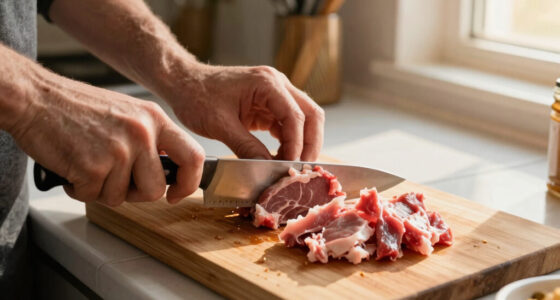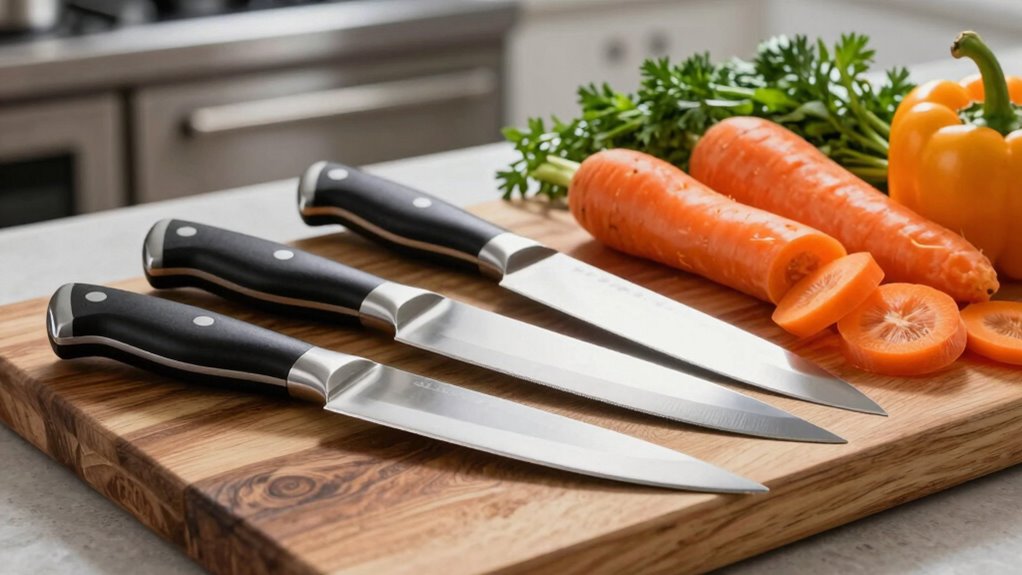

Choosing the right knife for vegetable prep comes down to one tradeoff: blade shape versus versatility. A straight-edged nakiri like the PAUDIN 7″ Nakiri excels at clean, push-cut chopping through onions and squash, while a santoku such as the imarku 7-Inch Santoku handles vegetables and still manages meat and herbs, which is why it earns my Best Overall spot. Budget shoppers get real value from the Farberware EdgeKeeper paring and santoku knives, which self-sharpen in their covers — a genuine advantage if you hate maintenance. The main tension in this category is between specialized Japanese vegetable blades and do-everything chef knives. Keep reading for the full breakdown of all ten picks.

Get health and wellness essentials delivered free with Prime
- Fast, free delivery on millions of items
- Prime Video, Amazon Music and more included
- Member-only deals all year
Key Takeaways
- Nakiri knives dominated this comparison for pure vegetable work — their flat profiles and thin edges out-cut santokus on push cuts, with the PAUDIN Nakiri offering the best price-to-performance ratio in the lineup.
- The imarku Santoku won Best Overall because it balances vegetable performance with enough versatility for proteins, making it the safest single-knife purchase for most home cooks.
- Self-sharpening sheaths (both Farberware EdgeKeeper picks) solve the #1 reason budget knives fail — neglected edges — though the blades themselves are noticeably less refined than the German and Japanese steel options.
- A paring knife set like the VITUER 8-piece complements rather than replaces a main blade; it wins for detail work like peeling, hulling, and supreming citrus, not for chopping volume.
- Build quality tracked closely with price across the lineup, but the gap between the ~$30 mid-range options (imarku, PAUDIN) and the ~$100+ premium picks (HOSHANHO, Sunnecko) was smaller than expected for vegetable-only tasks.
| Santoku Knife, 7 Inch Chef’s Knife Kitchen Knife with Razor Sharp High-Carbon German Steel, Ergonomic Non-Slip Handle for Slicing, Dicing, Chopping Meat & Vegetables, Ideal for Kitchens & Home Cooking |  | Best Overall for Precision Vegetable Prep | Blade Length: 7 inches | Steel Type: 3Cr15MoV German steel | Edge Angle: 15° double-bevel | VIEW ON AMAZON | See Our Full Breakdown |
| Farberware Edgekeeper 3.5-Inch Paring Knife with Self-Sharpening Blade Cover |  | Best for Precision, Small-Scale Vegetable Tasks | Blade Length: 3.5 inches | Blade Material: High-carbon stainless steel | Handle: Ergonomic | VIEW ON AMAZON | See Our Full Breakdown |
| PAUDIN Nakiri Knife – 7″ Razor Sharp Vegetable and Meat Cleaver, High Carbon Stainless Steel, Ergonomic Handle |  | Best for Versatile Vegetable and Meat Prep | Blade Length: 7 inches | Steel Type: 5Cr15Mov stainless steel | Hardness: 56+ HRC | VIEW ON AMAZON | See Our Full Breakdown |
| Cuisinart 7″ Nakiri Knife with Blade Guard, Stainless Steel Collection |  | Best for Easy, Safe Vegetable Slicing | Blade Size: 7 inches | Blade Material: Stainless steel | Included: Blade guard | VIEW ON AMAZON | See Our Full Breakdown |
| Sunnecko Nakiri Knife – 7″ Chef Knife for Meat Cleaver Vegetable Chopping |  | Best for Heavy-Duty Vegetable and Meat Prep | Blade Length: 7 inches | Edge Angle: 12° double-bevel | Steel Type: High-carbon stainless steel | VIEW ON AMAZON | See Our Full Breakdown |
| HOSHANHO 7 Inch Nakiri Knife, Ultra Sharp Japanese Kitchen Chef Knife |  | Best for Precise Vegetable Slicing and Elegant Design | Blade Length: 7 inches | Material: Japanese 10Cr15CoMoV high carbon stainless steel | Blade Edge: 15-degree ultra-sharp | VIEW ON AMAZON | See Our Full Breakdown |
| Farberware EdgeKeeper 5-Inch Santoku Knife with Sharpening Cover |  | Best for Easy Maintenance and Compact Prep Tasks | Blade Length: 5 inches | Material: High-carbon stainless steel | Handle: Ergonomic | VIEW ON AMAZON | See Our Full Breakdown |
| imarku 7-Inch Santoku Knife with High Carbon Stainless Steel |  | Best for Versatile, Heavy-Duty Vegetable and Meat Prep | Blade Length: 7 inches | Material: Japanese high carbon stainless steel | Edge Angle: 15-18 degrees | VIEW ON AMAZON | See Our Full Breakdown |
| Henckels Solution 4-Inch Paring Knife, Razor-Sharp, German Engineered |  | Best for Precise Detail Work and Small Tasks | Blade Length: 4 inches | Material: German stainless steel | Construction Type: Stamped | VIEW ON AMAZON | See Our Full Breakdown |
| VITUER 8-Piece Paring Knife Set with Sheaths, 4 Inch Ultra Sharp Kitchen Knives, German Steel |  | Best for Comprehensive Vegetable Prep and Safe Storage | Number of Items: 8 | Blade Length: 4 inches | Material: German stainless steel (3Cr13MoV) | VIEW ON AMAZON | See Our Full Breakdown |
| knives for vegetable prep | Blade Length | Handle Material | Material |
|---|---|---|---|
| Santoku Knife | 7 inches | Stainless steel | — |
| Farberware Edgekeeper 3.5-Inch | 3.5 inches | — | — |
| PAUDIN Nakiri Knife | 7 inches | Pakkawood | — |
| Cuisinart 7" Nakiri Knife with | — | — | — |
| Sunnecko Nakiri Knife | 7 inches | — | — |
| HOSHANHO 7 Inch Nakiri Knife | 7 inches | Pakkawood | Japanese 10Cr15CoMoV high carbon stainless steel |
| Farberware EdgeKeeper 5-Inch S | 5 inches | — | High-carbon stainless steel |
| imarku 7-Inch Santoku Knife wi | 7 inches | Pakkawood | Japanese high carbon stainless steel |
| Henckels Solution 4-Inch Parin | 4 inches | Stainless Steel | German stainless steel |
| VITUER 8-Piece Paring Knife Se | 4 inches | PP plastic | German stainless steel (3Cr13MoV) |
More Details on Our Top Picks
Santoku Knife, 7 Inch Chef’s Knife Kitchen Knife with Razor Sharp High-Carbon German Steel, Ergonomic Non-Slip Handle for Slicing, Dicing, Chopping Meat & Vegetables, Ideal for Kitchens & Home Cooking
This 7-inch Santoku knife stands out for its razor-sharp edge and balanced design, making it ideal for detailed vegetable prep like dicing onions or slicing tomatoes. Compared with the Nakiri options, its classic sheep’s foot tip offers more versatility, especially for push-cutting tasks. The hollow edge design prevents sticking, speeding up prep, but this feature adds complexity to cleaning. Its full-stainless steel handle ensures a secure grip during extended use, reducing fatigue, which is a step above lighter paring knives. The high-carbon German steel core guarantees sharpness retention, but requires careful hand washing to prevent corrosion. Overall, this knife is perfect for serious home cooks and aspiring chefs seeking precision and durability, though it involves a steeper learning curve for those unfamiliar with Japanese-style blades.
Pros:- Exceptional sharpness and edge retention from high-quality steel
- Versatile shape suitable for slicing, dicing, and chopping
- Hollow edge reduces food sticking for faster prep
Cons:- Requires careful hand washing to prevent rust and damage
- Slightly more complex to sharpen and maintain than simpler knives
Best for: Home cooks and budding chefs who need a versatile, durable knife for detailed vegetable and meat prep.
Not ideal for: Beginners who prefer lightweight, easy-maintenance knives or those with limited space for high-maintenance tools.
- Blade Length:7 inches
- Steel Type:3Cr15MoV German steel
- Edge Angle:15° double-bevel
- Handle Material:Stainless steel
- Blade Design:Hollow edge with divots
- Made In:Germany
Our verdict“This Santoku is best suited for cooks who value precision, durability, and versatility in vegetable prep, willing to invest in proper care.”
Farberware Edgekeeper 3.5-Inch Paring Knife with Self-Sharpening Blade Cover
This compact 3.5-inch paring knife excels at peeling, garnishing, and intricate vegetable work. Its self-sharpening sheath makes it a low-maintenance choice, sharpening the blade with every use—unlike the Santoku, which demands more careful handling. While the small size limits heavy-duty chopping, it provides unmatched control for delicate tasks, making it ideal for detailed work like deveining or creating garnishes. The high-carbon stainless steel blade stays sharp longer, but the hand wash-only requirement and small size may frustrate those needing a multi-purpose tool. This pick makes the most sense for cooks who prioritize precision in small tasks and want a knife that stays sharp without extra effort, though it’s less suited for larger vegetable prepping.
Pros:- Self-sharpening sheath maintains blade sharpness effortlessly
- Compact size offers excellent control for detailed work
- High-carbon steel ensures long-lasting sharpness
Cons:- Limited to small, precise tasks; not for heavy chopping
- Requires hand washing and careful maintenance
Best for: Home cooks who need a dedicated, precise tool for peeling, garnishing, and fine vegetable work.
Not ideal for: Those seeking an all-purpose prep knife or who prefer dishwasher-safe tools for larger chopping tasks.
- Blade Length:3.5 inches
- Blade Material:High-carbon stainless steel
- Handle:Ergonomic
- Self-Sharpening:Yes
- Care:Hand wash only
- Included:Self-sharpening sheath
Our verdict“This paring knife is ideal for meticulous vegetable prep and garnishing, especially for those who value sharpness and control over size.”
PAUDIN Nakiri Knife – 7″ Razor Sharp Vegetable and Meat Cleaver, High Carbon Stainless Steel, Ergonomic Handle
The 7-inch PAUDIN Nakiri combines the traditional vegetable cleaver design with the ability to handle meat, making it a flexible choice. Its high-carbon stainless steel blade offers excellent sharpness and durability, outperforming some purely decorative or lighter Nakiris like the HOSHANHO in terms of toughness. The wave pattern on the blade reduces friction, facilitating smoother cuts through firm vegetables and boneless meats alike. Compared to the minimalist Cuisinart, its ergonomic handle provides a better grip for repetitive chopping, though it’s not a true Damascus steel, and the handle may need occasional maintenance to prevent moisture damage. This knife is perfect for cooks who want a multi-tasking vegetable and meat cutter but are willing to care for a slightly more complex handle.
Pros:- Versatile for vegetables and meats
- Sharp, durable stainless steel blade
- Ergonomic handle for comfortable, prolonged use
Cons:- Handle may require maintenance to prevent moisture damage
- Not a genuine Damascus pattern, limiting aesthetic appeal
Best for: Home cooks and amateur chefs seeking a versatile, durable knife for vegetables and boneless meats.
Not ideal for: Those looking for a dedicated vegetable-only cleaver or who prefer lightweight, low-maintenance knives.
- Blade Length:7 inches
- Steel Type:5Cr15Mov stainless steel
- Hardness:56+ HRC
- Handle Material:Pakkawood
- Pattern:Wave pattern
- Design Inspiration:Japanese traditional
Our verdict“This Nakiri is a strong choice for those wanting a versatile, sharp knife that handles multiple kitchen tasks with ease, provided proper care is maintained.”
Cuisinart 7″ Nakiri Knife with Blade Guard, Stainless Steel Collection
The Cuisinart 7-inch Nakiri offers a straightforward, high-quality stainless steel blade designed for effortless vegetable slicing and dicing. Its inclusion of a blade guard makes storage safer and more convenient, especially for busy kitchens. Compared to the more artisanal Nakiris like PAUDIN or Sunnecko, this model emphasizes ease of use over traditional craftsmanship, making it ideal for beginners. The blade’s sharpness is sufficient for most home vegetable prep, but it may not hold an edge as long as higher-end Japanese blades. The handle provides a comfortable grip, but its simplicity means it lacks some ergonomic features found in premium options. It’s a practical choice for those who prioritize safety, ease, and affordability in a vegetable prep knife, but less so for those seeking professional-grade precision.
Pros:- Includes a protective blade guard for safe storage
- High-quality stainless steel for easy cleaning
- Simple, functional design suitable for beginners
Cons:- Lacks the traditional craftsmanship or detailed design of premium knives
- May require more frequent sharpening over time
Best for: Home cooks who want a reliable, safe vegetable knife with minimal maintenance.
Not ideal for: Serious chefs or enthusiasts seeking a highly refined, artisanal knife with exceptional edge retention.
- Blade Size:7 inches
- Blade Material:Stainless steel
- Included:Blade guard
- Design:Standard Nakiri
- Care:Dishwasher safe
- Made In:China
Our verdict“This Nakiri is ideal for casual cooks seeking a safe, easy-to-use vegetable knife without fuss or high maintenance, though it isn’t a premium or artisanal choice.”
Sunnecko Nakiri Knife – 7″ Chef Knife for Meat Cleaver Vegetable Chopping
The Sunnecko 7-inch Nakiri is designed for those who need a robust, all-purpose kitchen tool. Its ultra-sharp 12° double-bevel edge allows for smooth cuts through vegetables, fruits, and even boneless meats, making it a versatile option. Compared with the lighter, more traditional Nakiri knives like the HOSHANHO, Sunnecko offers a more balanced weight and ergonomic handle, reducing fatigue during long prep sessions. Its Japanese high-carbon stainless steel resists rust and maintains sharpness, but the knife’s slightly heavier weight may be tiring for some users. Ideal for professional kitchens or dedicated home cooks, this knife balances power and precision, though it may be overkill for light vegetable prep or casual use.
Pros:- Ultra-sharp 12° double-bevel edge for versatile cuts
- Heavy-duty, balanced weight for power and control
- High-carbon stainless steel resists rust and maintains sharpness
Cons:- Heavier weight may cause fatigue during long sessions
- Requires proper care to prevent corrosion
Best for: Experienced cooks and home chefs who need a heavy-duty, sharp knife capable of handling vegetables and meats with ease.
Not ideal for: Beginners or those with limited strength, as the weight might be challenging during extended use.
- Blade Length:7 inches
- Edge Angle:12° double-bevel
- Steel Type:High-carbon stainless steel
- Handle:Pakkawood
- Weight:Moderate to heavy
- Rust Resistance:Yes
Our verdict“This all-purpose Nakiri is perfect for serious cooks who want a reliable, heavy-duty knife for vegetables and meats, provided they can handle its weight.”
HOSHANHO 7 Inch Nakiri Knife, Ultra Sharp Japanese Kitchen Chef Knife
This nakiri knife stands out for its ultra-sharp 15-degree edge, expertly hand-polished to deliver effortless cuts. Compared with the VITUER 8-Piece Paring Knife, it offers a broader blade ideal for vegetables, making it more suitable for larger prep tasks. The high carbon steel maintains its edge through heavy use, but its specialty design means it’s less versatile for finer detail work or peeling. The ergonomic pakkawood handle reduces fatigue during extended prep, contrasting with the simpler handle of the Henckels Solution paring knife. The hollow scalloped sides reduce sticking, enhancing efficiency. However, the robust construction and pointed shape may feel unwieldy for very delicate slicing or for users preferring lightweight options. This nakiri makes the most sense for home cooks and professional chefs prioritizing clean vegetable cuts with a stylish, multi-purpose tool.
Pros:- Exceptional sharpness with a precisely polished 15-degree edge
- High-grade Japanese 10Cr15CoMoV steel retains edge well
- Ergonomic handle reduces fatigue during long prep sessions
- Hollow scalloped sides prevent sticking for faster cuts
Cons:- Relatively heavy and may feel unwieldy for very delicate tasks
- Requires careful hand washing to preserve blade integrity
Best for: Cooks seeking a high-performance vegetable knife with a stylish, ergonomic design for frequent use.
Not ideal for: Beginners or those preferring lightweight, more versatile all-purpose knives for occasional vegetable prep.
- Blade Length:7 inches
- Material:Japanese 10Cr15CoMoV high carbon stainless steel
- Blade Edge:15-degree ultra-sharp
- Handle Material:Pakkawood
- Hardness:60HRC
- Construction:Hand-polished
Our verdict“This nakiri is ideal for experienced cooks who want a precise, stylish vegetable knife for regular use.”
Farberware EdgeKeeper 5-Inch Santoku Knife with Sharpening Cover
This 5-inch santoku knife is perfect for quick, efficient slicing, dicing, and mincing, especially for cooks who value convenience. Its self-sharpening EdgeKeeper sheath keeps the blade consistently sharp, setting it apart from the imarku 7-Inch Santoku Knife, which requires regular manual sharpening. The smaller size makes it highly maneuverable for smaller hands or detailed prep, but limits its use for larger vegetables or meats. The ergonomic handle offers control, though its compact design may feel cramped for users with larger hands. The high-carbon stainless steel blade ensures durability, but hand washing is recommended to maintain the edge. Its main tradeoff is the limited blade length, which could slow down prep for bigger vegetables. This pick is best for home cooks who need a reliable, easy-to-maintain knife for everyday vegetable prep and small tasks.
Pros:- Self-sharpening sheath maintains razor-sharp edge
- Compact size offers excellent control for detailed work
- Durable high-carbon stainless steel blade
- Ergonomic handle reduces fatigue
Cons:- Limited to 5-inch blade size, less suitable for large vegetables
- Requires hand washing for longevity
Best for: Home cooks looking for an easy-to-maintain, space-saving santoku for daily vegetable slicing.
Not ideal for: Professional chefs or those preparing large quantities of vegetables, who may need a larger or more versatile knife.
- Blade Length:5 inches
- Material:High-carbon stainless steel
- Handle:Ergonomic
- Includes:Sharpening cover
Our verdict“This santoku is suited for everyday use by home cooks prioritizing ease of maintenance and space efficiency.”
imarku 7-Inch Santoku Knife with High Carbon Stainless Steel
The imarku 7-inch santoku is a versatile choice that balances sharpness and durability, making it well-suited for both vegetables and meats. Its Japanese high carbon stainless steel blade, with an edge angle of 15-18 degrees, offers a sharper, longer-lasting edge than typical stainless knives like the Henckels Solution paring knife. Its hollow edge design minimizes sticking, improving efficiency, especially for larger or sticky ingredients. The ergonomic pakkawood handle provides comfort during extended prep, though the size might be less ideal for users with smaller hands. Compared to the Farberware EdgeKeeper, it requires more manual maintenance but offers a broader 7-inch blade for bigger tasks. The main tradeoff is the need for careful hand washing to preserve its edge. This knife makes the most sense for serious home cooks or semi-professionals who need a durable, multi-purpose vegetable and meat knife.
Pros:- Sharp, durable edge from Japanese high carbon steel
- Hollow edge minimizes sticking and improves prep speed
- Ergonomic pakkawood handle for comfort
- 7-inch blade for larger vegetables and meats
Cons:- Handle material requires careful hand washing
- Requires regular maintenance to preserve sharpness
Best for: Experienced home cooks or semi-pro chefs who want a durable, versatile vegetable and meat prep knife.
Not ideal for: Casual cooks or those with limited storage space, given its larger size and care requirements.
- Blade Length:7 inches
- Material:Japanese high carbon stainless steel
- Edge Angle:15-18 degrees
- Handle Material:Pakkawood
- Blade Thickness:2.5mm
Our verdict“This santoku is a strong choice for cooks needing a versatile, durable knife for larger vegetable and meat prep tasks.”
Henckels Solution 4-Inch Paring Knife, Razor-Sharp, German Engineered
The Henckels Solution 4-inch paring knife excels in detailed vegetable prep like peeling, coring, and trimming. Its German-engineered razor-sharp blade offers exceptional control for intricate tasks, which larger knives like the imarku 7-inch santoku can’t match for precision. Its single-piece stainless steel construction guarantees durability and easy cleaning, unlike the more delicate high-carbon steel options. The ergonomic triple-rivet handle provides a stable grip, making it an excellent choice for fine detail work. The tradeoff is its smaller size, limiting its usefulness for larger vegetables or chopping tasks. Compared to the larger nakiri, this knife is a dedicated tool for delicate, precise prep, but less suitable for bulk chopping or slicing large produce. It suits home cooks or professionals who focus on detailed vegetable work.
Pros:- Exceptional precision with razor-sharp blade
- Lightweight and easy to maneuver
- Durable, stain- and rust-free stainless steel
- Comfortable triple-rivet handle
Cons:- Limited size restricts use to small tasks
- Not suitable for bulk chopping or larger vegetables
Best for: Cooks needing a precise, lightweight knife for peeling, trimming, or detailed vegetable tasks.
Not ideal for: Users looking for a larger, all-purpose vegetable or meat knife, or those preferring a heavier, more substantial tool.
- Blade Length:4 inches
- Material:German stainless steel
- Construction Type:Stamped
- Handle Material:Stainless Steel
Our verdict“This paring knife is ideal for fine, detailed vegetable prep for home cooks and professionals focusing on accuracy.”
VITUER 8-Piece Paring Knife Set with Sheaths, 4 Inch Ultra Sharp Kitchen Knives, German Steel
This 8-piece set offers multiple 4-inch paring knives, making it ideal for cooks who want a full range of small, precise blades for peeling, trimming, and intricate prep. Its German 3Cr13MoV stainless steel provides a good balance of sharpness and durability, comparable to the Henckels Solution but with more variety. The ergonomic handles ensure comfort, while the included protective sheaths enhance safety during storage and transport, a feature absent in many single knives. However, the set’s limited blade length makes it less suitable for larger vegetables or more demanding chopping tasks. The need for hand washing remains, and the set’s focus on small blades means it’s less versatile for bigger prep jobs. This set works best for home cooks who want a complete, safe-to-store collection for detailed vegetable work.
Pros:- Multiple high-quality German stainless steel knives
- Protective sheaths for safe, organized storage
- Ergonomic handles for comfort
- Ideal for peeling, trimming, and intricate tasks
Cons:- Limited to 4-inch blades, not suitable for larger vegetables
- Requires careful hand washing to maintain sharpness
Best for: Home cooks wanting multiple, reliable small knives with protective sheaths for everyday vegetable prep.
Not ideal for: Cooks needing a single, larger, or more versatile knife for bigger vegetables or meat prep.
- Number of Items:8
- Blade Length:4 inches
- Material:German stainless steel (3Cr13MoV)
- Handle Material:PP plastic
Our verdict“This set is best for cooks who want a variety of small, precise knives with safe storage for detailed vegetable work.”
How We Picked
I evaluated each knife through a single lens: performance on vegetables. That meant judging edge geometry and thinness for clean cuts through delicate produce like tomatoes, blade profile for full-contact chopping on a board, handle comfort during repetitive prep sessions, and how well the steel holds an edge over weeks of daily use. A knife that shreds an onion or wedges in a butternut squash lost points regardless of price or brand reputation.
Ranking also factored in versatility, maintenance demands, and value. Pure nakiris scored highest on vegetable work but were penalized slightly if they couldn’t pivot to other tasks, while santokus gained points for flexibility. Budget knives were judged against their price tier — a $15 paring knife isn’t competing with a Japanese nakiri, but it still needs to justify its cost. Finally, I weighed included accessories like blade guards and sharpening covers, which materially affect how a knife performs two years after purchase.
| knives for vegetable prep | Handle Material | Material |
|---|---|---|
| Santoku Knife | Stainless steel | — |
| Farberware Edgekeeper 3.5-Inch | — | — |
| PAUDIN Nakiri Knife | Pakkawood | — |
| Cuisinart 7" Nakiri Knife with | — | — |
| Sunnecko Nakiri Knife | — | — |
| HOSHANHO 7 Inch Nakiri Knife | Pakkawood | Japanese 10Cr15CoMoV high carbon stainless steel |
| Farberware EdgeKeeper 5-Inch S | — | High-carbon stainless steel |
| imarku 7-Inch Santoku Knife wi | Pakkawood | Japanese high carbon stainless steel |
| Henckels Solution 4-Inch Parin | Stainless Steel | German stainless steel |
| VITUER 8-Piece Paring Knife Se | PP plastic | German stainless steel (3Cr13MoV) |
Factors to Consider When Choosing Knives For Vegetable Prep
Before settling on a specific pick, it helps to understand what actually makes a knife good at vegetable work — and where manufacturers cut corners at different price points. These are the factors that shaped this ranking and should shape your decision too.
Blade Shape: Why Profile Matters More Than Sharpness
The single most common mistake buyers make is assuming a sharper edge automatically means better vegetable prep. In reality, blade profile determines cutting technique. A flat-edged nakiri or santoku makes full contact with the cutting board along its entire length, which is what you want for clean push cuts through peppers, cabbage, and carrots. A curved belly favors rocking cuts, which work but crush soft produce slightly at the tip contact point. If 80% or more of your knife work is produce, prioritize a flatter profile — this is why nakiris dominated the top half of my ranking. If you regularly break down chicken or slice roasts, the curve of a santoku or chef’s knife earns its keep.
Steel Type and Edge Retention
Marketing labels like “high-carbon” and “German steel” get thrown around loosely, and understanding the difference prevents overspending. Softer German-style stainless steel sharpens easily and resists chipping but dulls faster — fine for casual cooks. Harder Japanese-style steel (often in the 58-60 HRC range) holds a thinner, longer-lasting edge but is more brittle and demands more careful handling on dense squash or frozen items. For vegetable-only duty, thinner and harder usually wins because you’re rarely torquing the blade. One warning: very cheap knives often use unspecified steel that neither holds an edge nor takes one well, which is the real cost trap at the bottom of the market — not the premium end.
Handle Ergonomics for Repetitive Prep
Vegetable prep means hundreds of identical cuts in a single session, so handle comfort is not a luxury — it’s a safety feature. Look for a pinch grip-friendly shape with no hot spots where the handle meets the blade, and be wary of glossy, slippery finishes when hands are wet. Handle material matters less than geometry: a well-shaped composite handle outperforms a poorly shaped pakkawood one. Bigger hands generally want fuller handles, while smaller hands benefit from slimmer profiles like those on most santokus. If you can, hold a knife before buying — but if ordering online, prioritize reviews that mention long prep sessions rather than single-use impressions.
Maintenance Reality Check
The uncomfortable truth is that most knife disappointment comes from neglect, not the blade itself. Every knife in this roundup will dull, and none are dishwasher safe despite what casual care implies. What differs is how forgiving they are: the Farberware EdgeKeeper knives literally sharpen themselves in the sheath, which is a legitimate solution for people who will never own a whetstone. Mid-range options like the imarku and PAUDIN hold an edge long enough that a monthly honing rod session is sufficient. Premium Japanese blades cut beautifully but punish owners who let them go — a dull $120 nakiri performs worse than a maintained $35 one. Match the maintenance burden to your actual habits, not your aspirational ones.
One Knife or a Small Collection?
Buyers often agonize over a single “best” knife when the smarter question is coverage. A 7-inch santoku plus a 3.5-inch paring knife handles 95% of home vegetable work — the santoku for volume chopping, the parer for peeling, coring, and detail cuts. This is why the VITUER multi-pack and Farberware paring knife earn spots despite not being chopping champions. Conversely, buying a large block set for vegetable prep is almost always wasted money, since you’ll use two or three blades and store the rest. A specialized nakiri is worth it only if vegetable prep is genuinely your dominant kitchen task or you already own a general-purpose knife.
Price Tiers: Where the Value Curve Flattens
Based on this comparison, the sweet spot for vegetable knives sits between roughly $25 and $45, where you get genuine steel quality and decent heat treatment without paying for brand heritage. The performance gap between a $35 nakiri and a $120 one is real but modest — mostly felt in edge refinement and longevity, not in whether dinner gets chopped. Below $20, you’re gambling on quality control; above $80, you’re paying for incremental gains that matter mainly to enthusiasts. The exception is premium German engineering like Henckels, where the premium buys durability and resale confidence rather than dramatically better cutting. Buy for your cooking frequency, not your cooking fantasies.
Frequently Asked Questions
Is a nakiri knife better than a santoku for vegetables?
For pure vegetable work, yes — a nakiri is generally better, and that showed clearly in this comparison. The nakiri’s straight, rectangular edge contacts the board along its full length, producing clean push cuts through onions, carrots, and leafy greens without the rocking motion that can bruise delicate produce. The santoku trades a bit of that flat cutting surface for a more versatile tip and slightly more curve, letting it handle meat slicing and mincing herbs more gracefully. If vegetables are 80%+ of your knife work and you own another knife for proteins, go nakiri. If you want one knife that does most things well, the santoku is the smarter buy — which is why the imarku took Best Overall while PAUDIN’s nakiri won the value slot.
Do self-sharpening knife covers like the Farberware EdgeKeeper actually work?
They do work, with honest caveats. The cover houses a built-in ceramic sharpener that hones the edge each time you remove or insert the blade, and it genuinely keeps budget knives functional far longer than they’d stay on their own. What it can’t do is regrind a badly damaged or severely dulled edge — it maintains, it doesn’t restore. The tradeoff is that the knives themselves use modest steel, so you’re getting consistent adequate performance rather than premium sharpness. For anyone who knows they’ll never use a whetstone or honing rod, this system solves a real problem. For cooks willing to maintain a better blade, a conventional knife with superior steel will out-cut the EdgeKeeper line.
Can one knife handle all my vegetable prep, or do I need a paring knife too?
A 7-inch santoku or nakiri covers the large majority of vegetable tasks, but a paring knife earns its drawer space quickly. Anything requiring control at odd angles — peeling carrots, removing pepper seeds, hulling strawberries, supremeing citrus — is awkward and less safe with a long blade because you can’t maneuver the tip precisely. The practical pairing in this roundup is a main blade like the imarku Santoku plus either the Henckels 4-inch parer (if you want one durable knife for years) or the VITUER set (if multiple household members prep simultaneously or you like dedicated blades for different tasks). Skip the idea that more knives equal better prep, though — two well-chosen blades beat a block of ten mediocre ones.
Is it worth paying over $100 for a premium vegetable knife like the HOSHANHO?
It depends on how often you cook and how you feel about knife maintenance. Premium Japanese blades deliver a thinner, harder edge that cuts with noticeably less resistance and holds that edge through weeks of daily prep — a genuine pleasure if you cook nightly. But that hardness also means more vulnerability to chipping if you hack through kabocha squash rinds or twist the blade while it’s stuck in a potato. Casual cooks cooking a few times a week will get 90% of the real-world performance from the $30-40 options in this lineup. My honest guidance: buy premium when you’ve already maintained a mid-range knife well and found yourself wanting more, not as a first upgrade.
How do I keep a vegetable knife sharp without buying a lot of gear?
You need surprisingly little. A honing rod used for ten seconds before each session realigns the edge and delays actual dulling for months — this single habit is the difference between knives that frustrate and knives that perform. Beyond that, a pull-through sharpener ($15-25) handles full edge restoration a couple of times a year for most home cooks, no whetstone skills required. Two habits matter as much as any tool: never cut on glass, stone, or ceramic boards (they destroy edges instantly — use wood or plastic), and wash and dry the knife immediately rather than soaking it. Following just those steps, even the budget picks in this roundup will cut well for years.
Conclusion
Matching the right knife to your kitchen comes down to how you cook. For best overall, the imarku 7-Inch Santoku is the pick I’d hand most home cooks — it chops vegetables with authority while staying versatile enough for everything else. Best value goes to the PAUDIN Nakiri, which delivers near-premium vegetable performance at a mid-range price. Best premium is the HOSHANHO 7-Inch Nakiri for cooks who prep daily and want the finest edge in the lineup, with the Sunnecko Nakiri close behind. Best for beginners is the Farberware EdgeKeeper 5-Inch Santoku, because the self-sharpening cover forgives the maintenance mistakes everyone makes early on. For specific needs: the Cuisinart Nakiri suits budget-conscious vegetable enthusiasts, the Henckels 4-Inch Paring Knife rewards buyers who want one parer for a decade, and the VITUER 8-piece set fills out a household that needs detail blades for every cook. Whatever you choose, pick the blade that matches your real habits — the best vegetable knife is the sharp one you actually reach for.
Cold & flu season Picks
humidifiers
As an affiliate, we earn on qualifying purchases.