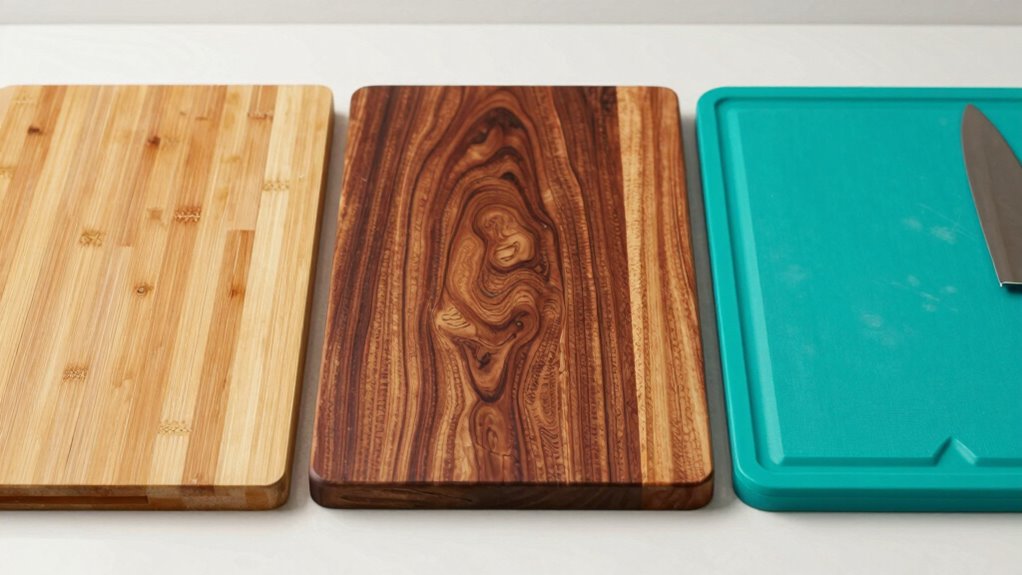
When choosing a cutting board for heavy produce, opt for sturdy, stable materials like wooden or bamboo boards, which are gentle on knives and provide good grip. Avoid hard surfaces like glass or certain plastics that dull blades quickly. Make sure the board is easy to clean and maintain to prevent bacteria. Using the right material improves safety, preserves your knives, and makes your prep more efficient. Keep exploring for more tips to optimize your kitchen setup.

Get health and wellness essentials delivered free with Prime
- Fast, free delivery on millions of items
- Prime Video, Amazon Music and more included
- Member-only deals all year
Key Takeaways
- Choose a stable, non-slip surface like wood or bamboo to prevent slips during heavy produce prep.
- Opt for softer materials such as wood or bamboo that are gentle on knives and resist dulling.
- Prioritize easy-to-clean materials like high-quality plastic for frequent use and thorough sanitation.
- Avoid overly hard surfaces like glass, which can dull knives and pose safety risks.
- Consider maintenance requirements; hand wash wooden boards and disinfect plastic for longevity and safety.
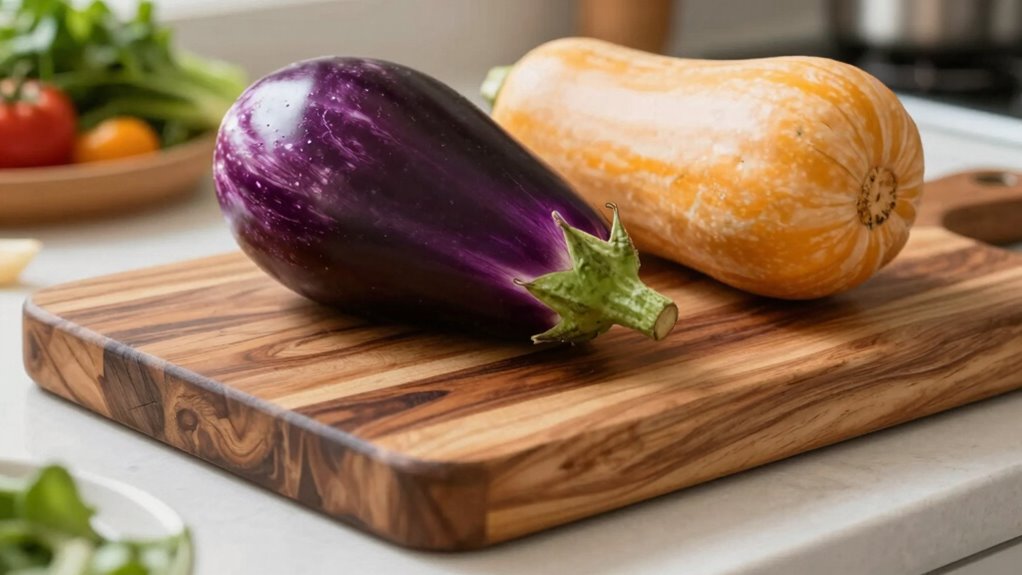
Choosing the right cutting board material is vital for both your kitchen’s safety and your food’s quality. When you’re prepping heavy produce, like large melons or thick squash, the cutting board you select can make a big difference in how smoothly your tasks go. A sturdy, durable surface helps maintain knife safety because a good cutting board provides stability, preventing slips that could lead to accidental cuts. It also influences how well you can control your knife, especially when applying force to cut through dense or heavy produce. Opting for a material that offers a balance of hardness and resilience ensures your knives stay sharp longer and that you don’t risk damaging your blades with overly soft or hard surfaces.
A sturdy, resilient cutting board ensures safety, stability, and longer-lasting knives when preparing heavy produce.
When considering knife safety, think about how different materials interact with your knives. Hard surfaces like glass or certain plastics might seem easy to clean but can dull your blades quickly. Conversely, softer woods like maple or bamboo are gentle on knives, helping them stay sharper longer, which translates into safer cuts because a sharp knife is less likely to slip. For heavy produce, you want a cutting surface that offers enough grip to prevent sliding, reducing the chance of accidents. Many people overlook how important this is, but a stable cutting board keeps your hands steady and reduces fatigue, so you’ll be safer and more precise. Additionally, the material’s grip and stability can significantly impact your overall safety during heavy prep work. Incorporating proper technique when using your cutting board can further enhance safety and efficiency.
Cleaning techniques are equally vital when choosing a cutting board material. Heavy produce often leaves behind residue that can harbor bacteria if not cleaned properly. Some materials, like plastic, can be sanitized thoroughly in the dishwasher, making them easier to keep sanitary after chopping large, moist items. Wooden boards, on the other hand, require more careful cleaning—hand washing with hot, soapy water and occasionally disinfecting with vinegar or a diluted bleach solution works well. Proper cleaning techniques are essential to prevent cross-contamination and prolong the lifespan of your board, especially when handling heavy produce. Avoid soaking wood boards for long periods, as excessive moisture can cause warping or cracking, compromising their safety and longevity. Proper cleaning not only keeps your kitchen safe but also preserves the integrity of the material, making sure your cutting board remains a reliable surface for heavy produce.
Ultimately, the best choice depends on balancing knife safety, durability, and ease of cleaning. A high-quality wooden or bamboo board offers gentle treatment for your knives and can handle heavy produce with proper technique. Plastic boards provide a hygienic, low-maintenance option for frequent, heavy-duty prep, especially if you need to sanitize often. Whichever material you choose, adopting good cleaning techniques and paying attention to knife safety will make sure your prep process stays safe, efficient, and enjoyable.
As an affiliate, we earn on qualifying purchases.
Frequently Asked Questions
Can I Use a Plastic Cutting Board for Heavy Produce Daily?
Yes, you can use a plastic cutting board for heavy produce daily. Plastic boards are durable and easy to clean, making them suitable for frequent use. To keep them in good shape, use alternative cleaning methods like vinegar or baking soda for sanitation, and practice proper cutting board maintenance by sanitizing regularly and avoiding deep cuts. This guarantees safety and longevity for your plastic board during heavy produce prep.
Are Wooden Cutting Boards More Hygienic Than Plastic?
Wooden cutting boards aren’t necessarily more hygienic than plastic ones. While wood naturally resists bacteria and is durable, plastic boards are easier to sanitize thoroughly, especially since they can go in the dishwasher. For kitchen safety, both materials need proper cleaning and maintenance. If you prioritize material durability and easy cleaning, plastic might be better, but with proper care, wooden boards can also be a safe, long-lasting choice.
How Often Should I Replace My Cutting Board After Heavy Use?
You should replace your cutting board after heavy use every one to two years, or when it shows deep cuts and persistent stains. Ironically, good board maintenance can extend its lifespan, but neglecting it speeds up wear and tear. Regularly sanitizing and sanding can help, but eventually, even the sturdiest board reaches the end of its cutting board lifespan. Don’t wait until bacteria hide in hidden grooves—know when it’s time for a swap.
Do Certain Materials Stain or Discolor Easily?
Some materials stain or discolor easily, especially softer woods and plastic boards. To prevent this, look for boards with good stain resistance and easy cleaning features. Plastic cutting boards often resist staining if cleaned promptly, while bamboo tends to discolor less than softer woods. Regularly disinfect your board and avoid cutting highly pigmented produce for better discoloration prevention. Choosing durable, stain-resistant materials helps maintain a clean, professional look over time.
Which Cutting Board Material Is Best for Acidic Produce?
For acidic produce, you should choose a non-porous cutting board like bamboo or plastic. These materials resist acidic residue buildup, ensuring food safety and preventing staining or discoloration. They’re easy to clean and won’t harbor bacteria from acidic juices. Avoid wood, as it can absorb acids and develop cracks where bacteria might hide. Prioritize materials that maintain hygiene and durability when prepping highly acidic fruits and vegetables.
Conclusion
Choosing the right cutting board isn’t just about practicality—it’s about creating a kitchen scene where your prep feels effortless and inspiring. Picture yourself slicing through vibrant, heavy produce on a sturdy surface that won’t wobble or dull your knife. With the perfect material under your hands, each cut becomes a satisfying part of your culinary journey. So, pick wisely, and turn your prep time into a smooth, enjoyable experience that leaves your kitchen smelling fresh and inviting.
Fall Picks
fall essentials
As an affiliate, we earn on qualifying purchases.