To organize a daily-use salad station, designate specific spaces for greens, vegetables, proteins, and toppings, keeping everything in shallow, labeled containers for easy access. Set up a dedicated dressing area with a variety of options, and keep dressings chilled if needed. Keep utensils within arm’s reach and replenish ingredients often to maintain freshness. Regularly clean and rotate items to keep everything tidy and inviting. For more tips on creating an efficient, appealing setup, continue exploring.

Get health and wellness essentials delivered free with Prime
- Fast, free delivery on millions of items
- Prime Video, Amazon Music and more included
- Member-only deals all year
Key Takeaways
- Designate specific, accessible areas for leafy greens, vegetables, proteins, dressings, toppings, and utensils.
- Use labeled, easy-to-reach containers for ingredients, dressings, and toppings to streamline selection.
- Keep ingredients and tools clean, rotated, and replenished regularly to maintain freshness and hygiene.
- Organize dressings and toppings vertically or in small trays for quick, clutter-free access.
- Maintain a tidy, inviting station with clear labels and dedicated spaces to encourage daily use.
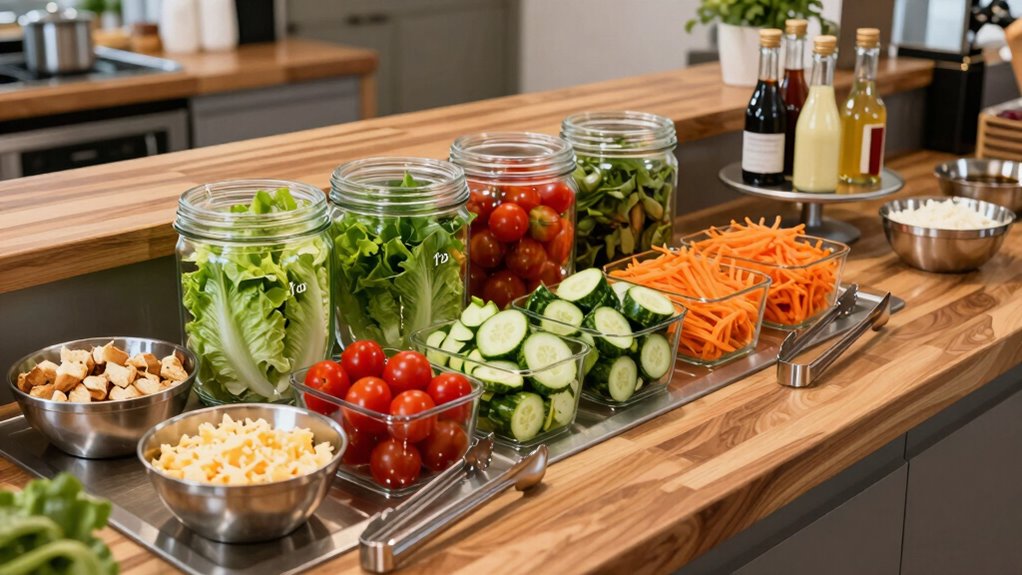
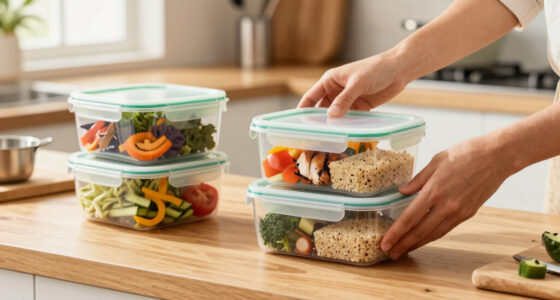
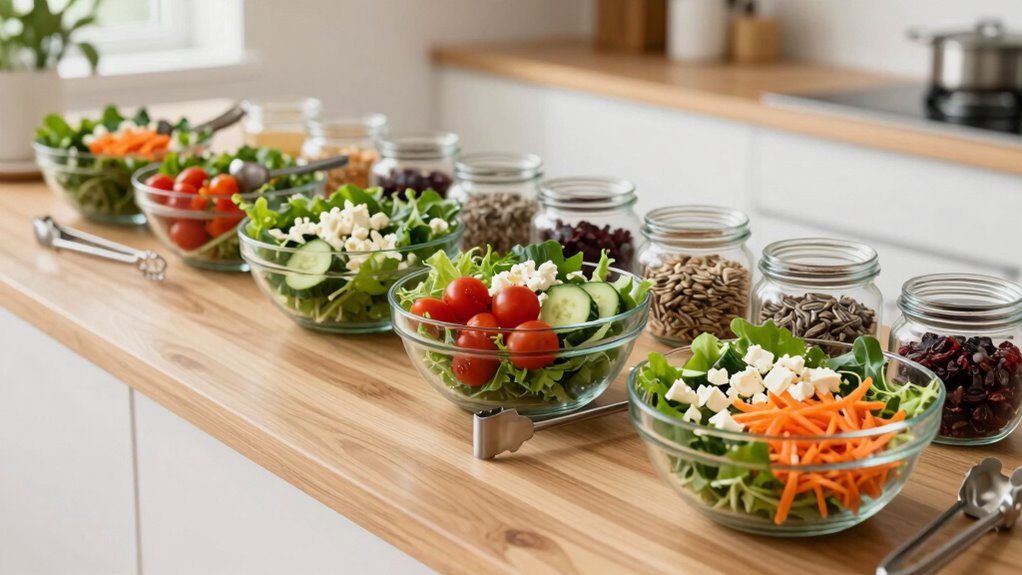
Setting up a well-organized salad station can make preparing and serving salads quick and enjoyable. When everything is in its proper place, you’ll find it easier to assemble fresh, delicious salads without wasting time searching for ingredients or tools. To start, designate a clear space for your main ingredients, such as leafy greens, vegetables, and proteins. Keep these in shallow, easily accessible containers, so you can quickly grab what you need. Labeling each container helps you remember what’s inside and keeps the station tidy—no more digging through clutter to find that last bit of spinach or chopped cucumbers.
Organize main ingredients in accessible containers, label them, and keep your salad station tidy for quick, easy salad prep.
Next, focus on your salad dressings. Instead of scattering bottles across the counter, dedicate a specific area for them. Use a small rack or tray to keep bottles upright and organized, making it simple to select your preferred dressing. Consider offering a variety of options—vinaigrette, ranch, balsamic—and keep them chilled if needed. Having a few tablespoons or small pitchers nearby allows guests or family members to serve themselves without mess. This setup encourages everyone to customize their salads, which makes the meal more enjoyable and personalized. Incorporating effective organization techniques can further enhance the efficiency of your salad station and ensure everything stays in its place. Additionally, using storage containers designed for produce can help keep ingredients fresh longer and reduce waste. Regularly rotating and cleaning these containers also helps maintain a fresh and inviting presentation.
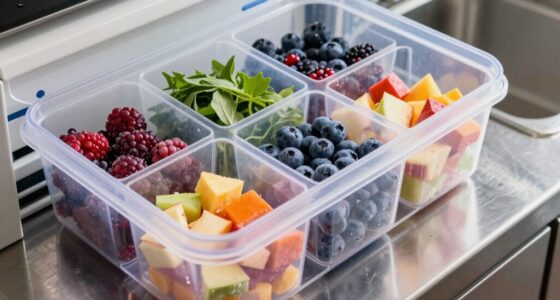
Fresh toppings are the finishing touch that make salads exciting and customizable. Prepare and display toppings such as croutons, nuts, seeds, shredded cheese, and dried fruit in separate containers or bowls. Arrange them neatly on a dedicated shelf or tray so that they’re easy to reach. Keep some toppings pre-portioned in small cups or jars for quick access, especially if you’re hosting a group. This not only speeds up the process but also ensures each person can add as much or as little as they like. Fresh toppings add texture, flavor, and visual appeal, so keep them replenished and fresh to maintain the station’s appeal. Incorporating gadget reviews of storage containers or tools can help you select the best options for organization. Additionally, using labeling techniques can further streamline the setup and help everyone identify ingredients quickly.
Finally, consider the tools you’ll need—serving spoons, tongs, and knives—and keep them within arm’s reach. Use small bowls or containers for utensils to keep everything organized and prevent cross-contamination. Maintaining cleanliness is key, so wipe down surfaces regularly and replace any spoiled ingredients promptly. Proper kitchen sanitation practices are essential for food safety and overall cleanliness. By setting up your salad station thoughtfully, with designated spaces for dressings, fresh toppings, and tools, you make the process seamless and inviting. This setup encourages daily use, turns salad-making into an enjoyable routine, and keeps your meals healthy and fresh with minimal effort.
salad station storage containers
As an affiliate, we earn on qualifying purchases.
As an affiliate, we earn on qualifying purchases.
Frequently Asked Questions
What Is the Ideal Size for a Salad Station?
The ideal size for a salad station is around 4 to 6 feet long, providing ample space for ingredients and accessories. You should include clear ingredient labels and easy-to-reach salad dressing bottles. Keep frequently used items at the front, and make certain there’s enough room for multiple people to serve comfortably. This setup promotes efficiency and keeps your salad station organized, making it easy for everyone to build their salads quickly.
How Often Should Salad Ingredients Be Replenished?
You should replenish salad ingredients daily to maintain freshness and ingredient quality. Check for wilted or spoiled items, and substitute them as needed. Keep salad dressing stocked and fresh, ideally refilling it once a day or as used. Regularly monitor ingredient freshness to prevent spoilage, and rotate stocks to ensure your salad station stays appealing and safe for your guests. Consistent replenishment keeps your station inviting and efficient.
What Safety Precautions Are Necessary for Salad Stations?
Imagine a bustling salad station, freshness hanging in the air — now, guarantee food safety and hygiene practices are top priority. You must regularly sanitize surfaces, wash hands thoroughly, and use clean utensils. Keep raw ingredients at safe temperatures, and cover salads to prevent contamination. Vigilance is key; when you follow these precautions, you create a safe environment where every bite is fresh, clean, and inviting.
How Can I Prevent Cross-Contamination at the Station?
To prevent cross-contact and manage allergens at your salad station, always wash your hands and utensils thoroughly between tasks. Use separate utensils and containers for different ingredients, especially allergens like nuts or dairy. Label allergen-containing items clearly, and keep them separate from others. Regularly sanitize surfaces and equipment. Train staff on allergen management practices, and encourage customers to inform you of allergies to guarantee safe, cross-contact-free salads.
What Are Budget-Friendly Ways to Set up a Salad Station?
Imagine turning your salad station into a budget-friendly oasis—it’s easier than you think. Use affordable storage containers to keep ingredients fresh and organized. Offer a variety of dressing options using small, inexpensive bottles or jars. Repurpose household items like jars or plastic bins for storage. You don’t need fancy equipment; with a little creativity, you can set up a functional, attractive salad station that invites healthy choices every day.
Conclusion
By keeping your salad station tidy and well-stocked, you’ll make every meal a breeze. Remember, a place for everything and everything in its place keeps chaos at bay. With a little planning, you’ll enjoy fresh, delicious salads every day without the hassle. When your space is organized, you can focus on enjoying your healthy creations and sharing them with loved ones. After all, a well-prepared station makes a happy, healthy kitchen.
Fall Picks
fall essentials
As an affiliate, we earn on qualifying purchases.