
When you eat raw foods, the active digestive enzymes you consume can survive the stomach’s acidity for a while, helping break down nutrients early. Many of these enzymes are resilient enough to pass into your intestines, where they continue aiding digestion. This can reduce the load on your own digestive system, making nutrient absorption more efficient. Want to discover how these enzymes support your gut health even further? Keep exploring to learn more.
Key Takeaways
- Many raw food enzymes are resilient enough to survive the stomach’s acidic environment temporarily.
- Enzymes can reach the intestines still active, aiding in nutrient breakdown and absorption.
- Cooking or processing denatures enzymes, reducing their activity in foods.
- Active enzymes in raw foods help pre-digest nutrients, easing the workload on the digestive system.
- Surviving enzymes contribute to better digestion and nutrient absorption, supporting overall gastrointestinal health.
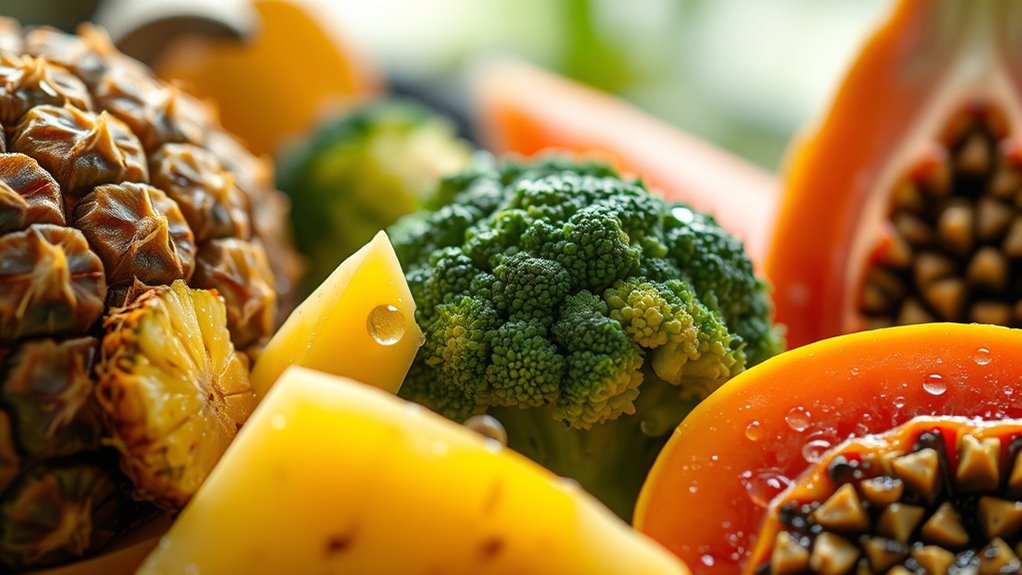
Raw foods are naturally rich in digestive enzymes that can aid your body’s ability to break down and absorb nutrients more efficiently. These enzymes play an essential role in supporting your digestion, making raw food benefits quite significant. When you consume raw fruits, vegetables, nuts, and seeds, you introduce enzymes that are active at the moment of ingestion, helping to kick-start the digestive process. This enzyme activity can reduce the workload on your stomach and intestines, potentially leading to better nutrient absorption and fewer digestive discomforts like bloating or gas.
The question often arises whether these enzymes survive the harsh environment of your stomach. The stomach’s acidic pH and digestive acids are designed to break down food, including enzymes, but many raw food enzymes are quite resilient. Some studies suggest that a significant portion of these enzymes can survive the stomach’s acidity, at least temporarily, and reach your intestines where they can continue functioning. This survival allows the enzymes to assist in breaking down complex molecules, such as proteins, fats, and carbohydrates, directly in your gut. As a result, your body can more efficiently digest and absorb nutrients, maximizing the raw food benefits.
However, it’s important to understand that enzyme activity is sensitive to temperature and pH. When foods are cooked or processed, most enzymes become denatured and lose their activity. That’s why eating raw foods guarantees you’re getting the maximum enzyme potential. These active enzymes can help pre-digest some nutrients, reducing the enzymatic burden on your own digestive system. This can be particularly beneficial for people with compromised digestion or enzyme deficiencies.
Frequently Asked Questions
Can Cooking Destroy All Digestive Enzymes in Foods?
Cooking can considerably reduce enzyme stability, often destroying digestive enzymes in foods. High heat from methods like boiling, frying, or roasting breaks down these enzymes efficiently. To preserve them, opt for gentler cooking methods such as steaming or raw consumption. Keep in mind that enzymes are sensitive to temperature, so the more you cook, the more you risk losing these beneficial compounds, potentially impacting digestion.
Do Enzyme Supplements Provide the Same Benefits as Raw Foods?
Enzyme supplements can provide benefits, but they often don’t match the raw food enzyme content. Studies show that raw foods retain about 80% of their natural enzymes, boosting digestion naturally. While supplements are convenient, their efficacy varies depending on formulation. You might find that eating raw foods offers a broader spectrum of enzymes and nutrients, making them a more effective choice for supporting your digestion compared to standard enzyme supplements.
How Long Do Enzymes Stay Active During Digestion?
Enzymes typically stay active for the duration of your digestion, which lasts about 24 to 72 hours, depending on what you’ve eaten. Their stability can vary based on stomach acidity and temperature, but generally, enzymes work efficiently during digestion. You can expect them to remain active long enough to help break down food, ensuring nutrients are absorbed properly and digestion proceeds smoothly.
Are Enzyme Levels Consistent Across Different Raw Food Sources?
Think of raw food sources as a vibrant garden—enzyme variability varies among plants and animals. You’ll find that enzyme levels aren’t consistent across different raw foods due to diversity in their composition and ripeness. For example, a ripe pineapple offers more bromelain than an underripe one. So, your enzyme intake depends on raw food diversity, and you should eat a variety to maximize enzyme benefits naturally.
Can Enzyme Activity Vary Depending on Food Ripeness?
Yes, enzyme activity varies depending on food ripeness. As fruits and vegetables ripen, their ripeness impact can cause enzyme variability, often increasing enzyme levels to aid in the breakdown process. You’ll notice that riper foods tend to have more active enzymes, making them easier to digest. So, choosing foods at the right ripeness can enhance enzyme benefits, supporting your digestion and overall health.
Conclusion
So, while raw foods contain digestive enzymes that seem to give them a natural boost, they often don’t survive the journey through your stomach’s fiery furnace. Think of these enzymes as delicate butterflies—beautiful but fragile—easily lost in the chaos of digestion. Ultimately, whether they survive or not, eating a varied diet rich in raw foods still nourishes your body in countless ways, like a symphony where every note plays a essential role in harmony.