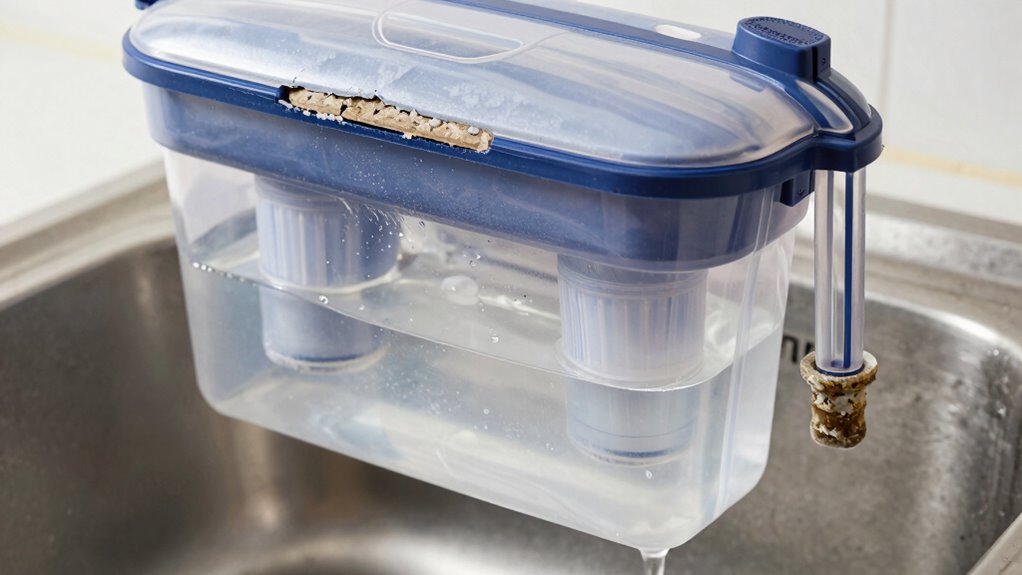

Neglecting regular maintenance of your gravity water filter is the biggest mistake that kills its performance. Failing to clean or replace parts on time can cause clogging, reduce water flow, and allow contaminants to bypass the filter. Over time, buildup and debris lower water quality and damage the system. Staying consistent with cleaning schedules and knowing when to replace parts keeps your filter working efficiently. If you stay aware, you’ll find out how to avoid common mistakes that compromise your water’s safety.
Key Takeaways
- Neglecting regular filter cleaning leads to mineral buildup, clogging, and reduced flow, impairing filter performance.
- Failing to replace filters on schedule allows contaminants to bypass the media, risking water safety.
- Ignoring signs like slow flow or bad taste prevents timely maintenance, decreasing filtration efficiency.
- Using uncleaned or overdue filters accelerates bacterial growth, compromising water quality.
- Inadequate inspection and cleaning diminish filter lifespan, causing system damage and increased replacement costs.
Why Regular Cleaning Keeps Your Gravity Water Filter Working Well

Regular cleaning is essential to keep your gravity water filter functioning effectively. When you clean your filter regularly, you prevent buildup that can reduce its filter lifespan. Over time, dirt, debris, and bacteria accumulate, increasing the risk of water contamination. If you neglect cleaning, these contaminants can bypass the filter media or clog it, decreasing filtration efficiency. Consistent maintenance ensures that the filter media remains unobstructed, allowing clean water to flow freely. This not only prolongs the filter’s lifespan but also guarantees safe, contaminant-free water. Regular cleaning acts as a proactive step in maintaining your filter’s performance, reducing the chances of water contamination and ensuring you always have access to safe drinking water. Proper maintenance helps optimize the water purification process and ensures safe drinking water over time. Additionally, understanding the filter media and its role in water purification can help you better maintain your system and avoid costly replacements. Regular inspections of the filter components can also identify wear or damage early, preventing potential failures.
When and How to Replace Filter Parts Correctly
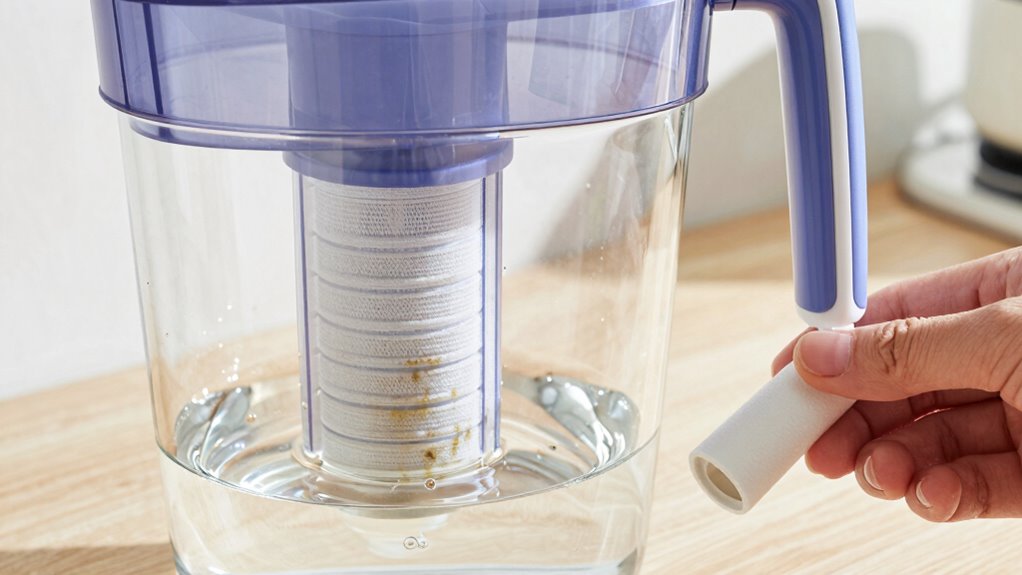
Knowing when and how to replace your gravity water filter parts is key to maintaining ideal performance. The filter lifespan varies depending on usage and water quality, but most filters need replacement every 2 to 6 months. Follow your manufacturer’s recommended replacement schedule to guarantee maximum filtration. Check for signs like slowed flow rate, bad taste, or odor, which indicate the filter is saturated or clogged. When replacing parts, turn off the water supply first, then carefully remove the old filter components. Clean any housings if needed, and install the new parts securely, making sure they fit correctly. Properly timing and executing these replacements preserves your filter’s effectiveness and prolongs the overall lifespan of your system. Understanding filter lifespan can help you plan replacements before performance declines. Regular maintenance and proper replacement procedures are essential for ensuring filter performance remains optimal over time. Additionally, keeping a replacement schedule helps prevent performance decline and reduces the risk of contamination.
How to Clean Your Gravity Water Filter: A Step-by-Step Guide
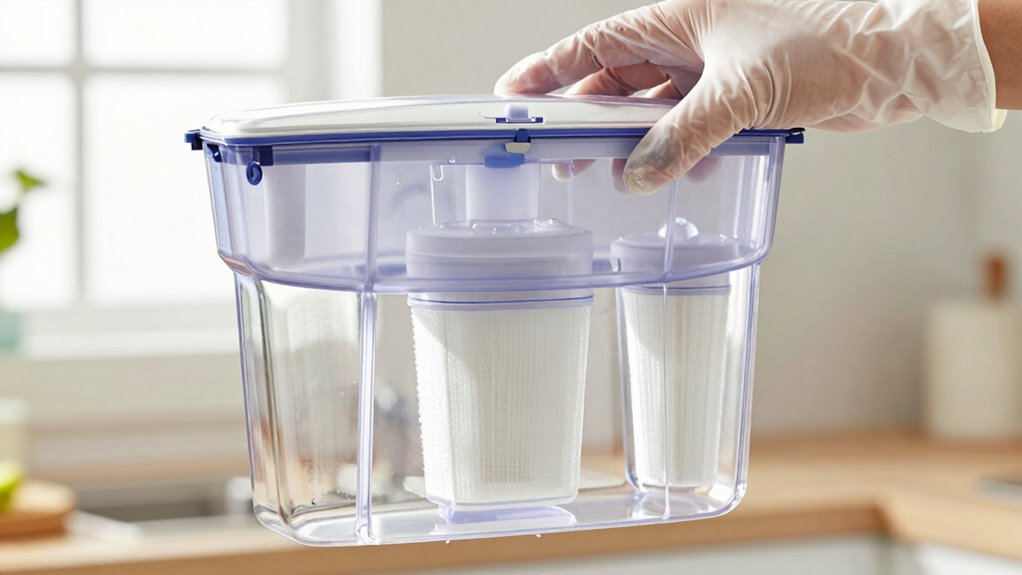
To keep your gravity water filter working efficiently, cleaning it properly is essential. Regular maintenance helps extend its filter lifespan and prevents mineral buildup that can clog the system. Here’s a simple step-by-step guide:
Regular cleaning is key to maintaining your gravity water filter’s efficiency and longevity.
- Remove the filter and disassemble the parts carefully.
- Rinse all components with clean, warm water to eliminate sediment and residues.
- Soak the filter in a vinegar solution for 15-20 minutes to break down mineral buildup.
- Reassemble the filter, ensuring all parts are dry before use.
- Additionally, consulting proper maintenance practices can help you avoid common mistakes that reduce performance.
- Being aware of filter lifespan and monitoring it regularly ensures optimal operation and prevents unexpected failures.
- Remember that regular cleaning is key to maintaining peak filtration efficiency and prolonging your filter’s service life.
- Understanding performance decline indicators can help you recognize when it’s time for a replacement or deeper cleaning to maintain optimal performance.
- Implementing preventive maintenance routines can also help you avoid costly repairs and ensure consistent water quality over time.
Signs Your Filter Needs Immediate Attention or Replacement
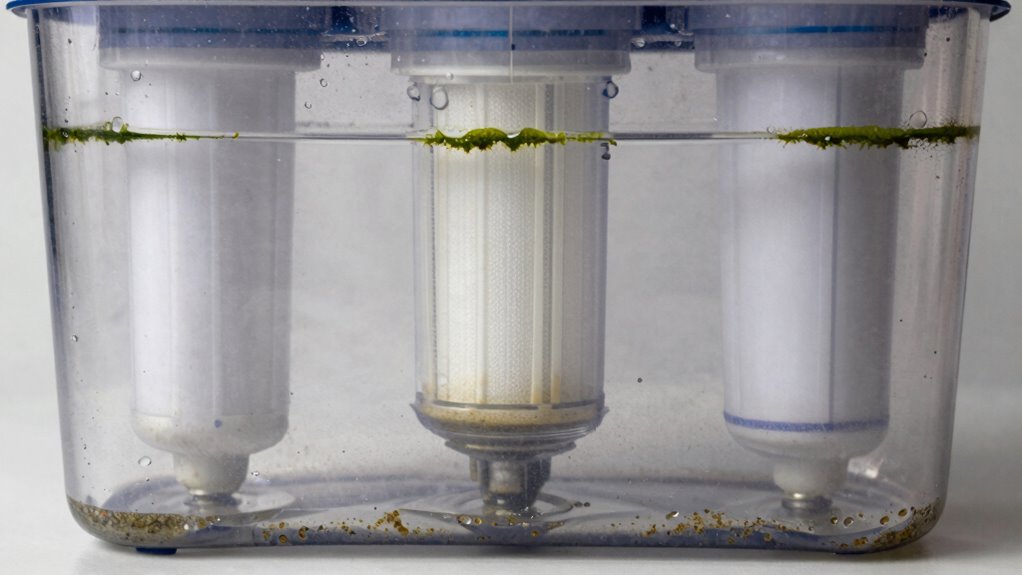
You should pay attention if you notice sediment buildup or cloudy water, as these signs indicate your filter may need cleaning or replacing. An unusual or foul taste in your water is another clear signal that something’s wrong. Don’t ignore these signs—they can affect your water quality and safety. Regular maintenance of your water filter is essential to prevent performance decline and ensure safe drinking water. Additionally, monitoring for filter lifespan can help in scheduling timely replacements to maintain optimal function. Proper care and understanding of your filter’s maintenance needs can extend its effectiveness and safeguard your health, especially since neglecting these aspects can lead to reduced filtration efficiency. Being aware of signs like sediment buildup can help you act promptly before issues worsen.
Visible Sediment Buildup
A visible accumulation of sediment or particles in your water indicates that your filter is no longer functioning effectively. When you see a thick sediment layer inside the filter housing, it’s a clear sign you need to act fast. Ignoring this can lead to dangerous contamination and clogged parts. Watch out for:
- A cloudy or murky appearance in your filtered water.
- A sudden increase in sediment in the filter housing.
- Reduced water flow, making filtering slow or impossible.
- A persistent gritty texture in your drinking water.
These signs show your filter isn’t trapping debris properly. The sediment layer inside the filter housing is overwhelming the system, which compromises your water quality. Address this immediately to protect your health and maintain ideal performance. Regular maintenance and understanding filtration principles can help prevent these issues from occurring. Recognizing sediment buildup early ensures you can take prompt action to keep your water clean and safe. Additionally, understanding filter capacity can help you anticipate when replacements are needed before issues arise. Being aware of high-tech filtration innovations may also guide you toward more efficient solutions for long-term maintenance. Moreover, staying informed about proper filter maintenance practices can extend the lifespan of your system and improve overall water quality.
Unusual Water Taste
Have you noticed a strange or off-putting taste in your drinking water? This could signal filter mineral buildup or changes in water mineralization. Over time, minerals can accumulate inside your filter, affecting its ability to purify effectively. This buildup can lead to a metallic or chemical taste, making your water less enjoyable and potentially unsafe. If you experience an unusual flavor, it’s a sign your filter needs immediate attention or replacement. Ignoring this issue can allow mineral deposits to compromise water quality further, reducing filtration efficiency. Regularly check for changes in taste, and don’t delay servicing your filter. Proper maintenance guarantees your drinking water remains clean, fresh, and free from unwanted mineral influences. Additionally, understanding your filter’s filter lifespan can help prevent performance decline and ensure optimal water quality.
Top Maintenance Mistakes That Lower Water Quality
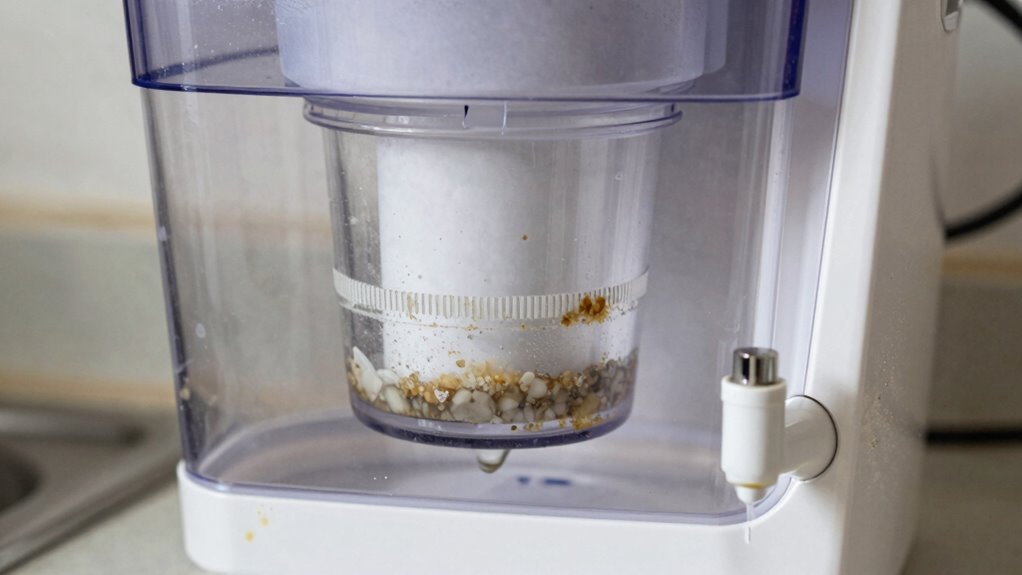
One common mistake is ignoring regular filter changes, which can cause buildup and reduce water quality. Using untreated or contaminated water without proper filtration also risks introducing harmful impurities. To keep your water safe, stay on top of maintenance and always use clean, treated water. Additionally, neglecting the importance of proper filter replacement intervals can lead to decreased performance and compromised water purity. Regularly monitoring filter lifespan ensures your system functions optimally and maintains water safety standards.
Ignoring Regular Filter Changes
Neglecting to change your gravity water filter regularly can considerably impact water quality. Over time, your filter’s lifespan diminishes, risking contaminated water. Ignoring this essential step can lead to:
- Reduced filtration efficiency, letting harmful impurities slip through.
- Shortened filter certification, risking invalidation of the filter’s safety standards.
- Bacterial buildup, creating health hazards and unpleasant tastes.
- Increased strain on the filter, causing it to clog faster and require costly replacements.
Failing to replace filters on schedule not only compromises water quality but also invalidates the filter’s certification, which guarantees safety. Regular filter changes ensure maximum performance, protect your health, and extend your device’s lifespan. Don’t ignore this critical maintenance step.
Using Untreated Water
Using untreated water can undo the benefits of your gravity water filter and considerably lower water quality. When you skip proper treatment, minerals can accumulate inside the filter, causing mineral buildup that hampers performance. Untreated water often has a pH imbalance, which can corrode filter components and reduce filtration efficiency. This imbalance may also allow harmful bacteria or contaminants to bypass the filter, jeopardizing your health. Relying on untreated sources increases the risk of clogging filters faster and decreases their lifespan. To maintain ideal performance, always pre-treat or filter raw water before it reaches your gravity system. Regularly testing water pH levels and removing mineral deposits can help ensure your filter functions effectively and consistently provides safe, clean water.
How Neglecting Maintenance Hurts Water Flow and Safety
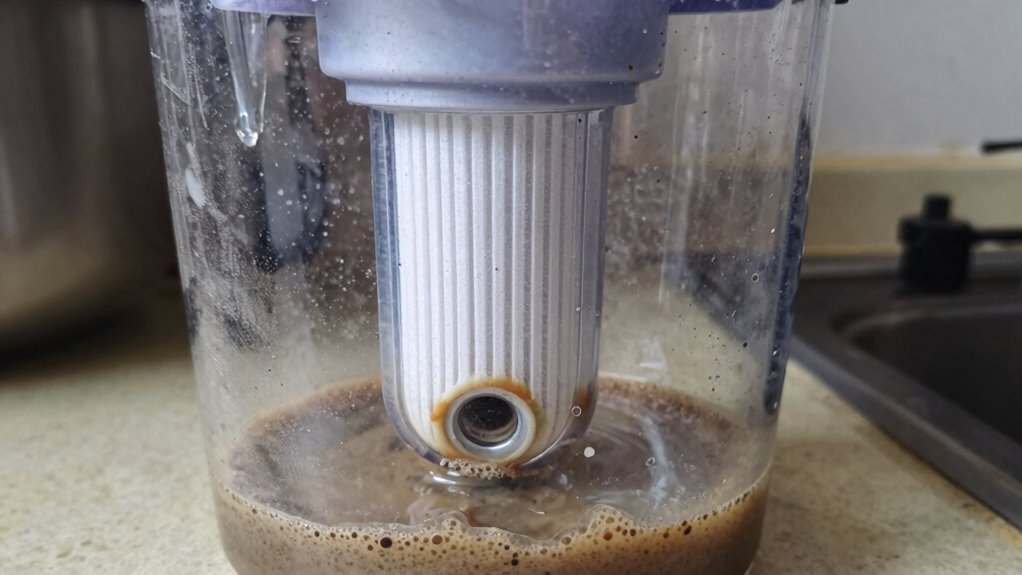
When you ignore regular maintenance on your gravity water filter, both water flow and safety can quickly decline. Over time, filter clogging and mineral buildup restrict water flow, making it harder to get clean water. This can lead to frustration and unsafe drinking conditions. Here’s what happens when you neglect maintenance:
- Your water flow slows to a trickle, leaving you waiting longer.
- Mineral buildup creates dangerous bacteria hiding in the filter.
- Filter clogging reduces filtration efficiency, risking contaminated water.
- You might unknowingly consume unsafe water, jeopardizing health.
Ignoring these issues means your filter can’t do its job properly, risking both inconvenience and health. Regular upkeep guarantees your water stays clean, fast, and safe for every use.
Simple Routines to Extend Your Filter’s Lifespan
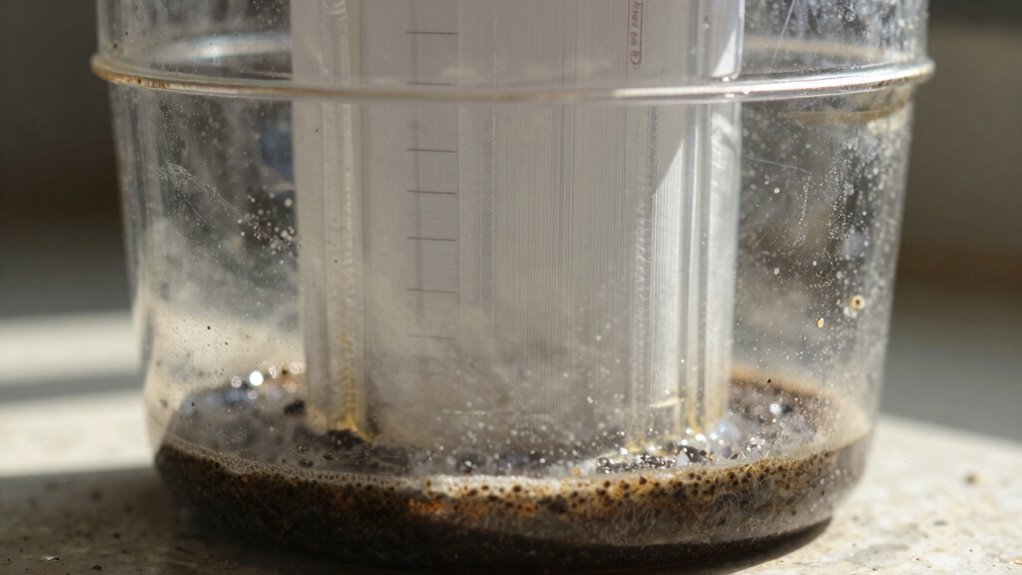
Regularly cleaning and replacing your gravity water filter components is the simplest way to extend its lifespan. Establish a routine cleaning schedule, such as rinsing the filter elements weekly to remove buildup and prevent clogging. Use gentle cleaning routines to avoid damaging delicate parts; avoid harsh scrubbing or chemicals that could compromise filter integrity. When needed, perform filter replacement promptly—delaying this process can lead to decreased water flow and reduced filtration efficiency. Keep track of your maintenance dates to stay consistent. Proper maintenance not only prolongs the life of your filter but also ensures safe, clean water. Small, regular cleaning routines and timely filter replacements make a significant difference in maintaining ideal performance over time.
How Often Should You Clean and Replace Filter Parts?
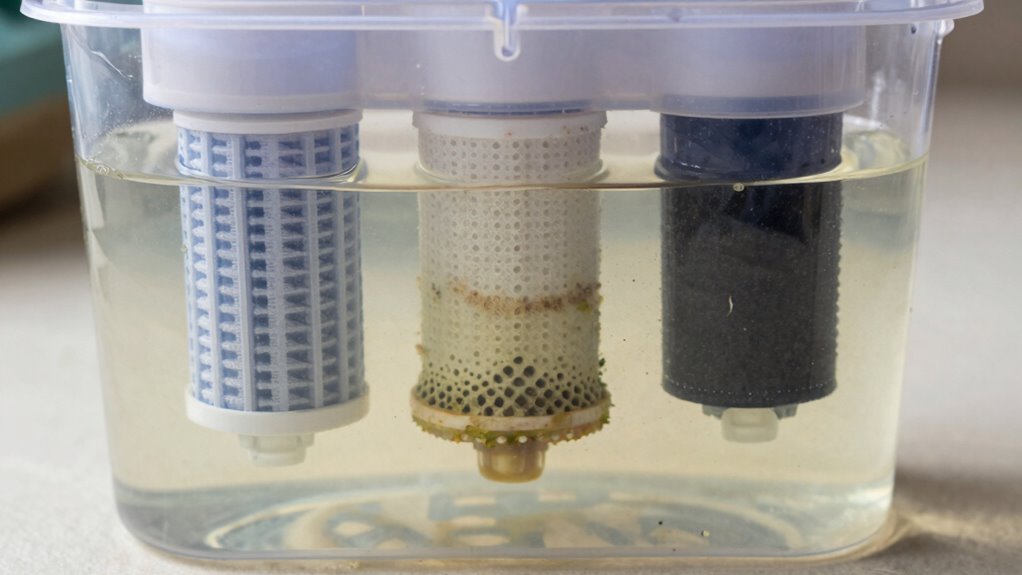
Determining how often to clean and replace your gravity water filter parts depends on your water quality and usage. Ignoring this can shorten your filter’s lifespan and compromise water safety. Follow a solid replacement schedule to keep performance high:
- Replace filter parts every 6 to 12 months if water is clean.
- Clean the filter weekly to prevent buildup and maintain flow.
- Inspect for signs of clogging or discoloration—these signal it’s time for a change.
- Use manufacturer guidelines as a benchmark, but adjust based on your water’s clarity and usage.
Sticking to this routine ensures your filter works effectively, avoiding costly replacements and health risks. Proper maintenance is key to extending your filter’s lifespan and ensuring pure, safe drinking water.
Troubleshooting Poor Water Flow and How Proper Maintenance Helps
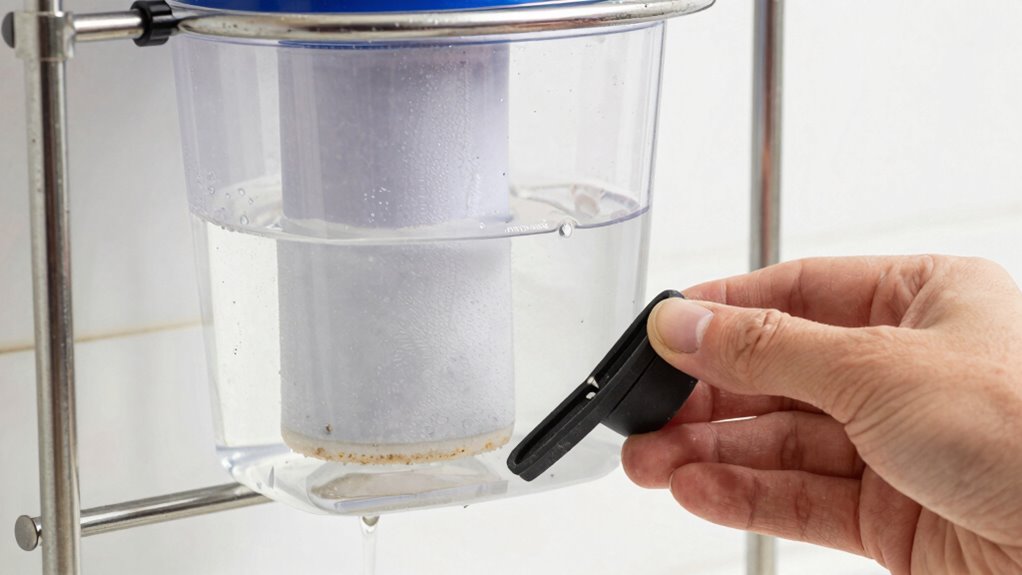
Even with proper cleaning and replacement schedules, you might notice your water flow slowing down over time. This decline often signals that your filter’s lifespan is ending or that buildup is hindering flow. To troubleshoot, start by inspecting the filter for clogging or sediment buildup, which can considerably reduce flow rate. Regular maintenance, such as cleaning the filter components and replacing worn parts, helps prevent contamination and keeps the filter functioning at its best. Proper maintenance not only restores water flow but also extends the lifespan of your filter, saving you money in the long run. Remember, neglecting routine upkeep can lead to contamination risk and decreased filter efficiency. Addressing flow issues promptly ensures your water remains clean, safe, and consistently fresh.
Keep Your Water Safe: Scheduled Maintenance Tips
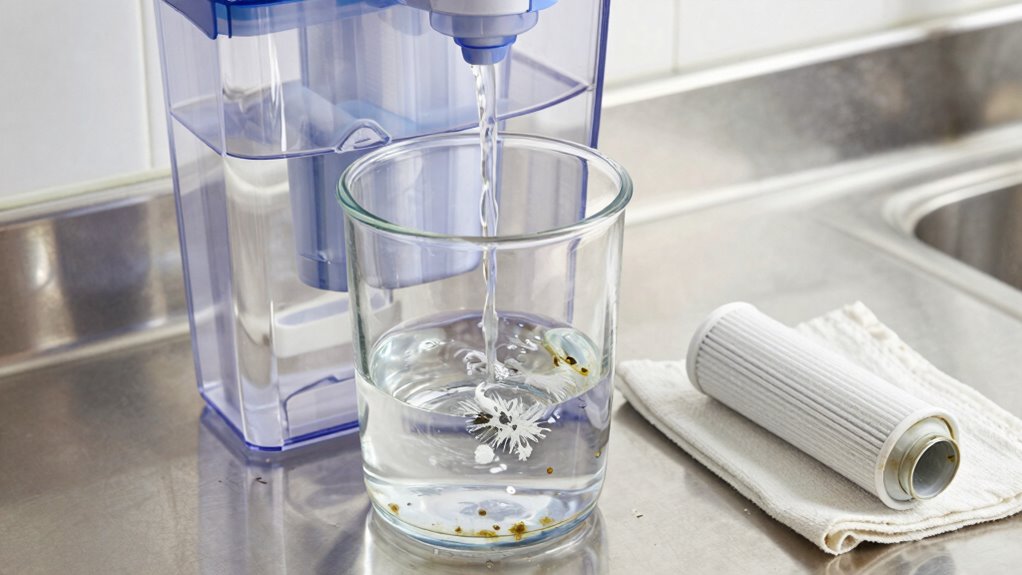
To keep your water safe and guarantee your filter performs at its best, scheduling routine maintenance is essential. Regularly check your filter’s lifespan and replace it when needed to prevent bacteria buildup and ensure ideal filtration. Here are four key tips to maintain your gravity water filter:
- Set reminders for filter replacement—don’t wait until flow slows down or water smells off.
- Inspect your filter monthly for signs of clogging or discoloration.
- Clean the filter housing every few months to remove residual debris.
- Follow manufacturer guidelines to stay aware of your filter’s lifespan and avoid skipping maintenance.
Frequently Asked Questions
Can Improper Maintenance Cause Health Risks From Filtered Water?
Yes, improper maintenance can cause health risks from filtered water. When you neglect regular cleaning, contaminant buildup occurs, which can introduce bacteria and other harmful substances into your drinking water. This not only diminishes filter performance but also shortens filter longevity. To stay safe, you should follow maintenance guidelines closely, ensuring your filter remains effective and your water stays clean and healthy.
What Are Common Signs of Hidden Filter Damage?
Watch for warning signs of filter deterioration, like cloudy or foul-smelling water, which signals sediment accumulation or damage. You might notice slower flow rates or strange tastes, indicating hidden filter damage. Keep an eye out for persistent particles or discoloration, both signs of filter failure. Regularly inspecting your filter helps prevent performance problems and ensures safe, clean water every time. Don’t ignore these warning signs—acting early saves your system and your health.
How Does Mineral Buildup Affect Filter Performance?
Mineral buildup can considerably reduce your filter’s efficiency by causing mineral clogging. This buildup blocks water flow, forcing your filter to work harder and decreasing its ability to effectively purify water. Over time, mineral clogging can lead to reduced filtration capacity and potential damage to the filter components. To maintain peak performance, regularly clean or replace your filter, especially if you notice slow flow or reduced water quality.
Are There Specific Tools Needed for Filter Maintenance?
You’ll need basic cleaning tools like a soft brush or sponge to clean your gravity water filter, and filter replacement parts when necessary. These tools help remove mineral buildup and guarantee the filter functions efficiently. Regularly replacing the filter cartridge and cleaning with gentle tools prevent clogs and maintain water flow. Keep a small brush or sponge handy, and follow the manufacturer’s instructions for filter replacement to keep your system in top shape.
What Are the Long-Term Costs of Neglecting Filter Upkeep?
A stitch in time saves nine—neglecting your filter maintenance schedule costs you more long-term. When you skip regular filter replacement and maintenance, your filter’s performance drops, leading to costly repairs or replacements later. Over time, clogged filters also increase energy use and reduce water flow, raising your expenses. Keep up with maintenance, follow the schedule, and your filter will serve you better and save you money in the long run.
Conclusion
To keep your gravity water filter performing like a well-oiled clock, don’t forget regular cleaning and timely part replacements. Skipping maintenance is like neglecting a knight’s armor — it leaves you vulnerable to poor water quality. Stick to your routine, watch for signs of trouble, and treat your filter with care. With proper upkeep, you’ll enjoy fresh, safe water, just as you’d trust a trusty steed to carry you through any adventure.