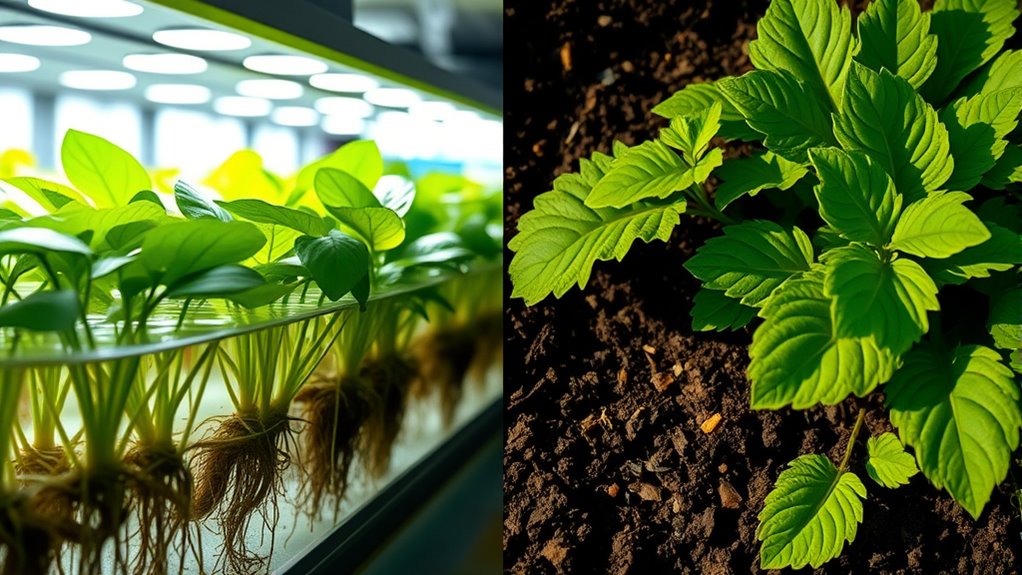

In hydroponics, nutrients come from water-soluble mixes that deliver precise amounts directly to plant roots, promoting faster growth. Organic nutrients, on the other hand, come from natural sources like compost and manure, breaking down slowly and supporting soil health. While hydroponic nutrients need careful formulation for water-based systems, organic options focus on sustainability and long-term soil vitality. To truly optimize growth, understanding these differences and how they impact plant health is essential; explore further to discover more insights.
Key Takeaways
- Organic nutrients are derived from natural sources and release nutrients slowly, while hydroponic nutrients are formulated for immediate availability.
- Hydroponic systems deliver nutrients directly through water, requiring precise formulations; organic nutrients need microbial breakdown for plant access.
- Soil health enhances organic nutrient effectiveness via microbial activity; hydroponics lacks soil microbes, needing carefully balanced nutrient solutions.
- Organic nutrients support sustainable soil practices and long-term health; hydroponic nutrients focus on rapid, controlled plant growth.
- Proper formulation and understanding of nutrient absorption are essential for maximizing plant health in both organic and hydroponic systems.
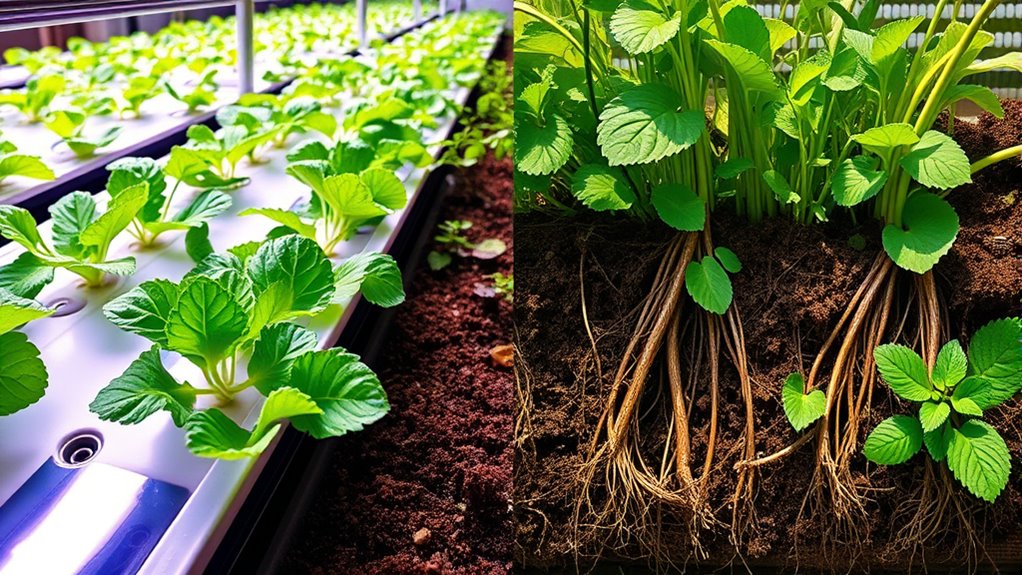
Are you wondering how to optimize plant growth with the right nutrients? Whether you’re growing in soil or a hydroponic system, understanding the differences in nutrient types is key to healthy, thriving plants. Organic and hydroponic nutrients each have unique characteristics that influence how your plants absorb essential elements. One of the main considerations is soil health, which plays a significant role in nutrient absorption in traditional gardening. Healthy soil teeming with microorganisms naturally breaks down organic matter, releasing nutrients slowly and making them available to your plants over time. This process supports a balanced ecosystem underground, which helps maintain consistent nutrient uptake and promotes overall plant health.
Healthy soil with rich microorganisms slowly releases nutrients, supporting plant health and ecosystem balance.
In contrast, hydroponic systems deliver nutrients directly to the roots through a water-based solution. Since there’s no soil involved, the focus shifts to meticulously formulated nutrient mixes designed for rapid absorption. This method allows plants to access nutrients quickly and precisely, often resulting in faster growth. However, because hydroponic systems skip the natural filtering and buffering provided by soil, the nutrient solution must be carefully balanced to avoid deficiencies or toxicities. The absence of soil also means there’s less microbial activity to assist in nutrient breakdown, so the grower must ensure the nutrient solution contains all necessary elements in the correct ratios.
Organic nutrients are derived from natural sources like compost, manure, fish emulsion, and plant extracts. They tend to release nutrients slowly as they decompose, which fosters a more sustainable approach and helps preserve soil health. When you use organic nutrients in soil, the microbial life is actively involved in breaking down these materials, which enhances nutrient absorption in a steady, controlled manner. This slow-release process not only benefits soil health but also reduces the risk of nutrient runoff and pollution. Organic options often improve soil structure over time, encouraging better water retention and aeration, which further supports healthy root development.
In hydroponic setups, organic nutrients are available but require careful formulation. Since they don’t benefit from microbial activity in the same way as soil, they might need additional adjustments to ensure plants can absorb nutrients efficiently. The key is to choose organic nutrient solutions specifically designed for hydroponics, as they are processed to be water-soluble and readily available for uptake. Additionally, understanding how eye patch benefits can be applied to plant care routines highlights the importance of proper nutrient management for optimal health. Overall, while both organic and hydroponic nutrients aim to nourish plants, their effectiveness depends heavily on your system’s setup and your understanding of nutrient absorption processes. By paying close attention to soil health in traditional growing and the formulation of nutrient solutions in hydroponics, you can maximize plant growth and health.
Frequently Asked Questions
Are Hydroponic Nutrients More Eco-Friendly Than Organic Ones?
Yes, hydroponic nutrients are generally more eco-friendly than organic ones because they often have a lower environmental impact and provide consistent nutrient purity. You’ll find that hydroponic systems use precisely measured nutrients, reducing waste and runoff. Organic nutrients, while natural, can sometimes have less predictable effects and may involve more resource use during production. So, if eco-friendliness is a priority, hydroponic nutrients tend to be the better choice.
Can Organic Nutrients Be Used Effectively in Hydroponic Systems?
Sure, organic nutrients can be used effectively in hydroponic systems, but don’t expect them to be as straightforward. Irony strikes when you realize organic compatibility often means slower nutrient absorption and potential buildup issues. You might think you’re providing pure, natural nourishment, but in reality, you’ll need to carefully manage your system’s balance to guarantee your plants get what they need without clogging or deficiencies.
How Do Nutrient Deficiencies Differ Between Hydroponic and Organic Methods?
You’ll notice nutrient deficiencies differ between hydroponic and organic methods because hydroponics relies on precise solutions, making deficiencies more immediate and easier to diagnose. In organic systems, the soil microbiome helps break down nutrients, but pH fluctuations can hinder nutrient availability, causing deficiencies. In hydroponics, stable pH levels help prevent deficiencies, but in organic setups, maintaining ideal pH is essential for microbial activity and nutrient uptake.
Are Organic Nutrients More Cost-Effective Than Synthetic Hydroponic Nutrients?
Ever wondered if organic nutrients are more cost-effective than synthetic hydroponic ones? In a cost comparison, organic nutrients often seem pricier upfront, but they can offer nutrient savings over time through improved soil health and reduced dependence on external inputs. While synthetic nutrients may be cheaper initially, they might require more frequent application. Ultimately, your choice depends on your goals, budget, and desire for sustainable practices.
Do Nutrient Requirements Vary Significantly Between Different Plant Species in Both Systems?
Yes, nutrient requirements vary considerably between different plant species in both hydroponic and organic systems. You’ll find that plant species exhibit nutrient variation, needing specific balances of macronutrients and micronutrients for ideal growth. Understanding these differences helps you tailor your nutrient solutions or organic amendments, ensuring each plant species receives the right nutrients for healthy development and maximizing yield, regardless of the cultivation system you choose.
Conclusion
So, here you are, thinking organic is always better, right? Turns out, hydroponic nutrients can be just as precise—maybe even more so—delivering exactly what your plants need. Ironically, while organic lovers chase natural magic, hydroponics offers a high-tech shortcut to lush growth. Whether you choose soil or solution, just remember: both paths can lead to thriving plants. Sometimes, the best choice is simply trusting your plants to tell you what they want—organic or not.