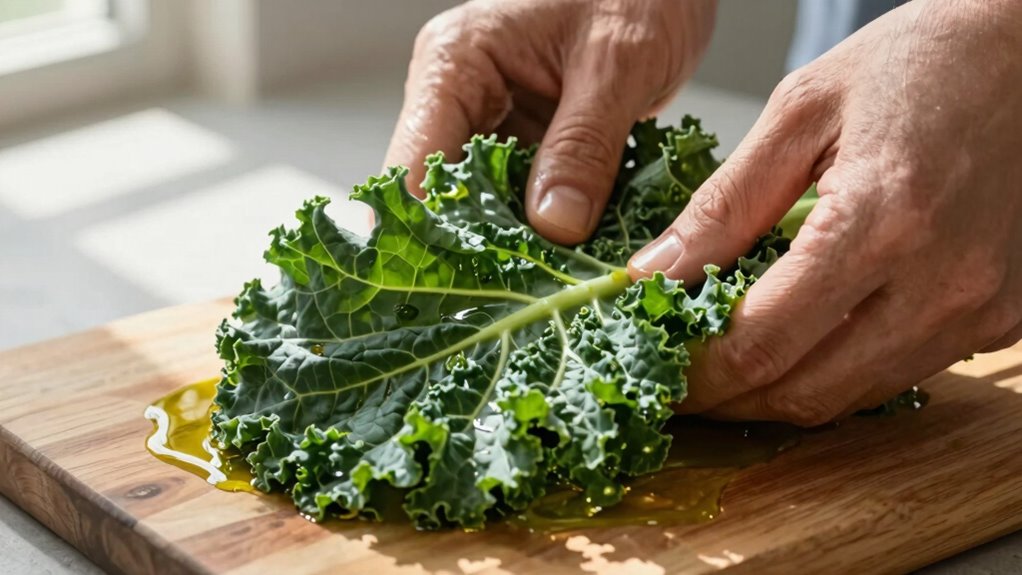

Massaging kale changes more than just its tenderness. When you gently rub the leaves, you break down tough fibers, making it easier to digest and absorb flavors. This process also releases its natural taste and enhances its nutritional benefits by breaking down cell walls, allowing for better access to essential vitamins and minerals. Plus, massaged kale serves as a fantastic base for salads and veggie dishes, elevating your meals to new heights. You’ll find even more benefits as you keep exploring!

Get health and wellness essentials delivered free with Prime
- Fast, free delivery on millions of items
- Prime Video, Amazon Music and more included
- Member-only deals all year
Key Takeaways
- Massaging kale breaks down tough fibers, improving texture and making it more enjoyable to eat.
- The technique enhances flavor absorption, allowing kale to better complement other ingredients in dishes.
- Nutritional benefits increase as massaging aids in nutrient absorption by breaking down cell walls.
- Incorporating massaged kale into meals encourages a higher intake of essential vitamins and minerals.
- This simple method transforms meal prep, making kale a versatile and nutritious base for various dishes.
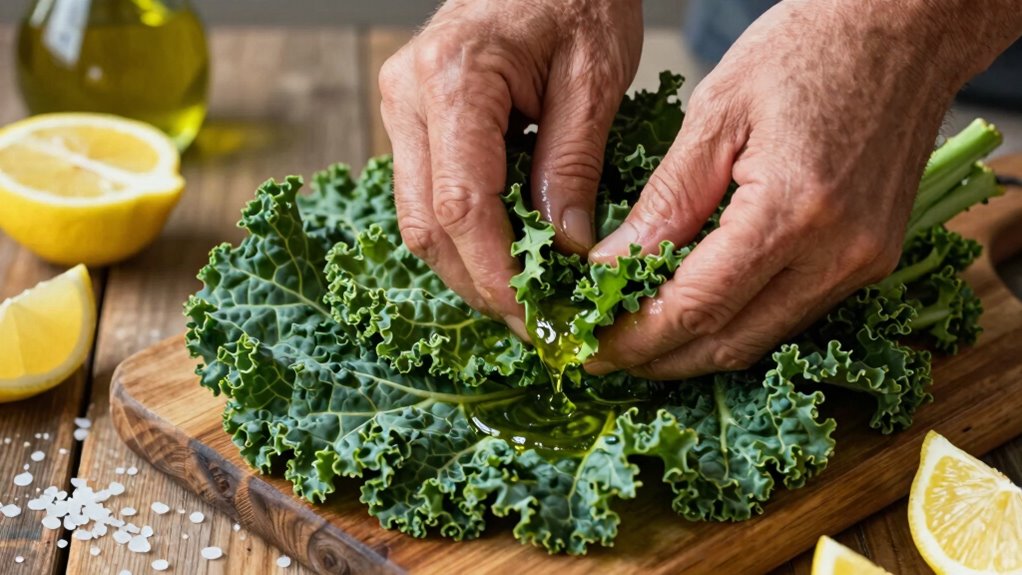
Massaging kale might sound unusual, but it’s a simple technique that transforms this leafy green into a tender, flavorful delight. When you massage kale, you’re not just improving its texture; you’re also revealing a world of nutritional benefits and making it more enjoyable to eat. This process involves gently rubbing the leaves with your hands, often combined with a bit of oil or acid, to break down the tough fibers. As you do this, you’ll notice the kale wilting and becoming softer, which is an essential step for your meal prep.
One of the most significant advantages of massaging kale is the texture improvement. Raw kale can be tough and chewy, making it less appealing in salads or wraps. By massaging it, you create a more palatable experience, allowing the leaves to absorb flavors better. You’ll find that the kale becomes less fibrous and more tender, making it easier to digest. This is especially important if you’re trying to incorporate more greens into your diet but find raw kale unappetizing.
Massaging kale enhances its texture, making it tender and flavorful, perfect for salads and wraps. Enjoy the greens without the chewiness!
Moreover, the flavor enhancement that comes from massaging kale can’t be overstated. When you rub the leaves, you’re not just softening them; you’re also releasing their natural flavors. Adding a bit of lemon juice or olive oil during the massage will further elevate the taste, making your salads more vibrant and satisfying. You’ll discover that well-massaged kale takes on a delightful taste that complements a variety of ingredients, from nuts to fruits, creating a more balanced meal.
In terms of nutritional benefits, massaging kale doesn’t just make it more enjoyable; it also aids in nutrient absorption. The process helps break down the cell walls, allowing your body to access the vitamins and minerals more efficiently. Kale is packed with antioxidants, vitamins A, C, and K, and minerals like calcium and iron. So when you take the time to massage your kale, you’re not only enhancing its flavor and texture but also maximizing its health benefits. Additionally, breaking down cell walls during massage can further improve the bioavailability of these vital nutrients. A deeper understanding of nutrient bioavailability can help you optimize your overall health.
Incorporating massaged kale into your meal prep can revolutionize how you approach salads and veggie dishes. With this simple technique, you can prepare a base that’s not only nutritious but also delicious, setting the stage for a variety of meals throughout the week. So, next time you buy kale, take a moment to massage it and experience the transformation for yourself. You won’t regret it!
As an affiliate, we earn on qualifying purchases.
Frequently Asked Questions
Can I Massage Other Leafy Greens Like Spinach or Arugula?
Yes, you can definitely massage other leafy greens like spinach and arugula! Massaging spinach can enhance its benefits by softening the leaves, making them easier to digest and absorb nutrients. With arugula, you’ll notice a change in texture; massaging can mellow its peppery flavor, making it more enjoyable in salads. So go ahead, give those greens a little TLC and elevate your salads with their improved taste and texture!
How Long Should I Massage Kale for Optimal Results?
You should massage kale for about 2 to 3 minutes for ideal results. As you work it, you’ll notice the kale texture transforming, becoming tender and vibrant. Use your fingers or a rolling pin, applying gentle pressure and rhythmic motions. Keep going until it feels softer and more manageable. The suspense builds as you watch the greens change, creating a delicious base for your salad. You’ll love the difference!
What Type of Oil Is Best for Massaging Kale?
For massaging kale, extra virgin olive oil is your best bet. It not only offers great oil benefits, like healthy fats and antioxidants, but also enhances the flavor of the kale. Just a drizzle will make a huge difference, making the leaves tender and tasty. Feel free to experiment with other oils, like avocado or sesame, to discover new flavor profiles that you love. Enjoy your deliciously massaged kale!
Does Massaging Kale Affect Its Nutritional Value?
Yes, massaging kale can enhance its nutritional value. Studies show that massaging increases nutrient absorption by breaking down cell walls, making vitamins and minerals more accessible. This process also activates enzymes that aid digestion. When you massage kale, you’re not just tenderizing it; you’re revealing its health benefits, like boosting vitamin K and calcium levels. So, take a moment to massage your kale and maximize its nutritional potential for your meals!
Can Massaged Kale Be Stored for Later Use?
Yes, you can store massaged kale for later use! To maintain its flavor enhancement, use proper storage techniques. Place the massaged kale in an airtight container or a resealable bag, removing as much air as possible. Keep it in the refrigerator, and it should last for about 3-5 days. Just remember, as time passes, the texture may change slightly, but the delicious flavors will still be there for your meals!
Conclusion
Massaging kale isn’t just about making it tender; it transforms the whole experience, much like turning a rough stone into a polished gem. By breaking down its tough fibers, you reveal a world of flavor and nutrition that makes every bite enjoyable. So, next time you prepare your salad, remember that a little massage can go a long way. Embrace this simple technique and watch your kale shine brighter on your plate!
Halloween Picks
halloween
As an affiliate, we earn on qualifying purchases.