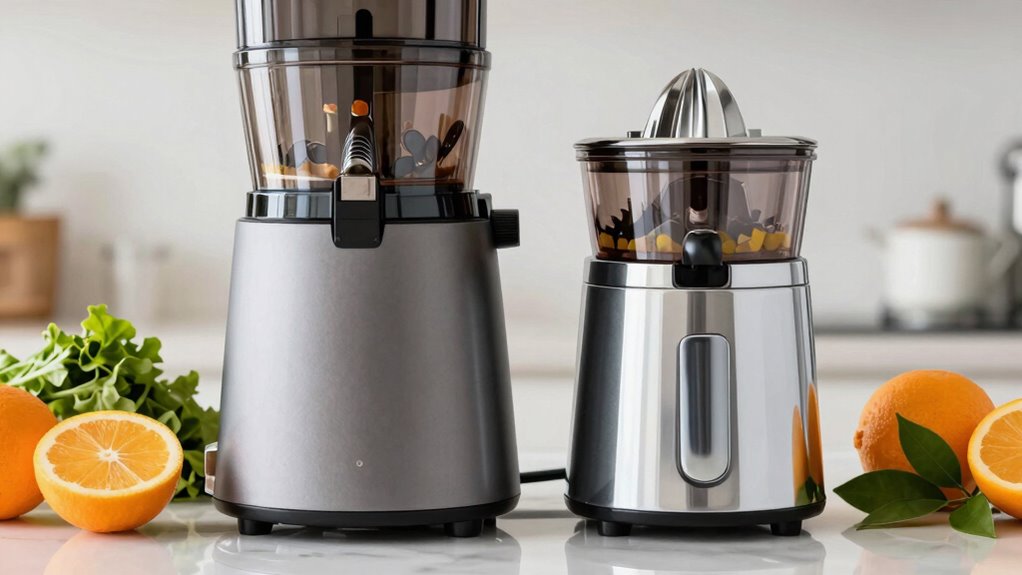
When choosing between masticating and centrifugal juicers, consider how each works; masticating uses slow crushing for better nutrient preservation, while centrifugal spins fast for quick juice. If you value juice quality, flavor, and versatility with greens and soft produce, a masticating juicer is ideal. For speed and ease, a centrifugal is better. Noise, cost, and maintenance also matter. Keep exploring to find the best fit for your juicing goals and lifestyle.
Key Takeaways
- Masticating juicers operate slowly, preserving nutrients and producing drier pulp, while centrifugal juicers are faster but may degrade juice quality.
- Masticating models are better suited for leafy greens and soft produce, whereas centrifugal juicers excel with hard fruits and vegetables.
- Centrifugal juicers are simpler to assemble and clean, offering quick setup, while masticating juicers require more effort and time.
- Masticating juicers tend to be quieter, more energy-efficient, and durable, often justifying a higher initial investment.
- Centrifugal juicers provide quicker juice extraction, making them ideal for busy routines despite potentially lower nutritional value.

Juicer Machines with 5.8" Large Feed Chute, Cold Press Juicer for Whole Vegetables and Fruits 400W, Slow Masticating juicer Easy to Clean Juice Extractor Machine High Juice Yield
5.8 Inch Larger Feed Chute – This juicer machines designed with 5.8 inch feeding chute large enough for…
As an affiliate, we earn on qualifying purchases.
As an affiliate, we earn on qualifying purchases.
How Do Masticating and Centrifugal Juicers Work?
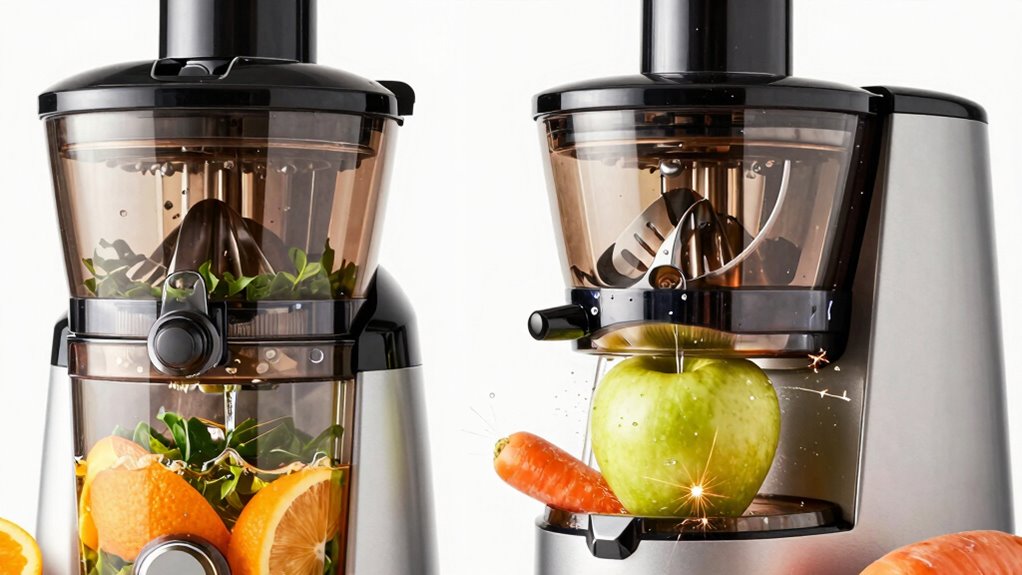
While both masticating and centrifugal juicers are designed to extract juice from fruits and vegetables, they do so through different mechanisms. Masticating juicers use a slow, gear-driven auger that crushes produce, mimicking chewing. This design minimizes heat and oxidation, preserving nutrients. Their juicer design emphasizes a horizontal or vertical chamber with a tight seal, allowing for efficient, gentle extraction. In contrast, centrifugal juicers rely on high-speed spinning blades, propelled by powerful motor technology, to shred produce instantly. This rapid spinning creates centrifugal force that separates juice from pulp. The difference in motor technology results in faster operation for centrifugal juicers, but often at the expense of juice quality. Both designs serve their purpose, but their mechanisms define their efficiency and output. Additionally, understanding high RPMs can help users choose a juicer that balances speed with juice clarity and nutrient retention. Proper maintenance of motor efficiency is also crucial for optimal performance and longevity of the juicer. Regular cleaning and avoiding overloads can help maintain consistent performance levels, and paying attention to motor heat can prevent overheating that may reduce the lifespan of the appliance. Moreover, ensuring proper lubrication can further enhance the longevity of the juicer’s moving parts.

Qcen Juicer Machine, 800W Centrifugal Juicer Extractor with Wide Mouth 3” Feed Chute for Fruit Vegetable, Easy to Clean, Stainless Steel, BPA-free (Black)
Upgraded 800W Motor – Centrifugal juicer machine with upgraded 800W high speed motor, more efficient and powerful than…
As an affiliate, we earn on qualifying purchases.
As an affiliate, we earn on qualifying purchases.
Which Juicer Delivers Better Juice Quality: Nutrition, Flavor, and Texture?
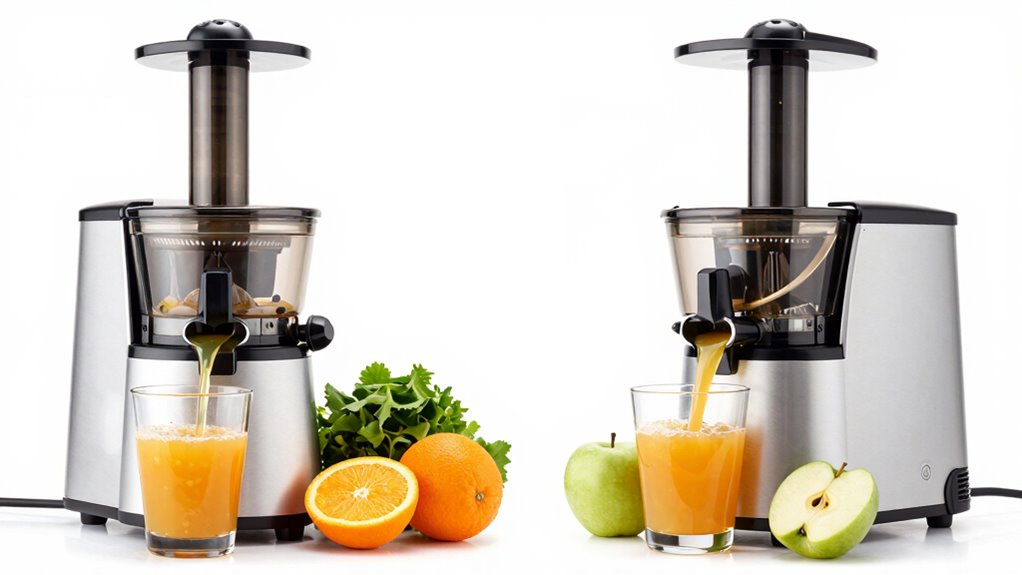
When it comes to juice quality in regard to nutrition, flavor, and texture, masticating juicers generally produce superior results. They excel at juice preservation, maintaining higher nutrient levels and minimizing oxidation. This slow extraction method helps retain enzymes, vitamins, and minerals, resulting in a healthier, more nutritious juice. Additionally, masticating juicers produce drier pulp, indicating more efficient extraction and less waste. The pulp dryness also improves flavor, giving you a richer, more concentrated taste. Efficiency of extraction is a key factor that influences the overall quality of the juice produced. Centrifugal juicers, on the other hand, tend to produce juice with slightly lower nutritional value and less pulp dryness, which can affect flavor and texture. Furthermore, juice preservation is enhanced by the gentle extraction process, helping to maintain the juice’s freshness over time. This gentle process also reduces oxidation, which helps preserve the juice’s vibrant colors and fresh taste. As a result, the oxidation process is slowed, which further extends the shelf life of the juice. Overall, if juice quality is your priority, a masticating juicer offers noticeably better nutrition, flavor, and texture. Media literacy is essential when evaluating the claims made about different juicer technologies and their benefits.
Juicer Machines with 5.8" Large Feed Chute, Cold Press Juicer for Whole Vegetables and Fruits 400W, Slow Masticating juicer Easy to Clean Juice Extractor Machine High Juice Yield
5.8 Inch Larger Feed Chute – This juicer machines designed with 5.8 inch feeding chute large enough for…
As an affiliate, we earn on qualifying purchases.
As an affiliate, we earn on qualifying purchases.
Speed and Efficiency: Which Juicer Gets You Juice Faster?
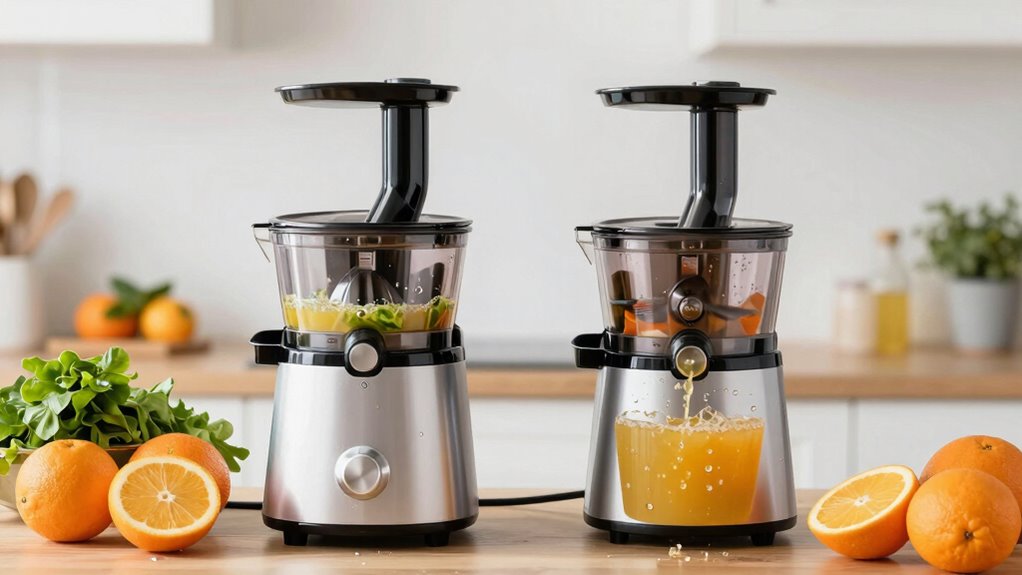
When it comes to juicing, speed matters if you want your fresh juice quickly. Different models vary in how fast they extract juice and how long the process takes overall. Let’s compare how quickly each juicer gets the job done. Understanding the extraction process can help you choose the right juicer for your needs. Additionally, the juicing efficiency impacts how much juice you get in a shorter period, making it a key factor for busy mornings or large batches. Furthermore, processing time influences how seamlessly the juicing fits into your daily routine, especially when time is limited. A motor power rating also affects how swiftly a juicer can operate, contributing to overall speed. Notably, user-friendliness plays a role in how easily the juicer can be operated during rapid or frequent juicing sessions.
Juicing Speed Differences
If you’re looking to juice quickly, the speed at which a juicer operates can make a big difference. Centrifugal juicers spin at high RPMs, delivering faster juice extraction, which means you get your juice in less time. They often produce a higher juice yield because their rapid spinning extracts more liquid from fruits and vegetables. However, this speed can also influence pulp dryness; centrifugal juicers tend to produce wetter pulp since they don’t extract as thoroughly as masticating juicers. Masticating juicers operate at slower speeds but focus on thorough extraction, resulting in drier pulp. So, if speed is your priority, centrifugal juicers will get you juice faster. But if you want ideal juice yield and pulp dryness, a masticating juicer might be worth the extra time. Understanding juicer types can help you choose the best option for your needs. Additionally, juicing efficiency is an important factor to consider when selecting a juicer based on your lifestyle and preferences. For example, proper juicer maintenance can ensure optimal performance and longevity over time.
Juice Extraction Time
Choosing the right juicer depends heavily on how quickly you want your juice. Centrifugal juicers typically extract juice faster, giving you a quick turnaround, but may sacrifice some juicing consistency and pulp separation. Masticating juicers, on the other hand, operate more slowly but produce a smoother juice with better pulp separation. If speed is your priority, centrifugal models are ideal—they process ingredients rapidly, minimizing wait time. However, if you prefer a thicker, more consistent juice with minimal pulp, a masticating juicer might take longer but offers superior juice quality. Consider your daily routine and preference for juicing consistency when choosing. Ultimately, the best option balances your need for speed with the quality of the juice you desire.
Qcen Juicer Machine, 800W Centrifugal Juicer Extractor with Wide Mouth 3” Feed Chute for Fruit Vegetable, Easy to Clean, Stainless Steel, BPA-free (Black)
Upgraded 800W Motor – Centrifugal juicer machine with upgraded 800W high speed motor, more efficient and powerful than…
As an affiliate, we earn on qualifying purchases.
As an affiliate, we earn on qualifying purchases.
Ease of Use and Cleaning: Which Juicer Is More User-Friendly?
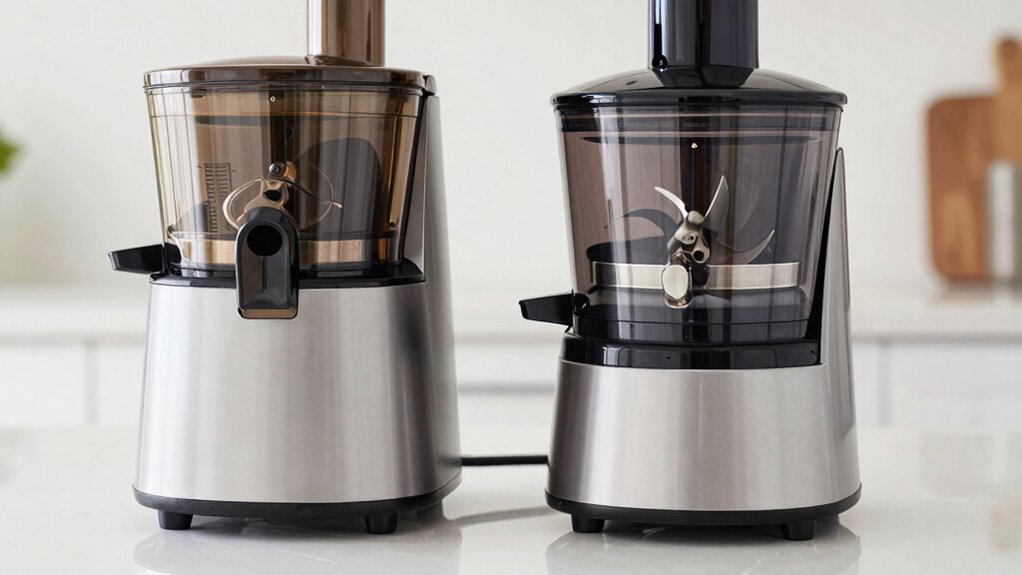
When choosing a juicer, ease of use and cleaning matter just as much as performance. You’ll want a model that’s simple to set up and assemble without hassle, and one that cleans quickly with minimal effort. Considering maintenance and storage options can make your juicing experience more convenient and enjoyable. Additionally, selecting a juicer with easy-to-clean parts can save you time and prevent leftover residue from affecting future uses. Opting for models with compact storage options can also help keep your kitchen organized and make cleanup less cumbersome. Furthermore, choosing a design that minimizes residue buildup can further streamline the cleaning process and maintain optimal juicing performance. Being aware of filter maintenance can also extend the lifespan of your juicer and ensure consistent results.
Setup and Assembly
Setting up and assembling a juicer can considerably impact how quickly you start enjoying fresh juice, so it’s important to take into account which model offers a more straightforward process. Centrifugal juicers typically come with fewer parts, making assembly quick and simple—perfect if you’re enthusiastic to try multiple juicing recipes without fuss. Masticating juicers might require a bit more effort to put together, especially with various juicer accessories, but their parts are often designed for easy disassembly. Both types usually include clear instructions, but the centrifugal model’s faster setup can save you time. Consider how often you plan to juice; if convenience is key, a model with intuitive assembly could make your juicing experience more enjoyable from the start. Additionally, ease of cleaning is an important factor to consider for maintaining your juicer’s performance and hygiene.
Cleaning Process Simplicity
Cleaning a juicer can be a hassle, but some models are designed to make the process easier than others. Centrifugal juicers typically have wide openings, making pulp separation and rinsing straightforward. Their removable parts are usually dishwasher safe, speeding up cleanup. Masticating juicers, however, often have tighter spaces and more components, which can make cleaning more time-consuming. Both types generate less heat during operation, helping with motor cooling and reducing residue buildup, but cleaning remains more efficient when parts come apart easily. Look for models with minimal nooks and crannies, as well as smooth surfaces that resist pulp buildup. Overall, centrifugal juicers tend to be more user-friendly in cleaning, especially if you prefer quick, hassle-free maintenance. Ease of cleaning is an important factor when choosing a juicer to ensure regular use without frustration.
Maintenance and Storage
Choosing a juicer that’s easy to maintain and store can save you time and frustration in the long run. When considering juicer storage, look for compact models that fit easily in your kitchen or pantry. Masticating juicers often have fewer parts, making maintenance tips simpler, like rinsing and assembling quickly. Centrifugal juicers may require more frequent cleaning due to their larger parts and pulp containers. To keep your juicer in top shape, follow maintenance tips like regular cleaning and proper disassembly. Store your juicer in a dry, accessible spot to ensure it’s ready when you need it. Additionally, understanding the kitchen fundamentals can help you optimize storage space and improve overall appliance care. Choosing a model with easy-to-clean components can also make your juicing routine more efficient and less time-consuming. An easy-to-maintain and well-stored juicer reduces clutter and streamlines your juicing routine, making the process more enjoyable.
Versatility: Can Each Juicer Handle Soft, Hard, and Leafy Produce?
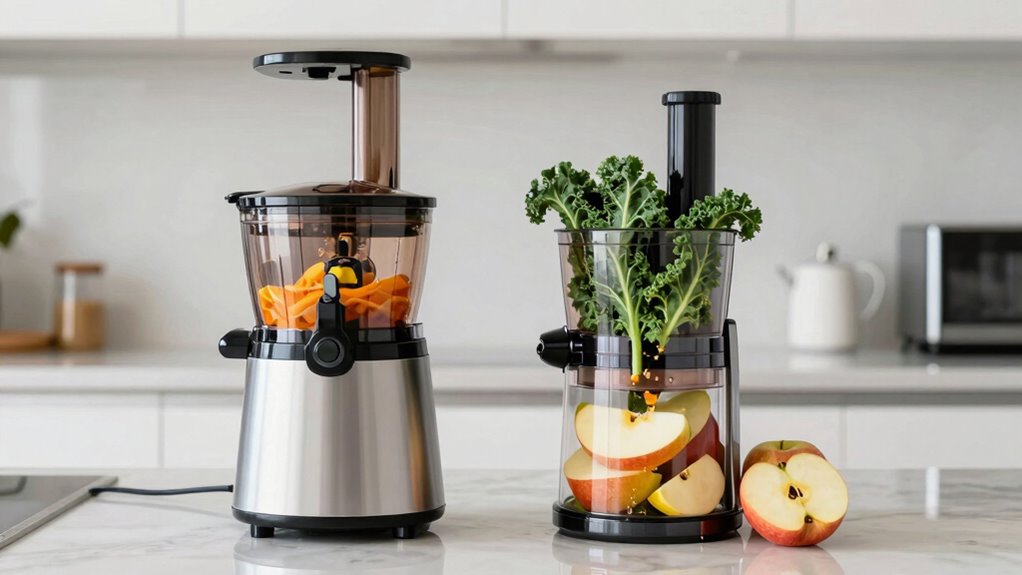
When evaluating juicers for versatility, it’s important to contemplate whether they can handle a variety of produce textures. A good juicer should efficiently process soft fruits like berries and citrus, hard produce such as apples and carrots, and leafy greens like spinach and kale. Fruit compatibility is key—you want a juicer that doesn’t clog or struggle with different textures. Centrifugal juicers excel at juicing hard produce quickly but may falter with leafy greens, which can be tough to handle. Masticating juicers, on the other hand, are better at leafy produce handling and can process a wide range of textures smoothly. Consider your typical produce choices to determine which juicer offers the best versatility for your needs.
Noise Levels and Power Use: Which Juicer Is Quieter and More Energy-Efficient?
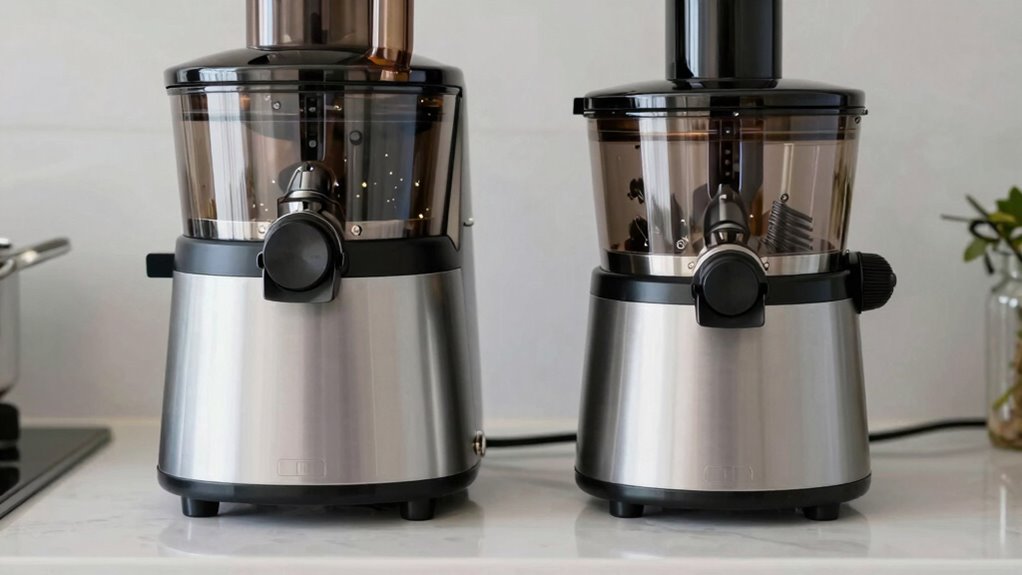
While evaluating a juicer’s versatility with different produce textures is important, considering its noise levels and energy consumption can make a big difference in daily use. Masticating juicers generally operate with lower motor noise, making them quieter during operation. Centrifugal juicers tend to produce more noise due to their high-speed spinning. When it comes to energy consumption, masticating models typically use less power since they operate at slower speeds. This makes them more energy-efficient over time, especially if you juice frequently. If minimizing noise and saving energy are priorities, a masticating juicer is your best bet. However, if quick results outweigh noise concerns, a centrifugal juicer might suit your needs better. Prioritizing these factors can improve your juicing experience daily.
Cost, Durability, and Long-Term Value: Which Juicer Is a Better Investment?
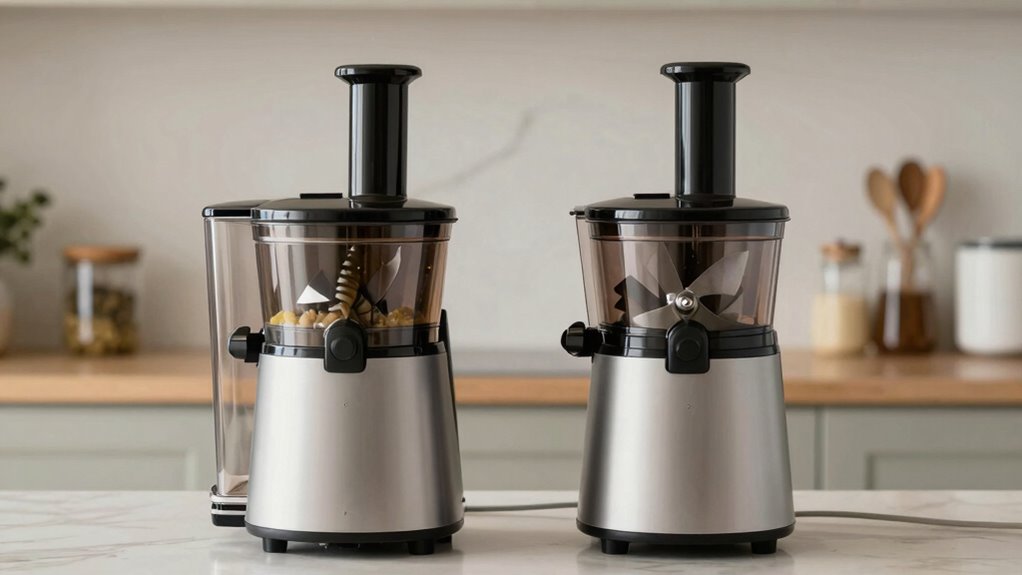
Investing in a juicer means weighing not just the initial cost but also its durability and long-term value. A thorough cost comparison reveals that masticating juicers often have a higher upfront price but excel in durability factors, lasting longer with proper maintenance. Centrifugal juicers tend to be more affordable initially but may require replacement sooner due to wear and tear. Consider how often you’ll juice and the quality of results you want—long-term, a durable juicer saves you money and effort. Look for features that boost longevity, like sturdy construction and easy cleaning. Ultimately, choosing a juicer that balances cost, durability, and long-term value guarantees your investment remains worthwhile, providing consistent performance for years to come.
Choosing the Right Juicer for Your Lifestyle and Juicing Goals?
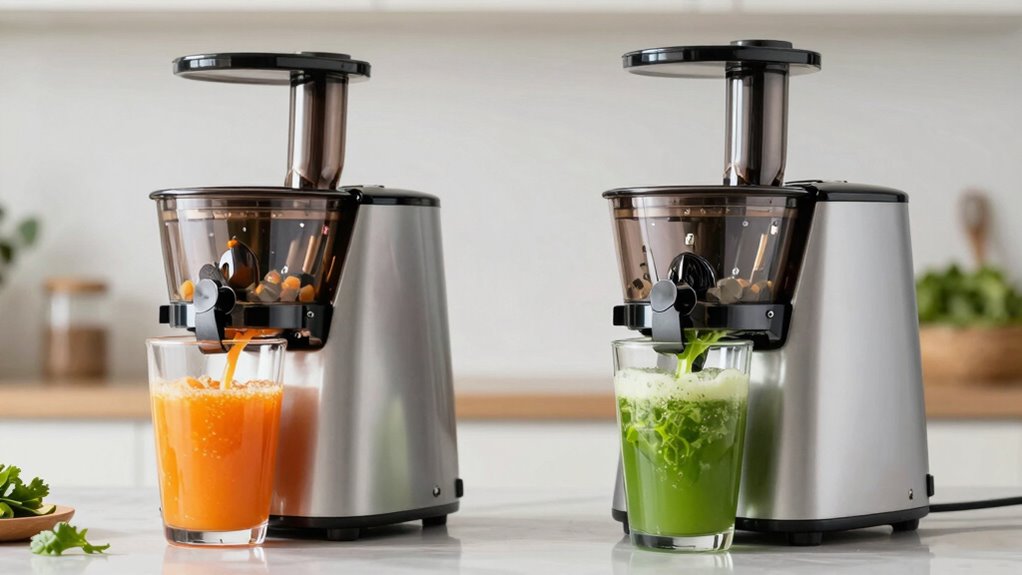
Choosing the right juicer depends heavily on your lifestyle and what you aim to achieve with your juicing routine. If you enjoy experimenting with various juicing recipes and want maximum nutrient retention, a masticating juicer might be your best choice. It handles leafy greens and hard vegetables well, supporting health benefits like improved digestion and increased energy. On the other hand, if you prefer quick, high-volume juicing for busy mornings, a centrifugal juicer offers speed and convenience. Consider your daily routine, the types of produce you use most, and your goals—whether it’s ideal health benefits or ease of use. Matching your needs with your juicer ensures you stay consistent and enjoy the process, ultimately maximizing your health benefits.
Frequently Asked Questions
Which Juicer Type Is More Suitable for Beginners?
For beginners, centrifugal juicers are more suitable because they offer easier ease of use and cleaning simplicity. You can quickly operate them with just a few buttons, making the process straightforward. Plus, their parts are generally easy to clean, saving you time and effort. Masticating juicers, while efficient, tend to be more complex and require more cleaning, which might be overwhelming if you’re just starting out.
Can Both Juicer Types Handle Wheatgrass and Leafy Greens Effectively?
Imagine your juicer transforming your greens into a vibrant, nutrient-packed wonderland. Both juicer types can handle wheatgrass and leafy greens, but masticating juicers excel in leafy greens efficiency and wheatgrass extraction, squeezing out every last nutrient. Centrifugal juicers process greens quickly but may sacrifice some nutrients. So, for the best juice and maximum health benefits, masticating is your go-to, especially for greens and wheatgrass.
How Much Juice Yield Can I Expect From Each Juicer?
You can expect a masticating juicer to deliver higher juice extraction efficiency, resulting in more juice and drier pulp. It typically yields about 20-30% more juice than a centrifugal juicer. Centrifugal models produce quicker results but with less juice and wetter pulp. Your choice depends on whether you prioritize maximum yield and pulp dryness or speed and convenience. Both types handle leafy greens well, but yield varies accordingly.
Are Masticating or Centrifugal Juicers Better for Making Nut Milks?
Like a skilled alchemist, you’ll find masticating juicers better for making nut milks, delivering a smoother, creamier texture and minimal pulp separation. They gently grind nuts, preserving delicate flavors and ensuring a silky consistency. Centrifugal juicers, with their high-speed blades, tend to produce a thinner milk with more pulp, making them less ideal. Choose a masticating juicer for rich, velvety nut milks that satisfy your craving for quality.
Do Different Juicer Types Require Special Storage Considerations?
Different juicer types do require special storage considerations. You should check the storage requirements for your specific model, as some parts may be fragile or need to be kept upright to prevent leaks. Additionally, maintaining good cleaning routines ensures longevity; disassemble and clean all components thoroughly after use. Store your juicer in a dry, dust-free place, and avoid cramming it into tight spaces to keep it in ideal condition.
Conclusion
Choosing between masticating and centrifugal juicers is like selecting the right tool for your garden—each has its own strengths. Think about what matters most: speed, juice quality, or versatility. No matter your choice, remember that the right juicer can turn your daily routine into a invigorating escape, making healthy living feel like second nature. Ultimately, it’s about finding the perfect fit for your lifestyle and goals, so your juice journey blossoms beautifully.