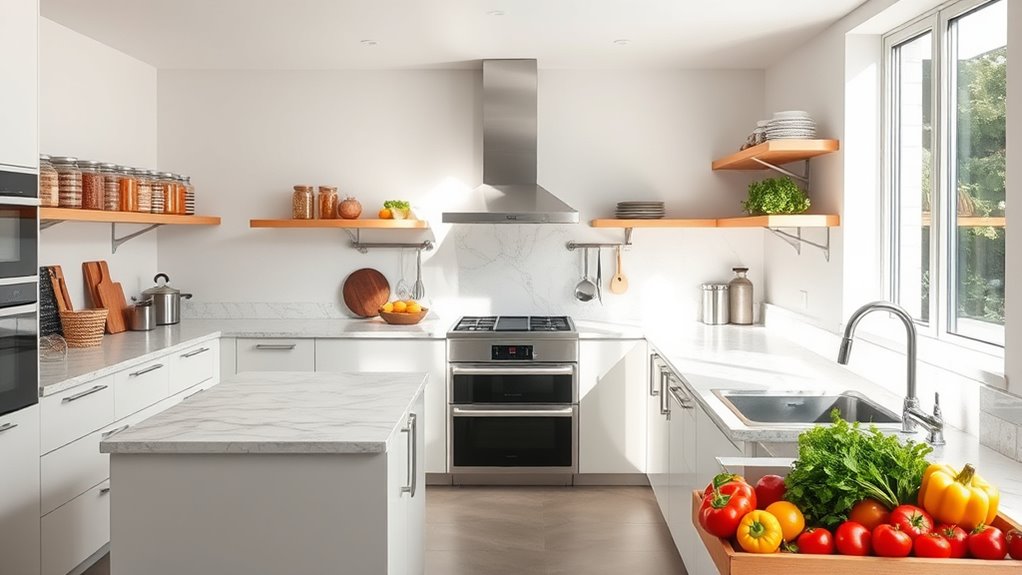

To organize your raw kitchen effectively, create distinct zones for washing, chopping, blending, and storing to prevent cross-contamination and boost efficiency. Place frequently used tools and ingredients within easy reach, and use color-coded cutting boards for different food groups. Arrange equipment in a logical workflow that moves from cleaning to prep, then to blending or storage. Keep less-used items out of the way, and make sure everything is neatly stored with labels and dividers. Explore these strategies further for a safer, more functional space.

Get health and wellness essentials delivered free with Prime
- Fast, free delivery on millions of items
- Prime Video, Amazon Music and more included
- Member-only deals all year
Key Takeaways
- Designate specific zones for washing, chopping, blending, and storing to prevent cross-contamination and streamline workflow.
- Position frequently used tools and ingredients within easy reach near prep and washing stations.
- Organize equipment logically, separating sharp knives from utensils for raw produce to ensure safety.
- Use color-coded cutting boards and labeled containers to identify food groups and maintain hygiene standards.
- Arrange workspace to promote a smooth flow from washing to prepping, blending, and storage, minimizing backtracking and bottlenecks.
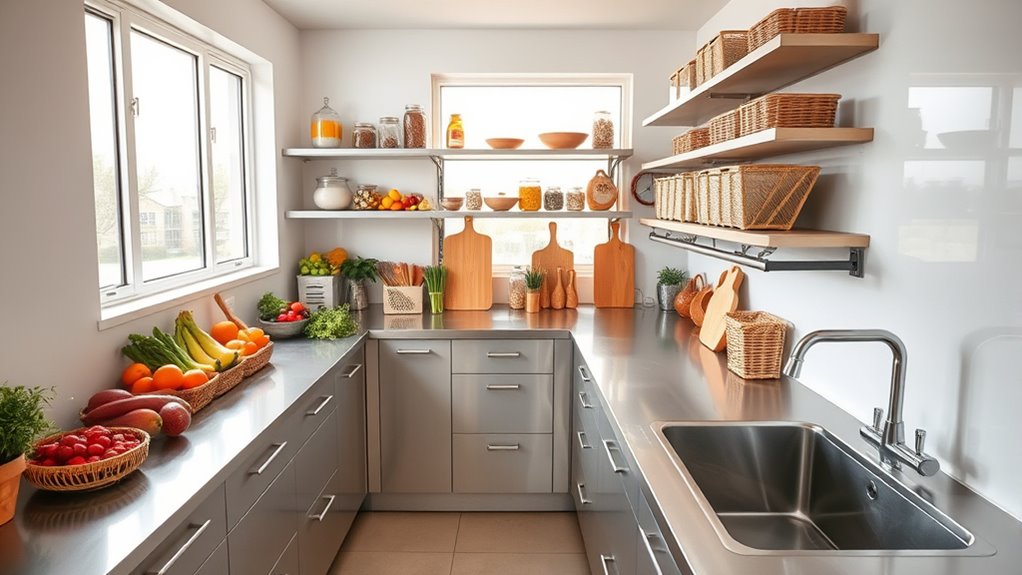
A well-organized raw kitchen makes preparing fresh, healthy meals easier and more enjoyable. When you focus on proper layout and thoughtful zones, you create a space that supports efficient workflow, food safety, and ease of use. One of the most important aspects to contemplate is equipment placement. You want your knives, cutting boards, blenders, and storage containers positioned logically to reduce cross-contamination and streamline your process. Place frequently used tools within easy reach, ideally near your prep areas, so you don’t waste time searching for them. Keep sharp knives and other potentially dangerous equipment separate from utensils used for raw produce to minimize the risk of accidents or foodborne illness.
Organize tools near prep areas and separate sharp equipment to enhance safety and efficiency in your raw kitchen.
Food safety is paramount in a raw kitchen, so your layout should facilitate clean separation of different tasks. For example, designate specific zones for washing, chopping, blending, and storing. Keep the washing station close to your sink, ensuring that you can quickly rinse fruits and vegetables without crossing into other zones. Chopping areas should be adjacent to your prep counters but separated enough to prevent cross-contamination from raw meats or other ingredients. Use color-coded cutting boards to identify different food groups—green for vegetables, red for proteins, and so on. This simple system helps maintain food safety and prevents the accidental transfer of bacteria.
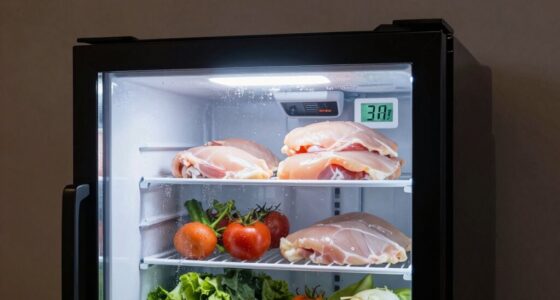
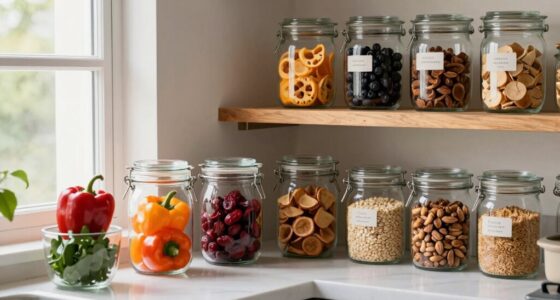
Efficient equipment placement also involves strategic storage solutions. Store raw ingredients in clearly labeled containers, ideally in refrigerated or cooled cabinets, so they stay fresh and safe. Keep frequently used items like leafy greens, berries, or nuts at eye level or within easy reach, reducing unnecessary movement. Conversely, less-used equipment can be stored higher up or in less accessible areas, freeing up workspace and maintaining order. Drawer organizers and shelf dividers prevent clutter and make it easy to find what you need at a glance.
Creating zones that follow a logical workflow minimizes cross-contamination and maximizes efficiency. For instance, start with washing and prep, then move to blending or assembling, and finally to storage or serving. Position your equipment and tools in a way that naturally guides this flow, reducing the need to backtrack or cross through contaminated zones. Additionally, understanding the best juice cleanses for weight loss can inspire you to incorporate nutrient-rich ingredients into your raw kitchen routines, emphasizing fresh produce and health-conscious choices. Regularly review your layout to identify bottlenecks or hazards, adjusting as needed. With thoughtful equipment placement and a focus on food safety, your raw kitchen becomes a functional, safe, and inspiring space that makes preparing nutritious meals a pleasure rather than a chore.
Frequently Asked Questions
How Do I Prevent Cross-Contamination in a Raw Kitchen?
To prevent cross-contamination in your raw kitchen, always practice utensil segregation by using separate tools for different food types. Clearly define contamination zones, such as raw meat and produce areas, and keep them apart. Regularly sanitize surfaces and utensils, and train staff to follow strict hygiene protocols. By maintaining these practices, you’ll reduce risks and guarantee food safety, protecting both your customers and your reputation.
What Materials Are Safest for Raw Food Countertops?
You should choose food grade surfaces made from non-porous materials like stainless steel, quartz, or certain plastics. These surfaces are safest for raw food countertops because they don’t absorb liquids or harbor bacteria, making cleaning easier and more effective. Avoid porous materials like wood or marble, as they can trap bacteria and pose contamination risks. Prioritize non-porous, food-grade surfaces to maintain a safe, hygienic raw kitchen.
How Should I Store Different Raw Ingredients?
You should store raw ingredients in clearly labeled, airtight storage containers to prevent cross-contamination. Use different container types like glass or BPA-free plastic, suited to each ingredient’s needs. Keep meats, seafood, and dairy on the lower shelves, while produce and dry goods go higher. Always label containers with ingredient names and dates, ensuring proper ingredient labeling. This approach keeps your raw ingredients organized, safe, and easy to access.
What Lighting Is Best for a Raw Food Preparation Area?
You should use LED lighting in your raw food preparation area because it provides bright, energy-efficient illumination without generating heat that could spoil ingredients. Combine this with natural illumination from windows or skylights to create a well-lit, inviting workspace. Proper lighting enhances visibility, ensures food safety, and boosts your mood, making it easier to prep ingredients accurately and efficiently. Aim for a balance of LED and natural light for ideal results.
How Can I Optimize Space in a Small Raw Kitchen?
Smart space solutions simplify small kitchen setups. You should select space-saving furniture that fits snugly without cluttering. Vertical storage solutions, like wall-mounted racks and hanging baskets, maximize your vertical real estate, freeing up precious countertop space. Keep essentials within reach, and use multi-purpose furniture to minimize clutter. Streamlining storage and choosing sleek, compact furniture helps you optimize every inch, making your small raw kitchen both functional and fabulous.
Conclusion
Now that you’ve set up your raw kitchen with the perfect layout, zones, and workflow, the real magic begins. Imagine the endless possibilities as you start experimenting and perfecting your process. But beware—small tweaks and surprises could change everything. Are you ready to *unleash* the full potential of your space? The journey to a seamless, efficient kitchen is just getting started. Stay attentive, because the next step might surprise you.
Fall Picks
fall essentials
As an affiliate, we earn on qualifying purchases.