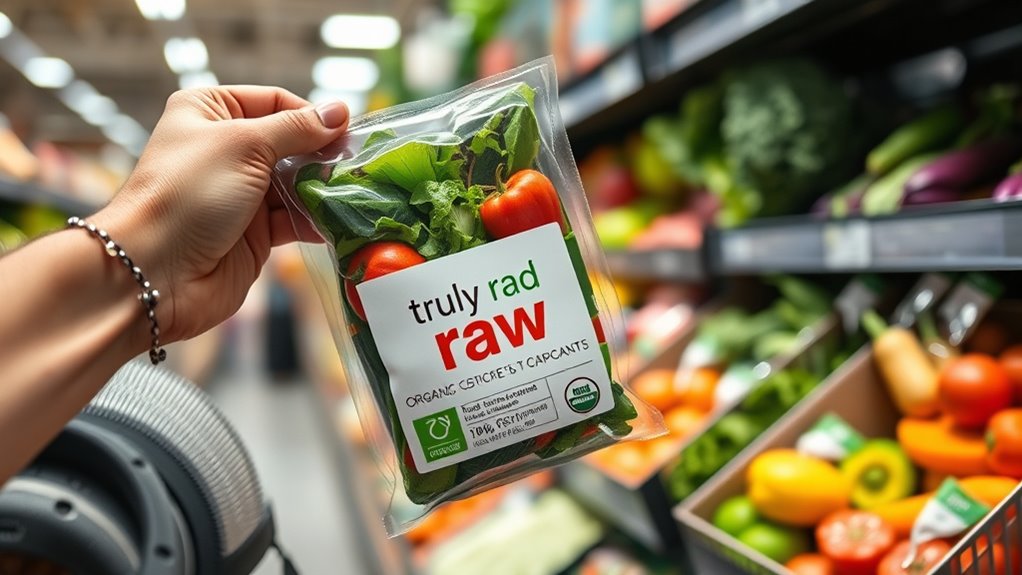

To shop smart for truly raw foods, focus on the labels to guarantee you avoid additives and processed ingredients. Look for organic certifications and ingredient lists that are short and simple, indicating less processing. Check sourcing details to confirm freshness and sustainability, and pay attention to expiration dates—shorter shelf lives typically mean higher quality. By paying close attention to these aspects, you can confidently select natural, pure foods, and discover even more tips to make healthier choices.
Key Takeaways
- Check for organic certification to ensure the product meets strict purity and sustainability standards.
- Read ingredient lists for simplicity and avoid products with unfamiliar chemicals or long additives.
- Look for sourcing details like origin and certifications such as non-GMO or pesticide-free for quality assurance.
- Pay attention to expiration and storage info; shorter shelf lives often indicate higher freshness and less processing.
- Prioritize labels that highlight minimal processing and natural ingredients for truly raw, unaltered foods.
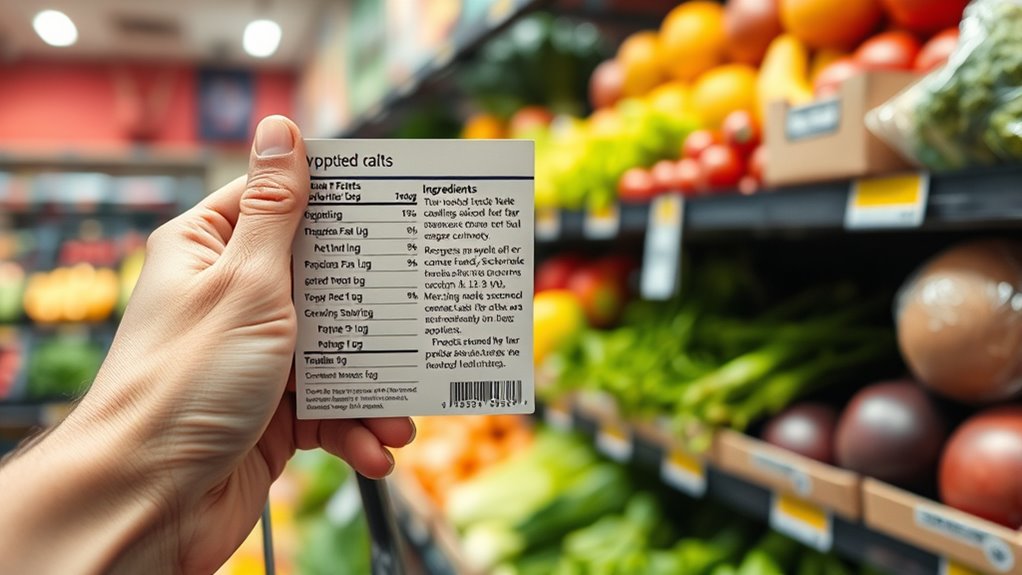
Shopping smart means making informed choices that save you money and time while getting the quality you need. When you’re selecting raw foods, reading labels becomes your best tool for ensuring you’re truly getting what you pay for. It’s tempting to rely on attractive packaging or familiar brands, but a closer look at labels reveals the real story behind your food. First, check for organic certification—this badge indicates that the product meets strict standards for avoiding synthetic pesticides, fertilizers, and genetically modified organisms. Organic certification isn’t just a label; it’s a guarantee that the food was produced with a focus on sustainability and purity, giving you peace of mind that you’re choosing healthier, more natural options.
Reading labels ensures you choose quality, natural raw foods free from unwanted additives and processed ingredients.
Equally important is ingredient transparency. When you flip the package over, scrutinize the ingredients list. The fewer the ingredients, the better, especially if you’re after truly raw foods. Look for items with minimal processing and no hidden additives or preservatives. If the label lists unfamiliar chemicals or long, complicated ingredient names, it’s a red flag. Instead, opt for products that clearly state their contents—ideally, a single ingredient or a short, straightforward list. This transparency helps you avoid processed foods disguised as raw or natural and ensures you’re getting exactly what you expect.
You should also pay attention to the sourcing details on the label. Many brands now include information about where their ingredients come from. Knowing the origin of your raw foods allows you to evaluate their quality and freshness better. For example, organic certification coupled with local sourcing often indicates a higher level of freshness and sustainability. Some labels even specify if the product is non-GMO or free from pesticides, which adds another layer of confidence in your purchase. Remember, reading labels isn’t just about avoiding the bad; it’s about actively choosing the best.
Additionally, take note of expiration dates and storage instructions. Truly raw foods tend to spoil faster, so freshness is key. If a product’s shelf life seems unusually long, it might be processed or preserved in ways that compromise its raw status. By paying attention to these details, you’re making sure you get the freshest, purest foods for your diet. Understanding food labels is essential for making these informed choices and ensuring your foods meet your standards for quality and purity.
Frequently Asked Questions
How Can I Identify Truly Raw Foods at a Glance?
You can identify truly raw foods at a glance by checking for ingredient transparency on labels—look for simple, natural ingredients without preservatives or additives. Packaging cues like clear labeling of raw or organic status also help. Avoid foods with long ingredient lists or unfamiliar chemicals. Trust brands that prioritize transparency, and when in doubt, opt for whole, unprocessed produce. Your eyes and reading skills are your best tools for smart, raw food choices.
Are There Specific Certifications Indicating Raw Food Authenticity?
You might think certifications are confusing, but they’re helpful for verifying raw food authenticity. Look for organic certifications and clear labeling standards that specify “raw” or “unprocessed.” These labels guarantee the product hasn’t gone through heat or additives, confirming it’s truly raw. Always check for reputable certification logos and detailed labels to confidently select authentic raw foods, making your shopping smarter and healthier.
Do Labels Vary Between Countries for Raw Food Products?
Yes, labels do differ between countries for raw food products. You should verify import/export labels, as they often reflect regional food standards. Different countries have specific requirements for raw food claims, so a product labeled as “raw” in one place might not meet the standards elsewhere. Always compare labels and certifications to ensure you’re truly buying raw foods that meet your expectations and dietary needs.
How Do Preservatives Affect Raw Food Label Claims?
Preservatives can considerably impact label accuracy, often hiding their true effects on raw foods. You might think you’re getting a pure product, but preservative impact can mask spoilage signs or alter appearance, making labels less reliable. Always scrutinize for additives, as preservatives may be present even when the label claims “raw” or “natural.” This subtle deception emphasizes the importance of understanding how preservatives influence what you see and trust on the label.
Can Packaging Tell Me if a Product Is Freshly Raw?
Packaging alone can’t guarantee a product is freshly raw, as packaging materials and labeling regulations don’t specify freshness or raw status. Look for clear labels that state “raw,” “fresh,” or “unprocessed,” and check for dates indicating when the product was packaged or sold. Remember, reputable brands follow strict labeling regulations, but it’s always best to verify freshness by inspecting the product’s appearance and asking questions at the store.
Conclusion
By becoming a label leggere, you’ll learn to look for luscious, truly raw foods, avoiding processed pitfalls. With careful checking, you can confidently choose crisp carrots, fresh figs, and fiery peppers—free from fake fillers. Let your shopping be a savvy, selective adventure, savoring the simple, natural splendor of pure produce. Stay sharp, stay selective, and savor the satisfying sweetness of shopping smart for truly raw foods.