


TL;DR

Get health and wellness essentials delivered free with Prime
- Fast, free delivery on millions of items
- Prime Video, Amazon Music and more included
- Member-only deals all year
A MedPage Today opinion article by physician Hamayle Saeed describes being screened for diabetes at a BMI of 23 under guidance for Asian Americans, but denied a GLP-1 medication at BMI 26.5 because she did not meet the cited U.S. eligibility thresholds. The piece argues that clinical guidance, drug labeling and insurer authorization rules use different definitions, while some coverage policies are narrowing. The author’s account and cited research raise questions about access, but the source does not establish a new national coverage rule or a change in eligibility.
Saeed writes that her clinician began diabetes screening in line with the American Diabetes Association’s lower screening threshold for Asian Americans. She says she does not have diabetes and was told she did not qualify for an FDA-approved GLP-1 under the thresholds applied to her: BMI of 30 or higher, or 27 or higher with a weight-related condition. The account is the author’s personal experience; the article does not identify the clinician, insurer or specific prior authorization decision.
The article focuses on the difference between screening for disease risk and qualifying for medication. Saeed says the same BMI can trigger earlier screening for an Asian patient while failing to satisfy a payer’s coverage criteria. She also points to recent changes in state Medicaid coverage, writing that Medi-Cal ended coverage for GLP-1s for weight loss in January and MassHealth followed in July. The source does not provide policy documents or specify which drugs, exceptions or patient groups those changes affect.
To support her argument, Saeed cites a study of nearly 1.5 million adults in England that compared diabetes risk across ethnic groups with the risk among white adults at BMI 30. The study’s reported equivalent was BMI 23.9 for South Asian adults and 26.9 for Chinese adults. She also cites a 2026 analysis of 352 GLP-1 trials, reporting that a BMI cutoff of 30 would have made 13.5% of Asian Americans and 7.2% of Koreans eligible, compared with 41.5% of non-Asian American adults. These are study findings as summarized in the opinion article, not a direct assessment of any individual’s clinical eligibility.
Screening Rules and Coverage Diverge
The mismatch matters because screening thresholds identify risk, while medication access often depends on a separate set of criteria. A patient can be considered at risk at a lower BMI yet face a higher threshold for a drug, depending on the medication’s indication and the insurer’s authorization policy. For people whose risk may occur at lower body weights, that difference can affect when they discuss treatment with a clinician and whether a plan will pay for it.
Saeed argues that coverage cuts can sharpen that problem for people near an eligibility boundary. Her article also raises a policy question: whether trial and authorization thresholds reflect evidence across populations with different body composition and disease risk. The cited data do not, by themselves, establish that a particular patient should receive a GLP-1; they point to a potential gap between population-level risk evidence and current access rules.
Products Worth Considering

Withings BPM Connect Wi-Fi and Bluetooth Blood Pressure Monitor
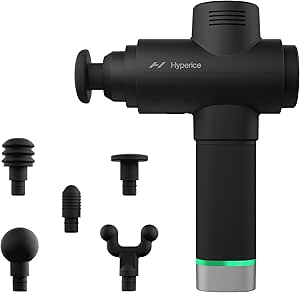
Hyperice Hypervolt 2 Pro Handheld Percussion Massage Gun

Bowflex SelectTech 840 Adjustable Kettlebell
As an affiliate, we earn on qualifying purchases.
How BMI Thresholds Entered the Debate
The World Health Organization set lower BMI action points of 23 and 27.5 for Asian populations in 2004, according to Saeed. The article says these points reflect evidence that some Asian populations may develop type 2 diabetes and cardiovascular disease at lower BMI levels than white populations. BMI is a screening measure and does not directly measure body fat distribution or determine an individual diagnosis.
Saeed also cites the ADA’s 2026 Standards of Care, which she says instruct clinicians to confirm excess adiposity using cutoffs appropriate to ethnicity, and a 2026 update to Asian-specific waist and BMI thresholds for diagnosing obesity. She contrasts that clinical guidance with trial entry criteria and payer forms that, in her account, continue to use BMI values of 30 and 27. The article says the FDA-approved labels for Wegovy and Zepbound describe eligibility using the terms obesity and overweight with a weight-related condition, while numeric cutoffs remain in trial descriptions and authorization processes. The source does not reproduce individual insurer policies, which can differ.
For evidence about treatment below BMI 30, the article points to the 2025 STEP 11 study in South Korea and Thailand. Participants entered under a local obesity definition of BMI 25 or higher; the report says those given semaglutide lost 16% of body weight, compared with 3.1% for placebo. A post hoc analysis of 68 participants who began below BMI 30 found reported weight loss of 17.6% among 45 semaglutide recipients and 4.4% among 23 placebo recipients. Those results describe a study group and do not set U.S. coverage policy.
““The ADA guideline that flags me for annual diabetes screening and the prior authorization form that denies me the drug are describing the same 26.5. Only one of them was written with an Asian body in mind.””
— Hamayle Saeed, MD, in a MedPage Today opinion article
Coverage Decisions Still Vary
The opinion article does not provide the records needed to independently verify Saeed’s individual denial, including the insurer’s authorization criteria, the precise drug requested or the stated reason for rejecting coverage. It also does not establish whether the decision reflected an insurer rule, a clinical judgment, a plan exclusion or another factor. Coverage can differ by plan and program, and the source does not give a complete account of current policies.
It remains unclear whether the studies cited will lead to changes in FDA labeling, clinical recommendations or payer rules. The trial results and population-level comparisons do not settle which BMI threshold should apply to every patient, nor do they show that GLP-1 treatment is appropriate for all people screened at lower BMI values. The supplied article ends during its discussion of race-based medicine, so its full argument and conclusion are not available here.
Policy Changes Remain Uncertain
The immediate next step for patients is to establish the criteria that apply to their particular prescription and coverage: the medication’s current indication, the insurer’s prior authorization form, and any applicable plan exclusions or appeal process. Decisions about treatment should be made with a qualified clinician who can assess an individual’s health and the available options.
For policymakers and health systems, the issue raised by Saeed’s article is whether clinical guidance and reimbursement rules should account for population-specific risk and evidence from trials involving patients at lower BMI. The source does not report a pending national rule change or a scheduled review by FDA, ADA or insurers. Any policy shift, and whether it changes access in practice, remains to be seen.
Key Questions
What happened in the report?
In a MedPage Today opinion article published Oct. 31, 2026, physician Hamayle Saeed said she was screened for diabetes under guidance for Asian Americans at BMI 23 but was denied a GLP-1 at BMI 26.5 because she did not meet the eligibility thresholds applied to her.
Why does the article compare BMI 23 with 30?
The article says the lower figure relates to diabetes screening for Asian Americans, while BMI 30—or 27 with a weight-related condition—is the threshold Saeed says was used to assess her access to a GLP-1. Screening and medication coverage are separate decisions.
Does a BMI below 30 mean someone cannot receive a GLP-1?
Not necessarily. Eligibility depends on the drug’s indication, the patient’s health circumstances and the applicable coverage policy. Saeed describes her own denial; the article does not establish a universal rule for every medication or insurer.
What evidence does the article cite about treatment below BMI 30?
It cites the 2025 STEP 11 study in South Korea and Thailand, including a post hoc analysis of 68 participants who began below BMI 30. The reported study results do not, on their own, determine U.S. prescribing or insurance coverage.
Have insurers changed their rules in response?
The source does not report a new national policy or a confirmed insurer response to the research. It says some Medicaid programs reduced weight-loss GLP-1 coverage and argues that payer forms can retain numeric cutoffs; specific policies and exceptions vary.
Source: medpagetoday.com