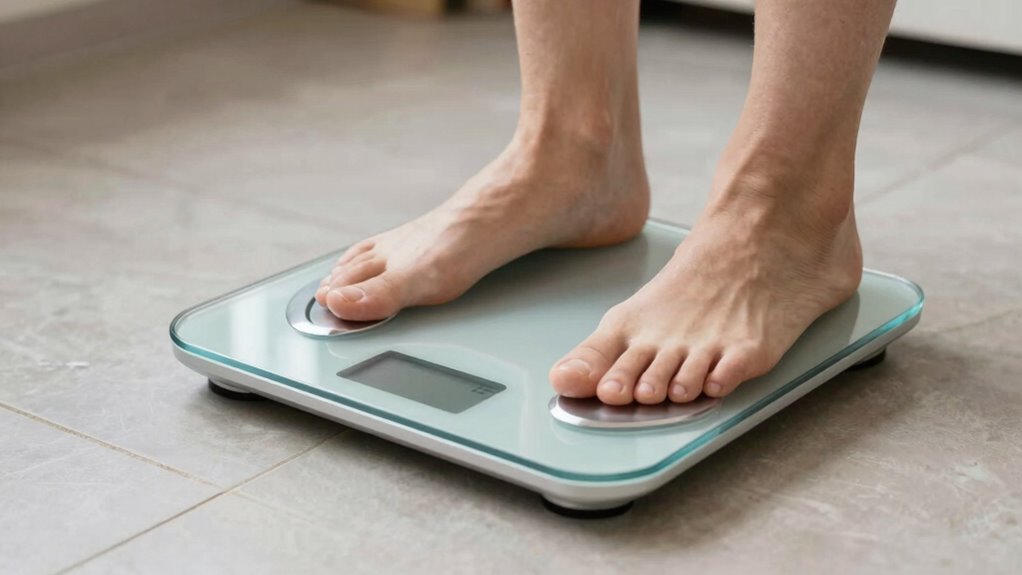

Smart scales use bioimpedance to estimate your body composition by sending a small electrical current through your body, revealing muscle, fat, and hydration levels. While they provide useful trends and insights, their accuracy depends on consistent testing conditions like hydration, time of day, and posture. Factors like recent activity or food intake can affect results. To get the most out of your scale, understanding its limits helps you interpret your progress better—more details are ahead.

Get health and wellness essentials delivered free with Prime
- Fast, free delivery on millions of items
- Prime Video, Amazon Music and more included
- Member-only deals all year
Key Takeaways
- Bioimpedance measures body composition by sending a low electrical current and estimating fat, muscle, and bone based on resistance.
- It provides useful trend data but is affected by hydration, recent activity, and measurement conditions.
- Smart scales can estimate metrics like BMR and hydration but cannot deliver precise clinical diagnoses.
- Consistent testing conditions improve reliability, but results should be interpreted cautiously due to variability.
- They are helpful for tracking changes over time but should not replace comprehensive medical assessments.
As an affiliate, we earn on qualifying purchases.
How Do Smart Scales Measure Body Composition Using Bioimpedance?
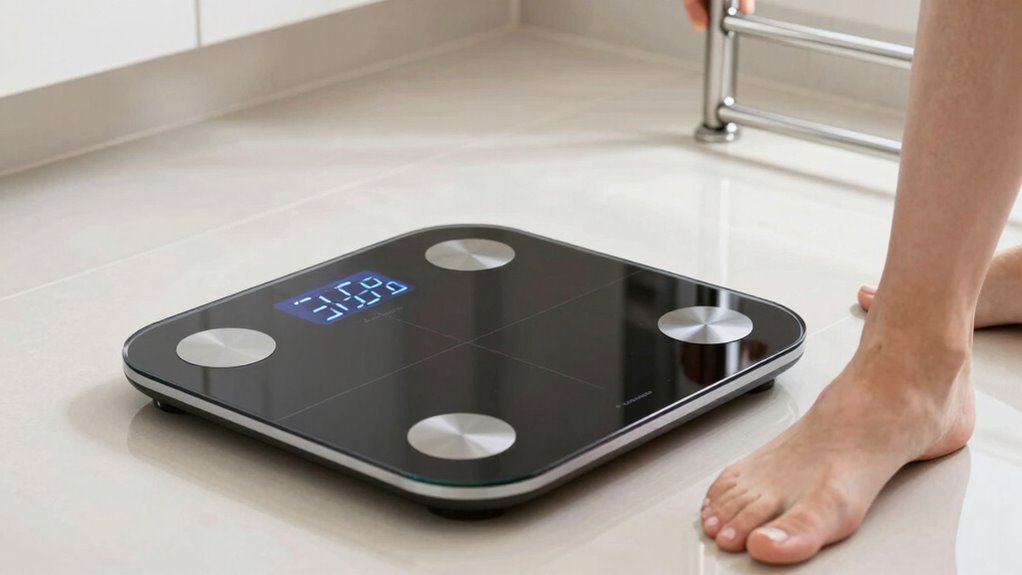
Smart scales measure your body composition by sending a small, harmless electrical current through your body using bioimpedance. This process estimates your muscle mass and fat percentage by analyzing how the current travels through different tissues. Since muscle conducts electricity better than fat, the scale detects variations in resistance to calculate these metrics accurately. When you stand on the scale, sensors send a low-level current that travels between your legs and, if your scale supports full-body measurements, through your arms. The scale then uses this data to estimate your muscle mass, which reflects your lean tissue, and your fat percentage. Keep in mind, factors like hydration levels can influence these readings, so for consistent results, measure under similar conditions. Regular calibration and proper testing procedures can improve measurement accuracy, especially if the device requires Portable Appliance Testing (PAT) or other safety checks. Additionally, understanding the bioimpedance process can help you interpret your results more effectively and recognize its limitations. Being aware of how hydration levels impact the readings can further enhance your understanding of your body composition data. Incorporating knowledge about body water content can also help you better interpret fluctuations in your measurements over time.
What Types of Data Can You Expect From a Smart Scale?
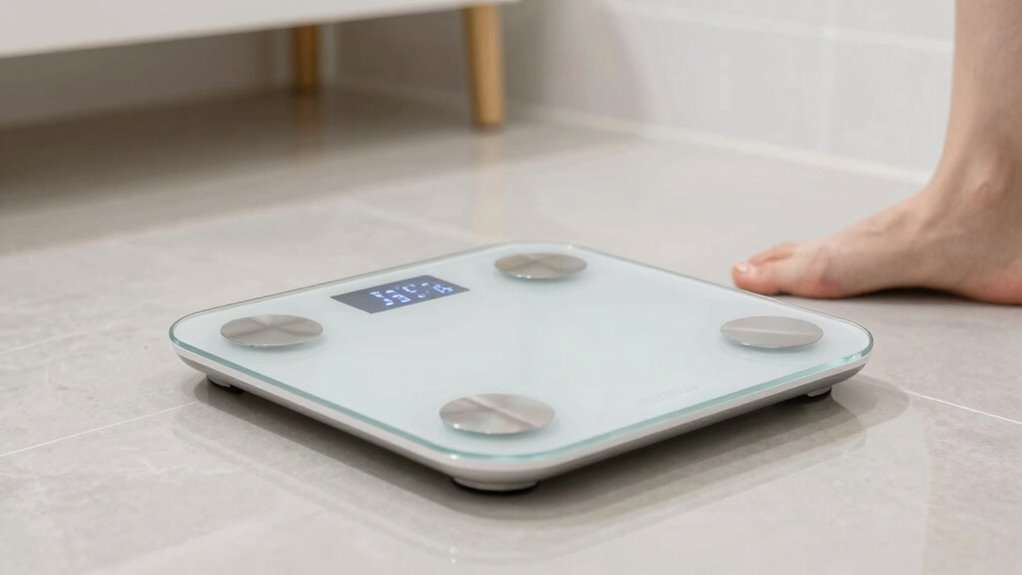
When you step on a smart scale, you can expect to see more than just your weight. It provides body composition metrics like muscle mass and body fat percentage, giving you a clearer picture of your health. Additionally, it offers hydration level indicators and estimates your basal metabolic rate to help guide your fitness journey. Understanding body composition analysis can further improve your interpretation of visual data, especially when analyzing images or charts related to your progress. Incorporating accurate measurement techniques ensures that the data you receive is reliable and meaningful. Recognizing the importance of bioimpedance technology can help you better understand the limitations and advantages of these measurements. By considering energy expenditure estimates, you can better tailor your diet and exercise plans to meet your goals.
Body Composition Metrics
Body composition metrics provide a detailed snapshot of your health beyond just weight. When you step on a smart scale, it estimates data like muscle mass, which reflects your strength and fitness, and bone density, indicating bone health and density. These metrics help you understand how your body is changing over time, whether you’re gaining muscle or losing fat. Smart scales use bioimpedance to measure how your body conducts a small electrical current, giving insights into these components. While not as precise as clinical tools, these metrics can motivate you to improve your fitness and monitor progress. Additionally, some models incorporate advanced sensors, which can enhance measurement reliability under certain conditions. Factors like hydration levels or recent activity can influence readings, so use these data points as general guides rather than absolute truths. Regular use and understanding of measurement accuracy can help you interpret your results more effectively over time. Incorporating data synchronization with other health devices can further improve the consistency and usefulness of your health metrics. Moreover, understanding the limitations of bioimpedance can help set realistic expectations for your health tracking.
Hydration Level Indicators
Hydration level indicators are a common feature on many smart scales, providing insights into your body’s fluid balance. These readings can help you understand your electrolyte balance and whether you’re experiencing fluid retention. By measuring bioimpedance, the scale estimates the amount of water in your body, which reflects hydration status. Proper hydration is essential for overall health, athletic performance, and recovery. If your scale shows low hydration levels, it might suggest dehydration, while high readings could indicate excess fluid retention. Keep in mind that factors like recent meals, exercise, and environmental conditions can influence these measurements. Regularly tracking hydration levels can help you make informed decisions about your fluid intake and overall wellness. Additionally, understanding bioimpedance can improve your interpretation of these measurements, ensuring you use the data effectively. Recognizing the limitations of bioimpedance measurements can prevent misinterpretation and promote a more accurate understanding of your hydration status. Being aware of measurement variability can further aid in making more consistent assessments over time, especially when considering factors like hydration fluctuations that naturally occur throughout the day. Incorporating knowledge about body composition can also enhance your understanding of what the scale’s readings truly represent.
Basal Metabolic Rate
Smart scales go beyond hydration levels by also providing data on your Basal Metabolic Rate (BMR). BMR indicates how many calories your body needs at rest to maintain essential functions like breathing and circulation. When your scale measures your muscle mass and fat percentage, it helps estimate your BMR more accurately. Higher muscle mass typically means a higher BMR, since muscle burns more calories than fat. Conversely, a higher fat percentage can lower your BMR, signaling the need for lifestyle adjustments. While these readings give you useful insights into your metabolism, remember they are estimates based on bioimpedance data. Bioimpedance measurements provide a non-invasive way to gather this information, but they are most effective when combined with a comprehensive understanding of your health. Understanding the limitations of bioimpedance can help you interpret your data more realistically. For example, factors like hydration levels and skin temperature can influence the accuracy of these readings. Use them as a guide alongside other health metrics to better understand your body’s energy needs and overall fitness.
Are Bioimpedance Body Fat and Hydration Measurements Accurate?
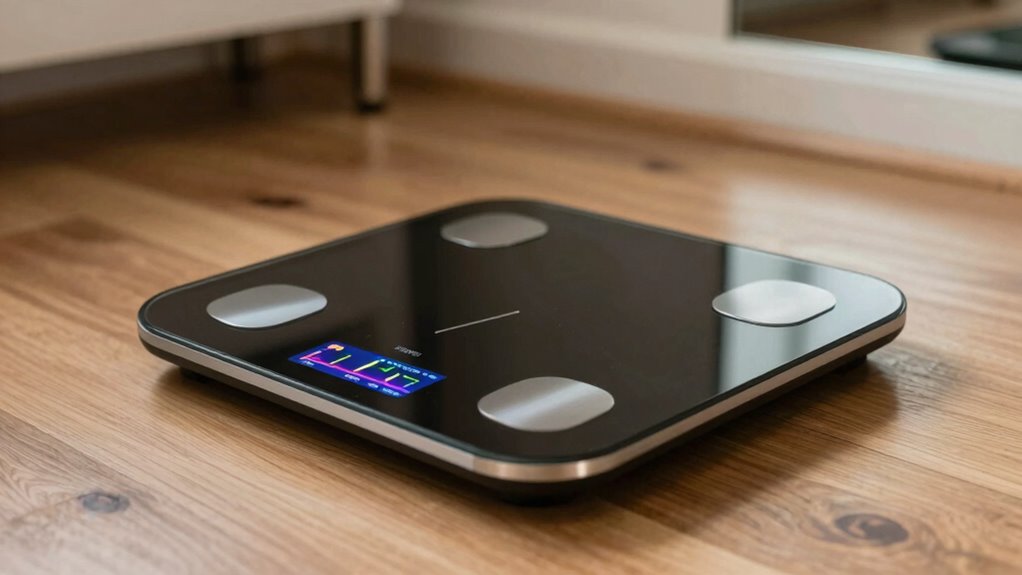
Bioimpedance measurements for body fat and hydration can vary due to factors like hydration levels and device differences. You might notice inconsistent results if your hydration fluctuates or if you switch between scales. Understanding these limitations helps you interpret your data more accurately. Regularly updating your running gear can also impact your hydration and performance readings. Being aware of measurement variability can help set realistic expectations for your progress. Additionally, ensuring proper device maintenance can improve the consistency of your readings. Recognizing how measurement conditions influence bioimpedance results can further aid in obtaining more reliable data.
Measurement Consistency Challenges
Measuring body fat and hydration levels with bioimpedance scales can be challenging because these readings often vary depending on numerous factors. Calibration challenges can impact accuracy, especially if your scale isn’t properly calibrated or differs from device to device. Consistent measurements require you to weigh yourself under similar conditions each time—such as at the same time of day and hydration status. User consistency is essential; small changes in posture, placement of your feet, or recent activity can skew results. These variables make it difficult to track progress reliably over time. While bioimpedance scales can offer useful trends, don’t rely solely on single readings for precise body composition assessments. Instead, aim for consistency in your measurement routine to improve overall reliability.
Influencing Hydration Levels
Because hydration levels fluctuate throughout the day, they can considerably affect the accuracy of body fat and hydration readings on bioimpedance scales. When you’re well-hydrated, the scale may underestimate body fat and overestimate muscle mass or bone density. Conversely, dehydration can lead to overestimating fat percentage and underestimating muscle mass. Factors like recent exercise, fluid intake, or even salt consumption impact hydration status. These changes alter the body’s electrical conductivity, which bioimpedance devices measure. While hydration influences the readings, variations in muscle mass and bone density also play roles. To improve accuracy, use your scale at the same time each day under consistent conditions, ideally in a rested state, to minimize hydration-related fluctuations.
Variability Among Devices
While bioimpedance scales offer a convenient way to monitor body composition, their measurements can vary considerably between different devices. This variability stems from factors like device calibration and user variability, making it hard to trust one scale for consistent results. Different scales may give conflicting body fat or hydration readings, even when used by the same person. Here’s a quick comparison:
| Feature | Device A | Device B |
|---|---|---|
| Calibration consistency | High | Moderate |
| User variability impact | Low | High |
| Measurement accuracy | Varies | Varies |
| Brand reliability | Established | Emerging |
| Overall reliability | Moderate | Fluctuating |
Understanding these differences helps you interpret readings more critically and avoid false conclusions.
What Factors Affect the Reliability of Bioimpedance Readings?
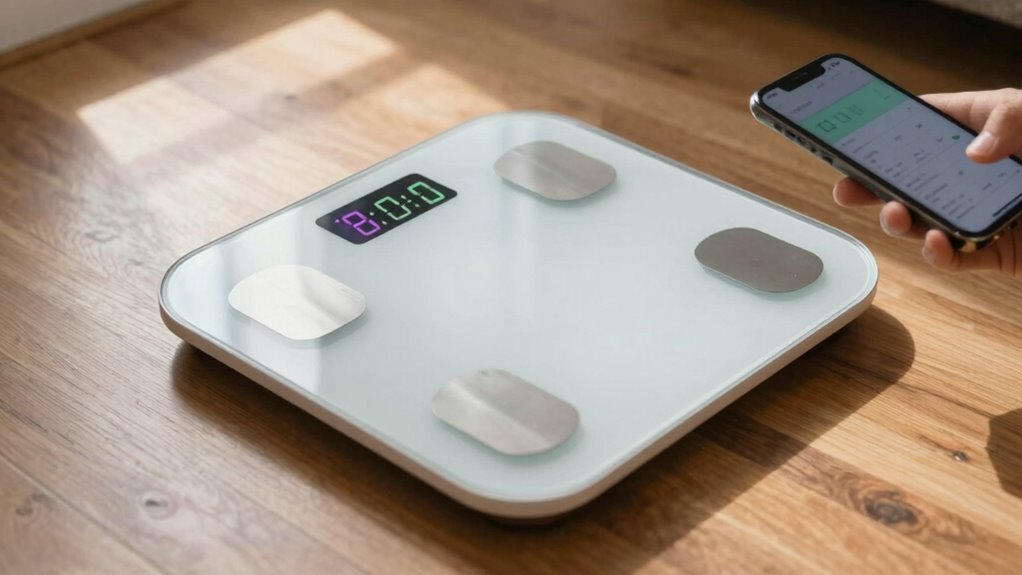
Several factors can influence the accuracy of bioimpedance readings, making it important to understand what can affect their reliability. Hydration fluctuations are a major factor; even small changes in your fluid levels can skew results. For example, being dehydrated or overly hydrated can cause readings to appear higher or lower than your actual body composition. Additionally, device calibration plays a pivotal role. If your smart scale isn’t properly calibrated, it may give inconsistent or inaccurate results over time. Ensuring your device is regularly calibrated and following consistent testing conditions—such as measuring at the same time of day and under similar hydration levels—helps improve reliability. Recognizing these factors allows you to interpret your bioimpedance readings more accurately and track meaningful changes over time.
What Bioimpedance Limitations Should You Know About?
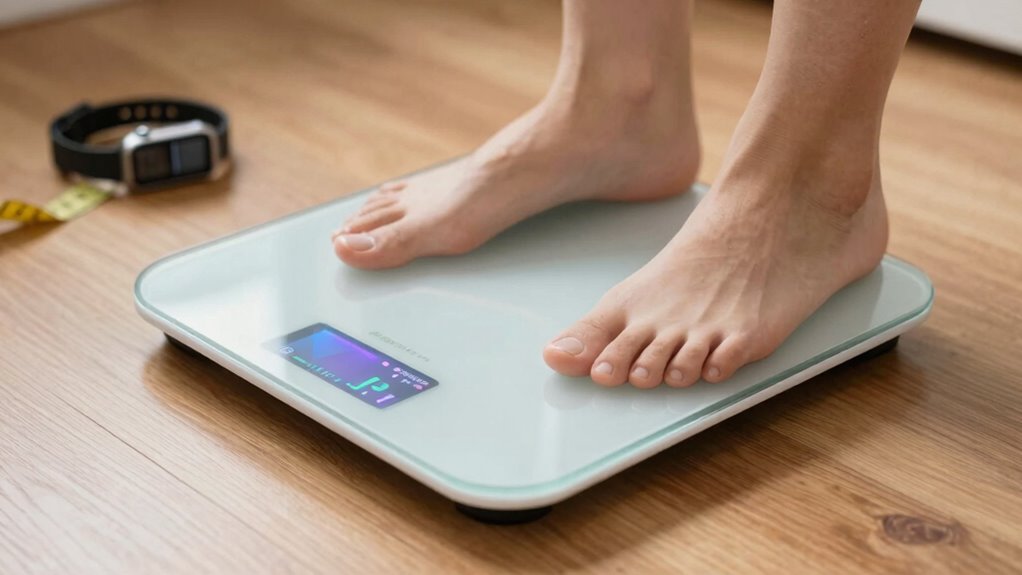
Bioimpedance measurements provide useful insights into body composition, but they come with inherent limitations that you should be aware of. Accuracy concerns can arise due to factors like hydration levels, recent exercise, or food intake, which affect readings. User variability also plays a role, as different individuals may see different results even with the same device. Keep in mind:
- Hydration status impacts measurement accuracy
- Time of day can cause fluctuations
- Body position during testing matters
- Recent physical activity skews results
- Device calibration and quality influence reliability
Understanding these limitations helps you interpret bioimpedance data more realistically. Remember, while useful, these measurements aren’t perfect and should be considered alongside other health indicators.
How Can You Make the Most of Your Smart Scale Data?
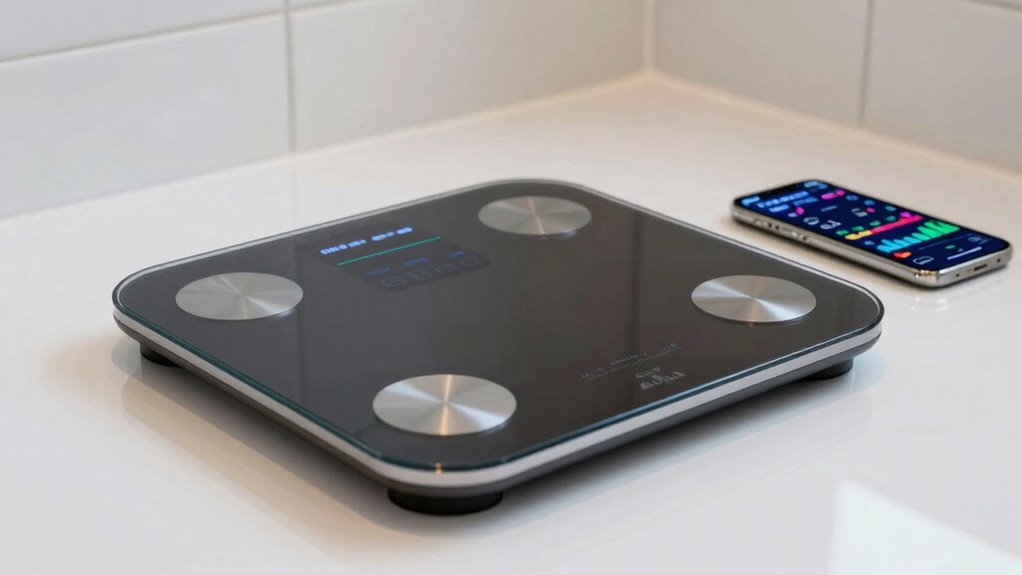
To get the most out of your smart scale data, focus on consistency and proper usage. Calibration issues can skew your results, so verify your scale is placed on a flat, hard surface and used at the same time each day. Avoid user errors like measuring immediately after eating or drinking, as hydration levels affect bioimpedance readings. Stick to a routine so that daily fluctuations reflect real changes, not inconsistencies. Keep your scale’s settings updated and follow manufacturer instructions carefully. Avoid stepping on with wet feet or moving the scale unexpectedly, as these user errors impact accuracy. By minimizing these issues, you’ll get more reliable data that helps you track progress effectively over time.
Are Smart Scales Worth Using for Your Fitness Goals?
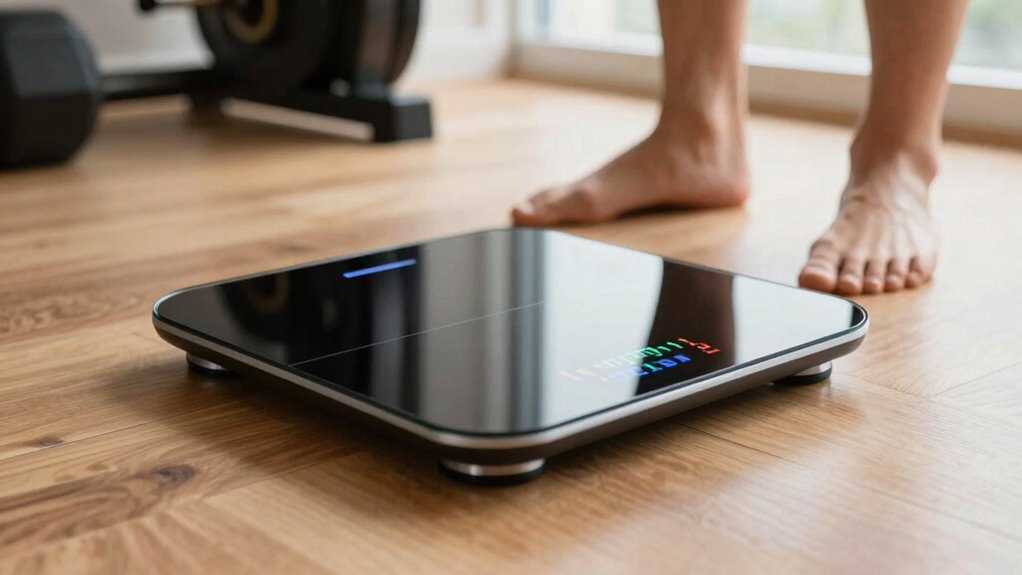
Are smart scales truly worth incorporating into your fitness routine? They can provide useful insights, but it’s vital to consider their limitations. Proper calibration procedures ensure accurate readings, which helps you track progress reliably. However, remember that data can vary based on hydration, meal timing, and other factors, so don’t rely solely on numbers. Also, think about user privacy—smart scales collect sensitive health information, so choose devices with strong data security. While they’re helpful for monitoring trends, smart scales shouldn’t replace extensive fitness plans. Ultimately, if you want consistent results, verify calibration procedures regularly and be mindful of your privacy. When used thoughtfully, they can enhance your understanding of your body’s changes without overestimating their precision.
Frequently Asked Questions
Can Bioimpedance Data Predict Long-Term Health Risks Accurately?
Bioimpedance data can give you some insights into your health risk, but it’s not highly accurate for long-term predictions. It measures things like body composition, which can indicate potential health issues, yet many factors influence your health over time. So, while it helps you monitor trends, don’t rely solely on it for long-term health risk assessments. Use it alongside other tools and medical advice for better accuracy.
How Do Hydration Levels Influence Bioimpedance Measurements?
Hydration levels notably influence bioimpedance measurements because hydration variability affects the electrical conductivity of your body. When you’re well-hydrated, measurements tend to be more accurate and consistent, but dehydration can lead to higher readings that misrepresent your true body composition. To guarantee measurement consistency, it’s best to measure under similar hydration conditions each time, ideally at the same time of day and after consistent fluid intake.
Are There Specific Conditions That Interfere With Smart Scale Accuracy?
Imagine trying to hear a whisper in a noisy room—electrode contact issues and electrical interference can distort your smart scale readings. When contact isn’t firm or electrodes aren’t properly aligned, the signals get scrambled, like static on a radio. Likewise, nearby electronic devices can send disruptive electrical signals, making measurements unreliable. To get accurate results, guarantee good electrode contact and keep electronic gadgets away during your weigh-in.
How Often Should I Calibrate or Update My Smart Scale?
You should check your smart scale’s calibration frequency every few months to guarantee accuracy, especially if you notice inconsistent readings. Regular scale maintenance, like placing it on a flat, hard surface and keeping it clean, also helps. If your scale has a calibration feature, follow the manufacturer’s instructions to recalibrate as needed. Updating the app or firmware periodically can improve performance and measurement reliability.
What Are the Best Practices for Interpreting Bioimpedance Data?
Did you know bioimpedance measurements can vary by up to 8%? To interpret data accurately, focus on measurement consistency—use your scale at the same time daily and under similar conditions. Always consider data in context, like hydration levels and recent activity, to avoid misleading conclusions. Tracking trends over time gives you a clearer picture of progress, rather than fixating on single measurements.
Conclusion
Smart scales are like tools in a toolbox—useful for guidance but not infallible. They can give you a general sense of your body composition, but don’t rely on them for pinpoint accuracy. Keep in mind their limitations, and focus on long-term trends rather than day-to-day numbers. With consistent use and realistic expectations, your smart scale can be a helpful partner—like a compass guiding you through your fitness journey, not the destination itself.
Halloween Picks
halloween
As an affiliate, we earn on qualifying purchases.