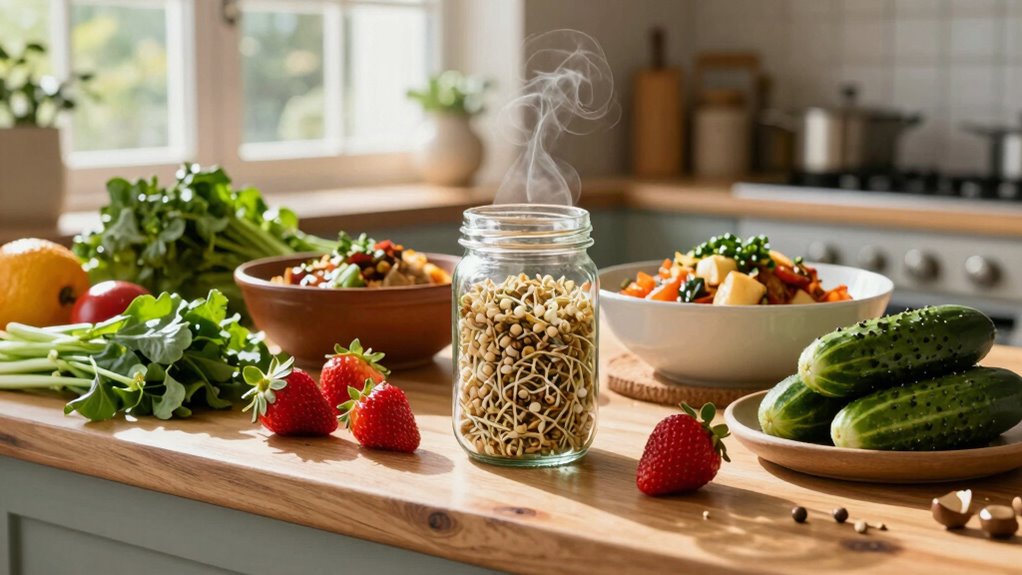

To start raw eating in a household full of cooked food, begin by introducing one raw meal a day, like a vibrant salad or smoothie. Showcase seasonal fruits and veggies to pique interest. Encourage family involvement by hosting a raw food night where everyone contributes a dish. Share the benefits of raw eating, like increased energy and creativity in meal planning. As you experiment and engage, you’ll find it easier to make raw foods a regular part of your diet.

Get health and wellness essentials delivered free with Prime
- Fast, free delivery on millions of items
- Prime Video, Amazon Music and more included
- Member-only deals all year
Key Takeaways
- Begin with one raw meal a day to gradually introduce raw foods into your family’s routine.
- Involve everyone by hosting a raw food night where each person contributes a dish.
- Create vibrant salads and smoothies to showcase the flavors of seasonal produce.
- Share the benefits of raw eating with your household to spark curiosity and interest.
- Experiment with recipes and alternatives, like zucchini noodles, to keep meals exciting and diverse.

Raw eating can be be a revitalizing way to nourish your body with whole, unprocessed foods. If you’re living in a household where cooked meals dominate, it might feel challenging at first to embrace this lifestyle. However, with some thoughtful raw meal planning and a focus on seasonal produce, you can seamlessly incorporate raw eating into your daily routine.
Start by evaluating what’s available in your kitchen. Look for fruits and vegetables that are in season. Not only are they fresher and tastier, but they’re also more nutritious. When you plan your meals, think about how you can use these seasonal ingredients creatively. For instance, you could whip up a vibrant salad with leafy greens, ripe tomatoes, and cucumbers, drizzled with a homemade dressing. This not only satisfies your hunger but also showcases the natural flavors of the produce.
Evaluate seasonal fruits and vegetables in your kitchen to create vibrant, nutritious meals that celebrate their natural flavors.
Next, ease into raw eating by gradually integrating it into your meals. You don’t have to go fully raw overnight. Try dedicating one meal a day to raw foods—maybe breakfast or lunch. Smoothies can be a great starting point. Blend up some leafy greens with bananas, berries, and a splash of almond milk for a delicious, nutrient-packed option that everyone can enjoy. You can even add a scoop of nut butter or seeds for extra energy. Incorporating seasonal produce into your raw recipes can make the transition more enjoyable and sustainable. Additionally, understanding the benefits of consuming whole, unprocessed foods can help reinforce your motivation and commitment to this approach.
As you get comfortable, experiment with different raw recipes. Discovering creative ways to prepare your meals will keep you engaged and excited. Zucchini noodles topped with a homemade marinara sauce made from sun-dried tomatoes can be a delightful alternative to pasta. You’ll find that raw foods can be just as satisfying, and soon, you might even have your family interested in joining you.
Consider involving your household in your raw meal planning. Share the benefits of raw eating and invite them to explore new recipes with you. Maybe you can host a raw food night where everyone brings a dish. This can spark curiosity and open up conversations about healthy eating habits. Additionally, understanding the benefits of consuming whole, unprocessed foods can motivate you to stay committed to this lifestyle.
Finally, understanding the importance of whole, unprocessed foods can motivate you to stay committed to this lifestyle. Listen to your body. Observe how you feel after incorporating raw meals. You might find that your energy levels increase, and your cravings for processed foods decrease. Embracing raw eating in a cooked-food environment is achievable. With some planning, creativity, and a focus on seasonal produce, you can nourish your body and inspire those around you.
Frequently Asked Questions
Can I Eat Raw Food if I Have Dietary Restrictions?
Yes, you can absolutely eat raw food even with dietary restrictions. Focus on raw food benefits like increased nutrients and better digestion. You’ll need to make dietary adaptations, choosing fruits, vegetables, nuts, and seeds that fit your needs. Experiment with different combinations to find what works best for you. It’s all about balance and ensuring you’re getting the nutrients you require while enjoying the freshness of raw foods.
How Do I Deal With Cravings for Cooked Food?
Did you know that about 70% of people experience cravings for cooked food when switching diets? To manage those cravings, focus on satisfying your hunger with raw alternatives. Keep fresh fruits and crunchy veggies on hand as snacks. Experiment with raw dishes that mimic cooked favorites, like zucchini noodles or raw pizza. Staying hydrated and mindful of your cravings can also help you resist temptation and stick to your raw eating goals.
What Kitchen Tools Do I Need for Raw Eating?
You’ll need a few essential kitchen tools for raw eating. A high-quality blender is a must; it opens up a world of smoothies, soups, and sauces, showcasing the blender benefits. Consider a food processor for salads and dips, and invest in sprouting seeds for fresh, nutritious additions to your meals. Don’t forget cutting boards and sharp knives for your fruits and veggies. With these tools, you’ll make raw eating easy and enjoyable!
How Can I Ensure I’m Getting Enough Protein?
Think of your body as a garden; it thrives on diverse nutrients. To guarantee you’re getting enough protein, focus on plant protein sources like nuts, seeds, and legumes. Raw smoothies packed with spinach, hemp seeds, and nut butter can be a delicious way to boost your intake. Experiment with flavors and combinations, and you’ll find it easy to nourish your body while enjoying the vibrant energy of raw eating.
Is Raw Eating Safe for Children and Pregnant Women?
Yes, raw eating can be safe for children and pregnant women, but you’ve got to guarantee nutritional balance. Raw food benefits include increased vitamins and enzymes, which support overall health. However, focus on a variety of foods to meet protein, calcium, and iron needs. It’s essential to consult a healthcare provider to tailor a plan that works for everyone, assuring safety and nutritional adequacy in their diets.
Conclusion
Starting a raw eating journey in a household filled with cooked meals can feel like planting seeds in rocky soil. But with patience and persistence, those seeds can thrive. Embrace the vibrant flavors and textures of fresh fruits and veggies, and invite your loved ones to join you in this colorful adventure. Remember, every small step counts, and soon, your kitchen can bloom into a haven of health, inspiring everyone around you to explore new tastes together.
Fall Picks
fall essentials
As an affiliate, we earn on qualifying purchases.