
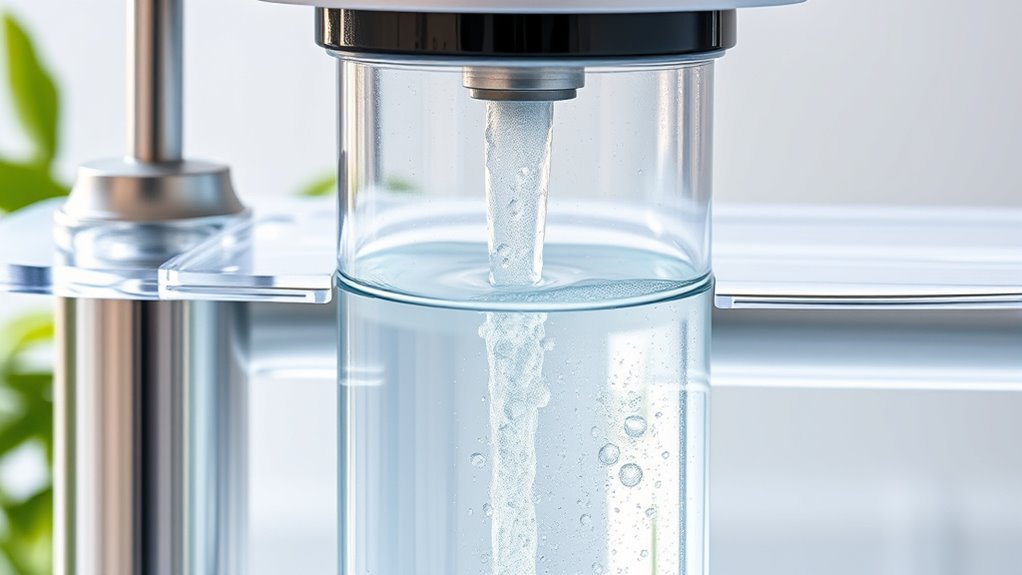

Reverse osmosis does an excellent job of stripping contaminants out of your water, but it strips the healthy minerals out too, which is why the water can taste flat and slightly acidic. That’s where remineralization filters come in: a final stage that adds calcium and other minerals back and nudges the pH upward before the water reaches your glass. In this comparison, I looked at three options through that specific lens. The iSpring RCC7AK-BN stands out as my overall pick thanks to its NSF/ANSI 58 certification and transparent first-stage housing, while the iSpring RCC7AK-BLK makes sense if you want the same filtration with a black faucet to match a modern kitchen. The GE FQ18RT plays a completely different role — it’s a replacement cartridge, not a full system — so it only fits if you already own a compatible GE unit. The main tradeoff across the board: full systems demand under-sink space and regular maintenance, while the cartridge route is effortless but locked to specific GE models.

Get health and wellness essentials delivered free with Prime
- Fast, free delivery on millions of items
- Prime Video, Amazon Music and more included
- Member-only deals all year
Key Takeaways
- The iSpring RCC7AK-BN is the best all-around choice: a full 6-stage under-sink system with NSF/ANSI 58 certification, alkaline remineralization, and a transparent first-stage housing you can visually inspect.
- The iSpring RCC7AK-BLK offers the same 6-stage filtration and remineralization as the RCC7AK-BN but swaps in a black faucet and lifetime technical support — pick it purely on kitchen aesthetics.
- The GE FQ18RT is not a standalone system; it’s a calcium remineralization cartridge for existing GE GXRV40TBN, GXRQ18NBN, and GNRQ18NBN systems, with a long 12-month replacement cycle.
- Both iSpring units need under-sink space and periodic filter changes (starting at a 6-month cycle), so measure your cabinet and budget for maintenance before buying.
- If you don’t already own a compatible GE system, the FQ18RT is irrelevant — it cannot be retrofitted to other brands.
| iSpring RCC7AK-BN 6-Stage Alkaline Reverse Osmosis Water Filter System |  | Best Overall | Model: RCC7AK-BN | Filtration stages: 6 | Production capacity: 75 gallons per day | VIEW ON AMAZON | See Our Full Breakdown |
| iSpring RCC7AK-BN 6-Stage Alkaline Reverse Osmosis Water Filter System with Black Faucet |  | Best for Modern Kitchens | Certification: NSF/ANSI 58 | Stages: 6 | Purification method: Reverse osmosis with alkaline remineralization | VIEW ON AMAZON | See Our Full Breakdown |
| GE FQ18RT Reverse Osmosis Under Sink Remineralization & Replacement Filter |  | Best Replacement Cartridge | Model: FQ18RT | Filter type: Remineralization replacement cartridge | Compatible systems: GE GXRV40TBN, GXRQ18NBN, GNRQ18NBN | VIEW ON AMAZON | See Our Full Breakdown |
| ro systems with remineralization filter | Model | Certification | Installation type | Dimensions |
|---|---|---|---|---|
| iSpring RCC7AK-BN 6-Stage Alka | RCC7AK-BN | NSF/ANSI 58 | Under sink | 15.5 × 16 × 18 in |
| iSpring RCC7AK-BN 6-Stage Alka | — | NSF/ANSI 58 | Under sink | 15.5 × 16 × 18 in |
| GE FQ18RT Reverse Osmosis Unde | FQ18RT | — | — | — |
More Details on Our Top Picks
iSpring RCC7AK-BN 6-Stage Alkaline Reverse Osmosis Water Filter System
The RCC7AK-BN earns the top spot because it gets the fundamentals right where they matter most. The NSF/ANSI 58 certification covers the entire system, not just individual components, which gives independent backing to the contaminant-reduction claims that cheaper uncertified systems can only make in marketing copy. The 6-stage process ends with an alkaline remineralization stage that adds minerals back and balances pH, addressing the two most common complaints about RO water: flat taste and acidity.
What separates it from the nearly identical RCC7AK-BLK below is practicality. The transparent first-stage housing lets you see sediment buildup with a glance under the sink, so you replace filters based on actual condition rather than guesswork — a small design choice that removes the most annoying part of RO ownership. The top-mounted fastener and quick-fit connections also make installation more forgiving for someone doing it for the first time. Compared with the GE FQ18RT, this is the complete package: membrane, filters, faucet, and remineralization all in one purchase. The honest downside is maintenance cadence, with replacement filters on a 6-month cycle for the early stages, and it needs about 15.5 × 18 inches of clear under-sink space plus a reasonable operating pressure (around 70 psi) to perform at its rated 75 gallons per day.
Pros:- NSF/ANSI 58 certified for the entire system, not just individual stages
- Alkaline remineralization stage restores minerals and balances pH
- Transparent first-stage housing makes sediment buildup visible at a glance
- Top-mounted fastener and quick-fit connections simplify installation
Cons:- Replacement filters require regular changes starting at a 6-month cycle
- Needs roughly 15.5 × 18 inches of under-sink clearance
- No power needed means flow depends on household water pressure (~70 psi)
Best for: Homeowners who want a certified, complete under-sink RO system with real alkaline remineralization and don’t mind routine filter changes.
Not ideal for: Renters or anyone without adequate under-sink space, or buyers who want to avoid ongoing filter maintenance.
- Model:RCC7AK-BN
- Filtration stages:6
- Production capacity:75 gallons per day
- Certification:NSF/ANSI 58
- Installation type:Under sink
- Purification methods:Reverse osmosis, alkaline remin, activated carbon, carbon block
- Power source:No power needed
- Filter life cycle:6 months
- Dimensions:15.5 × 16 × 18 in
Our verdict“The most complete, best-verified way to get mineralized RO water at home, and the pick I’d default to.”
iSpring RCC7AK-BN 6-Stage Alkaline Reverse Osmosis Water Filter System with Black Faucet
Functionally, the RCC7AK-BLK is the same 6-stage filtration platform as my top pick: same 75-gallon-per-day class, same NSF/ANSI 58 certification, same under-sink footprint, and the same alkaline remineralization stage that puts minerals and balanced pH back into the water. If you lined up the filtered water from both iSpring units side by side, you would struggle to tell them apart.
So why does it rank second instead of first? Because the differences live entirely in the details, and one of them cuts both ways. The included black faucet is genuinely the right call if your kitchen has matte black fixtures or stainless finishes that a chrome spout would clash with — and since the faucet is the only visible part of an under-sink system, that aesthetic decision is the whole show. You also get lifetime technical support, which is a real advantage for a first-time installer who hits a snag mid-project. What you give up relative to the RCC7AK-BN is the transparent first-stage housing, so filter condition becomes a matter of calendar-tracking rather than a quick visual check. The under-sink space requirement is identical, so measure your cabinet before committing either way — that’s the most common reason this model gets returned.
Pros:- Same 6-stage RO and alkaline remineralization platform as the top pick
- Black faucet suits modern kitchen finishes where chrome would clash
- Lifetime technical support helps first-time installers
- Quick-fit connectors simplify the install process
Cons:- Lacks the transparent first-stage housing of the RCC7AK-BN
- Requires measuring under-sink space before purchase
- Installation still demands under-sink access and basic plumbing work
Best for: Buyers who want RCC7AK-BN-level filtration and remineralization but need a black faucet to match a modern kitchen finish.
Not ideal for: Anyone indifferent to faucet finish — the RCC7AK-BN’s transparent housing makes it the smarter default.
- Certification:NSF/ANSI 58
- Stages:6
- Purification method:Reverse osmosis with alkaline remineralization
- Installation type:Under sink
- Capacity:75 gallons
- RO membrane filtration:0.0001 microns
- Contaminant reduction:Up to 99% of over 1,000 contaminants
- Dimensions:15.5 × 16 × 18 in
Our verdict“A style-driven variant of the top pick — choose it for the black faucet, otherwise stick with the RCC7AK-BN.”
GE FQ18RT Reverse Osmosis Under Sink Remineralization & Replacement Filter
I’m including the FQ18RT because plenty of people searching for RO systems with remineralization already own a system — they just need to keep the mineral stage working. This is a single replacement cartridge, not a filtration system, and that distinction drives everything about who should buy it. It’s compatible only with the GE GXRV40TBN, GXRQ18NBN, and GNRQ18NBN reverse osmosis systems, so before anything else, confirm your model matches.
For owners of those systems, the FQ18RT does its job well. It restores calcium to the filtered water, which improves both taste and the mineral profile, and the 12-month replacement interval is refreshingly long compared with the 6-month cycles on the iSpring units’ early stages — that means less frequent shopping and less maintenance. Swapping it in requires no plumbing experience and no tools, which makes it the lowest-effort product in this lineup by a wide margin. The tradeoffs are structural: it’s a single pack, so you’ll be repurchasing annually, and it handles calcium only, without the broader alkaline pH-balancing the iSpring alkaline stages provide. And unlike the two systems above, it does nothing for someone starting from scratch — there’s no membrane, no faucet, no filtration of its own.
Pros:- Restores calcium for healthier, better-tasting water
- Tool-free replacement with no plumbing experience needed
- Long 12-month replacement interval
- Fits multiple GE reverse osmosis system models
Cons:- Single pack means repurchases every year
- Only compatible with three specific GE system models
- Adds calcium only, without the broader alkaline mineral blend of the iSpring stages
Best for: Owners of compatible GE GXRV40TBN, GXRQ18NBN, or GNRQ18NBN systems who need to replace their remineralization stage.
Not ideal for: Anyone without a compatible GE system, or buyers who need a complete RO setup from scratch.
- Model:FQ18RT
- Filter type:Remineralization replacement cartridge
- Compatible systems:GE GXRV40TBN, GXRQ18NBN, GNRQ18NBN
- Quantity:Single pack (1 cartridge)
- Replacement interval:Every 12 months
- Remineralizes:Calcium
- Installation:No plumbing experience required
Our verdict“The effortless choice for compatible GE owners — and pointless for everyone else.”

How We Picked
Because the entire point of this roundup is remineralization, I only considered options where the mineral-restoring stage is a genuine, integrated part of the design rather than an afterthought. From there, I judged each product on four things. First, certification and filtration quality — NSF/ANSI 58 certification matters because it independently verifies contaminant reduction claims. Second, how the remineralization stage works and what it adds back, whether that’s calcium alone or a broader alkaline mineral blend that also lifts pH. Third, ownership burden: installation difficulty, under-sink space requirements, and how often filters need replacing, since an RO system you neglect performs worse than no system at all. Finally, I weighted fit heavily — a replacement cartridge and a complete 6-stage system serve completely different buyers, so the ranking below reflects which purchase makes sense for which situation rather than a simple quality contest.
| ro systems with remineralization filter | Model |
|---|---|
| iSpring RCC7AK-BN 6-Stage Alka | RCC7AK-BN |
| iSpring RCC7AK-BN 6-Stage Alka | — |
| GE FQ18RT Reverse Osmosis Unde | FQ18RT |
Factors to Consider When Choosing Ro Systems With Remineralization Filters
Choosing between these three options comes down to two questions: are you starting from scratch or maintaining an existing system, and how much ongoing maintenance are you willing to take on?Full system vs. replacement cartridge
The most important fork in the road is whether you already own a compatible system. The two iSpring units are complete under-sink systems — membrane, pre-filters, post-filters, remineralization stage, and faucet all included. The GE FQ18RT is a cartridge only. If you have a GE GXRV40TBN, GXRQ18NBN, or GNRQ18NBN, the cartridge is the obvious buy. If you don’t, it physically cannot serve you, and one of the full systems is your only real option here.
What remineralization actually adds
RO membranes remove nearly everything from water, including dissolved minerals like calcium and magnesium. The iSpring systems use an alkaline remineralization stage that adds a mineral blend back and raises pH toward alkaline levels, which most people find improves taste. The GE cartridge restores calcium specifically. Neither approach makes a dramatic health difference on its own, but both address the flat, slightly acidic character that plain RO water is known for — which is the whole reason this category exists.
Space, pressure, and installation realities
Both iSpring systems share the same 15.5 × 16 × 18 inch footprint, and they need to sit under your sink with room for tubing and the storage tank. Measure first — this is the single most common fit problem. The RCC7AK-BN runs with no power needed, relying on household water pressure of roughly 70 psi; low-pressure households will see slower production than the rated 75 gallons per day. Quick-fit connectors on both iSpring models mean no soldering or gluing, but you’ll still drill a faucet hole and make a drain connection.
Maintenance cost of ownership
RO systems are filters first, and filters expire. The iSpring units need stage replacements starting on a 6-month cycle, with replacement availability guaranteed for three years after purchase. The GE cartridge lasts a full 12 months and swaps in without tools. Budget for replacements before you buy any system — a neglected RO unit loses both flow and filtration quality, and the remineralization stage itself goes inert when exhausted, quietly returning you to flat, mineral-free water.
Frequently Asked Questions
Does reverse osmosis remove the minerals I actually want in my water?
Yes, and that’s the central irony of RO filtration. The 0.0001-micron membrane strips out contaminants like lead, chlorine byproducts, and dissolved solids, but it doesn’t discriminate, so beneficial minerals like calcium and magnesium go right along with them. That’s why all three products in this roundup exist: each one restores minerals after the filtration stage. The iSpring systems use a broader alkaline blend that also lifts pH, while the GE cartridge focuses on calcium. If mineral content matters to you for taste or dietary reasons, an RO system without a remineralization stage is the wrong purchase.
Is remineralized RO water actually healthier than regular RO water?
The honest answer is that the difference is modest but real. Most people get the bulk of their calcium and magnesium from food, not water, so remineralization won’t transform your nutrition. Where it clearly helps is taste and pH: plain RO water tends to taste flat and runs slightly acidic, and adding minerals back corrects both. If you find you stop drinking water because RO tastes hollow, remineralization solves that problem, and better hydration is a genuine health benefit in its own right.
How often do I need to replace the filters in these systems?
It varies by stage and product. On the iSpring systems, the early sediment and carbon stages follow a 6-month replacement cycle, while the RO membrane and remineralization stages last longer — the company guarantees replacement filter availability for three years after purchase. The GE FQ18RT cartridge runs on a full 12-month interval. The RCC7AK-BN’s transparent first-stage housing lets you visually confirm when sediment buildup warrants a change rather than relying purely on the calendar, which is a genuine convenience advantage over its black-faucet sibling.
Can I install one of these systems myself, or do I need a plumber?
All three products are designed with DIY installation in mind. The iSpring systems use quick-fit connectors that don’t require soldering or gluing, and the RCC7AK-BN’s top-mounted fastener simplifies mounting. That said, a full under-sink install involves drilling a hole for the dedicated faucet, connecting to the cold water line, and making a drain connection for wastewater — allow a few hours if it’s your first time. The GE cartridge is the easiest of all: it twists in with no tools and no plumbing experience in a matter of minutes. If drilling into your countertop feels uncomfortable, a plumber handles the faucet step quickly.
Which of these three should I buy if I’m starting from zero?
If you don’t own any system today, the GE cartridge is off the table — it only works with three specific GE models. Between the two iSpring systems, the decision is aesthetic and practical. Default to the RCC7AK-BN for its transparent first-stage housing, which makes filter monitoring easier across years of ownership. Choose the RCC7AK-BLK only if a black faucet genuinely suits your kitchen better, since the internal filtration and remineralization performance are effectively identical. Either way, measure your under-sink cabinet before ordering.
Conclusion
After comparing all three, the decision tree is straightforward. Starting from scratch? Buy the iSpring RCC7AK-BN — the full-system certification, transparent filter housing, and alkaline remineralization stage make it the most balanced long-term choice. Have a modern kitchen with black fixtures? The iSpring RCC7AK-BLK delivers identical water quality and adds lifetime technical support; just accept that you’ll track filter changes by calendar instead of by sight. Already own a GE GXRV40TBN, GXRQ18NBN, or GNRQ18NBN? Skip both systems and grab the GE FQ18RT — a 12-month, tool-free cartridge swap that keeps your mineral stage working for minimal effort and cost. Whichever route fits your situation, don’t buy an RO system without remineralization unless flat, acidic water is something you’re genuinely happy to drink.
Cold & flu season Picks
humidifiers
As an affiliate, we earn on qualifying purchases.