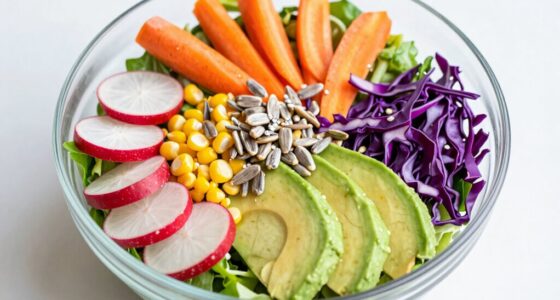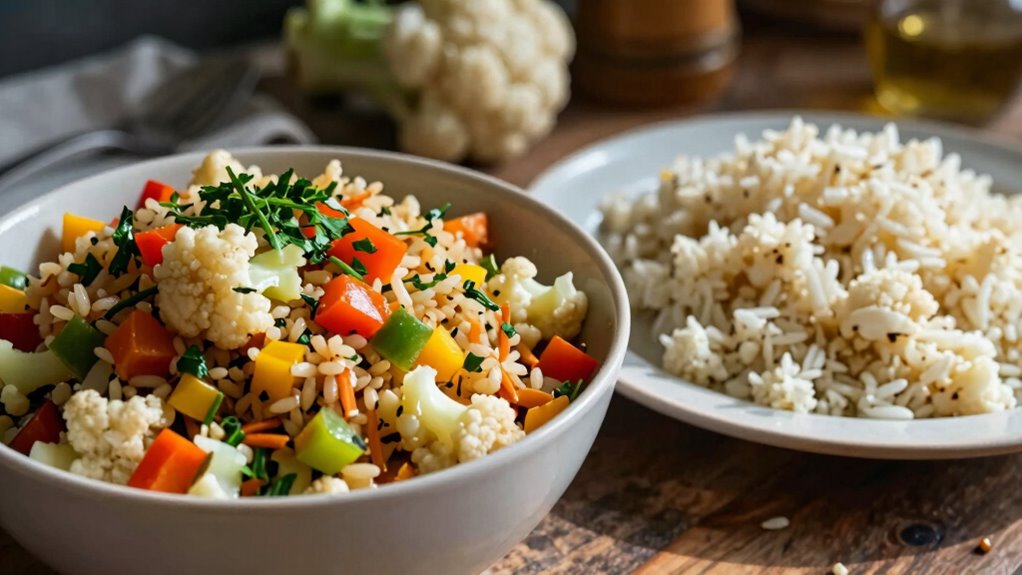

Cauliflower rice works well in dishes with vibrant flavors and textures that complement its mild taste, like stir-fries and salads. Its unique crunch adds interest but can clash with creamy or rich dishes, such as risottos. Without proper seasoning, it might taste bland, failing to elevate your meal. Understanding dish compatibility can make a big difference in your cooking outcomes. Explore how flavor balance and texture can transform your use of cauliflower rice for the best results.

Get health and wellness essentials delivered free with Prime
- Fast, free delivery on millions of items
- Prime Video, Amazon Music and more included
- Member-only deals all year
Key Takeaways
- Cauliflower rice’s mild flavor excels in vibrant dishes but can be overshadowed in rich, robust cuisines like curry.
- Its unique crunch enhances salads and grain bowls but may clash with creamy textures in dishes like risotto.
- Proper seasoning is essential, as cauliflower rice absorbs flavors well but remains bland without herbs and spices.
- Compatibility with certain cuisines, such as Asian and Mediterranean, supports better integration than traditional Italian dishes.
- Nutritional benefits make it appealing for health-conscious eaters, though its low-calorie nature may be redundant in nutrient-dense meals.

Cauliflower rice has quickly become a favorite among those looking to add a healthy twist to their meals. Its appeal lies not only in its low-carb profile but also in its versatility. However, you might find that it works beautifully in some dishes while falling flat in others. Understanding why that happens can enhance your cooking and meal planning.
One key factor is flavor balance. When you’re using cauliflower rice as a substitute for traditional grains, you need to take into account how its mild flavor interacts with other ingredients. In a stir-fry, for example, the vibrant flavors of garlic, soy sauce, and vegetables can elevate cauliflower rice, making it a perfect fit. But in a dish where you rely on a robust base, like a rich curry, the subtle taste of cauliflower might get lost. You’ll want to choose your dishes carefully to guarantee that the flavor profile complements this ingredient.
Texture contrast is another important aspect. Cauliflower rice offers a unique crunch that can enhance dishes. For instance, in salads or grain bowls, it can provide a rejuvenating bite. However, if you’re making a dish that relies on creamy or smooth textures, like risotto, the grainy quality of cauliflower rice may disrupt the expected mouthfeel. You’ll need to adapt your cooking techniques to make sure the texture works harmoniously with the rest of your ingredients. Additionally, understanding the culinary compatibility of cauliflower rice can help you select dishes where its texture will shine. Knowing how different cooking methods affect the texture, such as roasting or sautéing, can also be beneficial. It’s also helpful to consider cooking techniques that maximize its desirable qualities.
Seasoning strategies also play a significant role in whether cauliflower rice succeeds or fails in your dish. Since it’s relatively bland on its own, it absorbs flavors well, but it needs a good dose of seasoning. In a savory casserole, for example, if you skip on herbs and spices, the dish can taste underwhelming. Experimenting with seasonings can make a big difference, transforming a simple dish into something memorable.
Dish compatibility is essential. Some cuisines naturally lend themselves to cauliflower rice—think Asian or Mediterranean flavors—while others may not. If you’re creating a traditional Italian dish, for example, you might struggle to make cauliflower rice fit seamlessly. Additionally, considering the cultural context of the dish can help determine if cauliflower rice is an appropriate substitute. Recognizing the cultural relevance of ingredients can guide you in making suitable substitutions that respect traditional flavors.
Finally, reflect on the nutritional benefits. Cauliflower rice is low in calories and high in vitamins, making it a great option for health-conscious eaters. However, if you’re serving it in a dish that’s already nutrient-dense, its benefits may seem redundant.
cauliflower rice stir-fry seasoning set
As an affiliate, we earn on qualifying purchases.
As an affiliate, we earn on qualifying purchases.
Frequently Asked Questions
Is Cauliflower Rice a Low-Carb Alternative to Regular Rice?
Yes, cauliflower rice is a low-carb alternative to regular rice. It offers low carb benefits, making it a great choice if you’re watching your carbohydrate intake. Depending on the texture variations you prefer, you can pulse it in a food processor for a finer consistency or chop it coarsely. Different cooking methods, like sautéing or steaming, can enhance its flavor, ensuring it fits well into your favorite dishes. Enjoy experimenting with it!
How Do You Properly Store Leftover Cauliflower Rice?
To properly store leftover cauliflower rice, use airtight containers or resealable bags. Make sure it’s cooled to room temperature before sealing. Refrigerated, it’ll last about 3 to 5 days, while freezing can extend its shelf life to 1 to 2 months. When you’re ready to use it, just thaw in the fridge overnight or microwave it directly. Proper storage methods keep it fresh and tasty for your next meal!
Can You Freeze Cauliflower Rice for Later Use?
Yes, you can freeze cauliflower rice for later use. In fact, studies show that frozen vegetables can maintain their nutrients just as well as fresh ones. To preserve its quality, use proper freezing techniques: blanch the cauliflower rice briefly, cool it, then pack it into airtight containers for meal prep. This way, you can enjoy quick, healthy meals anytime, without sacrificing flavor or nutrition. Just thaw it before use, and you’re all set!
What Are the Nutritional Benefits of Cauliflower Rice?
Cauliflower rice offers impressive nutritional benefits. It’s low in calories, making it great for weight management. You’ll love its high fiber content, which aids digestion and keeps you full longer. Plus, it’s rich in vitamins C and K, boosting your immune system and bone health. Don’t forget its antioxidant properties, helping combat free radicals in your body. Incorporating cauliflower rice into your meals can enhance both nutrition and overall health.
How Can I Make Cauliflower Rice Taste Better?
To make cauliflower rice taste better, don’t worry if you think it’ll be bland. Start by sautéing it with garlic and onion for depth. Experiment with seasoning techniques like adding soy sauce, lime juice, or fresh herbs. Try different cooking methods, too—roasting can enhance its flavor. You can even mix it with other veggies or proteins for a delicious twist. With these tips, you’ll elevate your cauliflower rice game!
Conclusion
Incorporating cauliflower rice can elevate certain dishes while falling flat in others. For instance, it shines in stir-fries but struggles in creamy risottos where its texture can’t mimic traditional rice. Curiously, a study found that 54% of people who try cauliflower rice enjoy it as a healthier alternative. So, as you experiment with this versatile ingredient, remember to reflect on the dish’s overall texture and flavor profile for the best results. Happy cooking!
Halloween Picks
halloween
As an affiliate, we earn on qualifying purchases.