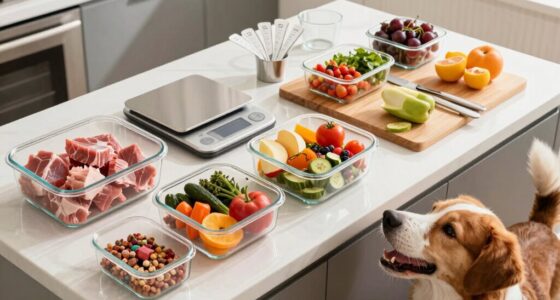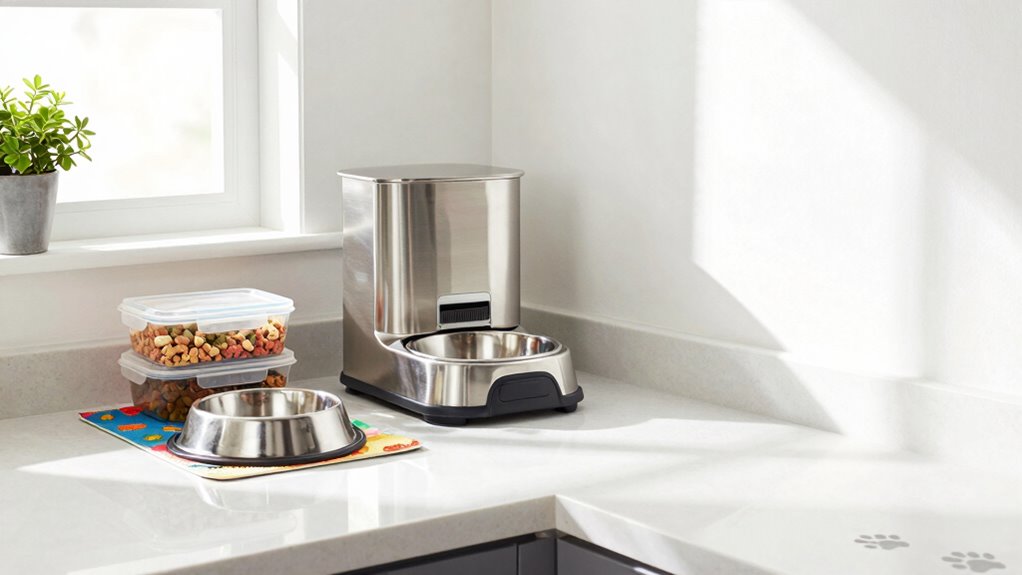

To keep raw pet feeding clean in shared kitchens, designate a specific area just for pet food prep. Use a marked cutting board and wear gloves while handling raw ingredients to minimize bacteria spread. Clean surfaces, utensils, and your hands thoroughly after use to prevent contamination. Store pet food in sanitized, airtight containers to avoid cross-contact with human food. By maintaining strict hygiene practices, you’ll guarantee a safer environment. There’s more to learn about keeping your kitchen sanitary and organized.

Get health and wellness essentials delivered free with Prime
- Fast, free delivery on millions of items
- Prime Video, Amazon Music and more included
- Member-only deals all year
Key Takeaways
- Designate a specific area in the kitchen solely for pet food preparation to prevent cross-contamination with human food.
- Use gloves when handling raw ingredients and work quickly to minimize bacteria exposure.
- Clean and sanitize all utensils, cutting boards, and surfaces immediately after use to maintain hygiene.
- Store raw pet food in separate, sanitized airtight containers to avoid cross-contamination with other food items.
- Communicate the importance of hygiene to all household members and discourage them from entering the pet food prep area during meal prep.
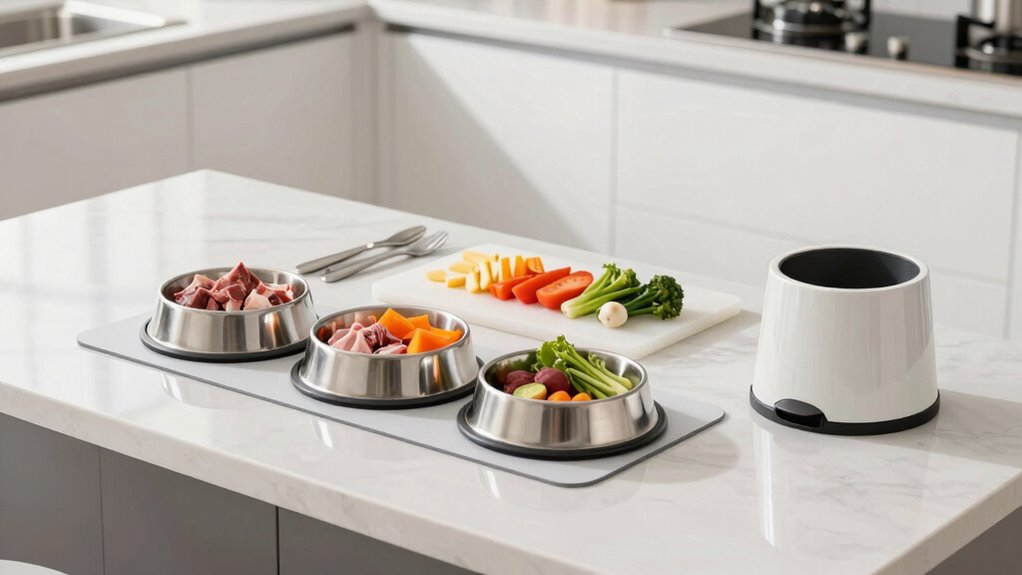
Feeding your pets a raw diet can be rewarding, but it can also get messy. If you’re sharing your kitchen with family members or roommates, you’ll want to be extra cautious about maintaining raw food safety and kitchen hygiene. After all, you’re not just feeding your furry friends; you’re also safeguarding the health of everyone in your home.
Start by designating a specific area in your kitchen for preparing your pet’s raw meals. This space should be separate from where you prepare human food to minimize any risk of cross-contamination. Use a cutting board just for pet food, and make sure it’s clearly marked. Keeping the raw ingredients confined to one area makes cleanup easier and helps everyone in the household understand the importance of food safety.
Designate a specific area in your kitchen for pet food preparation to minimize cross-contamination and enhance food safety.
When you unpack raw ingredients, be mindful of any juices that might escape. They can harbor bacteria, so place everything on a tray or in a bowl during the unpacking process. Consider using gloves while handling raw meat; this simple step can greatly reduce the risk of spreading harmful bacteria. If you’ve got a large batch to prepare, try to work quickly but efficiently to minimize the time raw food sits out. Additionally, practicing proper food safety techniques can further help prevent contamination and ensure a hygienic environment.
Once you’ve prepared the meals, it’s time for cleanup. Wash your hands thoroughly with soap and hot water after handling raw food. Don’t just rinse; scrub for at least 20 seconds to guarantee you eliminate any lingering bacteria. Clean the cutting board, utensils, and countertops with hot, soapy water immediately after use. Following up with a disinfectant can provide an extra layer of safety, especially in a shared kitchen. Being mindful of kitchen hygiene practices can further reduce the risk of contamination and maintain a sanitary space.
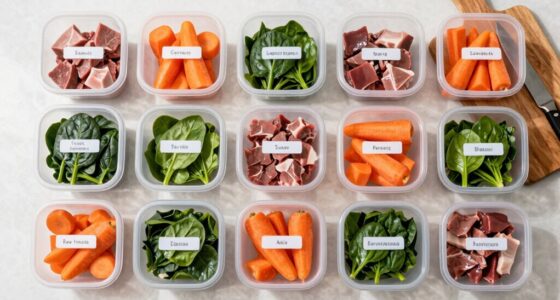
If you’re using any containers for storage, verify they’re sanitized before placing any raw food inside. Opt for airtight containers to minimize the chance of cross-contamination with any other food items. If your pets are on a raw diet long-term, you might want to keep a dedicated set of containers just for their food. Regularly inspecting and sanitizing storage containers can help maintain a hygienic environment. Incorporating proper cleaning techniques into your routine can ensure these containers stay safe and free from bacteria.
Communication is key in a shared kitchen. Let everyone know about your pet’s raw diet and the importance of hygiene when handling raw food. Encourage them to avoid using the designated area when you’re preparing meals for your pets. By being proactive and following these steps, you can keep your kitchen safe and clean, allowing your pets to enjoy their meals without compromising anyone’s health.
As an affiliate, we earn on qualifying purchases.
Frequently Asked Questions
Is Raw Pet Food Safe for All Dog Breeds?
Raw pet food can be safe for many dog breeds, but it’s crucial to take into account breed-specific factors. Some breeds thrive on raw diets, enjoying benefits like improved coat quality and energy levels. However, others may have sensitivities or health conditions that make raw feeding less suitable. Always consult your vet to guarantee your dog’s nutritional needs are met and to avoid any risks associated with a raw food diet.
How Can I Prevent My Pet From Stealing Food?
Did you know that 60% of pet owners report issues with their pets stealing food? To prevent your pet from snatching bites, focus on meal supervision. Use food distraction techniques, like puzzle toys, to keep them engaged during your meal times. Consistent training techniques, such as “leave it” commands, can reinforce boundaries. With patience and persistence, you’ll teach your furry friend that stealing isn’t acceptable behavior.
What Are the Signs of Foodborne Illness in Pets?
You should watch for several symptoms to detect foodborne illness in your pet. Common signs include vomiting, diarrhea, lethargy, loss of appetite, and abdominal pain. If you notice any of these symptoms, it’s essential to consult your vet immediately. Preventing illness starts with proper food handling and storage. Always make certain your pet’s food is fresh and safe, and keep their feeding area clean to minimize risks.
Can I Freeze Raw Pet Food for Later Use?
Absolutely, you can freeze raw pet food for later use, like storing summer fruits for winter. It’s a great way to manage raw food storage and keep your pet’s meals fresh. Just portion out the food ahead of time, so you can easily thaw only what you need. Make sure to use airtight containers or bags to prevent freezer burn, and label them with dates to track freshness effectively.
How Often Should I Clean Pet Feeding Areas?
You should clean pet feeding areas daily to maintain good feeding hygiene. Establish a regular cleaning schedule to prevent bacteria buildup and keep your space sanitary. After each meal, remove uneaten food, wash bowls with hot, soapy water, and wipe down surfaces. If you notice spills or messes, clean them up immediately. This routine not only guarantees your pet’s health but also keeps your kitchen fresh and inviting for everyone.
Conclusion
By following these tips, you can turn your shared kitchen into a clean haven, free from the chaos of raw pet feeding. Picture a serene space where your furry friend enjoys their meal, without leaving a trace behind. With a little preparation and care, you’ll keep the kitchen spotless, like a well-tended garden, allowing everyone to flourish together. Embrace these practices, and you’ll create harmony, turning mealtime into a delightful experience for both you and your pet.
Fall Picks
fall essentials
As an affiliate, we earn on qualifying purchases.