If your dehydrator runs hot, it’s often due to calibration issues, worn parts, or airflow problems. Regularly check your internal temperature with an external thermometer placed in the center, and compare it to the set temperature. If needed, recalibrate the thermostat and clean or replace worn components. Managing humidity and airflow also helps prevent overheating. Stay tuned—there’s more you can do to keep your dehydrator running smoothly and your snacks perfectly dried.
Key Takeaways
- Regularly calibrate your thermostat using an external thermometer to ensure accurate temperature control.
- Check and replace worn door seals to prevent heat loss and overheating.
- Use a reliable digital thermometer placed in the center of the dehydrator for precise internal temperature readings.
- Clean vents, fans, and dust buildup regularly to maintain proper airflow and prevent heat buildup.
- Manage dehydration load and humidity to avoid trapping heat and causing the unit to run hotter than intended.

Alpha Grillers Meat Thermometer Digital – Instant Read Food Thermometer for Cooking & Grilling – Professional Kitchen Gifts for Men, Dad & Mom
Instant Read Food Thermometer | Our instant read thermometer features a temperature probe and advanced, highly accurate technology…
As an affiliate, we earn on qualifying purchases.
As an affiliate, we earn on qualifying purchases.
Why Is My Dehydrator Running Hot? Common Causes Explained
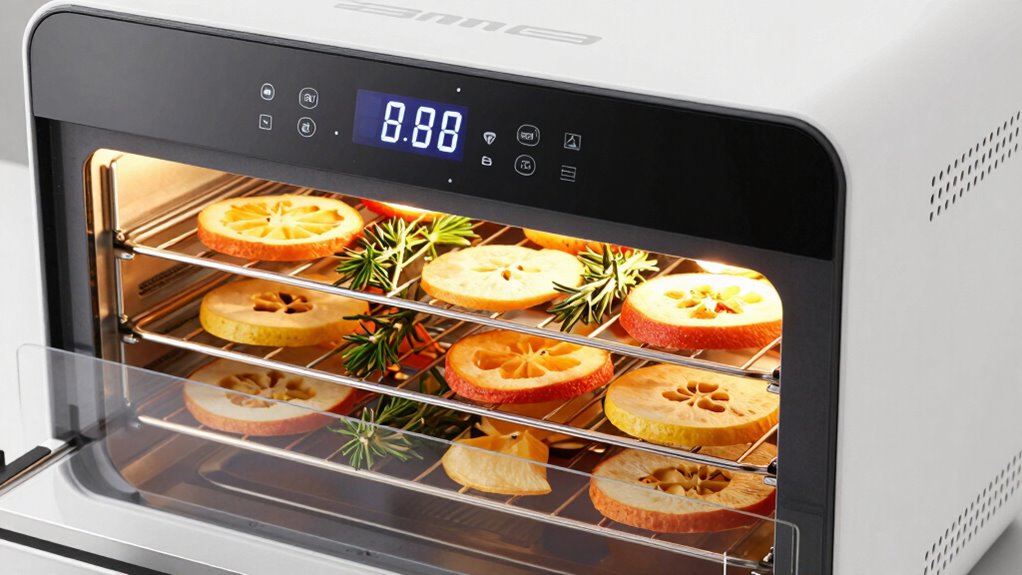
If your dehydrator is running hotter than usual, it’s likely due to a few common issues. Inadequate dehydrator maintenance can cause temperature inaccuracies, making it seem like your unit is overheating. Dust, grease, or food debris can interfere with the thermostat’s performance, leading to inconsistent heat levels. Additionally, worn-out heating elements or faulty thermostats can compromise temperature accuracy, causing the dehydrator to run too hot. Sometimes, calibration settings are off, especially if the unit has been moved or bumped. Regularly cleaning and inspecting your dehydrator helps guarantee it operates correctly. Proper dehydration depends on maintaining consistent temperature accuracy, so addressing these common issues will help prevent overheating and improve overall performance. Ensuring your dehydrator has proper temperature calibration is essential for optimal operation. Regularly reviewing manufacturer guidelines and performing proper maintenance can also help sustain reliable temperature control. Additionally, checking for internal component wear can prevent unexpected malfunctions. Being aware of temperature fluctuations can help you diagnose and correct issues promptly.

Pneumatic Thermostat Calibration Kit
Pneumatic Thermostat Calibration Kit
As an affiliate, we earn on qualifying purchases.
As an affiliate, we earn on qualifying purchases.
How to Check If Your Dehydrator Is Overheating
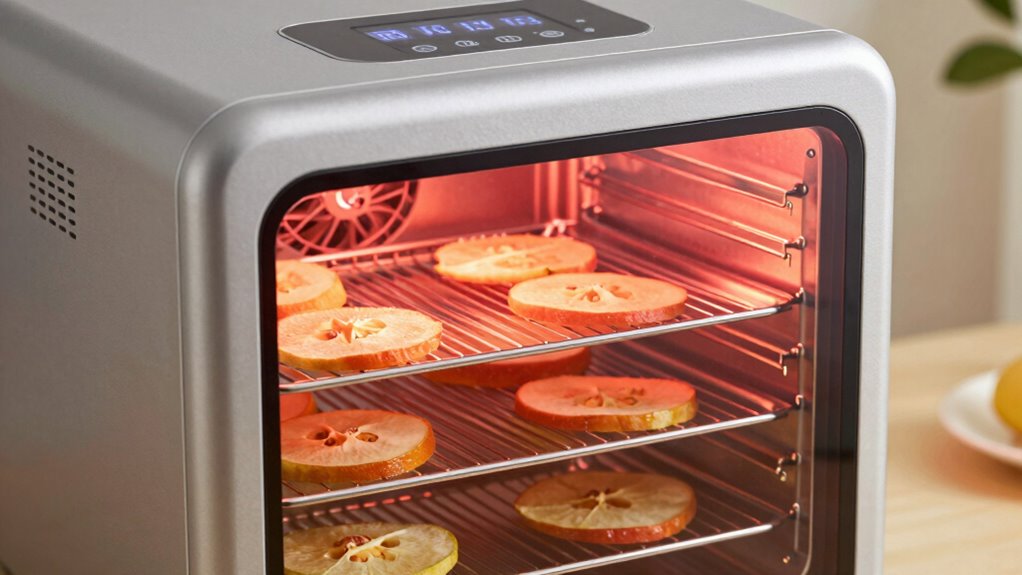
Since temperature inaccuracies can cause your dehydrator to overheat, it’s important to verify whether it’s running hotter than intended. Start by performing temperature testing with an accurate thermometer placed inside the dehydrator. Check at multiple points to get a reliable reading and compare it to your desired settings. During this process, follow safety precautions—avoid opening the door suddenly or touching hot surfaces. If your thermometer shows readings considerably above the recommended temperature, your dehydrator may be overheating. This could indicate a calibration issue or faulty thermostat. Regular temperature testing helps you identify overheating early, preventing food spoilage or safety hazards. Always handle tools carefully and ensure the dehydrator is unplugged during testing to stay safe.

MOrfiL Universal Refrigerator Door Gasket Freezer Door Gasket Magnetic Rubber Seal Part Replaces,No Need to Cut, Custom Made to Your Size
Universal door seal magnetic seal suitable for all brands. No cutting required, please specify the size and style…
As an affiliate, we earn on qualifying purchases.
As an affiliate, we earn on qualifying purchases.
Step-by-Step: Recalibrate Your Dehydrator for Accurate Temps

To guarantee your dehydrator maintains accurate temperatures, you’ll need to recalibrate it regularly. Proper recalibration ensures temperature stability and ideal airflow, preventing overheating or uneven drying. Here’s how to do it:
- Use an accurate thermometer placed in the center of the dehydrator. Run it empty at your usual drying temperature for about an hour.
- Record the temperature reading. If it’s off by more than a few degrees, note the discrepancy.
- Adjust your dehydrator’s thermostat or ventilation settings accordingly, focusing on airflow optimization to maintain consistent heat. Repeat the process if necessary until the temperature aligns with your target. This routine keeps your dehydrator running smoothly, with steady temperatures and even drying, avoiding hot spots or cold zones that compromise your results. European cloud innovation can also provide insights into advanced calibration tools to enhance your drying process, supporting consistent quality and efficiency.

8-Piece Small Cleaning Brush Set for Tight Spaces, Mini Crevice Brushes for Household Use, Ideal for Humidifiers, Cup and Toasters
This small cleaning brush set includes eight different brushes—crevice, bottle, gap, corner, edge, groove, detailing, track and hole…
As an affiliate, we earn on qualifying purchases.
As an affiliate, we earn on qualifying purchases.
How to Adjust Settings and Use External Thermometers

To get the most accurate drying, you need to calibrate your thermostat and use reliable external thermometers. Choose devices that provide precise readings, and regularly test your dehydrator’s temperature. Make sure to monitor water chemistry, and maintain proper airflow to ensure consistent, safe results. Additionally, understanding your dehydrator’s temperature controls can help you make more informed adjustments for optimal drying performance. Incorporating smart home automation features can also help you keep track of your dehydrator’s operation remotely and maintain ideal conditions effortlessly. Being aware of credit card security best practices can further protect your equipment and data from cyber threats.
Calibrate Your Thermostat
Calibrating your dehydrator’s thermostat is vital to guarantee accurate drying temperatures. Proper calibration improves thermostat accuracy and ensures your food dries evenly without overcooking or under-drying. Here are essential calibration techniques:
- Use an external thermometer placed in the dehydrator to monitor actual temperature versus the setting.
- Run the dehydrator at a specific setting and record the internal temperature after an hour.
- Adjust the thermostat dial based on the discrepancy between the set temperature and the thermometer reading, then test again.
- Regularly calibrate your equipment to maintain consistent drying results and prevent overheating issues. Additionally, understanding your dehydrator’s temperature control system can help you make more precise adjustments. Being familiar with your dehydrator’s temperature regulation mechanisms can greatly improve your calibration accuracy. These steps help you fine-tune your dehydrator’s thermostat, maintaining consistent results. Regular calibration ensures your dehydrator runs at the correct temperature, preventing overheating and preserving the quality of your dried foods. Incorporating knowledge of support breakfast options can also enhance your overall breakfast experience after a successful dehydration process. To achieve the best results, familiarize yourself with the home appliance’s temperature sensors to understand how they influence your calibration efforts.
Choose Accurate External Thermometers
Choosing the right external thermometer is key to accurately monitoring your dehydrator’s temperature. A precise thermometer helps you maintain ideal humidity control and prevents over-drying caused by power fluctuations. When selecting, look for digital models with a quick response time and calibration features. Keep in mind that some thermometers are more accurate than others, especially in fluctuating power conditions. To emphasize this, consider this comparison:
| Feature | Importance |
|---|---|
| Calibration accuracy | Ensures reliable readings in variable conditions |
| Response time | Quickly detects temperature changes |
| Power stability | Reduces false readings during fluctuations |
Understanding how modern kitchen technology enhances appliance accuracy can also inform your choice of external thermometers. Additionally, opting for thermometers with automatic calibration features can help maintain consistent precision over time. Recognizing the significance of temperature stability is crucial, especially when dealing with power surges or outages that can affect readings.
Regularly Test and Adjust
Regular testing and adjustment of your dehydrator’s settings guarantee it maintains the correct temperature for peak drying. To do this effectively, you should regularly check your external thermometer’s accuracy and modify the settings as needed. Proper thermometer placement, such as placing it in the center of the drying chamber, ensures precise readings. Follow these steps:
- Perform calibration checks every 3–6 months, depending on usage.
- Use an external thermometer to verify the internal temperature at different points.
- Adjust your dehydrator’s temperature controls based on thermometer readings to maintain the target drying temperature.
- Understanding the importance of temperature accuracy helps prevent overheating and ensures safe, even drying. Regular calibration frequency and correct thermometer placement help prevent overheating. Proper calibration and placement are essential for consistent results, ensuring your food dries evenly and safely. Additionally, being aware of potential temperature fluctuations can help you better manage your dehydration process and achieve optimal results. Being mindful of calibration methods can further improve your dehydration efficiency and safety.
Tips to Keep Your Dehydrator’s Temperature Consistent

Maintaining a steady temperature during dehydration is essential for consistent results, and small adjustments can make a big difference. To keep your dehydrator’s temperature stable, focus on moisture control and airflow management. Remove excess moisture from your environment, as high humidity can cause fluctuations. Ensure your dehydrator is placed in a well-ventilated area, avoiding direct sunlight or drafts that disrupt airflow. Use trays with good air circulation to promote even drying, and don’t overcrowd them. Regularly check and clean vents and fans to prevent blockages. If your dehydrator has adjustable vents, fine-tune them to optimize airflow. Proper airflow and moisture regulation help maintain the desired temperature, leading to better dehydration quality and preventing overheating issues. Additionally, understanding environmental conditions can help you better control your dehydration process and achieve more consistent results. Proper temperature calibration techniques can further enhance your drying process and prevent overheating. Being aware of ambient temperature fluctuations can also help you anticipate and adjust for changes that might affect your dehydration process.
What to Do When Overheating Persists: Troubleshooting Tips

When your dehydrator continues to overheat despite your efforts, it’s important to act quickly to prevent damage and guarantee safe operation. First, check the door seals; worn or loose seals can cause heat escape, leading to temperature fluctuations. Replace or tighten them if needed. Second, improve humidity control inside the unit by reducing moisture buildup, which can cause overheating. Use a small fan or open vents slightly to regulate airflow. Third, verify your dehydration load—overcrowding can trap heat and hinder airflow, increasing the risk of overheating. By maintaining proper door seals, managing humidity, and avoiding overloading, you can troubleshoot persistent overheating effectively. These steps help keep your dehydrator running smoothly and prevent further temperature issues.
When to Seek Repairs for a Dehydrator That Runs Too Hot

If your dehydrator is consistently running too hot, you need to recognize the signs of overheating, like burnt food or a burning smell. Troubleshoot common issues such as faulty thermostats or blocked vents to determine if repairs might fix the problem. If these steps don’t work, it may be time to contemplate replacing the unit altogether.
Signs of Overheating
A dehydrator that runs too hot can quickly ruin your food and damage the machine itself. Recognizing signs of overheating helps you catch issues early before costly repairs.
Here are key indicators:
- Excessively dry or burned food – If your items become crisped or scorched quickly, the dehydrator may be overheating due to poor humidity control.
- Unusual noises or burning smells – These often signal airflow management problems causing the machine to run hotter than intended.
- Overly warm exterior or vents – Feeling heat on the outer surface suggests the internal temperature is too high, risking component damage.
Monitoring these signs ensures you can adjust settings or seek repairs promptly, maintaining proper airflow management and humidity control.
Troubleshooting Common Issues
Recognizing the signs of overheating is the first step, but knowing when to seek professional repairs is equally important to prevent further damage. If your dehydrator consistently runs too hot, it can compromise dehydrator safety and moisture regulation, risking spoilage or fire hazards. Consider these key indicators:
| Symptom | Action | Priority |
|---|---|---|
| Excessive heat | Schedule a professional check | High |
| Burning smell | Turn off immediately, seek repairs | Critical |
| Uneven drying | Have the thermostat tested | Moderate |
If these issues persist despite calibration, it’s time to consult a technician. Addressing problems early avoids damage, ensures safety, and maintains proper moisture control. Don’t ignore overheating signs—professional repairs protect your appliance and your safety.
When to Replace Unit
When your dehydrator continues to overheat despite attempts to calibrate or troubleshoot, it’s a clear sign that replacement might be necessary. If your unit is nearing the end of its typical lifespan or if overheating persists despite repairs, consider substituting it. Additionally, check if your dehydrator is still under warranty coverage; many manufacturers offer repairs or replacements for faulty units within this period.
Consider replacing your unit if:
- It’s over the recommended lifespan (usually 5-10 years).
- Repairs are costly or ineffective.
- It consistently runs hot despite calibration efforts.
In these cases, investing in a new dehydrator ensures safety, efficiency, and better performance, saving you time and hassle in the long run.
Best Practices for Perfectly Dried Snacks Every Time
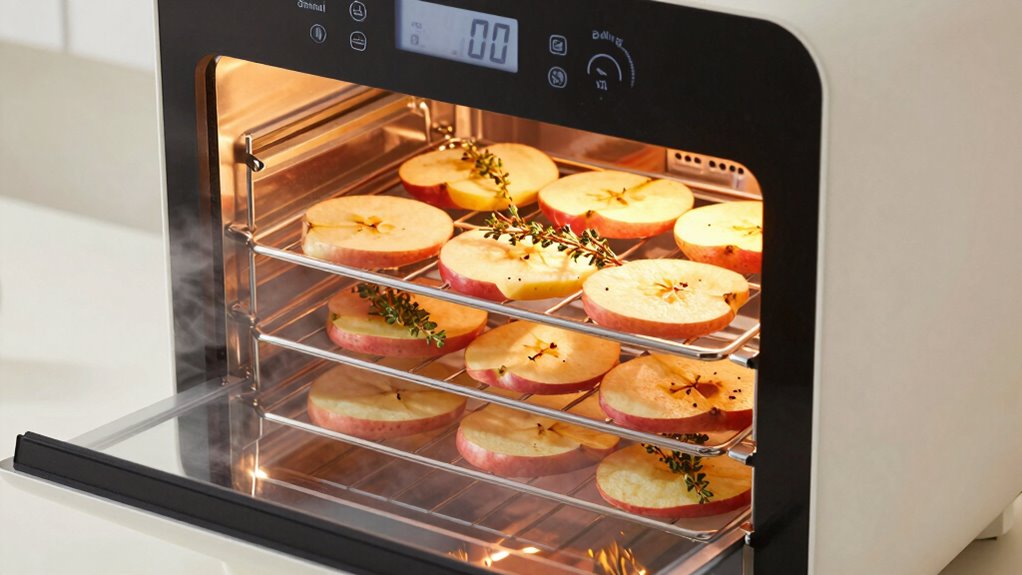
Achieving perfectly dried snacks every time requires attention to detail and consistent technique. First, ensure your dehydrator airflow remains unobstructed, allowing even circulation of air around your ingredients. This helps prevent uneven drying and preserves texture. Check the ingredient moisture level before drying; overly moist items need longer or higher temperatures, while drier ingredients require less. Slice foods uniformly to promote consistent drying times. Avoid overcrowding trays, which can hinder airflow and lead to uneven results. Use a thermometer to monitor the dehydrator’s temperature and make adjustments if necessary. Rotate trays mid-process for uniform drying. Following these best practices guarantees snacks that are crispy, flavorful, and perfectly dried every time, no matter what ingredients you’re working with.
Frequently Asked Questions
Can External Fans Help Reduce My Dehydrator’s Temperature?
Yes, external fans can help reduce your dehydrator’s temperature. Proper fan placement is key; position the fan to improve airflow around the unit without directly blowing on the heating element. This airflow optimization helps dissipate heat more effectively, preventing overheating. Just make certain the fan isn’t too close, which could interfere with the dehydrator’s internal temperature control. Experiment with placement to find the best balance for consistent, safe drying temperatures.
How Often Should I Recalibrate My Dehydrator?
Imagine your dehydrator as a steady heartbeat, helping you preserve food perfectly. To keep that rhythm steady, you should recalibrate every 3 to 6 months, depending on how often you use it. Regular calibration ensures temperature stability, preventing overheating or uneven drying. If you notice inconsistent results, recalibrate sooner. Maintaining this schedule keeps your dehydrator running smoothly and your dried foods consistently delicious.
Do Different Food Types Affect Temperature Accuracy?
Yes, different food types can affect your dehydrator’s temperature accuracy because varying food moisture levels influence dehydration speed. Heavier, wetter foods may cause your dehydrator to run hotter or slower, making temperature calibration tricky. You should monitor how each food type behaves and adjust your settings accordingly. This way, you guarantee consistent dehydration results, keeping your dehydrator running accurately regardless of the food moisture content.
Is It Safe to Use a Thermometer Inside My Dehydrator?
Think of your dehydrator as a tiny oven, and yes, it’s safe to use a thermometer inside. Place it away from vents for accurate readings, ensuring it’s not touching the sides or food. Regular calibration is like tuning an instrument — do it frequently to keep readings precise. This way, you’ll confidently monitor temperatures, preventing under- or over-drying your food and ensuring safety.
What Are Signs My Dehydrator Needs Professional Repair?
If you notice uneven drying or significant temperature inconsistency, your dehydrator might need professional repair. Signs include persistent overheating despite calibration, strange noises, or a failure to maintain the set temperature. These issues suggest your unit’s temperature calibration is off or components are faulty. Don’t ignore these signs—getting it checked guarantees safe, efficient operation and prevents spoilage or safety hazards.
Conclusion
Just like a seasoned chef perfects their recipe, calibrating your dehydrator guarantees your snacks come out just right. By understanding why it runs hot and following these tricks, you’re wielding the precision of a master. Don’t let overheating spoil your efforts—think of it as taming a wild stallion. With patience and practice, you’ll turn your dehydrator into a trusty tool, crafting delicious, evenly dried treats every time.