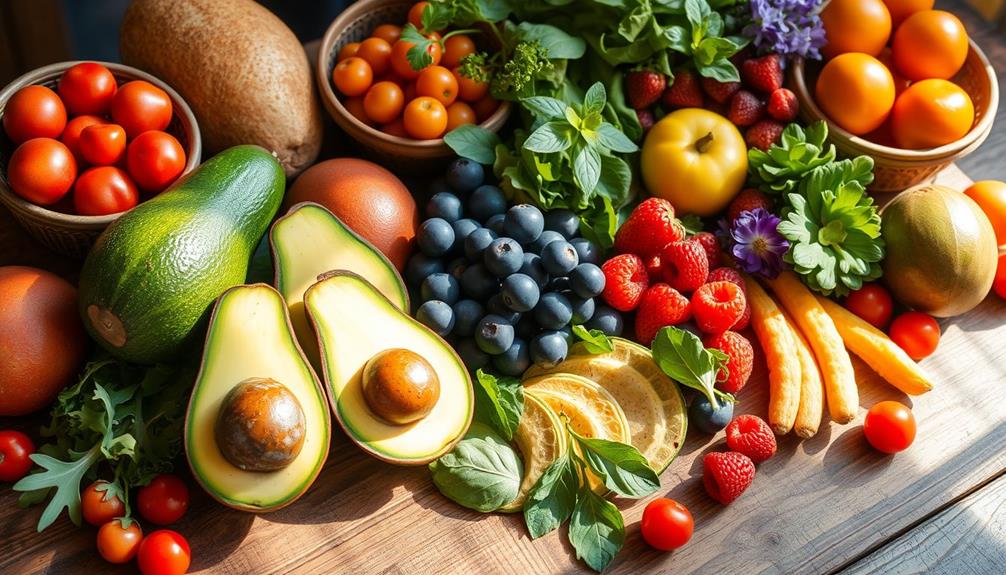
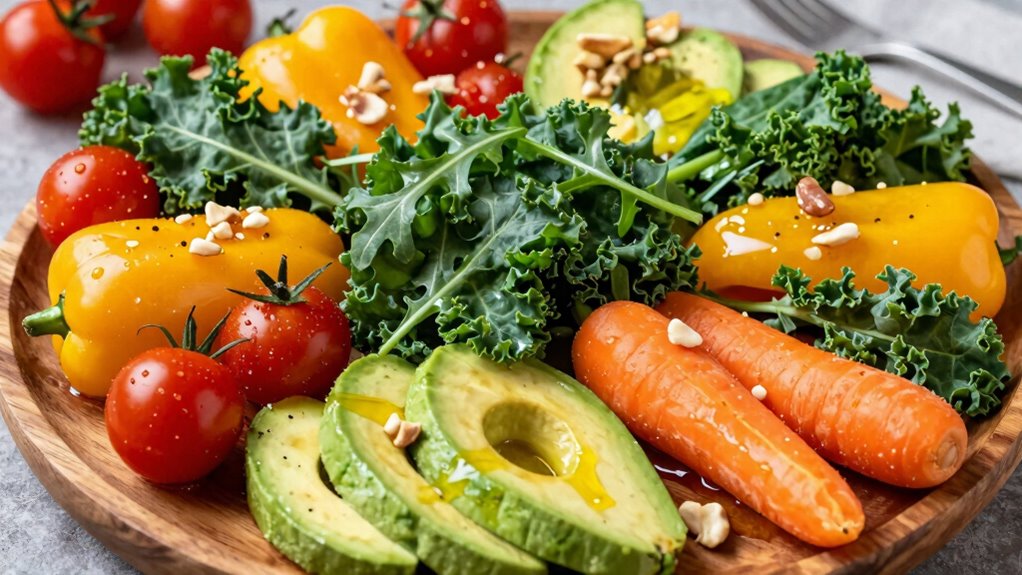

Relying solely on greens in your raw meals often leaves you short on essential nutrients. Greens are great for fiber and micronutrients, but they lack variety. Incorporating fruits, nuts, seeds, and whole grains can enhance flavor, texture, and overall nutrition. Healthy fats from avocados and nuts help absorb vitamins, too. Plus, a colorful plate makes meals more appealing and enjoyable. Discover how to create a more balanced approach to your raw meals for better health.

Get health and wellness essentials delivered free with Prime
- Fast, free delivery on millions of items
- Prime Video, Amazon Music and more included
- Member-only deals all year
Key Takeaways
- Sole reliance on greens can lead to nutrient deficiencies due to lack of diverse vitamins and minerals found in other food groups.
- A balanced raw meal requires the inclusion of fruits, nuts, seeds, and whole grains for optimal nutrient intake.
- Healthy fats from sources like avocados and nuts enhance nutrient absorption, particularly fat-soluble vitamins.
- Meals lacking variety can become monotonous, reducing adherence to healthy eating habits and overall satisfaction.
- Colorful, diverse plates not only appeal visually but also signify a broader range of phytonutrients crucial for health.
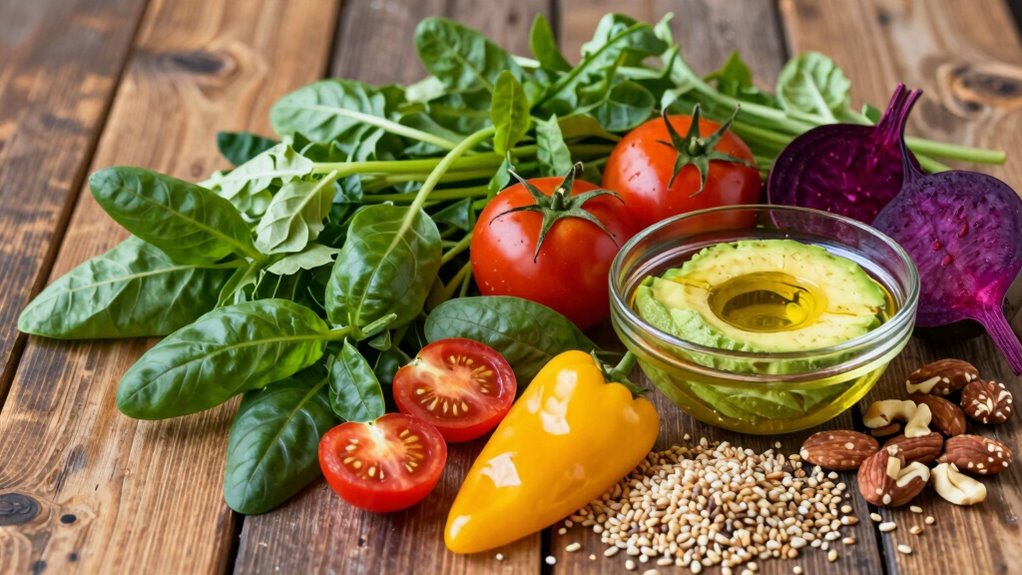
When you embrace balanced raw meals, you’re not just fueling your body; you’re nourishing it with vibrant, nutrient-dense foods. You might think that loading up on greens is the easiest way to achieve a balanced raw meal, but that’s a common misconception. While greens are certainly packed with essential vitamins and minerals, relying solely on them can leave your meals lacking in vital nutrient variety. To truly thrive, your meals need a broader spectrum of ingredients.
Think about it: greens are rich in fiber and offer plenty of micronutrients, but they often fall short on protein and healthy fats. By sticking primarily to leafy greens, you miss out on the balance your body craves. A well-rounded raw meal should include a mix of fruits, nuts, seeds, and even whole grains. Each of these components contributes unique nutrients that work together to support your overall health.
Flavor balance is another reason why greens alone don’t cut it. Imagine a salad made up entirely of kale or spinach. While it might be somewhat enjoyable, it can quickly become monotonous. By incorporating fruits like avocados or berries, or nuts like almonds or walnuts, you can elevate the flavor profile of your meal. This variety not only makes your meals more enjoyable but also encourages you to stick with your healthy eating habits.
Don’t underestimate the power of healthy fats, either. Avocados and nuts add a creamy texture and rich taste that greens alone simply can’t provide. These fats are essential for nutrient absorption, especially for fat-soluble vitamins like A, D, E, and K. So, when you skip the fats, you’re not just missing out on flavor; you’re also hindering your body’s ability to utilize the nutrients from those greens. Additionally, incorporating a range of nutrient sources ensures a more complete nutritional profile for your raw meals. Including a variety of plant-based fats can further enhance the absorption of fat-soluble vitamins and improve overall meal satisfaction.
Incorporating a range of colors and textures into your meals is key. A colorful plate isn’t just visually appealing; it’s a sign of nutrient diversity. Each color represents different phytonutrients that offer various health benefits. By blending greens with vibrant fruits and hearty nuts, you create a feast for both your eyes and your taste buds. Remember, the nutritional variety in your meals supports long-term health and helps prevent deficiencies. Ensuring that your meals include diverse plant foods not only enhances flavor and appearance but also maximizes your health benefits.
As an affiliate, we earn on qualifying purchases.
Frequently Asked Questions
Can I Survive on Greens Alone for a Long Time?
You can’t survive on greens alone for long. While they’re packed with vitamins, relying solely on them can lead to nutrient deficiencies. You miss out on essential proteins and fats necessary for long-term sustainability. Your body needs a variety of nutrients to function effectively, and greens just won’t cut it. For a balanced diet, include other food groups to guarantee you’re getting everything you need to thrive.
What Are the Best Fruits to Pair With Greens?
Pairing greens with fruits like bananas, berries, and apples creates delicious fruit combinations that enhance your nutrient balance. Did you know that adding fruit can boost your meal’s vitamin C content by over 50%? Bananas provide potassium, while berries are packed with antioxidants. Mixing these with leafy greens not only elevates flavor but also guarantees you get a broader spectrum of nutrients, making your raw meals both tasty and healthful.
How Do I Transition to a Raw Meal Diet?
To shift to a raw meal diet, start by incorporating a variety of fruits, vegetables, nuts, and seeds. This boosts nutrient diversity and highlights raw meal benefits like increased energy and better digestion. Gradually replace cooked foods with raw options, experimenting with different recipes to keep it exciting. Listen to your body and adjust as needed. You’ll find that blending flavors and textures can make your meals both satisfying and nutritious.
Are There Any Supplements I Should Consider?
Yes, you should consider supplements, especially if you’re moving to a raw meal diet. Without a variety of foods, you might face nutrient deficiencies. Look for a quality multivitamin to cover your bases and consider adding omega-3 supplements for essential fats. These can help guarantee you’re getting the nutrients your body needs to thrive. Always consult a healthcare professional before starting any new supplement regimen to tailor it to your needs.
What Are Common Mistakes When Preparing Raw Meals?
When you plunge into raw meal preparation, it’s easy to miss the mark. Think of it like a symphony—every ingredient needs to hit the right note for nutrient balance. Common mistakes include relying too heavily on one food group, skimping on variety, and ignoring protein sources. Don’t forget to include healthy fats and spices; they can enhance flavor while boosting nutrition. Mix it up for a harmonious, satisfying meal!
Conclusion
In the quest for vibrant health, remember that even a salad can’t stand alone, much like a song without its melody. Greens pack nutrients, but without the harmony of proteins, fats, and grains, your meal falls flat. Embrace variety, and let your plate reflect a symphony of flavors and benefits. Just as diverse notes create a masterpiece, so too will a balanced raw meal nourish your body and soul, guiding you toward a truly vibrant life.
Halloween Picks
halloween
As an affiliate, we earn on qualifying purchases.