When you’re raw feeding with limited freezer space, start by evaluating your dog’s dietary needs and calculating meal portions. Opt for smaller, frequent purchases to keep ingredients fresh. Rotate proteins weekly, using vacuum-sealed bags for portioning. Organize your freezer with clear labels and efficient stacking to maximize space. Thaw meals in the fridge overnight or use cold water baths for quicker options. By following these steps, you’ll easily manage raw feeding without sacrificing nutrition—there’s more to discover!

Get health and wellness essentials delivered free with Prime
- Fast, free delivery on millions of items
- Prime Video, Amazon Music and more included
- Member-only deals all year
Key Takeaways
- Calculate your dog’s dietary needs to determine the appropriate meal portions, ensuring efficient use of limited freezer space.
- Shop weekly for fresh ingredients, rotating proteins to maintain variety and balance in your dog’s diet.
- Use vacuum-sealed bags for portioning meals, optimizing storage while preserving freshness for each serving.
- Label and organize your freezer systematically, making it easy to identify and access different protein sources.
- Plan thawing methods ahead of time, utilizing fridge thawing or cold water baths for quick access to meals.
If you’re passionate about raw feeding but find yourself short on freezer space, you’re not alone. Many pet owners face the same challenge. The good news is that with a bit of creativity and smart planning, you can still provide a nutritious diet for your furry friend without overwhelming your freezer. It all comes down to effective meal planning and portion control.
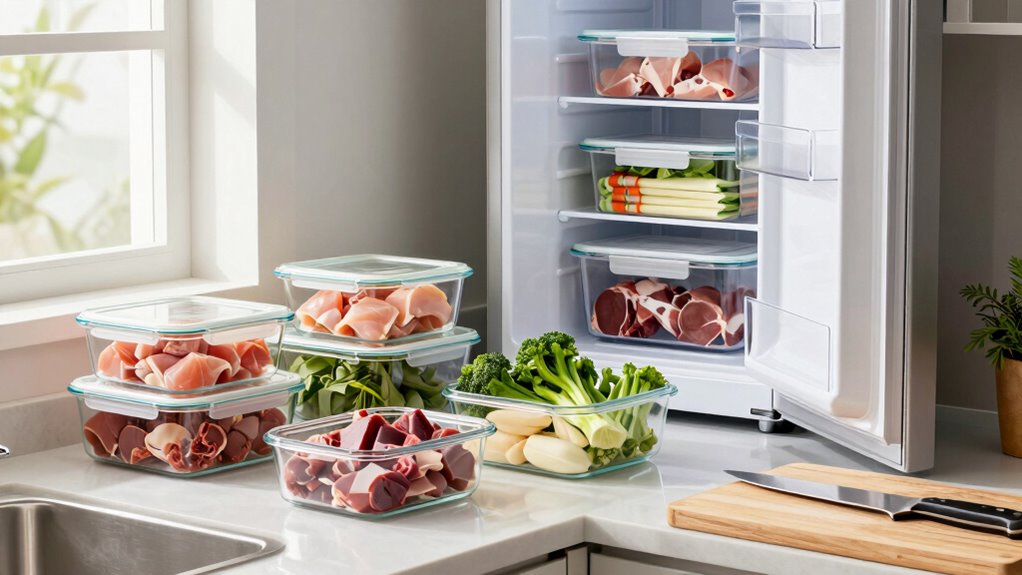
Start by evaluating your dog’s dietary needs and determining how much food you need for each meal. This will help you create a meal plan that fits your available space. Instead of buying large quantities of meat, consider purchasing smaller portions more frequently. This way, you can maintain freshness while avoiding clutter. You might also want to explore alternative proteins, like fish, eggs, or even organ meats, which can be easier to store in smaller amounts.
Evaluate your dog’s dietary needs and opt for smaller, frequent purchases to maintain freshness and manage freezer space effectively.
Another key to managing limited freezer space is ingredient rotation. Keeping a variety of proteins in your dog’s diet is essential for balanced nutrition, but it can be tricky with limited storage. One effective approach is to shop weekly, rotating different proteins each week. For example, you could focus on chicken one week, then switch to beef or turkey the next. This not only helps you manage storage but also guarantees your pup gets a diverse diet. Incorporating proper storage techniques can further optimize your freezer space and help prevent spoilage. Additionally, understanding nutritional balance ensures your pet’s diet remains complete despite the smaller quantities. Regularly inspecting your freezer for frozen food safety can also help prevent waste and ensure freshness over time.
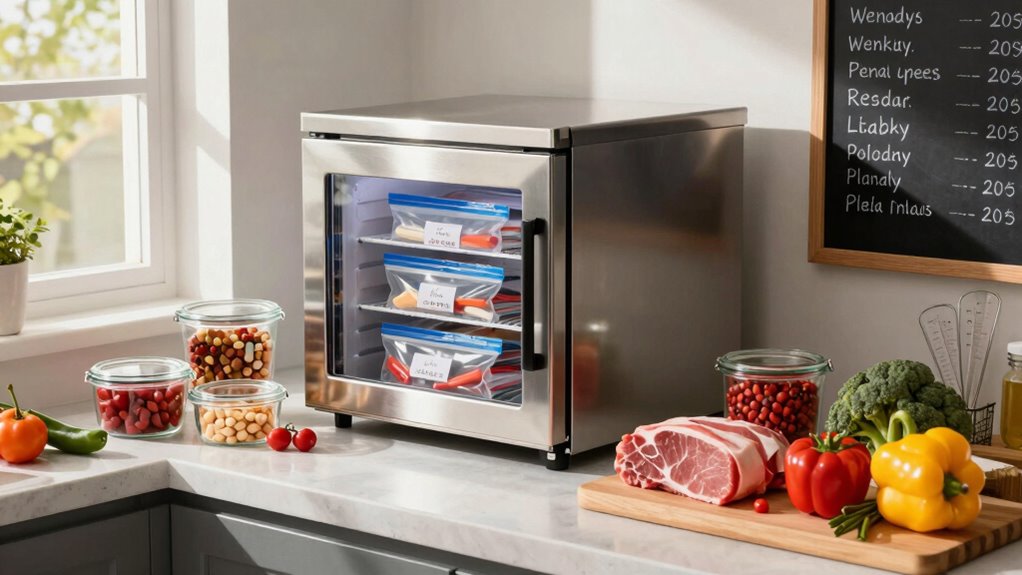
When it comes to storage solutions, think about using vacuum-sealed bags to maximize space. These bags can help preserve freshness while taking up less room than traditional containers. You can portion out meals ahead of time, sealing each serving individually. This method allows for easy thawing and portion control, since you’ll only need to pull out what you need for each meal.
Additionally, freezer organization techniques, such as labeling and stacking, can significantly improve storage efficiency and help you keep track of different protein sources. Speaking of thawing techniques, consider planning your meals so you can easily thaw the right amount the night before. Placing sealed bags in the fridge overnight is a reliable method. If you’re in a pinch, you can also use cold water baths to thaw smaller portions more quickly.
vacuum-sealed pet food storage bags
As an affiliate, we earn on qualifying purchases.
As an affiliate, we earn on qualifying purchases.
Frequently Asked Questions
Can I Use Fresh Ingredients Instead of Frozen for Raw Feeding?
Yes, you can use fresh ingredients instead of frozen for raw feeding. Fresh ingredient sources like local farms or markets can provide high-quality options. Just guarantee you’re sourcing from reputable places to maintain safety. Since storage alternatives are limited, consider buying smaller quantities more frequently to keep everything fresh. You can also prep meals in advance, using what you need right away and storing any leftovers in the fridge for short-term use.
How Often Should I Rotate Proteins in a Raw Diet?
You should rotate proteins in your dog’s raw diet every few days to maintain diet variety and guarantee balanced nutrition. Switching proteins regularly helps prevent allergies and keeps mealtime interesting for your pup. Aim for a different protein source at least once a week, mixing in chicken, beef, fish, and lamb. This protein rotation not only enhances flavor but also supports your dog’s overall health by providing diverse nutrients. Enjoy mealtime together!
Are There Specific Supplements Needed for Raw-Fed Pets?
Feeding your pet a raw diet can feel like crafting a masterpiece, but it’s essential to avoid nutrient deficiencies. You’ll likely need specific supplements to guarantee a balanced intake. Look for high-quality supplement sources like fish oil for omega fatty acids, calcium, and multivitamins tailored for raw diets. Keep your pet’s health vibrant and thriving by closely monitoring their nutritional needs and adjusting their supplements as necessary.
Is Raw Feeding Safe for Puppies and Kittens?
Yes, raw feeding can be safe for puppies and kittens if done correctly. You need to guarantee their meals are balanced and meet specific nutritional requirements for puppy nutrition and kitten growth. It’s essential to consult with a veterinarian or a pet nutritionist to create a proper diet plan. Keep an eye on their health and development, adjusting their meals as needed, to guarantee they thrive on a raw diet.
What Are the Signs of a Balanced Raw Diet?
A balanced raw diet shows signs of nutritional balance, which means your pet’s getting essential vitamins and minerals. You’ll notice increased energy, a shiny coat, and healthy digestion. Diet variety is key, so include different protein sources and organs. Pay attention to food sourcing; choose high-quality ingredients from reputable suppliers. If your pet thrives, maintains a healthy weight, and shows vibrant overall health, you’ve likely nailed the balance in their raw diet.
Conclusion
Navigating raw feeding with limited freezer space is like dancing in a small room—you can still enjoy the rhythm with a bit of creativity. Embrace meal prepping, portioning, and utilizing your fridge to maximize freshness. Remember, a little planning goes a long way, ensuring your pet gets the nutrition they need without overwhelming your storage. With these tips, you’ll keep your feeding routine smooth and satisfying, just like a well-timed twirl on the dance floor.
Fall Picks
fall essentials
As an affiliate, we earn on qualifying purchases.