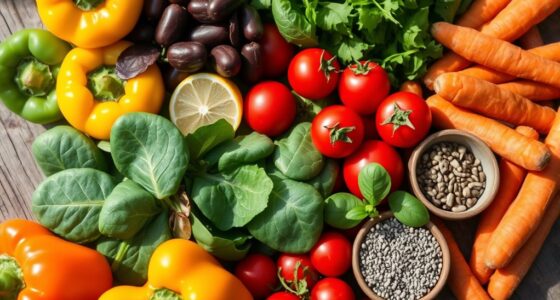
Embracing a vibrant variety of fruits and vegetables is key to sticking with a consistent raw routine. Each type offers unique vitamins, minerals, and antioxidants, which keep your diet balanced and exciting. Mixing flavors and textures prevents mealtime boredom, making healthy eating enjoyable. Seasonal produce not only tastes better but also boosts nutrient density. Plus, diverse choices support your digestive health and overall well-being. Discover how to enhance your raw journey even further.
Key Takeaways
- A diverse selection of fruits and vegetables ensures a broad spectrum of vitamins and minerals essential for a balanced raw diet.
- Seasonal produce offers peak freshness and flavor, enhancing enjoyment and satisfaction in raw meals.
- Varied tastes and textures in produce make meals more exciting, reducing the likelihood of dietary fatigue.
- Increased fiber intake from a mix of fruits and vegetables supports digestive health, promoting better overall well-being.
- Choosing local and seasonal produce encourages sustainable eating, reinforcing commitment to a consistent raw routine.
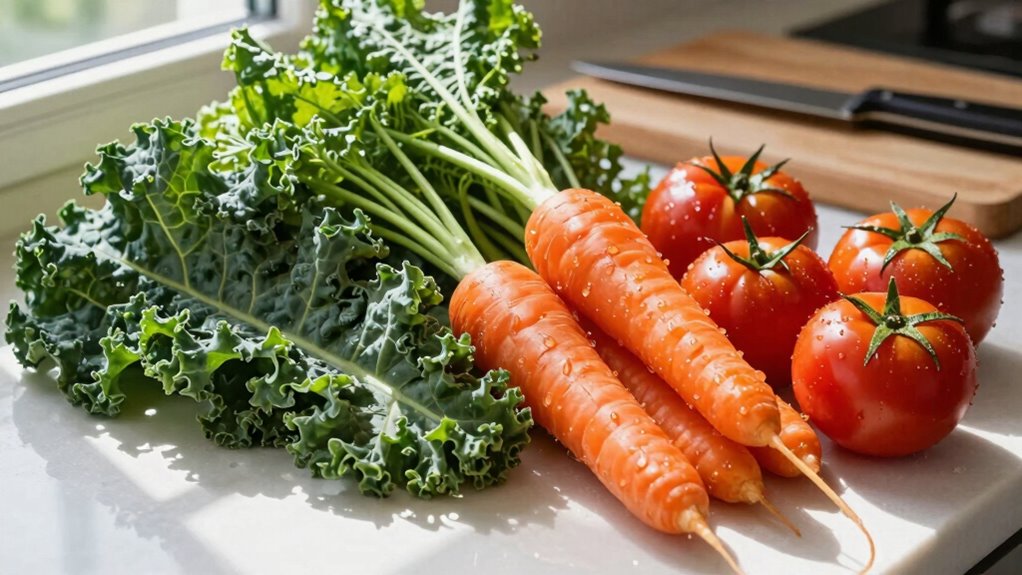
When you embrace a produce variety and raw routine, you’re not just adding color to your plate; you’re also boosting your health. Incorporating a wide range of fruits and vegetables helps you achieve nutritional balance. Each type of produce offers unique vitamins, minerals, and antioxidants that support your body in different ways. By mixing it up, you guarantee you’re getting a thorough array of nutrients. This variety becomes especially important when you focus on raw foods—cooking can diminish some of the vitamins and enzymes crucial for your well-being.
Seasonal availability plays a key role in maintaining this variety. When you eat what’s in season, you not only enjoy the freshest flavors but also promote sustainable practices. Seasonal produce tends to be more nutrient-dense, as it ripens naturally and is harvested at its peak. For example, in summer, you might find an abundance of juicy peaches and vibrant tomatoes, while fall brings hearty squash and crisp apples. This connection to the seasons enriches your meals, making them more enjoyable and aligned with nature.
Flavor diversity is another fantastic perk of having a produce variety. Different fruits and vegetables bring unique tastes and textures to your dishes, preventing mealtime boredom. Imagine a colorful salad featuring crunchy bell peppers, creamy avocado, and tangy citrus. Each bite offers a new sensation, making healthy eating feel less like a chore and more like a culinary adventure. The more diverse your plate, the more likely you are to stick with your raw routine.
Moreover, a varied diet greatly impacts your digestive health. Many fruits and vegetables are rich in fiber, which aids in digestion and promotes a healthy gut. Eating a mix of produce—such as berries, leafy greens, and legumes—guarantees you’re not only getting the fiber you need but also a range of prebiotics that support beneficial gut bacteria. This can lead to improved digestion and overall well-being, making you feel lighter and more energized. Recognizing the importance of nutritional balance can help reinforce your commitment to a diverse produce intake. Including a wide array of produce also encourages sustainable eating practices, benefiting both your health and the environment. Additionally, embracing seasonal eating can encourage more mindful choices that align with natural growth cycles. Incorporating local produce whenever possible can further enhance these benefits by reducing your carbon footprint and supporting nearby farms. Incorporating such practices not only enhances your diet but also fosters a deeper connection with the food system and promotes environmental sustainability.
organic produce storage containers
As an affiliate, we earn on qualifying purchases.
As an affiliate, we earn on qualifying purchases.
Frequently Asked Questions
How Do I Start a Raw Food Diet?
To start a raw food diet, focus on meal planning. Begin by stocking up on fresh fruits, vegetables, nuts, and seeds. Research raw food benefits, like increased energy and improved digestion, to motivate you. Create simple recipes that excite your palate. Gradually incorporate more raw meals into your daily routine, aiming for variety to keep things interesting. Remember, it’s about enjoying the process and discovering what works best for you!
What Are the Best Storage Methods for Fresh Produce?
To keep your fresh produce at its best, store it at the ideal temperatures and humidity levels. Refrigerate most fruits and vegetables to slow down spoilage, but remember that some, like bananas and tomatoes, prefer room temperature. Use breathable bags for leafy greens to maintain moisture without causing rot. For root vegetables, a cool, dark place works well. Regularly check for any overripe items, removing them to prevent spoilage of the others.
Can I Freeze Raw Fruits and Vegetables?
Sure, you can freeze raw fruits and vegetables! Just think of your freezer as a time capsule for produce—who wouldn’t want to preserve the glorious moment of a ripe peach forever? Use proper freezing techniques like blanching veggies to lock in nutrients, then pack them in airtight bags. When you’re ready to enjoy, simply thaw using cold water or your microwave. Voilà! You’ve just time-traveled to a fresh fruit and veggie paradise.
Are There Any Supplements Needed on a Raw Diet?
On a raw diet, you might need some essential supplements to avoid nutrient deficiencies. Consider adding digestive enzymes to aid digestion and help absorb nutrients better. Look for vitamin sources like B12, which can be tricky to get from raw foods. Omega fatty acids are important too, so flaxseed or chia seeds can be great additions. Don’t forget about protein alternatives; nuts and seeds can help round out your diet effectively.
How Do I Deal With Cravings on a Raw Food Diet?
To deal with cravings on a raw food diet, recognize your craving triggers. When you feel them creeping in, reach for healthy snack alternatives like raw nuts or fruit. Keep your nutrient balance in check, as deficiencies can heighten cravings. If emotional eating hits, try a quick walk or some deep breathing instead. Remember, it’s about finding joy in your choices and staying connected to your goals, not just curbing those cravings.
Conclusion
Incorporating a variety of produce into your raw routine not only keeps things fresh but also guarantees you’re getting a wide range of nutrients. Think of it as creating a colorful masterpiece on your plate—just like an artist mixes paints to achieve the perfect hue. By embracing this vibrant approach, you’ll find that your meals become more enjoyable, and you’ll stick to your healthy habits with ease. So go ahead, let your taste buds travel through the garden!